


Click to subscribe on: Apple / Spotify / Amazon / YouTube / Rumble
On this final episode of the Scheer Intelligence podcast hosted on KCRW but continuing on ScheerPost.com, host Robert Scheer welcomes Larry Gross, author and Professor Emeritus of Communication at the USC Annenberg School for Communication and Journalism. The two cover Zionism, specifically through the lens of Gross, who lived in Israel and personally witnessed the country’s evolution from its earlier claim to progressive idealism under its Labor party founders to the brutalizing occupation of Gaza and the West Bank Palestinians.
Although the term Zionism carries negative international weight today, Gross tells the story of his family, who came to Israel after his father left the United States in response to McCarthyism. Israel’s early labor connected and progressive politics represented a symbol of opportunity and hope for the Jewish diaspora community, such as Gross’ family. His father, who worked for, and was friends with then Israeli Prime Minister Golda Meir, thought Israel was “realizing this dream of the Zionist left, which was the party that had governed Israel… and was purporting to be creating both a Jewish state [and] also a progressive state.”
As Gross aged, however, Zionism’s mask slowly began to peel and the ugliness would emerge. “As a teenager growing up in Israel, some of the contradictions were already becoming apparent, ones that today are all too unmistakable,” Gross tells Scheer.
Israel has sharply broken from its labor affiliated days after the assassination of Yitzhak Rabin by a Jewish religious fanatic to the ascendancy of Benjamin Netanyahu’s far right Zionist government. Zionism turned on itself and now threatens the very Jews who initially looked upon it with hope. Gross’s family escaped McCarthyism, but now Jews like him in America working in groups like Jewish Voice for Peace, objecting to Israel’s uncontrolled militarism, face a more virulent repression from the Trump Administration inspired by Israel’s right-wing militancy.
Gross cites the pro-Palestine campus protests and explains, “what is happening in universities today… they are performing anticipatory compliance. They are failing to stand up, just as universities unfortunately did in the 1950s in that era we call McCarthyism, in which they fired people, they refused to hire them, they rewrote policies.”
Gross remarks that there are many voices of reason, including many Jews, that speak out against Israel’s atrocities today. “The slogan ‘never again’ has to mean never again, including to Palestinians,” he says.
Credits
Host:
Executive Producer:
Video Producer:
Introduction:
Transcript
This transcript was produced by an automated transcription service. Please refer to the audio interview to ensure accuracy.
Robert Scheer
Hi, this is Robert Scheer with another edition of Scheer Intelligence where the intelligence comes from my guests. This is a show I’ve been doing since October 30th, 2015. And we’ve done 418 episodes. I’ll go into that at the end a little bit. But this is my last show that KCRW is hosting. And it’s just been a great journey. We started with John Dean, the White House attorney in the famous Nixon-Watergate case. And we also did Daniel Ellsberg, who was somebody who was a target of Nixon, and his trial helped bring Nixon down. We did Willie Nelson. We did Janet Yang. So there’s been a lot.
Tonight, as the show will continue at ScheerPost, moving the archive over there (ScheerPost.com). And that’s all going to be fine and will continue, but there is something about this moment, obviously not just because of our show, but because of where we are as a country. And for the last one that I’m doing now for the NPR station, KCRW in Santa Monica, I wanted to turn to Larry Gross, somebody who I actually worked for when he was the chairman of our communications department at the Annenberg School at USC. He had been the deputy dean of the Annenberg School at the University of Pennsylvania.
He’s the founding editor of International Journalism Journal of Communication, which is one of the top in the world. He wrote, for my money, one of the most, if not the most, important books about the gay revolution, but not just a revolution: the struggle of gay people before the AIDS crisis obviously through but really the history, “Up from Invisibility.” It’s an incredibly important volume. He’s done a lot of other work in his life, but I think that showed the courage of his temperament, his ability to meet the highest scholarly standards at the same time, be extremely relevant to the public debate, to the public discourse. So I have a great deal of admiration, if there’s one person I’m really happy to be talking to, to mark this end of this chapter, the beginning of another, it is Larry Gross, but also particularly because of the moment. I’m doing this the day after Donald Trump in a press conference with Bibi Netanyahu announced, really to my mind, one of the most significant betrayals of Jewish people, their concern, both Larry and myself are Jewish.
And we experienced, I’m going to let Larry go into it, experienced anti-Semitism in our own country. We’ve written about it and so forth. But I never thought I would be in a situation where the sphere of McCarthyism, of attack on freedom would be done in the name of the Jewish people in part because it’s got to do with Israel and suppressing thought, including groups like Jewish Voice for Peace on the campuses that protested against what Israel has done in Gaza. And, you know, I can’t speak for Larry, but for myself, I thought that’s what, as a Jewish person, I was obligated to do, to have some universal concern about human rights. Now, Larry is someone who actually benefited, or at least his family did, from Israel’s foundation, from its existence. I’m going to let him tell that story because his father was a very famous person in the government and played a very important role. And then McCarthyism came along and he packed up his family and went to Israel. I don’t want to mangle that story. I’m going to let Larry tell it. So put us there. And that’s the early McCarthyism. And then now, how did we get to this new, much more vicious McCarthyism? And somehow it’s in the name of Jewish people.
Larry Gross
Well, first of all, thank you, Bob. It’s an honor to be your guest on this final episode of the KCRW version of your program. So just to make this fairly quick and get to our discussion, my father, as you said, worked in the Roosevelt and then Truman administrations in Washington. He was a staffer on the Hill. He was the staffer primarily responsible for the writing of the Full Employment Act really of 1944, 1945. It was passed in 1945. The Full Employment Act created the Council of Economic Advisers. This was one of the sort of stipulations in that bill. And he became the executive director of the Council of Economic Advisers—this was under Truman—until 1952 at the end of the Truman administration. My father was, to use the term of art of that period, a premature anti-fascist, which was an actual term that was used. He was investigated by the FBI several times.
And I think it’s important just as a quick historical footnote to record that the term McCarthyism is used very widely and broadly today, but in fact, the phenomenon that’s referred to by the term McCarthyism, an ideological witch hunt and prosecution of people for beliefs that should be completely acceptable under our First Amendment, actually predated McCarthy’s entry. McCarthy was the last act of this Cold War witch hunt, which began under Truman. It began arguably under the Democrats because they were afraid of being called soft on communism by the Republicans, but nonetheless, they enthusiastically joined in hunting out and firing people from the federal government. Just, one might add, as we’re seeing today, the beginnings possibly of a similar form of witch hunt going on in Washington. In any case, my father was defined as a premature anti-fascist because he had a record of leftist anti-fascist activism before December 7th, 1941.
After Pearl Harbor, anti-fascism became the American creed. Before then, it was suspect. And my father, like many other people who had worked in the Roosevelt and Truman administrations, was out of a job when the Republicans won the 1952 election. And like many people in that circle, these were people who had worked, many of them were economists or economic specialists, began to look for jobs and found the private sector was conforming with the Cold War mentality. And one of the few options that many of them could take were overseas jobs as economic advisors, mostly in the third world. So some of the people in my father’s circle went to Pakistan, went to Indonesia, went to Japan, and went to other countries. My mother, who at that point had four children, was not eager or didn’t like the prospect of, as she put it, raising her children in an expat bubble in some other country. But when the opportunity arose to join what was called the Economic Advisory Council to the Prime Minister’s office, to Ben-Gurion’s office in Jerusalem, this was something that my mother and my father were interested in. I don’t think my father had been particularly connected with Zionism, but my mother was more acquainted with it because her parents were labor Zionists. They had both emigrated from, well, Russia was what I was always told, but in fact, looking at it now, it was Ukraine. They came from the area near Kiev and had left early in the 20th century.
They were involved in labor Zionism. Golda Meir was a friend of my grandparents and they saw Israel as at that time, you know, realizing this dream of the Zionist left, which was the party that had governed Israel, had run Israel from the beginning and was purporting to be creating both a Jewish state but also a progressive state, a state that imbued and represented the ideals of the labor movement. So we technically were embarked on a move to Israel, which was supposed to last two years. It ended up lasting seven years. My father, after three years working in the government, the third year working for Golda Meir in the labor ministry ended up at the Hebrew University where he created and chaired, ran their first program in public administration, which was a specialty of his. He was sort of a theorist of administration and government as well as economics. He was kind of a self-made political and social scientist. So we spent seven years in Israel much of the ‘50s and I went there as a 10 year old, 10 and a half, stayed there until I was almost 18, went through school from the sixth grade through the 12th grade, graduated from the Hebrew University Secondary School and I would say became deeply attached, certainly to the landscape, to many aspects of the country. But I also have to say that even at that point, as a teenager growing up in Israel, some of the contradictions were already becoming apparent, ones that today are all too unmistakable.
There was a fairly clear dimension of racism that imbued Israeli society, not only the attitude towards the Arabs, which was unabashedly racist, Arabs were considered primitive and sort of a lower caste altogether, but there was a fairly clear and structural racism towards the Jews who came from the Middle Eastern countries, from the Arab countries, who came from North Africa, who came from Syria, from Iraq, from Kurdistan, from other areas. And these Jews were actively sought, there were all kinds of mechanisms to bring them in order to swell the population, but they were definitely treated with contempt and a kind of racist discrimination, which incidentally is still there today, although in a kind of, you might say Trumpian fashion, when the Labour Party monopoly on power was broken in the ‘70s and Menachem Begin became the prime minister. He did it largely with the support of the Mizrahi, of these Eastern, as they’re called, Jews who resented the elitism and disdain with which they were treated by the Ashkenazi elite. So there was definitely a parallel there to the way in which the Trump base votes for, of all people, you know, the billionaire class of Donald Trump because of their hatred for the elitism, the sort of disdain they feel from the liberal elite, educated elite, and quite a lot of similarity.
But Israel changed most dramatically after the ‘67 war. I remember this quite well for many reasons, but one of them was the dramatic and relatively fast change in the attitude of the Orthodox and particularly the ultra-Orthodox. As I think many of your listeners know, the ultra-Orthodox Jews were never Zionists. In fact, many of them were and many of them still are, in Brooklyn at least, anti-Zionist. They have a very simple rationale or argument for it, which is that when God decides that it is time for the Messiah to arrive and reestablish Israel at the head of nations, then God will do it. For mere humans to say, it’s time and we’re going to do it, is impudent, is insolent. It’s telling God, that we’re impatient. It’s showing impatience and lack of obedience to God. The ‘67 war, however, was interpreted in particular by a very influential rabbi with the name [inaudible] that the ‘67 war was God’s way of saying, now it’s time. That the swiftness with which the Israelis conquered, defeated the Arab armies and conquered the entirety of the West Bank and the Sinai and the Golan demonstrated that God was ready now for the Jews to take possession of the entire land of Israel. And incidentally, for those listeners who have heard all this hoo-ha about from the river to the sea, that was a Zionist slogan. In fact, the Zionist slogan that I saw, you know, graffitied on the wall across from the Knesset, the old Knesset building in the center of Jerusalem, was both sides of the Jordan. That was the Likud, pre-Likud, [inaudible] then, party slogan, both sides of the Jordan. Because as they like to quote, it says in Genesis 14 I believe, that I give you this land from the Nile to the Euphrates. So really, from the point of view of ultra-Orthodox Jews, really, God gave us everything all the way from Egypt to Baghdad. It’s very reasonable of us only to ask for this part of it. We’re not asking for everything. So their line was, now we get it all, and this is God’s will now. And what you have that transforms Israel in a way that is completely obvious today to anybody paying any attention is the rise of theocratic religious nationalism of the worst sort.
Of the sort that makes anybody, I think, who is familiar with or engaged with the values of Judaism and the messages of Judaism gives just the horror at the ethnocentric barbarism of the ultra-Orthodox and the undisguised racism with which they view anybody who is not Jewish. They may hide it, but you know, particularly when they’re speaking Hebrew, and you can find this on YouTube, you know, nowadays, you know, it is very clear that it is a fundamentally racist view in which Jews are separate from and more important than, superior to. And Palestinians certainly don’t rise of the Arabs to the level of receiving the dignity of being human. Israel, well, secondly, other than that, Israel also demonstrated as much of the world has in the last few decades, the fragility of a sort of a socially democratic system in the era of neoliberalism, in the area of corporate and capital triumphalism, of which again, the United States today is all too good an example. When the Likud coalition, headed by Begin, now by Netanyahu, defeated the Labour Party in the late ‘70s. It began just as was happening in the United States and in Britain and in Europe. It began a neoliberal counter move against the social welfare or the sort of social democratic economic and social system that had prevailed in Israel. It became a neoliberal capitalist-oriented state, just as was happening under Reagan in the United States, under Thatcher and Blair in Britain and all over, you know, throughout Europe. Israel is very much in the same camp, except that it’s also an armed garrison that has been propped up by the United States from the beginning, but particularly after ‘67 when supporting, in, up until ‘67, the support or the attitude of the United States towards Israel was always a kind of contest between the oil interests that the Republicans were more representative of and the interests that were more characteristic of the Democrats who liked the sort of having a base in the Middle East, which was very useful for American military and economic purposes. But the balance tipped in favor of Israel after 1967, and the Israelis began to benefit from that, including, again, this is something that remember, as I said, Begin is ‘77. This is also the period in which the Christian right is becoming such a powerful force in US politics. Certainly Reagan benefited from it. Bush benefited from it. And Trump is benefiting from it. And one of the peculiarities there is the sort of mutual interests, bizarre as it may seem, of the ultra, you know, the Christian right fundamentalists in the United States and the Israeli nationalists.
The Christian fundamentalists in the United States, as is well known, think Israel is, you know, needs to be supported because that’s the way the second coming will happen, in which case the rapture will take place, all the elect will go off to heaven and the Jews will be left behind, you know, tough. And the Jews, of course, are very happy to take advantage of this support, which has been key to building the power of the Israel lobby in the United States. Interestingly enough, just saw Netanyahu’s current visit to the United States includes meetings with the Christian fundamentalist leaders, not particularly with the American Jews who aren’t necessarily too happy with Netanyahu right now.
Robert Scheer
So let me interrupt. I mean, this is really fascinating. And I happened to cover the Six Day War. I was there at the end of it and so forth when the Labor Party was still in power. And I must say, at that time I was editor of Ramparts Magazine, which was fairly known for challenging US foreign policy. And I felt totally, I’d been in Egypt in which, and by the way, you said that they won this victory, actually was a preemptive war.
Larry Gross
Yeah, it was presented as, what they’re doing compared to the mess we’re in in Vietnam.
Robert Scheer
Yeah, but the fact is that Israel was not threatened in that way and they chose to back the attack with intelligence and so forth. But leaving that aside, myself, I felt very at home in Israel until I went to the occupied area, until I went to Gaza, until I went to the West Bank on that trip. But interviewing Allon and Dayan, Moshe Dayan and all these people, who I got to talk to at least briefly as a journalist or what have you, they all told me, first of all, a number of them liked ramparts, they liked the American progressive movement, the anti-war movement. I felt no distance. I felt no, and as, you know, having a Jewish mother who experienced anti-Semitism, my whole family in Lithuania was wiped out, went back there after the war to try to find relatives, everyone was dead or had become a displaced person, we had no contact with them. And so, yes, there was something, and this is what I wanted to ask you about, your own growing up in Israel and you’re a Hebrew reader and speaker and everything. I didn’t have that, of course. I still had a little bit of Yiddish, but that had been rejected. But the fact of the matter is, I, at that time, would have called myself a skeptical left Zionist. I thought, well, you know, the Jewish people had this barbarism of the Holocaust and maybe they needed a homeland. But the ideology that I was presented with was that the Palestinians would be respected. I remember this very clearly and there was a lot of at least appearance of that. I was introduced to many Palestinian Arabs that had been living in Israel. They’d given blood to the Israeli army. And this racism that you’re talking about was concealed from me. I’m always not intimate with the society. And everyone talked a good game.
These, after all, were left social democrats in the Labour Party. They were in power. They were the generals. The left kibbutzim has provided a very high percentage of the officers in the army. At one point, they said, I think, 80% had come out of. I stayed at one kibbutz [inaudible]. And so I felt very at home. And the last thing I expected, I knew there was going to be tension and what was going to happen, but they all warned me that there couldn’t be occupation because if you occupy the people, then you become what you hate most. And that after all, the Jews had been victimized by being alienated from power and scapegoated and so forth throughout their history in the diaspora. And so people were very clear about that. And then you watch a movie like The Gatekeepers, which is all these people from Shin Bet, the Israeli authority that administered the West Bank Gaza. They talk about the slide into this nationalism and right wing. So these are the people who ran the whole thing. I consider it one of the most important documents to watch or read about Israel. And so really what I want to get from you as somebody who witnessed Israel when it was, let’s face it, you know, it was left, after all, one of the attacks on, I mean, not one, one of the main ways Hitler was able to unify all this opposition against Jews was he said the Jews were communists, the Jews were leftists, right? That was the attack. You know, here, in fact, most of the people that I met and talked to in Israel would have been described as leftist or progressive.
Larry Gross
Yeah, were, well, left was the ruling party, but it was social democratic. You know, this is not an uncommon phenomenon, particularly with, you know, like former colonies, know, ex-colonial countries in Africa and Asia and elsewhere, that the party that sort of dominates, leads the independence movement and then become, then takes power, as in South Africa, as in Zimbabwe, as in India, you know, sits in power for a long time and becomes complacent and becomes corrupt and becomes bureaucratic. And one of the interesting things about Israel, which I remember quite well in that period, and that I sort of saw later when I visited Eastern Europe and Russia, was a certain kind of infuriatingly stolid bureaucratic attitude towards how to run things. And when I saw it in Eastern Europe and in Russia, I said, I recognize that. That’s what used to drive people crazy in Israel. I mean, a lot of the sort of habits of behavior and running things that dominated Israel for decades was transplanted from Russia and Poland and Eastern Europe and a certain way of dealing with things that drove people crazy. You know, for decades, probably still does in Russia, you know, kind of top-down authoritarian, bureaucratic, small-mindedness, Israel was full of that, full of it. But the other part of it, you know, is that there were people after ‘67, including Ben-Gurion, who said, we can’t keep this land. This is a bad idea, you know, lots of the more thoughtful, you know, of intellects, intellectuals of the period said, you know, not good. But it began to happen. And incidentally, some of those generals you talked to, like Yegad-Olam, were also the people who instituted the first settlements. Because they started the settlements after ‘67 in the old fashioned way they had done it before in, you know, the 30s and the 40s which is as armed camps. And the Allon settlements were strung along the Jordan, basically as a kind of barrier for future wars that they might have to fight. It never happened that way, but they were sort of following the model they knew of planting little seeds of settlers in order to have, you know, sort of outposts that were also military. You know, as you said, the connection between the kibbutzim and the army was very tight.
This is how they did it. These little, in fact, one of the more popular ways to serve in the army was to be in Nahal, which was the sort of agricultural unit in the army. And what you would do as your army service is you and a group of people would go and begin a settlement that would eventually turn into a kibbutz. But you would do that as part of your army service because these were seen not only as agricultural sediments, but also as garrisons and as military outposts. The connection was very, very clear. But then the temptation to build housing, to build cheap housing as a way of bringing in the population. And it’s hard to know. Eventually, think historians will get access to documents exactly how carefully and these plans were laid out as opposed to sort of happening. But as they began building it, they began as the Gatekeepers documentary talks about, they began building what is unmistakably an apartheid system in that there were roads now that only the Israelis can drive on through the West Bank. The West Bank indigenous population has to go, rend its way around through all these checkpoints, whereas there are these straight through quick roads that the Israelis can take, that the Jews can take. You know, it’s very much of a separation, which is what apartheid means, system. And even in ‘67, when you were there, the Israeli Arabs still lived under military control. Those villages, those Arab villages that were still there, the ones who hadn’t left, had been driven out in ‘48 were under the control of military authorities. They were not under the control of the regular police and courts. They were under the control of the military authorities. It was very much of a dual system, although not typically one that was easily visible or certainly shown to outsiders.
But very quickly they began to create this dual system and keeping it out of sight and to have, should be familiar to the United States, a source of cheap labor. So the Palestinian economy began to be dependent to large extent on the labor, on the cheap labor, the jobs, construction jobs, agricultural jobs, other jobs that West Bank Palestinians would get in Israel. Sounds familiar, should to the United States. And one of the things that was, I think, most striking in a kind of understandable way when October 7th happened was the degree to which the Israeli society was able to live in a bubble, which is actually how a lot of people describe Tel Aviv, by far the biggest city in Israel, as cosmopolitan, very European style city, oblivious to what was happening, you know, very close by, know, 30, 40 miles away, 50 miles away, very close. And these, you know, this music festival, which was attacked by the Hamas forces, you know, on October 7th was a sort of Western style music festival rave or whatever, staged right up against the border with Gaza. So right across the border, like a mile or two away from where this rave, this music festival was happening was, what has often described as the, you know, an open air prison. densest population in the world cut off from everything with limited access to all kinds of supply. I mean, this is before October 7th, incredibly limited access to all kinds of things, including electricity and water and medicines. mean, the conditions weren’t good there before the bombing started. But Israelis were allowed to ignore that, to live in a kind of complacent ignorance of what their government was doing just over the hill.
Robert Scheer
So let me ask you about that because the Jewish life that I grew up in in the Bronx and I was an overwhelmingly Jewish place. mean, had Italian neighborhoods, Irish neighborhoods, most of the kids I went to school with and Yiddish was actually still used extensively. We had people, displaced persons who survived Europe, who came to live. They didn’t go to Israel. They managed to get in the United States. Now they were not blocked the way they had been during the war. And they were mostly working class. They worked in the garment industry. Their kids went to the public schools, you know, and then even were excluded from the Ivy League schools. I know you went to Brandeis, which was a Jewish university, and the general consensus in New York is don’t even apply, because I was born in ‘36, so when I was growing up they said don’t even bother applying to the Ivy League schools, even if you can afford it, they don’t want any New York Jews. In fact, New York was called Jew York City pretty widely around because we had, I think, three million Jews or something. And generally, it was not difficult to identify Jewish people, at least in New York, where I grew up, with being progressive, enlightened, very, you know, major participants in the civil rights movement, the trade union movement. I mean, just the idea of Jews now celebrating these super billionaires and
and celebrating power and being Goliath and so forth rather than David. It was so alien to how I grew up was…
Larry Gross
It was the other side. I mean, remember the Rothschilds.
Robert Scheer
Rothschild literally was in England, but still, I’m not denying that, but in fact, there were, we called them German Jews, there were earlier immigrants, generally, mean, come on, they were the bosses. I mean, many Jewish people worked for these British Jews.
Larry Gross
Jews were also accused of being capitalists or being communists. They were both.
Robert Scheer
I’m not disputing that, but as a kid, it was really confusing to me because in Germany and Europe, they were saying the rich Jews and the Jews do this and all that. And that was the heart of anti-Semitism. And yet, from our visit, you know, my mother was a garment worker working piecework, but she wasn’t alone. I mean, all the people I knew and the idea. I mean, I want to get across when you look at the civil rights movement, you look at the labor movement in the United States, Jews were so vastly disproportionately represented. If you look at the killings in Mississippi or anywhere, there were Jewish volunteers. So I mean, I’d like to keep this under an hour. We got 37 minutes, but I do want to, I think it’s important for somewhere to record, because I’m very proud of that Jewish tradition. I’m sure you are. I mean, the fact is, the matter is, all through my life, aside from Israel, that became problematic very much after the Six Day War. I never had any trouble thinking that this, and certainly through my mother’s family, my Jewish relatives and so forth, that by definition you were at least liberal, left liberal. mean, it was an odd thing to run into a conservative, or a conservative Democrat Jew or a conservative Republican. And even when I went through the South, Jews, there were plenty of Jews in the South that were well known for standing up for civil rights, speaking out for civil rights and throughout the country. So I would like to just, because that’s being lost now. mean, that’s right now, I mean, you know, the image of the Jew is certainly, well, I guess the key word I’m looking for here, Larry, now adding you as a scholar, asking you as a scholar, by definition, Jews wanted to be cosmopolitan in best sense of the word. I think of Hannah Arendt, think of [Herbert] Marcuse, people like that, they felt that you shouldn’t be tribal. It’s not just about your tribe, it’s about what’s going on in the world. Maybe you could discuss that.
Larry Gross
I think that’s certainly true, but Jews are, they come like every other category of people, you know, in all flavors, in all types. But I think it’s certainly true that Jews, like other groups that have experienced discrimination, oppression, marginalization, when they, as it were, break through, when they become, when the barriers are lowered, turns out that many of them just want to be part of the ruling class. Many of them want to climb the ladder. Many of them want to be just like everybody else. I think, however, to focus on sort of what the running topic of this discussion has been, which is Israel and what’s happened, all of that, that it’s very important to understand that Israel has been playing a game of public relations, psychological warfare, you might even say political subversion in a very real way for decades. And they’ve been doing it very, very well. You could say the founders of public relations, the inventor of public relations was Jewish, you know, Edward Bernays, who liked to talk about being a…
Robert Scheer
The nephew of Sigmund Freud, right?
Larry Gross
The nephew of Sigmund Freud, you know, I’d to talk about that. But, you know, the success of the Israeli public relations, you might call it PR, what the Israeli government calls hasbara, which means explanation or instruction, explanation. I mean, they explain things, is enormous. And famously, you can read Norman Finkelstein on this and lots of other people, the Holocaust, which became a sort of an industry, to use Finkelstein’s term, quite a bit later than you might think. You know, if you don’t follow the story, you know, people weren’t talking about the Holocaust nearly as much for the first 15 or 20 years as they were later, but they realized how effective the Holocaust is as a bulwark against criticisms of Israel. Then, you know, you might say, as people have said, playing the Holocaust card. Anytime anyone criticizes Israel, we talk about the Holocaust. I mean, the endless references now in the last two years to October 7th as the most devastating attack on Jews since the Holocaust, because, you know, 1,400, perhaps, let’s say. I think it’s about 1,400 Israelis were killed, although some of them were actually, know, Thai and other workers, but let’s say 1,400 Jews were killed, you know, and this is constantly raised as the, you know, as the license to commit what, you know, I think has reasonably been described as genocide is unambiguously ethnic cleansing, the relentless bombing that has killed tens of thousands. So what is the calculus here? But the Israeli use of this is incredibly effective. They have succeeded in getting many governments and institutions to accept a legal definition that criticizing the state of Israel is, by definition, anti-Semitic. This is obscene. This is obscene. To say that criticizing the policies of a government is racist is an obscenity. It’s an offense to the memory of the Jews who have been killed by anti-Semites.
So that a political argument is the equivalent of anti-Semitism and it is being used today, I mean, just to bring it locally, it’s being used in universities that odious Elise Stefanik, member of Congress who received her reward by being appointed UN ambassador by Donald Trump, and who incidentally, in her confirmation hearings, said that Israel has a biblical right to the land. This is a US elected official saying that the Bible gives Israel ownership of the land. So that despicable person used the sort of McCarthyist tactic of claiming to see anti-Semitism, much as McCarthy would have claimed to see communism, and several university presidents cowered in front of her, groveled, and incidentally lost their jobs for it because they, I suppose, didn’t grovel enough. It’s outrageous. And what is happening in universities today, including USC, which I am now recently retired from, but you’re still teaching at, they are performing anticipatory compliance. They are failing to stand up just as universities unfortunately did in the 1950s in that era we call McCarthyism, in which they fired people, they refused to hire them, they rewrote policies. This is not a moment that will look good in the history books, just as the McCarthy period doesn’t look good. Now, there, I have to say, in a way, they have in some ways even more reason to be afraid than some of the universities did back in the 1950s, because the American university system, particularly research universities, the elite universities, are entirely dependent on federal funding now. A research university by definition is dependent upon federal funding, which is where research, certainly in science and medicine and engineering, is funded overwhelmingly.
And when the government says, if you don’t do this, that or the other, we’re gonna turn off the faucet. No more funding as Elon Musk and his crowd of the MAGA lunatics just did with this freeze, universities are cowering and for good reason. This is the money that pays the rent. This is the money that pays the salaries. This is the money that turns the lights on, but it’s also the money that makes the research possible. That is why the American universities are the best for the most part in the world because of this research apparatus, the sort of research capability that has been built over the last 50 or 60 years, largely with public funding, which is appropriate. And now it’s being threatened. And the trustees are enforcing this. USC, I strongly suspect, is, you know, they completely bungled the Palestinian issue and the student protests last spring. They made fools of themselves by canceling the speech of the valedictorian, whom they have chosen, a Palestinian student, and then canceling her speech with no reason, and then canceling the whole commencement. I don’t think it’s a coincidence that they have trustees.
Robert Scheer
Was she Palestinian or she was?
Larry Gross
Whatever it is. She’s Muslim. Yeah. It may not be Palestinian, but she’s Muslim. That’s enough. You know, I think they’re all, you know, trying to they’re afraid of the trustees. I mean, there are all too many people who are in the phrase that you’ve probably heard progressive except for Palestine, where suddenly all the ways in which they understand the world and justice and decency has its big exception about Israel because they have bought the lie that the Israeli government represents Judaism. It doesn’t. And it’s an obscenity to claim that it does.
Robert Scheer
Well, you know, we’ve gotten a little bit personal here. You know, in my case, my father was not Jewish and my relatives and I went back to those relatives too and one of his brothers had been conscripted into the German army and actually had been wounded fighting in Russia and so forth. And I find it so appalling because I struggled all that time as a kid figuring out how can these people who, you when I met them in New York and so forth, seemed so reasonable and everything. And you know my brother, my half brother who was all German, fought in the U.S. Army, Air Force, he bombed our home area in Germany and so forth. You know, they certainly were anti-fascist and so on. But the irony that the Holocaust, which was the creation, I mean, led by obviously Germany and was presented itself as the height of civilization before, right, that they now instead of really acknowledging the threat to freedom by suppressing people, they’re suppressing people in Germany.
Larry Gross
Yes, they have bought, know, their guilt complex, you know, has lined them up with the worst of this Israeli propaganda. It’s not only them. I mean, the Israeli operatives, as has been exposed by some journalists, work together with Keir Starmer in the British Labour Party to purge the Labour Party left, Jeremy Corbyn, but not only Jeremy Corbyn, many long time Jewish members of the Labour Party, true leftists, have been purged from the British Labour Party under the ridiculous claim that they’re anti-Semitic because they’ve criticized Israel. And this has been going on for a while and it was one of the key ways in which Stammer was able to take over the Labour Party and get rid of these troublesome leftists in the Labour Party by falsely accusing them, many of them Jews, they said, of being anti-Semitic. This is very, very effective. What’s happening in the United States right now looks all too much like what, speaking about Germany in the 30s, was called Gleichaltung, which meant coordination. Sort of bringing everybody in line. And if you look at the Republicans in Congress right now in the Senate, confirming ludicrous nominees by Trump or not doing anything visible to stop Elon Musk’s unelected rampage through the government and the civil service. This is [inaudible] and the Democrats aren’t doing much better. They’ve been failing to be a real opposition party for long enough.
Robert Scheer
You know, this is the most depressing conversation. It’s not your fault, it’s the situation. But I’m just thinking, how did we get here? When you think of the brilliant Jewish intellectuals, brilliant Jewish brave, courageous, you know, going, I mean the people who actually stood up against Hitler in the Warsaw ghetto, throughout, the people who resisted and most died and they died in the camps. And you think of their respect for ideas, their respect for debate, for dialogue, for study, which after all, whatever else you think about the religion is built on study, study, study, study the Talmud, study every document. Question challenge and again as you pointed out it’s not for mere mortals to decide these things. We’re supposed to discuss these things and then a higher power hopefully we’re getting aligned with that. We should mention some of these people I remember when I did come back after the Six Day War and I gave a talk at the 92nd Street Y, the young Hebrew Association and Hannah Arendt was there. And I was being sort of criticized because I said there are really problems with this occupation and so forth. And she came up to me after and said, you have to keep saying what you’re saying. I first didn’t even recognize her, this historic intellectual who had grappled probably as profoundly as anyone with where did this Nazism come from and what was it? And but you know, have Einstein, you have all of these people. But Marcuse, whose brother was killed in the camps and who escaped Nazi Germany, why don’t we just take a few minutes now to at least pay tribute, acknowledge this incredible history of…
Larry Gross
Well, actually, you don’t have to go back. There are people today who are doing the work. I mean, people like [inaudible] and Avi Shlaim. There are Jewish and non-Jewish academics, historians in Israel, too. Well, as you know this, because I think you read Haaretz, which is the independent newspaper in Israel.
Robert Scheer
I read Haaretz every morning.
Larry Gross
It’s not har, it’s haar. Haar. Haar. It means the land.
Robert Scheer
I stand corrected.
Larry Gross
It means the land. I urge listeners to this program who haven’t to look at Haaretz. It’s available online in English. And it reflects a clarity of presentation and analysis that you do not find in the American media where they’re afraid that if they write anything like this, they’ll be accused of being anti-Semitic. It’s a little difficult to accuse the writers in Haaretz of being anti-Semitic, but the Netanyahu government in its current coalition is threatening them with all kinds of legal constraints. They have been undermining the freedom of the press in Israel quite consistently and dramatically, not to mention killing journalists at an alarming rate. I think they’ve exceeded Mexico now. More journalists killed in Gaza in the last year but there are plenty of people, many of them Jewish, maybe even most, who are speaking truth here. Partially it’s sentimental attachment, which I must say to some extent I feel to the land, the landscape in [inaudible]. But it is, the ability of people to have ideology overcome reason and objectivity is not new. I mean, one of the things that struck me incredibly when I first learned about this or encountered it was, you know, the Moscow trials, Stalin’s trials of, you know, in which he eliminated his former comrades, you know, the former Bolshevik leaders. And many of them would stand up and confess to crimes they hadn’t committed and the way in which committed communists, leftists, Stalinists for decades would, you know, live with, come to terms with, deny, work around. It’s very similar to the way in which people with long time commitments to Israel and Zionism manage to see what is going on right in front of their eyes, right in front of them and not see it as what it is, which is genocidal. The slogan never again, if it only means never again to Jews, then it’s obscene. Then it’s obscene. The slogan “never again” has to mean never again, including to Palestinians.
Robert Scheer
Well, we could end on that note. You know, the irony is, I’m going to end the way we began. Your family went to Israel, yes to work, but they went there, you learned the language, you studied in the schools, your father gave service to that nation, wanted to make it stronger and better. And now you could be fired for expressing, you know, clearly an informed position born out of your own lived experience, knowledge of the language, knowledge of the culture, experience in the society, seeing it as its best when it was a place of considerable tolerance, supporting Jews, but internationally a symbol of standards of free speech. Remember, after all, Israel was supposed to be the democracy in that area, setting an example. And I must say, I drank the Kool-Aid. At the time of the Six-Day War, I actually felt at home. I actually felt, because I’d been, you know, it’s war and there has been stress and I was in Egypt and I came through and now I’m in Israel, I’m writing about it as a journalist, as a person, I felt, whoa, I’m breathing a little easier. I’m not going to lie about it. I was critical of what seemed to be going on with the West Bank. You know, I didn’t know that much about Israeli society. So for instance, the Palestinian Arabs, not the ones in the occupied area that I met in Israel, they were, you know, including some who were mayors of towns and so forth. But then again, they were assigned to me, I mean, you should meet this one. So I understand how we’re gamed. But I must say, I don’t recognize the Israel that I read about now and see. I don’t know, maybe we could just take a minute or two. But I mean, you must have some deep well of sadness. And also what does it mean to be a Jew? You are a Jew. You went to a Jewish university. You speak Hebrew. I mean no one can take away…
Larry Gross
Nobody can take away what matters to me about Judaism. But Judaism has always been a very mixed deal. It’s never been pure and simple, and it’s never been sweetness and light. are many places in the Old Testament in which it’s pretty bloodthirsty and in which a lot of the celebration is over slaughtering the non-Jews. When the current lunatic, well, I can’t say lunatic fringe because they’re in the cabinet. When the current religious extremists who are now in power in Israel use the phrase Amalek, which they do, that’s not a subtle reference. Amalek are described in Exodus as the foreigners you’re supposed to kill. There’s a celebration, talking about King Saul and then David, who succeeds him, King David, and when David is becoming a hero, there’s a phrase there that the people would sing, Saul slew in his thousands, but David in his 10 thousands. And this is celebrated. Well, you know, those thousands and 10,000s, they were, you know, Philistines, or as we now say, Palestinians. Philistine, Philistine. Philistine, know, people may say, they’re nothing. Well, you know, the term actually is in the Bible. Yeah, it’s a long standing animus there. The Jews have been pretty bloodthirsty at different points. It’s not all humble scholarly or spiritual. National power leads to certain kinds of behavior no matter who holds it.
Robert Scheer
I’m searching for some optimism here. Let me just push you just a little bit further. The fact is even right, I shouldn’t say even, right now and there’s reason for Jewish people to speak up because this is being done. It’s being done in our name. I mean, the irony that you, a person who has this intimate connection with Israel, partially educated there, dealt with these issues all your life, were you now the head of one of these, or you were the assistant dean at Penn, in the department chair at USC, that you could be fired for your analysis of Israel.
Larry Gross
I could certainly be accused of being anti-Semitic.
Robert Scheer
I mean you don’t believe that that that’s legitimate.
Larry Gross
Of course not. Now what I’m saying, I’m less concerned about people like me, which is to say tenured faculty who are hard to fire. Although we may get there, but it’s hard. But there are others. mean, right now there is a direct threat, a literally direct threat against students or faculty who are here on visas, student visas or work visas as faculty, that Trump has said that if they are found to be pro-Hamas, which is a little hard to define, or anti-Semitic, which is now defined as criticizing Israel, their visas can be revoked. So I am really concerned that universities will begin to define this happening. And that’s not even something the university could say, no, we’re not going to let you do that because they don’t control that. It might be the equivalent of ICE removing students and even faculty from universities and I wouldn’t be a bit surprised.
Robert Scheer
So what bitter irony that your family, I mean in part the defense of the creation of Israel was that Jewish people would find a refuge and they would find it not only because they conformed to the most right-wing part of Zionism or something, but they would find a refuge from the irrationality and madness of those who would suppress speech and your family was a beneficiary of that. And now you could be attacked.
Larry Gross
I’m not feeling very vulnerable, but there plenty of people who are vulnerable. And I’m seeing, or I’m afraid I’m seeing, too much capitulation on the part of institutions that never learn the lesson. I mean, as I said earlier, they are truly vulnerable. But nonetheless, these are not minor issues. These are serious issues of principle that one should not yield.
Robert Scheer
You know, final question, because when I was growing up, a question that was raised even in the popular media, right after the war, you know, the war in which this Holocaust occurred, was, can it happen here? There were books written with that title, articles, people talked about this.
And a number of them who raised those issues, people like Eric Fromm, a lot of them, and so forth, were people who had experienced the Nazi experience. And what they were trying to answer, and this is something I think is worth people, if they’re still listening to this, to think about. Because the greatest barbarism in human history, which I think we could agree is the Holocaust, did not come in so-called primitive society. came in the best educated society honored for its stability, for its rule of law, for its sense of documentation, scientific method, and so forth. And these people that spoke out about, can it happen here, were talking about the United States because they were shocked by what had happened in Germany. This is worth spending a little time on because people don’t talk about that. The great shock was it didn’t come in the most anti-Semitic countries. I remember talking to Marcuse and I talked to his niece whose father had been killed in the camps and his father had been editor of one of the leading German newspapers, Jewish. And he didn’t leave Germany, got as far as France. His wife, who was German, had said, we can’t go, we’re here, our life is here. And then finally, went for everybody, was turned over by the French and he was killed in the camps. I mean, right now at this moment, and I mean, we’ve talked about this over the years, but I mean, it does seem to be a time where that question is pressing. I mean, it’s not. And it’s scary of the McCarthyism because we’re not talking about a senator and some people rallying around them. We’re talking about the government at the highest level endorsing this. There won’t be congressional opposition. There won’t be congressional committees challenging this McCarthyism, which is what happened with McCarthy. He attacked Eisenhower after all. He attacked the Republican Party, even though he was a Republican. So getting to this question, are you… You’re a major social scientist. Do you think this question can it happen here, the it in full blown fascism? You think we’re at this historical?
Larry Gross
Yes. It’s looking pretty dangerous right now, I’d say, yes. I’d say, as I said, this is very reminiscent of what’s called [inaudible], coordination, you know, sort of. And the sort of, as I refer to, the sort of Elon Musk running, you know, through the government. Shutting this, grabbing that, you know, whatever, without anybody, being unelected, you know, not even technically appointed. mean, whatever the hell he’s supposed to be, you know, and the Republicans are all afraid of being primaried. I mean, they’re all afraid. The only thing, you know, they’ve gerrymandered themselves, particularly in Congress, to the point where the only thing they’re afraid of is from the right. And the right is, you know, unhinged right now. And they’re smelling blood.
Robert Scheer
So even though we don’t have the economic instability of Germany, even though we have a society for all of its failings that is keeping most people fed well and…
Larry Gross
That is some source of hope that people aren’t ready for that they will start sort of seeing things that make them feel uneasy and worried and not happy with. And there may start being some backbone among the Republicans and the Democrats, both of whom have been spineless. All of them have been spineless and they’re owned now by corporate interests. And the billionaires aren’t even being subtle anymore. They’re not even pretending.
Robert Scheer
So as a social scientist finally, it comes as a shock that this happens, happening really very quickly. And all of the things we taught in school, I still teach, separation of powers or amendments or…
Larry Gross
They only work when people follow the, when people accept it. That’s the nature of a social contract is people have to abide by it.
Robert Scheer
And you have to have your top legal in the separation of your Supreme Court.
Larry Gross
It’s not something one feels too happy about these days.
Robert Scheer
All right, on that note, thanks for doing this, Larry. And let’s hope we’re wrong about this.
Larry Gross
Maybe we’ll be in the same barracks in the council.
Robert Scheer
Yes. My goodness. All right. That’s thanks. Well, let me just conclude this. This is, as I said at the beginning, the last show that’s going to be hosted by KCRW, the NPR station in Santa Monica. So please don’t hold them accountable for anything we said, because, you know, they’re going to probably have their funding cut or others will and so forth. This is two of us talking and we’re responsible for what we say. For those who want to continue listening to the show, they’re on ScheerPost.com. I’m moving the archive there. I’ll be doing the show and sheerpost.com and then the other places on the internet and so forth where people have been getting this. In the meantime, I want to have a special shout out to Christopher Ho and Laura Kondourajian at KCRW that have been hosting, not hosting, posting the shows at the station. I want to thank our executive producer, Joshua Scheer. Diego Ramos, who writes the introduction, Max Jones, who does the video. And I want to thank Integrity Media in Chicago, Len Goodman, a well-known lawyer there who comes from a prominent Jewish family. Katrina vanden Heuvel with the JKW Foundation in the memory of Jean Stein, a Jewish American writer who dared to speak out about the rights of Palestinians and what comes from an old established Jewish family for the two of them for giving some support that we really need to keep these podcasts going. They will keep going. In fact, I want to start, given the urgency of the time, start doing these things more than once a week, maybe as often as this something that needs to be said. So check out www.scheerpost.com. That’s where we’ll be from now on until we run into any difficulty there. Okay, take care. You know, it’s funny, just one last little note on this. The great New Yorker media critic, kind of blocking on his name now, but he said… yes, A.J. Liebling said, freedom of the press is guaranteed only to those who own one. Now, ScheerPost isn’t very big and who knows, Trump is talking about going after people’s tax status and all that. But as long as I own one, I’m going to keep doing these shows, so stick with us. See you next week with at least one edition at ScheerPost.com. Thank you.
Please share this story and help us grow our network!
Robert Scheer
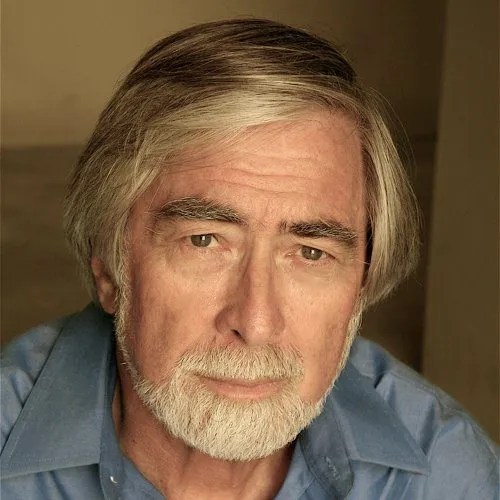
Robert Scheer, publisher of ScheerPost and award-winning journalist and author of a dozen books, has a reputation for strong social and political writing over his nearly 60 years as a journalist. His award-winning journalism has appeared in publications nationwide—he was Vietnam correspondent and editor of Ramparts magazine, national correspondent and columnist for the Los Angeles Times—and his in-depth interviews with Jimmy Carter, Richard Nixon, Ronald Reagan, Bill Clinton, Mikhail Gorbachev and others made headlines. He co-hosted KCRW’s political program Left, Right and Center and now hosts Scheer Intelligence, an independent ScheerPost podcast with people who discuss the day’s most important issues.
Editor’s Note: At a moment when the once vaunted model of responsible journalism is overwhelmingly the play thing of self-serving billionaires and their corporate scribes, alternatives of integrity are desperately needed, and ScheerPost is one of them. Please support our independent journalism by contributing to our online donation platform, Network for Good, or send a check to our new PO Box. We can’t thank you enough, and promise to keep bringing you this kind of vital news.
You can also make a donation to our PayPal or subscribe to our Patreon.

