

Click to subscribe on: Apple / Spotify / Google Play/ Amazon / YouTube / Rumble
The revelations of people like Edward Snowden, Julian Assange and John Kiriakou have allowed the world to know about the sly and insidious turn Western governments took following 9/11. From torture programs to mass surveillance to extrajudicial captures and killings, it has become clear how far these governments have poured away their own values and beliefs.
Despite their best efforts to reveal the truth, whistleblowers, leakers, journalists can only show so much against the backdrop of entire governments. In the years since, hundreds, if not thousands of stories remain to be told about those most affected by these illegal and immoral measures, and Phantom Parrot, a new documentary by director Kate Stonehill, adds one more to the record.
Stonehill and Muhammad Rabbani, the managing director of CAGE—an organization that specializes in supporting those people who have been victims of torture and abuse primarily at the hands of the U.S. government and its allies—join host Robert Scheer on this episode of the Scheer Intelligence podcast. The trio delve into the narrative of the documentary and explore the context behind the imperative to support innocent people ensnared by the faulty U.S. and U.K. national security apparatus.
The main crux of the film focuses on the case of Ali Al-Marri, a Qatari man who was detained, tortured and abused in the U.S. for over 10 years. Al-Marri, as Rabbani describes, is a victim of a massive dragnet program by the U.S. and CIA that saw hundreds of innocent Arab men rounded up in the time after 9/11. “It was just the idea that if we have this person and they are sufficiently pressured, they’re broken down, basically tortured, then at some point they’re going to make an admission. And using that admission, we [the U.S.] will get a result. We’ve caught a terrorist and we can show that our war against terrorism is winning,” Rabbani explained.
Through his work on Al-Marri’s case however, Rabbani found himself in the lion’s den when he was detained upon arriving back in the U.K. He faced police interrogation and demands for his electronics and passwords. It demonstrates that while the War on Terror may formally be over, the security and surveillance apparatus it spawned is here to stay.
You can also make a donation to our PayPal or subscribe to our Patreon.
Credits
Host:
Producer:
Introduction:
Transcript
This transcript was produced by an automated transcription service. Please refer to the audio interview to ensure accuracy.
Robert Scheer Hi, this is Robert Scheer with another edition of Scheer Intelligence, where the intelligence comes from my guests. In this case, they’re in London, certainly a center of intelligence about many things. But about imperialism in the world, [it has] kind of been a world leader and some of the dire consequences and that’s what we’re here to talk about: a fascinating documentary, and I’m not using it lightly, and it’s called “A Phantom Parrot.” And this was something that was revealed, a program of GCHQ, I believe, with the intelligence agency in England. But thanks to Edward Snowden, we learned that this agency has had vast powers to spy along with the NSA, they obviously cooperate. They’re both part of Five Eyes, spying on us and the principal character who’s also with us. So that’s Kate Stonehill, who is the director and Muhammad Rabbani. Do I pronounce that correctly? Rabbani is the principal character because he is actually the well-intentioned human being who is trying to help people who are in trouble.
He’s the managing director of a group called CAGE, which is concerned about helping people who have been the victims of government overreach, as it’s put. But really, we’re talking about torture and everything else. And so we learn from Edward Snowden, who is unfortunately not available except in exile, forced by the United States, but that, in fact, in terms of the use of technology, the U.S. and England have set an international example of intrusion and surveillance and what have you. And so that’s what this movie, Phantom Parrot, reveals. It’s a movie that’s been on a circuit of film shows and so forth, festivals. We’re going to have a trailer of it posted on our site and a website you can go to to learn more about it. But we have this time now. And so why don’t I begin with you, Kate. Why did you make this movie? What’s it about? And so forth. And then we’ll go to your star subject.
Kate Stonehill Sure. So, yes. So Phantom Power is a feature length documentary that follows Rabbani as he is prosecuted under UK terror law for refusing to hand over the passwords to his electronic devices. And so in the process, it unravels a secret U.K. government program called Phantom Parrot, where thousands of people are stopped at the border, asked for their passwords, and then have that data extracted and loaded into a database. And so I met Rabbani through a short film I’d made previously, and that film featured six people who were labeled as nonviolent extremists by the U.K. government. And I was doing some work for Channel Four News, and I kept in touch with one of those individuals and he had a court case against the U.K. government. And I said to him, you know, what’s happening with your court case? And he said, not much, really, but I think you should really meet Rabbani. So we met. And all I knew at the time was that he was facing prison for his decision to not give his passwords. And I thought that that was an extremely shocking situation and I thought that it would be an opportunity to ask questions about our data and who has the right to coerce us into giving it to them.
Scheer Right and in the compelling opening scenes, he gets off a plane. I believe you have your child with you at that point. And the next thing you know and they’re all very polite in England and they tell you just sit there. They say, I can’t do a British accent but it reeks of authority, we’re going to ask you these questions—and then the punch line comes—and if you don’t give us the password to your gadgets, which we’ve seized from you, your phone and so forth, you’re going to be subject to arrest under this draconian legislation and they just presented as the most normal occurrence in the world. Now, of course, we complain about human rights violations—we in the United States, anyway, our government—human rights violations all over the place anywhere in the world. And, in fact, we have a Julian Assange in prison, there for revealing some of our own crimes, the clear crimes of killing civilians and so forth in Iraq and elsewhere.
So I want to get to that, this conceit of the West that somehow we’re on the side of virtue. We’re seeing that now in the Middle East. There’s an excellent documentary, The Gatekeepers, about what the secret domestic agency, Shin Bet, has been doing in the West Bank for years by former directors of it. Nonetheless, the US Congress, or at least the House of Representatives, now said you can’t ask any questions about that because they’re part of the zone of free societies and so forth. So let me ask you, Rabbani, Muhammed Rabbani, how did you get into this and what is your organization? And then I do want to make clear, one of the most compelling things about this, we actually hear from a person who was tortured, who you worked on his human rights thing. So why don’t you introduce actually the lead character?
Muhammad Rabbani Sure. Thank you so much. You’ve noticed that Kate called me Rabbani and although the second name that is actually what I’m known by. But you can feel free to call me Muhammed, that’s totally fine. But a lot of people call me Rabbani, just so listeners are not confused as well. So as you said in your introduction, the film focuses on the aspects of privacy, government surveillance, and also the story of one individual called Ali Al-Marri. He’s a torture survivor. He was held in the US for around 12 or 13 years, during which some of the techniques of sleep deprivation, torture and abuse are used in Guantanamo Bay prison were used on him even though he was a prisoner on U.S. soil. So my connection to the story is essentially he’s one of our clients in my organization.
Our organization is a 20 year old organization that specializes in supporting those people who have been victims of torture and abuse at the hands of primarily the US government and its allies. So in the course of our work, we came across his case and we were asked to investigate an allegation that he was bringing in the case. And that allegation was that he had documentary evidence of at least three names, maybe more, at least three names, named individuals who were involved in his torture. So we obviously were very keen and interested to support him so that there can be accountability for the torture that he faced at the hands of American government representatives or agents. So I went on a trip to Doha in Qatar and with the lawyers of Ali Al-Marri, this individual that I’m referring to, and on my way back, when I landed back in the UK, what transpired was I was stopped at the at the desk, asked a few basic questions, and then I was asked to go in for an interview or an interrogation, rather.
And that then ultimately led to the police officers demanding that I give access to my laptop and my phone because they were determined in getting hold of the data that I may be in possession of maybe the files connected to the Ali Al-Marri case, whatever their intentions, they just were determined to get hold of the my devices. I, of course, refused because I felt that it would be an absolute breach of trust and confidentiality. My duty of care to a torture survivor. The police, I thought, would be reasonable at the beginning. I thought they would understand that I cannot in any way surrender this information without getting the consent of the victim himself.
Scheer Let me just interrupt. The victim at that point was no longer being held, right?
Rabbani Yeah, correct. By this time it was around maybe three months or six months into his release. He had already served his time. And the documentary goes into…
Scheer His attorney, who was very impressive in the film, was…
Rabbani Andy Savage
Scheer What is his name?
Rabbani Andy Savage.
Scheer Yeah. And he was instrumental in getting him released or I couldn’t quite tell.
Rabbani Absolutely. I mean, he played a huge role. Ultimately, the justice system, the way it works with political cases like this, they offer some sort of plea deal. And unless you accept the plea deal, you end up with a 120 year sentence or something like that. So what Ali Al-Marri did was he accepted an admission of guilt, even though he was innocent of that crime and his lawyer tried his best to sort of get his client off without any admission. In the end, as it turns out, he was able to at least come out of prison and then clear his name and clarify that, you know, whatever he admitted to it was because he was coerced. He had no other choice.
Scheer But I want to be clear about this. So the government never really, first of all, never brought him to trial. And after 12, 13 years in which he had been tortured fairly consistently, what did they come up with? What is the guilt or the alleged guilt?
Rabbani Well, firstly, 2 or 3 years of his imprisonment, he was disappeared, which means the government did not acknowledge that they were holding him. It also means that he had no access to lawyers and he had no phone calls. His family didn’t know if he was alive or dead. He was disappeared. And in that period of American history, the US was running a program called the Secret Detention Black Sites Program. Right. So the CIA was running that program. And what they would do is go around the world and just pick off people for interrogation and they just disappear them. They take them to black sites in various countries. I think around 56 countries participated in that program with the CIA. And they would, under torture, be pressured to give up names of other individuals, and then those people would be rounded up and the whole process would continue.
So Ali Al-Marri found himself in this type of situation in the beginning, so 2 or 3 years he was just disappeared. After which he was brought to, there was acknowledgment he was presented in front of some sort of military type court system. And he then stayed in prison for around another 5 or 6 years, without trial. And then he was brought to trial. And as I mentioned, that’s how the judges decided that, you know, you’ve already served like 7 or 8 years, we’re going to sentence you in the total of, I think, 18 years. So he then served his time and we met him after he was released. And I think that was 2015 or something like that.
Scheer And you met him at a time when he was trying to sue for admission or clear his name?
Rabbani Exactly. He was very keen to make sure that, number one, the false allegations against him are cleared and he is acknowledged as an innocent person who was wrongly arrested, unjustly imprisoned, deprived of his due process rights. He was very keen to do that, and also, more importantly, because he was subjected to torture, he believed that he had sufficient evidence to actually pursue these perpetrators in a court of law. And that’s where CAGE gets involved with the story, actually. So we were asked to look at this matter. So we organized UK lawyers and he had some American lawyers, and we began investigating the case, as I mentioned. And it was on that as, I suppose, consequential or fateful trip, that as I gathered his testimony and as I had collected all of the data material that he shared with us, I made that return journey back to the UK and the UK police arrested me.
Scheer You know, your matter of fact tone belies the legal atrocity here, which is here is somebody who disappeared, was kidnapped. No one knows where he is, but he’s tortured, that we don’t call because we call it enhanced interrogation. And these supposedly civilized Western leaders in England and the United States and elsewhere think they have the right to do that. No one, I gather, in connection with this case has ever been brought to trial for torturing the torturers. I think to this day, only John Kiriakou, the former CIA agent who actually did not participate in torture but was involved in capturing people, was supposed to be connected with Al Qaida, he served two years for revealing that fact.
But I think this case is another example where the people are actually doing the torture, there was no accountability for torture or call it enhanced interrogation. So when he tries to get some acknowledgment, some accountability, you’re involved in that process. You’re interviewing him, you’re getting information, you end up having the full weight of the law, at least in England, against you, for the crime of trying to help a former prisoner who claims he was innocent and maltreated. Is that correct?
Rabbani That’s absolutely right.
Scheer And what would they say if they were listening to this say, oh, no, no, it’s not like that at all? Right?
Rabbani Absolutely. They even denied, the police, once I ended up in court, the police were also summoned and they just straight up denied that they had any knowledge of me, the individual, let alone the fact that I was involved in this case. They just denied it. And in the end, the judge pressured them and they had to admit, I think halfway through the day, they had to admit that, yes, they had prior knowledge. It was an intelligence-led stop. They knew who I was. They knew and they were prepared. And they deliberately stopped me in order to ultimately try to get my devices, access to my devices.
Scheer Yeah, because it’s interesting, I’m just going to turn back just briefly to Kate Stonehill, who made this movie. You have wonderful footage of the debate in I guess it’s the House of Commons about these laws. And again, they have this wonderful accent and everybody I guess they’re wearing wigs and things and they look so reasonable and they’re telling you there’s absolutely no dire consequences to anyone from passing a law that says they can stop and grab all your material. The irony in this, by the way, is that the Fourth Amendment to the US Constitution, which prevents warrantless searches, of which this would be, actually, Chief Justice Roberts of the US Supreme Court has declared that that part of the Constitution was in fact the basis for the American Revolution. John Adams had even witnessed that and said that and that this was fundamental because he wanted to prevent agents of the king from barging into people’s house, rummaging around and John Roberts in the U.S. Supreme Court declared no.
And modern technology deserves the same protection, even more so because, because, in the words of Chief Justice Roberts, there’s more information on your phone, then was ever in your domicile. So here you come with a phone in England where they haven’t learned the lesson of the American Revolution, nor have we, by the way, we have gutted the Fourth Amendment. And you are a prime example of, I guess, what the American Revolution was fought about because there’s a challenge to government power used in an unreasonable way. And you’re trying to help a prisoner, and they think they have the right to get that information. And you won’t give them the passwords. Right. And you will then become the culprit. Is this is a fair summary because what I just stated somebody is going to want to know what’s the other side? What’s the other claim?
Rabbani Well, the other claim, I’ll just share it with you. The other claim, the other side argues that unless we have these draconian, very intrusive laws and powers at the borders, terrorists are going to come into our country and blow the place up. That’s the argument. It’s a national security argument. The idea that we must be willing to give up some of these very precious rights and liberties if we want to have a safe and secure country. That’s how they frame…
Scheer I understand every radical government claims, they have national security interests and there are foreign enemies. But what the whole point of the US Constitution was that you couldn’t trust any government, certainly not the English government, but you couldn’t trust your own. Because after all these amendments were put in to restrain the new American government. Right. And what it could do and the basic argument is you can’t… First of all, even as a philosophical legal matter, you couldn’t claim a danger if you didn’t have a specific reason. That’s what a warrantless search was all about. They couldn’t rummaging around in your iPhone or in your domicile. But a fact is there is no evidence that anybody’s come up with that any of these measures, call them enhanced interrogation or call what they should be called, torture, have produced any usable evidence. Was there any in this case?
Rabbani Yeah. I’ll just give you a few very simple stats, at least I can speak about the UK. We’ve actually from CAGE, we’ve published a report that investigates this power. It’s called Schedule 7 of the Terrorism Act. So on average, just giving you round figures, around 50,000 people are stopped under this power each year.
Stonehill I should just say that has gone down.
Rabbani Yeah. I mean, the point being that if you look at the averages over since 20 years, it’s around 50,000. Nowadays, it’s gone down and there’s some sort of technical and…
Stonehill Covid is part of that.
Rabbani What would the police do? They have a sort of a trick that they play, which is they still stop huge numbers of people, but they don’t record the stop. I’m a living example of it. Like, oh, maybe in eight out of ten of my last trips. I’ve been stopped, but I’m never given a notice. I’m never given an acknowledgment that I’ve been stopped and searched and questioned. So what they’ve done is they’ve very cleverly massaged the figures by not recording most of those stops now. Any case, the point being, even if it’s 2000 a year, what they argue is if you look at the numbers who are stopped compared to the numbers of people who are charged for a crime, the percentage you get is 0.03%. That’s the ratio. The numbers of people that are charged for a crime compared to the numbers who stopped, interrogated, searched without any right to remain silent, without any suspicion. So that is extremely revealing. It shows that the power is there, it’s being used, but clearly they’re not going after the criminals. They’re going after innocent people who are just passing through the borders, coming back home. So the statistics actually…
Scheer Aren’t they going after intimidating people like you who are trying to bring some measure of legal protection to a wrongfully accused person who spent 12 to 13 or whatever, 13 years in prison? I mean, come on. We’re talking about a serious crime, grabbing a human being who you have no real evidence against, and you can keep them incognito and imprisoned for 12, 13 years. Somebody comes along like you and you’re part of a group trying to bring some justice to it. And yes, intimidation. Don’t you feel more intimidated by… It’s a very effective documentary because you use modern technology to kind of reconstruct the interrogation room and what it must feel like. And I think, technologically a very clever film. I was very impressed. But when I put myself in your shoes, I would think this is really intimidating and maybe I won’t go interview an ex-prisoner somewhere or maybe I don’t need this. That’s what we’re really talking about here is a chilling effect on the freedom of everyone.
Stonehill Well, I think that’s a really important point. And one thing that I often try and point out is this power has been used, first of all, in targeted way against lots of activists and journalists, but secondly, it was used to stop David Miranda, the partner of Glenn Greenwald, while he was helping his partner, his husband to report on the Snowden leaks. And so one of the reasons we even know that there’s this secret program in operation is because of this document that was leaked by Edward Snowden. But this same law, Schedule 7, was actually used to try and stymie that process. So I think that you go back to that footage of the passage of the law. And for me, it was really interesting to see the concerns that were being raised and then to look at where we are now and what we’ve seemingly accepted as a public and say how far have we come?
Scheer Well, let me ask you a question as a filmmaker, because I saw another film you made, I don’t know if it was set in the Ukraine or where it was, but it had to do with the other government’s surveillance of people, right?
Stonehill It was about fake news. I think you’re talking about Fake News Fairytale.
Scheer It was basically part of the support of the U.S. narrative that we’re besieged by fake news from bad actors somewhere else. But what is the response to this film? Because, I mean, it just seems as if, yes, thanks to Edward Snowden and a few other people like John Kiriakou, we learned about the existence of this program. And so what? We got used to it. We accepted it. In no way tarnishes our sense of virtue that we’re a wonderful, law abiding society. And it in no way denies our right to call, which I think is very legitimate as a journalist or anyone else, to call out any violation of civil liberties anywhere in the world. But the prevailing, what is it? I don’t know. It’s a sort of drug or something in England, in the United States and places like that, what’s loosely described as the West, is you get over it. It’s like you had a bad cold or it was a flu, we found the vaccine. It’s over, we’ll never do it again and so forth.
And yet we only were able to document that this program is there because you hear Edward Snowden and he can’t ever come back. And if we get our hands on him, there are people who call themselves enlightened liberals who actually think he should be, they should throw away the key. And I don’t want to bring it up, but you’re not far there in London from where Julian Assange is in jail. And why is he in prison? The leading newspapers, including The New York Times that ran his stories have said that he was a legitimate publisher and that they printed his material and that it will have a disastrous effects on freedom. But they hardly ever mentioned that they’ve taken this position. But I want to tie it somehow to your experience. Both as a director and as just a person who defends a people who were tortured or tries to get the facts out. How does the polite society that you folks otherwise live in respond to your tales of basically a polite tyranny? What happens at dinner parties?
Stonehill I mean, I think polite tyranny is a really good way of putting it. I’ve reflected on this a lot the last couple of months in the process of trying to release the film and also experiencing people’s reactions to it. I think that the myths that we have about our society, about our politics, are incredibly powerful. I mean, I do think fundamentally it’s a story about power. And I think power reinforces itself. And that is, when I watch the film, that’s what I see happening. I see these political processes that are then sort of, I guess, just reinforcing themselves in a way that is I guess that’s not really answer your question about the polite society. I think a lot about what Gareth said as well, the capacity to be shocked is important, she says that in the film, Rabbani’s lawyer. And I think in many ways we have lost the capacity to be shocked.
Scheer We haven’t lost it, they deliberately set out to prevent any accountability. I mean, that’s the only way I could understand this. First of all, none of the claims that any of them, not that that would justify it morally, but none of the claims that you had a ticking time bomb and you must do these things. None of them have ever been verified. And so this is not unimportant. I mean, for those who think there is a counter argument, they just haven’t come up with it. President Obama couldn’t come up with it. He came up with one example of one of the alleged supposed hijackers who didn’t make it in San Diego, and the guy was being bugged at every turn and he was living at the home of an FBI informant. It was just utter nonsense. And so you don’t even have the fire in the theater argument that usually informs these discussions. We’ve had decades now of dealing with it. And let’s talk about the person that you were visiting before you got your phone grabbed. What do they have against this person? What did they come up with?
Rabbani So Ali Al-Marri, the accusations against him, if you put it into context, his arrest happened in the immediate days after the 9/11 attacks. So in that time, during that period, there were a lot of men of Arab background that were being rounded up in the States. So he had been already living in the United States, he was studying there. He had attended I think college or university or something, he was studying there. So he was sort of one of those men who was just rounded up and then taken through the entire process of interrogation and criminalization. So the accusations varied depending on what year they were made to him. So he was accused of being connected to the 9/11 hijackers, which, you know, false.
He was accused of creating a plot to bomb some university some way if I remember correctly, there were lots of accusations. All of them fell through because they were not based on evidence. It was just the idea that if we have this person and they are sufficiently pressured and they’re broken down, basically tortured, then at some point they’re going to make an admission. And using that admission, we will get a result. We’ve caught a terrorist and we can show that our war against terrorism is winning. So that was their idea. Now, in Ali Al-Marri’s case, he’s an outstanding individual. He’s very formidable, is very resilient. He didn’t buckle, he didn’t admit to anything until right at the end. As I mentioned earlier on, he had to accept that plea deal. So there was nothing basically. To answer to a question, there was nothing, there was no plot, there was no accusation of being involved in any type of action which was going to harm many Americans or any violence at all. All of those were just allegations that were made without any basis.
Scheer Okay. We’re falling into the trap of thinking this is something, not acceptable, but somehow just a screw up. I mean, isn’t it a fact that… These two governments and they’re part of a larger coalition, obviously the Five Eyes, and they feel they have the right to grab any human being anywhere in the world, no matter their nationality or anything, and subject them to, at the very least, hold them for 12 years or whatever without, for a large part without anybody even knowing where they are. And then when you say sort of torture, what was done to him by this U.S. government, British government?
Rabbani The case is covered in the documentary. I mean, some of the things that he had to go through, his family had to, he was made to believe that his family were also captured. And they made lots of insinuations and threats that if you don’t comply, if you don’t admit, we will do this to your wife, we will do this to your children. He was made to believe at some points that they had already killed some of his family members. So a lot of it was psychological. But in addition to that, there was one major incident that’s related in the film where he was physically struck down. He was beaten. And then he was not answering the questions that they were wanting him to answer. So they forcibly put a sock in his mouth to the point of suffocation. So there was physical abuse, there was psychological abuse. There was also sleep deprivation, which is a very powerful method of torture. Some of the clips from his cell are actually featured in the documentary that show him just stuck in that small cell. And to some extent, of course, it would affect someone’s mental health and wellbeing. So according to his lawyers, they say that he reached points where he was almost suicidal. So since then, he’s come out of that experience, he’s healed.
I want to quickly just comment on one thing that Kate mentioned about how power, well, the film does, I mean, Ali’s story is a very powerful emotional story of a human being and what happens when there’s unrestricted, arbitrary power. So if the state is granted more and more arbitrary power, it will inevitably abuse it and it takes its consent and legitimacy from us, the people, those who the state is meant to represent. What we’ve got here is a situation where the growth of that power is being accelerated because of technology. And that simply is how the state uses surveillance, accesses the technology at scale, uses that technology to gain more and more power in the relationship of state versus citizen. To the point where instead of the state being accountable to citizens, you’ve got the opposite situation going on, where the ordinary people, they don’t have access to surveil or gain information about public officials. But public officials and institutions and bodies have amassed huge powers where they can collect information on everybody. And that’s what Edward Snowden showed us when he actually revealed to the world how the American government, at least, is carrying out mass surveillance.
Forget about targeted surveillance on suspects or those who may be involved in criminal activity. You’re talking about once they got the powers, they’ve now deployed against ordinary people en masse. So that’s, I think, another feature in the film that draws that out and explains that. What type of society are we heading into where powerful entities, whether they’re states or corporations, have got all of this power? Who’s going to put a check on that? How do we make sure that they’re actually restrained? What mechanisms are there?
Scheer Well, that was the whole point. Maybe just be a positive point on which to end this. And I wish you luck pursuing this and that when the film comes out, maybe we’ll do it this again and when it’s available. But people will go to the website, we’ll post that. I got to watch your film, so I hope we get to see it in theaters soon. I found it really powerful for the very reason you just mentioned. You don’t have to, yes, they do end up beating people and slamming their head into the wall and doing all sorts of terrible, intimidating things. But the fact of the matter is, it can all be done on the quiet and drive people crazy, freak them out. And it’s very interesting. You bring up the technological aspect that we can get because that was the issue here. Will they get you a password, period. Now, I’m amazed that they even needed your password. They probably have means to crack all these things anyway, maybe they were just being overkill. But the point made and Chief Justice Roberts, who a lot of my liberal friends don’t like and they don’t like the Republican appointees, he wasn’t a Trump appointee but they know like any of them on the court.
But he did speaking for the court and with full support of the court said very clearly that technology does not trump the constitutional protections. And he says very clearly, the American Revolution, we all talk about patriotism and how wonderful, we forget that we rebelled against a power that we considered at the time totalitarian and is stolen power. And he says and he’s not alone. It’s been said over the years by constitutional scholars that this Fourth Amendment protection against arbitrary intrusion by any policing power with their general writ persistence or without specific warrants is a fundamental, fundamental denial of freedom. The fundamental… If they can rummage about, that’s what they wanted to do, they wanted to rummage about in your cell phone. He specifically takes the cell phone and Justice Roberts says there’s more information on cell phones than was ever in anyone’s domicile. And the American Revolution was fought over that principle more than any other.
And now we have this amazing thing. Somebody arrested in America, trying to go to school in America, ends up talking to somebody, after he’s out, about his case and whether he’s got a case. And in England, once again, they’re doing the very thing that we were not supposed to be able to do. I think that’s a good point on which to end. I wish you luck in getting this movie to a wider audience. Meanwhile, people should check out the trailer and pursue the case. And you have a website, right? That you have a lot of information, do you want to tell us how we access it?
Stonehill Yes. If you go to http://www.phantomparrot.com, you can put your name to sign up for our mailing list and we will let you know when the film comes widely available to watch.
Scheer And Phantom Parrot is this wonderful program that Edward Snowden revealed. So, Snowden, who I think by any reasonable standards should be considered a great hero, nonetheless was forced into exile in Russia, wasn’t his choice. They took away his papers. And again, you got Julian Assange sitting there pretty close to where you folks are, trying to tell us something about how power works. The whole point of the democratic experiment, even done by these white men in wigs that gave us our Constitution was to hold power accountable. I applaud your efforts as a filmmaker, as a civil liberties advocate to hold power accountable. Sadly enough, I say lots of luck, it seems like a rigged game. But that’s it for this edition of Scheer Intelligence. I want to thank Laura Kondourajian and Christopher Ho at KCRW, the wonderful NPR station in Santa Monica for posting shows. Joshua Scheer, our executive editor. Diego Ramos, who writes the intro. Max Jones, who does the video and the J.K.W Foundation in memory of a fiercely independent writer, Jean Stein, for helping to fund these shows. See you next week with another edition of Scheer Intelligence.
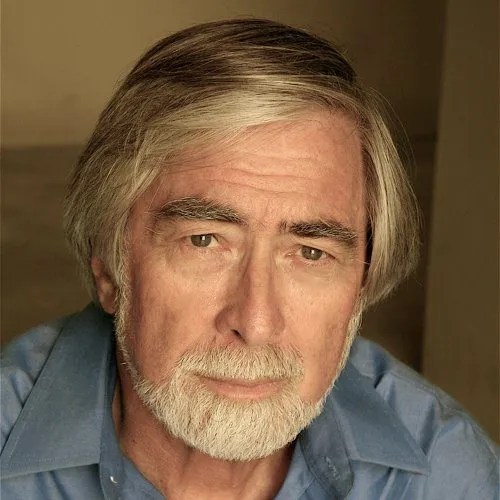
Robert Scheer
Robert Scheer, publisher of ScheerPost and award-winning journalist and author of a dozen books, has a reputation for strong social and political writing over his nearly 60 years as a journalist. His award-winning journalism has appeared in publications nationwide—he was Vietnam correspondent and editor of Ramparts magazine, national correspondent and columnist for the Los Angeles Times—and his in-depth interviews with Jimmy Carter, Richard Nixon, Ronald Reagan, Bill Clinton, Mikhail Gorbachev and others made headlines. He co-hosted KCRW’s political program Left, Right and Center and now hosts Scheer Intelligence, an independent ScheerPost podcast with people who discuss the day’s most important issues.
