

Click to subscribe on: Apple / Spotify / Google Play/ Amazon / YouTube / Rumble
The 1960s represented a pivotal time in American history, one that embodied vast change and influence in shaping what the country has become. From the Civil Rights movement to the Vietnam War to the moon landing, society was in a period of steadfast innovation, self reflection and self determination. The specter of death, however, could not escape the memory of the time, including the deaths of the millions of civilians and soldiers in Southeast Asia and the thousands of victims of racial violence. The assassinations of Martin Luther King Jr., John F. Kennedy, Malcolm X and Robert Kennedy delivered a resounding blow to the trajectory of these movements and ultimately, the direction of the United States.
Joining host Robert Scheer on this episode of the Scheer Intelligence podcast, filmmakers John Kirby and Libby Handros discuss their upcoming documentary series “Four Died Trying.” The series focuses on the deaths of these four iconic leaders in American history and the endlessly enigmatic stories that surround their assassinations.
“We think that each of these guys were making moves that challenged the very heart of the power structure in the United States and around the world,” Kirby said. Scheer, Kirby and Handros dive into some of the history surrounding each of the figures and how they were becoming greater threats to U.S. economic, military and domestic power by the day, a circumstance that the Kirby and Handros film theorizes is the main reason for their deaths.
Kirby and Handros highlight the abundance of interviews featured throughout the series, providing crucial context and previously untold stories from people closely related to the four figures. Among the names mentioned are Robert F. Kennedy Jr., Ilyasah Shabazz (Malcolm X’s daughter), American trade union activist Paul Schrade and over 100 others.
You can also make a donation to our PayPal or subscribe to our Patreon.
Credits
Host:
Producer:
Introduction:
Transcript
This transcript was produced by an automated transcription service. Please refer to the audio interview to ensure accuracy.
Robert Scheer Hi, this is Robert Scheer with another edition of Scheer Intelligence, where the intelligence comes from my guests. In this case it’s Linda Handros and John Kirby. And these people have vast experience making documentaries…, But I want to cut to the chase. They made a movie, or the beginning of a movie, of a whole series. I watched the prologue. I bought it for, I don’t know, nine bucks or five bucks on Apple TV, but you can get it on other sites now, I’m sure they’ll promote it. But the reason I wanted to do a podcast, it has a truly provocative thesis, and if we could initiate a discussion about American history in classrooms and the media and so forth, I think it would have an incredibly positive effect because our history was tampered with. We can argue about how it was tampered, but we’re talking about a specific period of the 1960s, which some people would describe as turbulent, some people didn’t welcome. But there’s no question the major issues confronting American society of race, gender, imperial power, militarism, violence, income inequality, all of those issues were on full display. And the movie deals with the assassination of four principal national actors.
One could argue they were the four most important in certain respects, with regard to these issues that I just discussed, beginning with the assassination in 1963 of John Kennedy, in ’65 of Malcolm X, who had broadened his appeal from the Prophet Muhammad and was now talking about peace and war and whites and blacks getting together. Martin Luther King, April 4th, 1968, and Bobby Kennedy, I believe it was June 5th. He died on June 6th, but he was shot on June 5th of ’68. So here you have a former president of the United States who had already shown his anger with the intelligence agencies. He threatened to, according to some accounts, break the CIA into a thousand pieces because of what had gone wrong with the Bay of Pigs. He’d also been through the near total world ending disaster of the Cuban Missile Crisis, and he was killed. And then, as I say, Malcolm X, Martin Luther King, who had shifted the focus of the civil rights movement to embrace a concern about US militarism and the Vietnam War. And Bobby Kennedy, who had just won the Democratic primary in California and in South Dakota, and who was emerging as the leading candidate to challenge Lyndon Johnson, who ended up not running again, and Hubert Humphrey ran. And so there’s no question these four assassinations changed America fundamentally. The question is, are they linked? And does this have anything to do with the larger forces in America that would destroy democracy in this fashion? So I will leave it up to the two of you to tell us about the scope of this project. And the first, what is it, 55 minutes one can obtain? Hello?
John Kirby Yeah. Great. Thank you so much for that introduction, Bob. Yeah, the project is Four Died Trying, it is a series. The prologue is now out. It’s out on Apple TV, Amazon, YouTube, Vimeo, Google Play and our distributor’s website Journeyman TV. And it does consider the four major assassinations of the 1960s, principally to start with what each of these four leaders was doing in the last years of their lives, which may have in fact stirred great powers against them. And the position we take as we look at these things and you’ve already outlined some of the things that these guys were doing. And I note that your birthday is April 4th, well I don’t know what year, but…
Scheer 1936, I’m not shy about it.
Kirby Well, there you go.
Scheer By the way, as long as you’re bringing up the personal. I actually was the last person to interview Bobby Kennedy at the Ambassador Hotel. So one of your assassinations is a subject I know well, I was in the room with him, and then when he went downstairs, he said, Wait here, I’ll come back and we’ll finish the interview. And I was went downstairs and was there when Bobby was shot.
Kirby I mean, we have to interview you for that.
Scheer And I just want to I just want to say, I mean, I was very familiar with that campaign. I covered it a lot and had quite a bit of contact.
Kirby That’s amazing. And of course, in your role at Ramparts, I need to talk to you about that. But in any event, we think that these assassinations are definitely linked. We think that each of these guys, as you outlined, was making moves that challenged the very heart of the power structure in the United States and around the world. And we regard these murders as a false mystery, to use the great Kennedy researcher, Vince Salandria’s phrase, each of these murders is self-evidently an act of state. It is self-evidently a state crime against democracy. And that is the kind of guiding principle of the entire series as we show you. I think as we show you what each of these guys were doing in that light, it becomes very clear that when you talk about someone like John Kennedy, who’s anti-colonial to his bones, probably from his Irish heritage, he is making speeches against the French in Algeria on the Senate floor in 1957. He becomes the unofficial ambassador to Africa, these are issues we’re going to cover. He is for African independence, this is one of the reasons why the CIA and others killed Patrice Lumumba before Kennedy took office. There’s a famous Jack Lowe photograph of Kennedy receiving the news, which is is heartbreaking. It goes on through, as you mentioned, the Bay of Pigs when he was given all sorts of assurances about the nature of that expedition, which turned out to be complete lies. He refuses to invade Cuba twice. He goes up against the head of the steel trust. He’s going after the oil depletion allowance. He’s talking about withdrawing a thousand men from Vietnam and the rest by 1965. He is making rapprochement with Khrushchev. In his famous American University speech, he basically declares unilateral cessation of atmospheric nuclear testing.
He was trying to end the Cold War and literally raise the middle class, not only in this country, but around the world with programs like the Alliance for Progress and the Peace Corps. He upset every sector of the American establishment. The story we’ve been told about Kennedy, it’s now it’s just about as womanizing or this or that he was a cold warrior. These are all falsehoods. He was absolutely an anti-communist, but he was anti-totalitarian. And he didn’t believe in Soviet colonialism. He didn’t believe in American colonialism. And then, as you mentioned, Malcolm X had changed his whole perspective after leaving the Nation of Islam. And he was making speeches at places like the Oxford Union and he was talking about bringing charges against the United States in the U.N. World Court for human rights violations in the same way that the Soviets were being indicted for their treatment of the Jews and the same way that South Africa was being indicted for its treatment of its Black citizens. So that’s what he was doing. He was moving closer to King, they had mutual contacts that were bringing the two men together. So this was and it would have been a major embarrassment as we outline in the prologue to the United States at this time in the Cold War. And he is killed not by members of the Nation of Islam, he’s killed by police informants and it connects all the way to the top of the U.S. government, which again, we will show as the series goes on. Martin Luther King, April 4th, 1967, gives his speech at Riverside Church, where he comes out against the Vietnam War, the Beyond Vietnam speech, which is a masterpiece of a speech, talking about how the giant triplets of the extreme materialism, militarism and racism have combined in this country to make it the greatest purveyor of violence on the Earth. They couldn’t handle having someone like him coming out against the war. He was also about to initiate an occupation, a multiracial occupation of Washington, D.C., as I’m sure you know and not leave until Congress did something about poverty.
They were deeply concerned about such an event. The powers that be were not pleased with that prospect. And he was taken out before that event could happen with him as leader. And then, Bobby, as you noted, was, as you know, probably better than I, was on his way, we think, to the presidency. He was running as a peace candidate, withdrawing from Vietnam. And he was speaking privately and not so privately about the possibility of reopening the case into his brother’s killing. So that’s what the the series is about. And we go through each of these and in turn and what these guys were doing. And then it ends with their killing in season one, there’ll be multiple chapters ending with their killing. And then we, in season two, we go into the researchers over the years, it becomes a kind of a cultural history of these killings, what it’s meant for the country, what it’s meant for the world. It basically changed the whole direction of the world to John Kennedy represented an interruption in the kind of U.S. imperial program. And we could have been in a much different place now if that interruption had continued. So it’s a very sad story, but one also filled with hope and we can take the lesson from what these guys were doing and the courage from them to do the same thing.
Scheer Okay. So, Libby, tell me more about your the making of this film and your role in it.
Libby Handros Well, we have 120 plus interviews, and so it has been a huge tour de force to get everybody. It’s not one of these projects where you send out the interview request and you immediately get back. Oh, yes, when would you like to come? You have to chase a lot of these people around for sometimes a year and two years to get the interview. So it’s been quite a feat to get everybody in, to get it lined up. But once we get at them, it’s very, very rewarding. And we have a lot of last interviews. We’ve got the last interview with Mort Sahl. We’ve got the last interview with Dick Gregory. We have the last interview. Speaking of the assassination of Bobby Kennedy. We have the last interview with Sandy Serrano, who famously saw the woman in the polka-dotted dress. We also have the last interview with Paul Schrade, who spent the last years of his life trying to get Sirhan Sirhan paroled.
Scheer So it’s you should mention Paul Schrade was the United Auto Workers leader who came out against the war. He was the leader on the West Coast and he was standing with Bobby at the podium and was also shot, but not fatally. He recovered and he died recently, yes.
Handros Yes and so he worked very tirelessly the last years of his life to try and get parole for Sirhan, because, of course, if he was shot and Bobby were shot, given where he was standing, the same person could not have shot him and shot Bobby. So that made it very obvious, given the directions, they were shot from. So it’s been it’s been quite a challenge, but a quite a rewarding challenge. We’ve been at it since 2016. And just to add very briefly to shorthand it in a kind of way, these men were all promoting peace. And it turns out that the military establishment, the industrial establishment, the deep state, whatever you want to call it, they don’t like peace. So promoting peace is not good for one’s longevity.
Scheer Well, okay, that raises the big question here, because you referred before, or John did, to the “they,” they don’t like this. And I think John worked on Lewis Latham’s thing on the ruling class or you both did? Lewis Latham is somebody I have a lot of respect for his work. And he had the courage to say America actually has a ruling class. Of course the great myth of American society is we’ve never had a ruling class. We’ve just had these independent actors. They happen to be wealthier white males, a large number of slave owners originally and so forth. But nonetheless it was the idea that somehow the popular mass had created this institution and the revolution that brought it about and so forth. So why don’t we really begin with the elephant in the room of your documentary? It’s pretty easy to see that these four assassinations happening within a decade of four people who were very profound actors, important actors, and one being the president, the other former attorney general, ex-Senator Bobby Kennedy, and of course, the two major civil rights leaders at a time of great turbulence. And yes, they were all in agreement of sounding the alarm about war and nuclear war, the war in Vietnam and so forth. There’s been a very good movie about the FBI, MLK/FBI documentary about the role of the FBI in the assassination of Martin Luther King. That’s now part of our acknowledged history. And so what I want to get at is that your movie, the one I saw, the prologue, assumes there’s a “they,” but let’s get it out. What do you mean by the “they.”
Kirby Okay. So “they,” this is the $6 million question, of course. But I think considered generally, it’s what a guy named Badget called the double government, that kind of permanent, unelected bureaucracy in the agencies. The top levels of the Pentagon, the CIA, State Department, etc. And it’s also the kind of interlocking corporate boards of the major banks and other large scale industrial businesses, all of which have that kind of revolving door at the lower levels, from the regulatory agencies to the corporate boardrooms. So it’s a loose confederation, if you will, at times. At other times, I would say when it matters, like when you need to start a war or agree on an assassination, then I’d say there’s very tightly knit control. Like, I think that everybody who really kind of mattered in the media, in the government, the elected government and the unelected government within the agencies, even people who had been fired, who remained kind of the unofficial heads. Like Allen Dulles remained, I believe, the unofficial head of the CIA. I think Lyndon Johnson, for instance, was involved in all of these assassinations. And we can show that certainly in the case of John Kennedy. I don’t necessarily… That doesn’t mean I think he was the mastermind, but there was tremendous time pressure for him because Bobby Kennedy was going after him. And so many of his scandals, which I’m sure you recall, the Billie Sol Estes agricultural scandal, the Bobby Baker weapons contract kickback scandal. I mean, if you look at Lyndon Johnson, he’s essentially the embodiment of the military industrial complex.
So their clients, they’re above him, right? Whether they’re Rockefellers or people involved in finance. But Johnson is kind of steering the ship along with people like Allen Dulles, we feel, of the establishment writ large. And essentially the establishment writ large must have come to an agreement amongst themselves. And none of them did anything about any of these killings. It wasn’t like there was a split or it was a rogue faction somewhere lower down the chain. The top levels of the establishment agreed that John Kennedy had to be executed. He had to die and he had to die quickly because Johnson was about to go to jail. He was literally about to be completely dishonored. There was a hearing happening on November 22nd, 1963, in which a guy named Reynolds who had been part of these kickback schemes was testifying to the fact that he saw a suitcase filled with $100,000 that had been delivered to Johnson for having rerouted the technical fighter contract from Boeing to General Dynamics, a Texas company. So this is the kind of thing that happens. As we know, Eisenhower almost called the military industrial complex, the military industrial congressional complex because of the nature of these kinds of kickback schemes and getting factories built for your constituents, etc. So this has been the driving engine of the American economy in the postwar years, and new wars have been generated since that time in order to keep that kind of core engine of American power and wealth for some moving. Funny enough, Kennedy did more for all of these people in many ways. He increased defense spending, but he wanted it to be about non-nuclear spending. And he also was about let’s get involved in space, let’s do other kinds of interesting things. We’ll call it the New Frontier. We’re going to figure out new ways of being human on the Earth without continually resorting to war. He didn’t want to come from a position of weakness, but he was about reorganizing the economy and he figured out a way to raise the minimum wage without increasing inflation, for instance. So he created the boom period of the sixties that outlasted him. And this could have been great for everybody. But it seems like the ruling class, as we have Louis Lapham say, he pulls a quote in our film The American Ruling Class, he pulls a quote from Voltaire which is that the comfort of the rich depends upon an abundance of the poor.
So there’s a question of not just you’d think, hey, why not just have everyone be, why not have a middle class society? Well, it turns out then you have problems like your generation protesting the Vietnam War. your generation and younger generations protesting war. And suddenly they say, okay, well, I guess we can’t do the draft anymore because we’ve got these uppity kids from suburbia who don’t want to go off and fight just brainless, mindlessly in Southeast Asia for what? No one’s sure. So now we get rid of the draft and we depress the economy and we create economic conscription. And that was basically Kissinger and others’ answer. So in any case, the point is that these guys, they were trying to reinvent the whole American program. And the “they,” the establishment, was not having that. And it’s very clear in everything that happened that that’s the case.
Scheer And so your your film, this was the prologue that I got to see or people can watch now. How are you going to prove this?
Kirby Well, it’s actually very simple because, again, Vince Salandria provides the guide. He was a humble sort of Italian anarchist who was the advisor to Mark Lane and to Jim Garrison and the people who took a more prominent role in these three investigations. But as he points out, all you have to do, this has been a false mystery from the beginning. The evidence for all of this has been there right from the start. All you have to do is ask yourself a couple of simple questions. He calls it the honest government test. So you can say in the case of the Kennedy assassination, would an honest government take Governor Connally, who was shot along with Kennedy, would they take his clothes to the dry cleaners immediately, even though they represent evidence. Would they take the Ford, the limousine, and send it back to Ford to have all the bullet holes knocked out and the dents knocked out from where the ambush, there was a fuselage of bullets that hit the limousine. There’s cracked windshields and bullet fragments everywhere.
Scheer You know what, I’m sorry. Let me interrupt you, because I understand. I watched Oliver Stone’s movie. I’ve read a lot of books and so have many people. We know all the contradictions you mentioned that portrayed who was shot along with Bobby Kennedy. And as I say, I was there that night. I was there when the woman in the polka-dot dress. But there was also even someone else. I was with Jack Newfield, a well-known journalist who was close to Bobby, and we actually ran after some guy that panicked and ran out and so forth. I understand all the contradictions and confusions, and I think, by the way, polling would show that most Americans know there is something really, profoundly questionable about all four assassinations. As I said, we’ve had a very strong movie on MLK, Martin Luther King’s assassination and the role of the FBI that it sent him threatening, false letter trying to get him to commit suicide.
And so there’s a lot of documentation that these are four major assassinations that fundamentally altered American history. No question about that. And, yes, served the agenda of people who want a permanent militarized economy and an imperial presence in the world. That there’s no doubt about. But where the argument always is, how is this counter power cohere? How does it stay together? And the reason I wanted to look at your work and so forth is because Lewis Latham that you work with. He’s somebody who actually had a lot of, he grew up in that background. He was familiar with it and he was the one who dared to suggest that it’s a complex, not easily discernible milieu of power that applies in a way to America that might not as easily apply to obviously authoritarian regimes or theocratic regimes. So why don’t we take some time to talk about that?
Kirby Well, okay. I mean, you were asking, how would we prove it? I think there’s a link to your current question and what I was going to go on to say which. So, for instance leaving aside some of the minute details, another one of Vince’s list was as soon as Lee Harvey Oswald was captured, a message was sent to the cabinet plane flying over the Pacific and to the new Air Force One or to Air Force One an hour after he had been captured saying, we got the guy, there is no conspiracy, that’s it. Now, that not only shows you that the government writ large, that shows you something about the nature of the conspiracy. But it also shows you something about the nature of power. It shows you that there is… whoever has access… this wasn’t just some rogue splinter group or Lyndon Johnson by himself deciding to do something. This must have been the highest levels of the Pentagon, the highest levels of the permanent bureaucracy. And its friends in the establishment decided to kill Kennedy and then tell everybody it was this guy. And they decided that, they had already decided that and they told everybody an hour afterwards.
And so you see even Salandria saying what was the message? The message that they were sending by killing him in public the way they did and by saying what they said to those cabinet officers and to the people who had just experienced that ambush is we don’t care what you saw, heard, smelled, felt or saw. We’re going to tell you what to say. So that is power. And that shows you something about where the power resides and what the nature of that power is. That hideous strength is what C.S. Lewis called it. It is a kind of unstoppable power. And then they kill the suspect. Would an honest government allow the prime suspect to be killed in police custody on national television? That tells you something else about the nature of power. They wanted that message out there for everybody to see. So when you’re asking who are “they”? Well, “they” are the people that can tell, that can make the Dallas police completely give up any hint of running real security. They have the ultimate power. And by the way, you can trace that in this case in particular through Lyndon Johnson and his friends. But they took care of one aspect and Allen Dulles and others took care of people like Lee Harvey Oswald. He is a phony CIA defector, a guy who went to Russia and came back, no problem, with a Russian bride. That tells you something about who did this and the nature of power. So in any case, I mean, you see what I’m saying? There’s much more to the intel… I think most people who study power structures like Dom Hoff and others and lap them they are less likely to look at the intelligence services. So I would argue that whatever constellation of wealthy people and other government sort of people are behind things, the intelligence services have an organizing role to play. They steer the ship. They are the brains of the establishment. And they decide to do things like these assassinations or like these provocations that get us into war.
Scheer Okay. So just to get, you know, to establish the nature of your project as a work of journalism. Who are the key people you’ve interviewed that confirm for you this analysis? And just give us the most compelling ones, I know you’ve got Bobby Kennedy’s son in there quite prominently. What are the others?
Handros Indeed, Bobby Junior provides a very good interview about what both his father and his uncle were doing and the nature of the people that they managed to anger, excuse me, among the other people that we interview who gave very strong interviews, Isaac Ferris, Martin Luther King’s nephew, who talks about the fact that if they could kill a president, they can certainly kill a preacher. And he talks about the fact that one of the things that the power elite, the deep state don’t like, they don’t like it when disparate groups of people are brought together. So Martin Luther King was bringing together poor whites and poor blacks for the Poor People’s Campaign. It wasn’t just going to be a civil rights thing for Blacks in America, it was going to be for everybody in America. And that was very, very frightening to the powers that be. In the case of Jones, we also have Clarence Jones, Martin Luther King’s personal attorney.
We have Adam Walinsky, who was Bobby Kennedy’s speechwriter, who talks about the evolution, for example, of the very famous GDP speech that Bobby gave where he can he talks about the wealth of a nation not being how much money its debt or its gross national product is, but on how its taking care of its people. Another wonderful interview that we have is with, there’s 120 of them. So it takes a minute to think about them going down the list. We, of course, have Ilyasah Shabazz, Malcolm X’s daughter, and we have a lot of the people who are involved in the recent exoneration of the people who were originally charged with the assassination of Malcolm X. We have the man who was running a posse, which was the New York City Police Department’s intelligence unit, it’s his last interview. Of course, the interviews with Mort Sahl and Dick Gregory. So on and on it goes. I mean, we’ve got a marvelous cast, Vince Salandria, who John was talking about, who comes up with the notion of false mystery and asks the question, what would an honest government do?
Kirby I mean, Mort Sahl’s an interesting one to focus on for a second, because he was not only probably the most famous comedian of his moment and the first real political comedian, he was a joke writer for the Kennedy campaign, was friends with the whole Kennedy scene. And he really becomes the only inner circle Kennedy friend who makes a stink about what happened and refuses to simply accept what happened. So as part of his not accepting it, he joins Jim Garrison’s, the district attorney of New Orleans, investigation, becomes a deputized investigator. And some of what he saw and he relates to us is clear evidence of the involvement of the most powerful forces in our society. When you again, looking at the details of how they don’t interview witnesses, of how they don’t secure crime scenes, how they don’t… In all of these cases, you can see total negligence about actually looking to see what happened. And why is that? I mean, it’s sending a clear signal. We know who did it, we did it. And we don’t care if you know it. It’s kind of obvious that they did it. As soon as you spend a couple hours looking at it and it sends a message to anyone who cares about these issues, if you want to end up like those guys, you can keep doing what you’re doing.
Scheer The film is called, I wrote it down again.
Kirby Four Died Trying.
Scheer So let’s be clear about this. They died trying to challenge what you argue is the essential driver of American policy, which is this empire building, national power and national security state and so forth. And what is very clear from your prologue and from the evidence is that these four events, these four assassinations, again, the very popular president John F. Kennedy, the two major leaders of the most profound social change movement in the country, the civil rights movement, which had was having tremendous impact and also dealing with questions of poverty. And then finally, Bobby Kennedy, the president’s brother, who was running what started out, he was senator then from New York, but running as an outsider campaign against Lyndon Johnson, that suddenly was very successful. He carried the important California delegation and so forth. So this was a big deal and he was shot at that the celebration of his victory in the Ambassador Hotel in California. So there’s no question that this is what changed American history and that these are four people who tried very dramatically, very clearly, to change American history in a common way. Arguing against empire, arguing against the wars, raising the questions of the divisiveness, economic failings and so forth in our society that were going unaddressed by this drive for war.
So the coherence of your film project is there. The challenge in the series moving forward, this is why I would watch it after watching the prologue. I want to see what you come up with. And what these people say about the whodunit. It’s clearly a very legitimate whodunit to explore, there’s no doubt about it. It’s very clear that in fact, as I said before, I think polling would indicate most Americans don’t accept the narrative we are about to be celebrating, well next month coming up, in late January and into February we’ll discuss Black History Month. But we’ll also have the honoring of Martin Luther King and so forth. And here is the most important agent of change in modern American history, Martin Luther King, or a symbol of the most important movement. And there’s now, as I say, a very good documentary, MLK/FBI that just lays it out there that our most important intelligence agency, the FBI, was interested in the elimination of Martin Luther King, whether by character assassination.
Kirby I don’t think that it does that as much as you think it does. But that’s another story, we have congressmen who were part of the House Select Committee, and we have people who’ve never spoken before about this, to answer to your question, from Congressman Fauntroy to people on the Kennedy and King and other staffs, people who have kept quiet for years and have not wanted to speak, the sons of people like John Kenneth Galbraith. People who understand and know and who, again, there’s a kind of a quietness. There’s kind of a sense that it’s not healthy for your career, not necessarily your life, but that you’re not going to win friends and influence people by talking about these assassinations. But we managed to get these people perhaps because they’re speaking towards the end of their lives to speak honestly about their feelings about who did it. So you talk about the Reverend Lawson, who got Dr. King to Memphis to support the garbage workers strike, and he talked about it as a coup. All four of these people dying as a coup. I mean, the mystery is not who did it. The mystery is in us. Why haven’t we done anything about it for all this time? The mystery is, what are we going to do now? The mystery is, do we have the strength to look at it? That’s always been the issue. It’s very obvious who killed these people, you could kid yourself about it.
You could try to say, oh, there’s some doubt. My father, who was in the Kennedy administration, it was in the Bobby Kennedy Civil Rights Division and discovered some things about how they were denying the vote to Blacks and everything as an 18 year old intern. But he when you would ask him who killed John Kennedy, he’d say three words, Lee Harvey Oswald. And he saw what we are showing people now, the prologue, and he his mind was changed. So we’re hopeful that and Adam Wolinsky called what he saw of our prologue a national document. So we’re hopeful that this is able, just the prologue itself is able to get people to reexamine their understanding of the sixties. A lot of people have been living in denial about what happened and they’ve not been putting at the center of their experience and what happened to the country, these murders. These murders were pivotal to these social justice causes. They absolutely had a major derailing effect over policy. As you mentioned, one of the people killed was a president and one was about to be president. So this kind of thing has totally derailed the project of human emancipation, if you will. And we have to acknowledge it and do something about it. That’s the mystery. Will we do something about it?
Scheer Yeah, but what you’re talking about, I mean, you are going ahead with the whole series on this, right?
Handros Of course, yes. They’re going to be probably 20 or more episodes by the time we’re done.
Scheer Okay. So I appreciate your being willing to discuss the prologue. And then the proof, as I say, will be in the pudding. But let me say, there’s no question, I want to be clear on this. There’s no question but that these four assassinations have to be examined ruthlessly, completely continuously if you want to understand what happened to American history. And I want to offer a personal conclusion on this, I wasn’t, I guess, name dropping before. I mean, I can tell you, as somebody who covered Bobby Kennedy and got to know him quite well, didn’t always agree with him and I certainly was very close to portrayed and others, and I know a number of the people we’re talking about. There is no question that Bobby Kennedy was running for president because he challenged the Democratic Party and the Republican Party establishment. This was a very bold thing for him to do. We had a sitting Democratic president, Lyndon Johnson, and Bobby Kennedy, who came up through a whole power structure and was a good actor in it. And sometimes he acted quite conservatively and sometimes didn’t respect civil liberties, like his support of McCarthy at a key point and there’s a whole complex history. But certainly at that point in his life, Bobby Kennedy was profoundly disturbed about the direction America was taking.
And he saw the connection that also bothered Martin Luther King, who was killed just months before, that you could not solve America’s domestic problems of civil rights and enduring poverty and so forth without challenging the military industrial complex. He was very clear on that. And he was also very clear that that that his brother, the president, had seen that he had learned the lessons from his presidency. And he was clearly at odds with the CIA and the people who wanted to manipulate American foreign policy in a much more warlike direction. So I’m looking forward to your subsequent chapters and to see what you folks have come up with. And again, there’s no question that this deserves the most serious continuing examination as a topic. Why did these four people who tried to take us to a saner course of behavior as a nation and we’re at a time now, my goodness, what are we doing in the world and what is our role in this world and how much of how frightening it is. And yes, and how inattentive we’ve been to our domestic problems. So I wish you luck with this venture and when we see more chapters, maybe I can have you back to talk about it, okay?
Kirby Appreciate that. Well, chapter one, just briefly, is about what you just mentioned, the whole McCarthy period and the Red Scare. And we, of course, we talk about Bobby’s involvement, but we realized young people don’t even know what the Red Scare was, what the McCarthy period was like. And so we immerse people in that in a 38 minute shorter episode to give you the background so you understand what it meant for Kennedy to call for peace with Russia eventually. You need to understand, just like today, though, from a different quarter, the Russians are the boogeyman. And if you, in those days, were left asking for civil rights or anything else, you were a tool of Russia. Now it’s been flipped around. But the point is, we are in a very similar period to that red scare period in the past three years with all kinds of things like the threat of identity cards and all kinds of things. So anyway, hopefully you will hear the rhymes with today in our in our chapter one episode coming out in January on the Red Scare.
Scheer Okay. And so how did they get it again, I’ve taken your time. How do people get to see what I saw.
Kirby The prologue is available on Amazon. It’s available on Apple TV.
Scheer Give the name again.
Kirby The name of the the series is “Four Died Trying.” The prologue episode is available now on Amazon, Apple, Vimeo, YouTube, Google Play and journeyman pictures dot com.
Handros And you can go to our website fourdiedtrying dot com and hit the “get it now” button and it will take you to links to all of these.
Kirby And you should sign up to know when the next episodes are going to drop, we’re going to make sure each one is carefully crafted and beautiful.
Scheer Okay. Thank you. And I actually was blown away by it. I thought you packed a lot there in that 58 minutes. And as I say, I can’t fault you for not solving the murder here or the four murders. That’s not your job. You don’t have the great police power. So don’t take that as a criticism. Oh, we.
Kirby Oh we solve it, it’s solved. Don’t worry, the series will make that abundantly clear.
Scheer All right. Well, that’s quite a promise. Let’s leave it there. I want to thank Laura Kondourajian and Christopher Ho, at KCRW, the excellent NPR station in Santa Monica for hosting these shows. Joshua Scheer, our producer. Diego Ramos, who writes the intro. Max Jones, who does the video, and the J.K.W Foundation in memory of Jean Stein, a wonderful independent writer and author for contributing some support for this show. But I want to say something in closing about Jean Stein, because she did marvelous interviews. She was very close to Bobby Kennedy and to the whole Kennedy family. She did very important research on what had happened at the time of his death. I know I was one of those interviewed by her. And I think this is a project that she personally would have found very important to continue. And I also want to say, Paul Schrade, whose name has come up, was one of the most marvelous human beings I ever encountered. I first saw him down by what is now Silicon Valley, but near Stanford. Here was a guy who many of his union members were working in the defense industry, and yet he dared to criticize the Vietnam War, challenged the leadership of his union. I don’t know, I’ve met very few people in my life that impressed me as much as Paul Schrade and the fact that you have him in your film and pay honor to his role. He was the man, as I said before, was shot standing with Bobby Kennedy and for Paul Schrade at the end of his life to be convinced that it was not Sirhan Sirhan, that it was part of a, let’s use the word conspiracy, to do in Bobby, he was no fool and he spent a lot of time documenting all the contradictions. So on that note, see you next week with another edition of Scheer Intelligence.
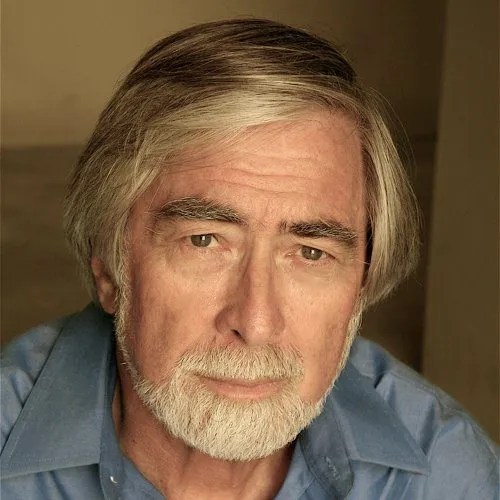
Robert Scheer
Robert Scheer, publisher of ScheerPost and award-winning journalist and author of a dozen books, has a reputation for strong social and political writing over his nearly 60 years as a journalist. His award-winning journalism has appeared in publications nationwide—he was Vietnam correspondent and editor of Ramparts magazine, national correspondent and columnist for the Los Angeles Times—and his in-depth interviews with Jimmy Carter, Richard Nixon, Ronald Reagan, Bill Clinton, Mikhail Gorbachev and others made headlines. He co-hosted KCRW’s political program Left, Right and Center and now hosts Scheer Intelligence, an independent ScheerPost podcast with people who discuss the day’s most important issues.
