

Click to subscribe on: Apple / Spotify / Google Play/ Amazon / YouTube / Rumble
The recent missile exchanges between Iran and Israel stirred fears of World War III, and while the action has cooled down, the uncertain path still looms with tension. Esteemed author and Middle East scholar Trita Parsi joins host Robert Scheer on this episode of Scheer Intelligence to discuss what these attacks could mean going forward.
“We should be extremely worried about the risk of war in the region in the sense of an expansion of the war. We obviously already have a slaughter going on in Gaza by the Israelis. And I don’t think we’ve ever been as close as we are now in terms of a direct confrontation between Iran and Israel,” Parsi said.
Israel’s assaults on neighboring Syria and Lebanon often go unpunished given the geopolitical ties to the U.S. and the West, but their early April airstrikes on the Iranian consulate in Damascus, which killed several top Iranian military officials, proved to be too much for Iran. Its unprecedented retaliatory strikes on Israel, despite being non-lethal, signaled a remarkable change in the region.
The airstrikes “essentially busted Israel’s air of impunity and the degree to which Israel essentially was viewed as being untouchable in the region,” Parsi told Scheer. “This is part of the reason why it was so difficult for the Israelis not to respond, because they did not want to see the Iranians managing to create a new set of rules in the region in which Israel didn’t have the freedom of action of being able to whack Iran or whack Lebanon without getting any response, doing so with complete impunity.”
Parsi thinks that because of this level of escalation, the U.S. is now in the hot seat for having to put a stop to Israel, and specifically Netanyahu’s reckless actions, and that a potential solution could manifest itself through the upcoming election.
“There’s going to have to be some political changes in order for this to happen, for the situation to change and I do suspect that is coming because when you see the perspective of younger Americans about this issue, even on the right, it is changing dramatically. I don’t think this is a generation that in any way shape or form views Israel as David,” Parsi said.
Credits
Host:
Producer:
Introduction:
Transcript
This transcript was produced by an automated transcription service. Please refer to the audio interview to ensure accuracy.
Robert Scheer: Hi, this is Robert Scheer with another edition of Scheer Intelligence, where I hasten to add that the intelligence comes from my guest, in this case, Trita Parsi. And, I’ve had him before on the show and I just want to say he’s one of the rare individuals that has the respect of the establishment. He’s got a doctorate from American University, Johns Hopkins, where he studied with Zbigniew Brzezinski, and how do you pronounce it? Francis Fukuyama, who told us that it was the end of history. That hasn’t turned out to be true, and it was Brzezinski that had any idea that if we somehow defeated the Soviets in Afghanistan, that would be the end of that problem. We seem to have more energy devoted to containing Russia now than we ever did under communism.
And, an author of a number of books that have been well received by our foreign policy establishment. His first was the “Treacherous Alliance: The Secret Dealings of Israel, Iran, and the United States.” That was 2007, then he had a very important book, “A Single Roll of the Dice: Obama’s Diplomacy with Iran,” Yale University Press 2012. And it was selected by Foreign Affairs as the best book of 2012. And his latest book was “Losing an Enemy: Obama, Iran, and the Triumph of Diplomacy,” another Yale University Press book, 2017. We didn’t lose the enemy. Right now, Iran seems to be everyone’s convenient choice of an enemy. I should mention that you left Iran when you were only four years old, but your father had run afoul of both the Shah’s regime and the Ayatollah. You were in Sweden as a refugee, you also got several degrees there. So let me ask you, we’re in this incredible situation. I’m more frightened than I’ve been, and I’m an old guy, and I’ve written a lot about these things, of the possibility of using nuclear weapons now, than I’ve ever been. At least in the old regime of the Cold War, there was an understanding, that got tested by the Cuban Missile Crisis, that you really can’t use these weapons. And now you have nuclear armed Israel. We’ve managed to convince Iran not to go that route, but certainly Pakistan has nuclear weapons. There are lots of them around the world. We’re saber rattling with Russia. So why don’t you tell us where we are now and how worried we should be?
Trita Parsi: We should be extremely worried about the risk of war in the region in the sense of an expansion of the war. We obviously already have a slaughter going on in Gaza by the Israelis. And I don’t think we’ve ever been as close as we are now in terms of a direct confrontation between Iran and Israel. At this stage, the risk is not for that conflict to turn nuclear. However, if that conflict does take place, meaning not just an exchange of fire, but actually leads to a real war, then the risk of nuclearization in Iran is going to expand significantly in the sense that the Iranians do have a nuclear program, but it’s civilian.
It does not have currently the military dimension, but it will be very difficult to see that program remaining civilian if there is a major war. So as a result, there’s a tremendous amount of danger that comes with a direct confrontation between Israel and Iran. And of course, from the U.S. standpoint, a very significant problem is that the U.S. most likely will get dragged into the war. Now, its ability to stay out of that war is very limited, and it would then be yet another disastrous war in the Middle East that does not serve U.S. interests, and is completely unnecessary and avoidable if we pursue a policy that is much more strategically wise than the one that the Biden administration has pursued so far.
Scheer: So let me ask you a question. You wrote a recent column in which you suggested that Netanyahu seemed to be constraining things and so forth and then blew it in relation to Iran. I don’t want to mess up your article here, but I couldn’t understand because I don’t have any insider information, but it seems that there was this Israeli attack violating one of the most sacred rules. You don’t blow up embassies and you certainly don’t blow it up in a country that you think you’ve liberated and then the other people seem to have power in Iraq and so forth. And then Iran, fired back with what was presented as a massive attack, drones and so forth. And then Israel’s supposed to, and with the help of the U.S., been able to thwart that. But reading your article, everybody seemed to be doing wink-wink here. That the U.S. knew all about and Israel knew all about the coming attack. It was not designed to be enormously successful in punishing Israel and as a result when Israel retaliated, you would suggest it was a quite minor retaliation and then, Iran didn’t even, they pretended to not even notice that. So is this some kind of bizarre game being played out before our eyes that ordinary mortals like myself and people listening can’t possibly comprehend?
Parsi: No, I think in retrospect, it looks as if it was all very clean and designed and choreographed to perfection, but it was not. What you have was a situation in which the Israelis kept on pressing the envelope, pushing the envelope. They had assassinated and killed several Iranians in Lebanon and Syria without an Iranian response. And they thought that they could go all the way toward, even taking, bombing an Iranian consulate. But it became one straw too many, and the Iranians decided to respond. They had lost face. Their territory had been attacked. And there was a lot of pressure on Iran and a lot of communication between the United States and Iran to try to make sure that conflict was somewhat contained and minimized. But what the Iranians ended up doing was nevertheless a rather large attack with about 300 missiles and drones and cruise missiles.
But they gave the U. S. side a 72 hour heads up, which enabled the U.S. to come to Israel’s aid and enable the Israelis to be on full alert, as well as the Brits and the French. So they shot down the vast majority of those projectiles, but nevertheless, seven missiles nevertheless managed to get through the Israeli air defenses and strike Israeli bases, three of them. Which shows that the Iranians actually do have the capacity, even with a 72 hour heads up to penetrate Israel’s air defenses. This essentially busted Israel’s air of impunity and the degree to which Israel essentially was viewed as being untouchable in the region. This is part of the reason why it was so difficult for the Israelis not to respond, because they did not want to see the Iranians managing to create a new set of rules in the region in which Israel didn’t have the freedom of action of being able to whack Iran or whack Lebanon without getting any response, doing so with complete impunity.
The U.S. put a lot of pressure on the Israelis not to respond at all. And the response that came was clearly designed to make sure that the Iranians would be able to wave it off and not have to respond in kind, not have to escalate. So there’s some credit I think is deservingly going to the Biden administration for having helped diffuse this situation. But what my article points out, if you’re referring to the one in the New York Times, is that even though the president managed this tactically quite well and avoided the worst outcome, what he did is that he managed the worst outcome of his own policy. Because the strategic trajectory that the U.S., that Biden has put us on, is one in which we have been put on the precipice of war in the region. And it was only a question of time before episodes of this kind would happen. And even with this one being diffused does not mean that we will not have another one in another month’s or two month’s time.
We should not be in this situation in the first place. If the United States from the outset had pursued a much different policy, pushing for a ceasefire rather than blocking it, we would have been able to diffuse tensions overall in the region and avoid a scenario in which there could have been a war between Iran and Israel in the manner that we just managed to, with some luck as well, evade. So in order to truly be able to minimize the risk of the U.S. getting dragged into the region again, we need a different policy that is not just tactically clever in terms of avoiding the worst outcome, but it’s strategically effective in making sure that the worst outcomes don’t even come into play to begin with.
Scheer: So let me ask you about this because, there was an air, for the longest time, ever since the Six Day War that Israel just knocked out any threat without much consequence. And that was also done with a lot of cooperation from the United States as far as targeting and so forth. And I don’t, and that sort of, however, has first of all, given what you mentioned, the slaughter in Gaza, everybody forgets that Israel’s presence or claim over the West Bank and Gaza and part of Jerusalem came from a preemptive war. Now, I don’t know if you agree with that, but I happen to be writing about it at the time and I was in the area, and it was very clear, I was in Egypt and then in Israel. And it was very clear that Goliath was Israel, backed by the United States, and David was Syria, Egypt, and so forth, that they did not have the kind of air force and weaponry and so forth.
And anyway, the Palestinians did not attack Israel. Actually, Palestinians that were already in Israel before the Six Day War, many of them offered their blood, their support, and so forth. So this whole image that has been conducted that, yes, Israel has a powerful military, but it needs it because it’s David and it’s surrounded by all of these countries is kind of a myth. that has been stoked by the mass media and everything. And the other part of that myth is that Israel, even though it’s David, is an invincible David and can win very quickly without suffering very much. that’s been disproved a number of times, but very prominently this time, they now seem to be in a never ending war of their own, and so is the U.S. Is that a fair summary?
Parsi: I would agree that this idea that Israel is David, if it ever was true, it stopped being true a long time ago. Unfortunately, that is the perception that President Biden still seems to live in. And perhaps part of the explanation as to why he has adopted the line that he has. But Israel is not only militarily superior, but at least up until April 1st, believed that it had the freedom of action of whacking any country in the region with impunity without paying a price for it. That I think has now changed as a result of what happened between Iran and Israel, and that’s part of the reason why it was quite a massive strategic mistake by the Israelis to take out the Iranian consulate because it validated what many had suspected that Iran had the capacity but it was not known. Now it’s confirmed that they have that capacity and most likely the Israelis are going to be very careful about doing something like that again. Which means that we’ve returned to an era in which Israel no longer had, did not have that degree of freedom.
You cannot have that degree of freedom, even if it’s been somewhat limited now, and claim that you are David. That is a freedom of action that only Goliath ever could have. But it is very much a frame that seems to be informing Western policy. And as a result, supporting Israel, even as it is recklessly destabilizing the region and then frankly, putting the U.S. and Europe’s own security at stake. When Israelis attacked the Iranian consulate, they gave the Pentagon almost no heads up at all, essentially telling them about it right before it happened. This infuriated the Pentagon and the Biden administration because it meant. That we might end up in a regional war also meant that the truce that currently exists between the United States and Iraqi and Syrian militias, as you know, they have killed three Americans in the last couple of months because of intensified attacks by them on the U.S. in the region as a way of pressuring the U.S. to pressure Israel for a ceasefire. But those attacks have now stopped for more than eight weeks. They could have restarted again as a result of what the Israelis did. So this is directly putting the U.S. into the firing zone. And what is stunning about all of that is that I, until this point, see no consequences for Israel having done this. And this is, it goes back to Biden’s approach to this issue in which he seems to be extremely deferential to Israel and accepting, without consequence, a lot of actions by Israel that is directly undermining U. S. interests.
Scheer: Yeah, but Israel has every reason to think it can get away with anything it wants, because whatever criticism there may be of the slaughter, I personally think it’s appropriate to do. talk about genocide. If we actually look at the history of discussion of genocide, others might not agree, but certainly seems to be aimed at denying any agency to the Palestinians, any possibility of their having any kind of governance or one person, one vote or any other. basic human rights, including the right, the right to decide who, who rules them or the area they live in.
But, putting that aside for a second, why shouldn’t Netanyahu think he can do whatever he wants? We just rewarded his arrogance with this huge, military assistance bill. we just said, whatever you do, and, I, and there’s a political reason. You mentioned Obama’s achievement, and I do think it was a major achievement in getting Iran to stop whatever it was doing that was frightening about its nuclear program. You celebrated that. At the same time, Netanyahu came and spoke to the U. S. Congress denounced the sitting president, undermined his, and, he was received, in an almost universal applause and he could do it again. If you look at it, what is the choice for a voter? You’ve got a lot of young people now at these universities who have shown they don’t buy the narrative.
They want to see some kind of a combination of a palestinian state. There’s the UN, majority, I think 150 nations recognized and yet, Netanyahu can have the confidence. He’s actually much more popular in the U. S. Congress than he is in his own Knesset. It’s one of these great ironies. And that, so a voter, We all tell people you got to vote. We live in this democracy. What do we do? Who’s the lesser evil, would probably seem to be a Biden. So what does that mean? He will underwrite a genocide, but do it more slowly or less dramatically, than, Trump. So where does, what is going on here? And, what could you take from there? Go ahead.
Parsi: I think you’re right in the sense that. If we don’t impose any consequences when Netanyahu conducts himself in this way, we should not have the expectation that he will not continue to challenge U. S. interests in the manner that he has. And I would say that I think this is an extraordinary, strange situation that we’re in because If I was sitting in the White House, I would be extremely worried about Biden’s re-election chances, given how he has alienated so many critical elements of his winning coalition from 2020.
Gen Z voters, African American voters, and of course in some key states, Arab American voters. And all of this for some sort of an ideological adherence and commitments to Israel that also at the same time blinds the U. S. to what Israel is doing, and is remarkably accepting of, Israel’s conduct, even though the president himself admits that Israel is committing war crimes because indiscriminate bombing as Biden’s, described Israel’s campaign as is a war crime.
There’s going to have to be some political changes in order for this to happen, for the situation to change. and I do suspect that is coming because when you see the perspective of younger Americans about this issue, even on the right, it is changing dramatically. I don’t think this is a generation that in any way shape or form views Israel as, as David.
I don’t think even they viewed him as Goliath. I think it goes beyond that at this point. That change, however, will probably not manifest itself politically for another 5 to 10 years. But I think it is unavoidable at this point because What this episode has done is that it has given young Americans an informative experience about their perspectives of the Middle East, the U.S.’s role there, and the role of Israel. I don’t think it’s going to go away in any way, shape, or form easily.
Scheer: Let me ask you, you are connected with, I didn’t give you a proper institution, introduction, the Quincy Institute, and the motto is help us achieve a world where peace is the norm, and war. lots of luck on that. but, and the Quincy Institute is a transpartisan action tank and communications project established to challenge the decades long obsession of the U.S. foreign policy decision makers with global military dominance and war. And I applaud that. I read a lot of the material that comes out of the Quincy Institute.
There are a lot of very respected, experienced veterans of American foreign policy and its wars. Yes, it’s an institute to be admired. And yet, despite your establishment credentials, and, I’m not using that negatively. you are. One of the, and not you, only you, but the other people at the Quincy Institute are very well informed, very experienced, about all this.
It seems naive, that we can get to a world where peace, Is the norm and war the exception? you look right now. We’re picking a fight with China. and, we’re denying their ability to use advanced chips and produce so they can get out of this middle income trap that they in India are in and try to get into advanced consumer products.
We even deny them the right. They happen to be great at making solar panels and electric cars. And we want to threaten that in cold war terms or enemy Terms or Orwellian find the enemy and we do it all over the place. So just you know, we’re going to run out of time. I know you’ve got other things to do but tell me how do you talk about peace in a culture our culture american culture now?
That seems to be more pro war and more informed by and then we had just let me throw this in case people don’t know are two You Most important presidents who had war experience, George Washington and Dwight Eisenhower, George Washington, both, in their farewell address. After running the government to be here, what did George Washington do?
He says, I call upon my countrymen to avoid false patriotism, the impostures of pretended patriotism, and seek world influence with gentle means. That was George Washington. Eisenhower, of course, Famously won this about the military industrial complex. It seems to me now this military industrial complex is at the center of all American thinking, and this bill, by the way, increases their profit, their stock market evaluation. A lot of that money’s not even going to Ukraine or Israel. It’s going to the Defense Department contractor.
Parsi: I think there’s plenty of reasons to be quite worried and perhaps even pessimistic about the situation. But I think what you are looking at, Bob, is where the elite is, where the foreign policy establishment is, and where the current policy is.
And when one looks at that alone, the picture you present is very accurate. When you take a look at America as a whole and look at where the population is on these matters, I think there’s plenty of reason to see some hope, and some reason as to why things are going to be changing. Granted, of course, That they assert themselves and that we end up, we still have a political situation, a system that, however, imperfectly nevertheless seeks to represent the views of the population.
As I mentioned earlier on, when you take a look at not only, let’s set aside Israel for a second, when you take a look at how younger Americans think about foreign policy, how they think about some of the cornerstones of the Of American foreign policy of the last couple of decades that has led us into, these militaristic, adventurous, dominance, centered approaches.
You see a situation in which, for instance, their views of American exceptionalism is starting to be dramatically different from the views of older Americans view about, they do not think of the United States as a country that is so exceptional that it can allow itself to be above all other countries and all the rules that it itself has put in place.
When you take a look at how they view the spread of democracy and human rights. Less than 20 percent of younger Americans in polls that have been done over the course of the last five years are now of the view that using military force, even for the protection of human rights, means humanitarian interventionism.
It’s just that those numbers are very different when you pull Americans 65 and up. So you’re seeing a situation in which there’s an entire one or two generations of Americans who have seen nothing but bad wars. This is not the generation, the great generation that had wars that were clearly against evil, against the domination of the Nazis, etcetera.
What they’ve seen is only bad wars. And they’ve also seen that those very bad wars are the reason as to why their standard of living is going to be lower than that of their parents, at least a big reason as to why it’s going to be lower than their parents. This has created a very different perspective on militarism, a very strong resistance against it.
It is not reflected in the mainstream media. It is not reflected in the manner that the president talks now or the foreign establishment seize things. But it is manifested in the sense that if you want to run for president and win, you have to present yourself as an anti war candidate. The last couple of presidents have done so.
Hillary Clinton famously did not because she would have no credibility if she tried to. It was a factor in her loss as well. You’re seeing that increasingly in Congress as well. I think we’re going to see much more of that going forward. Is it going to be sufficient to be able to overcome the stranglehold of the military industrial complex and the manner in which so much of America’s economy has now become dependent upon the export of weapons and arms?
It’s going to be a significant challenge. But in this very complicated and overall problematic picture, I do see some very clear signs of hope.
Scheer: I think, Lillie, we can wrap this up. I know you have to go to a meeting or something. what, it was, I don’t know, no one ever seems to, every time I mention George Washington’s farewell address, After my recording or something, I’ll go look it up to see if I invented this, because why isn’t it something that’s taught, And sure enough, he taught, he was not an isolationist. He believed in trade. He believed, but his, the whole thinking of the founders, it seems to me, was how do we avoid being Rome? they hated what, what Rome became. They hated the French empire, the Spanish and the English. They broke with the mother country over this extension that you can’t be a normal nation. You have to control, as far as you can see. And, that, power corrupts, and that sort of thing. And so I ask you one last question, because you have great establishment, respect, credentials, and so forth. How do they justify this? I know, I knew Zbigniew Brzezinski, who you studied under and okay, he has some passion left over from Poland and his father to diplomat and so forth and Beov. But we’re in a situation now where we wanna contain communist China and we stress older communists on the other hand. Our main weapon now against Communist China is Communist Vietnam, which we fought this war against.
And what happened when we lost the war? Communist Vietnam and Communist China went to war. Okay, same thing with Russia. Now, we got, had arms control agreements and everything with the Russians when, even when Stalin was there. right up through. You got a guy that we backed, Putin, to be the anti communist candidate. Yes, he’d come up through their bureaucracy and their secret service and all that, but the fact is he was Yeltsin’s guy, and Yeltsin was a hopeless drunk. So we have Putin, and now he is the enemy of choice, and we can’t do business with him and so forth. So I just really get to, finally, to the question, do we have sane adults, Watching the store.
These are smart people. Why do they still talk? And fake news is what they do. It’s constantly fake news. You spend 20 minutes. I tell my students, you go spend 20 minutes outside, just Google these things. You’ll see it’s silly. Silly talk. we have on our campus, everybody’s worried now, of the Jewish students are alarmed and so forth with all this war mongering. I happen to be Jewish, I certainly know a lot of Jewish students. I see no reason where I teach at USC where we just stopped a valedictorian, science oriented, brilliant woman, because it might alarm the school, we have a thing. But the fact of the matter is, this scary talk is very profitable.
And so why do they, where are we going to get some rational people who say, look, we have to be a normal nation. We have to, Isn’t that the message? You’re very smart about these things. Isn’t that the message from BRIC, the BRICS alliance and the South speaking up? Isn’t that the big issue that we are isolating ourselves?
Parsi: It certainly is. And I think the foreign policy establishment is not really taking that in. They think that the answer to this is just to educate the American public and the rest of the world as to why they’re wrong and why so yeah, no, we, we, do clearly have a highly problematic situation, in this. And let me give you another quote. You talked about George Washington. Our Institute is named after John Quincy Adams because of the speech that he gave in 1821. And I, if you permit, I’m just going to be, a short segment of it that
Scheer: You’re the one who has to go. You take as much time as you want. All right.
Parsi: America goes not abroad in search of monsters to destroy. She’s the well wisher to the freedom and independence of all. She’s the champion and vindicator only of her own. And then, passage just slightly further down, if American engages in militarism, he says essentially, The fundamental maxims of her policy would insensibly change from liberty to force. She might become the dictatress of the world.
She would no longer be the ruler of her own spirit. This was a clear call, not for isolationism, but against militarism and adventurism in American foreign policy. Not only because it’s wrong, but because it would come at the expense of America’s own freedom and liberties at home. And if you take a look at what is happening right now in the terms of Western countries support, at least the blind support for Israel and its war and slaughter in Gaza right now, you’re seeing clear signs that in order to be able to sustain this level of blind support, you We have to actually erode our own democracy. You’re having students not being allowed to have freedom of speech on campus or freedom of assembly. You already have for quite some time made efforts to make sure that people give up their rights, be able to choose if they so want to. Boycott Israeli products. They will no longer be able to get government contracts as a company or as individuals in states like Texas, et cetera. in Germany, in which slogans have been forbidden, you cannot say from the river to the sea, Palestine will be free. that demonstrations against the war in Gaza in France and in Germany have been outlawed. You see how meetings and conferences have been forbidden. A former European minister, a Greek minister of finance is no longer allowed to speak in Germany, on these matters.
And has been told by the Germans that, German authorities that he will essentially, be prosecuted if he does. These are clear signs of how, in order to sustain this level of support, not just for our own militarism, but for the militarism of another country, we’re going to have to erode our own democracy at home. And I think this is, I don’t think this is going to be accepted by the American public. I think this has gone too far now, or I think we’re going to see a major backlash against it.
Scheer: I know you have to go, but you’ve used the word slaughter. And, and I think it’s appropriate here, but when you talk about the criminalization of dissent, right now, in any classroom in America, any high school or college classroom, If you refer to what Israel is doing as a slaughter, let alone do what the UN court is actually investigating now, whether it rises to genocide, you will, if not lose your job, certainly hurt your career and certainly feel very vulnerable.
And this is being accepted. And, I just read something in the old McCarthy days. It’s very interesting that, and particularly relating to Hollywood and the Hollywood 10 and all the text. A disproportionately high number of people who were dragged before this inquisition were Jewish. This is really, I, just want to end on that, because it’s really, truly disturbing to me that Jews are now Jewish people. My mother left Russia after the Bolshevik Revolution. Okay. it wasn’t to come here to embrace, more violence and more terror. And I just want to end with the country you know most about, even though you’re only four years old when you left, but you, obviously, are an expert on Iran.
And it gets back to Orwell’s old finding the enemy, And after all, we have some responsibility for what happened around because we overthrew Mohammed Mossadegh, the last real election they had at 19, what was it? 54, 53. Yeah, so I just want to ask you, I know, again, quickly, we’ve been raised, really, to think of Iran as a center of evil. It’s convenient to this whole thing, because just as we, and then Egypt somehow, where they have no more political freedom. They jailed most of the people who were active in the Arab Spring. The conditions are awful, and they are actually the people who had a war. with Israel once, but they got accepted. Jordan was accepted. That’s the other country that was involved in the Six Day War. and yet, the Palestinians are made to have the whole responsibility for anti Semitism in the world, for the insecurity of Jews anywhere. It is the, if we talk about fake news, it’s the big lie, writ large, Roger. Is it not? And just maybe, how to think about Iran? Is it, what, just the center of evil?
Parsi: No, I, that’s obviously quite cartoonish, and it says quite a lot about the foreign policy establishment in Washington. It tends to reduce complex geopolitical issues to good versus evil and Marvel comics type of the storylines. Iran’s regime is a highly repressive government, highly interventionist in the region. playing the game of a great power in the region on a regional scale, is definitely challenging the U S and other potential, or external powers that are trying to have a footprint in the region is, a country that has weakened the states of other states in the region by supporting militias, et cetera.
However, take a look at the track record of almost a decade. any other major country in the region. I’m not talking about the smaller countries, don’t even have the power to do this. And you will see that all of them are doing things that are highly problematic, maybe different, maybe justified differently. But this is not a story in which you have a region of innocence and then one country with blood on its hands. We did a study at the Quincy Institute about four years ago and we looked at all of the interventions of regional states in the region between 2010 and 2020. And Iran, without a doubt, is one of the most interventionist powers in the region.
However, from 2015 and onwards, the Turks and the Emiratis actually had surpassed Iran in terms of interventions in the region. Five out of the six most interventionist countries in the region, Israel, Turkey, Saudi, UAE, and Qatar. are all funded by and armed by the United States. There’s allies of the U.S. Oftentimes they’re intervening in the region against each other. So the idea that Iran, in some way, is standing out in the region, or certainly, is an outlier because it’s just doing it much more than anyone else. It’s not born by the facts. It doesn’t mean that Iran or the Iranian regime is positive. I personally don’t think it is. But looking for good guys in geopolitics is not an exercise that I think is particularly fruitful.
Scheer: And then you should be reminding people that Iran did not do 9 11. Did not attack the World Trade Center. 15 people came from Saudi Arabia and four others from other countries, including Egypt. I’ll end on that. I want to thank you, and for taking the time. How do we get more material? Trita Parsi, they just go to the Quincy Institute?
Parsi: Go to the Quincy Institute, quincyinst.org. Or go to my personal website, tritaparsi.com. I do a lot of stuff on Twitter @tparsi, and they can get in touch with me or my institute, through those channels.
Scheer: Okay. And I want to thank, I thank you, and I want to thank Christopher Ho and Laura Kondourajian, at KCRW, the excellent NPR station in Santa Monica for hosting these, podcasts, Joshua Scheer, our executive editor, who insisted that I get you, because he was so impressed the last time we had you, Diego Ramos, who writes the introduction, Max Jones, who does the video, and the J.K.W. Foundation in the memory of a very independent thinker, Jean Stein, who cared a great deal about what was the suffering of the Palestinians, which has only increased since her passing for supplying some funding for the show. See you next week with another edition of Scheer Intelligence.
Please share this story and help us grow our network!
Editor’s Note: At a moment when the once vaunted model of responsible journalism is overwhelmingly the play thing of self-serving billionaires and their corporate scribes, alternatives of integrity are desperately needed, and ScheerPost is one of them. Please support our independent journalism by contributing to our online donation platform, Network for Good, or send a check to our new PO Box. We can’t thank you enough, and promise to keep bringing you this kind of vital news.
You can also make a donation to our PayPal or subscribe to our Patreon.
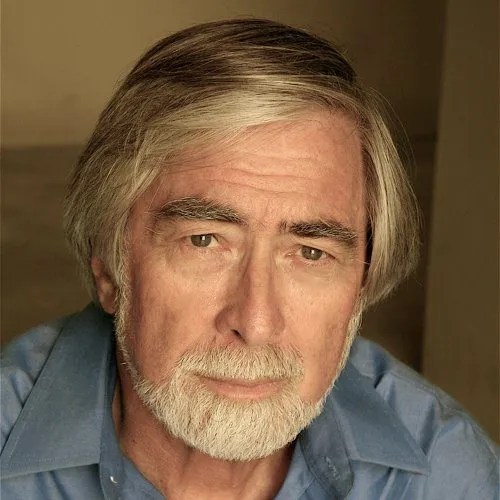
Robert Scheer
Robert Scheer, publisher of ScheerPost and award-winning journalist and author of a dozen books, has a reputation for strong social and political writing over his nearly 60 years as a journalist. His award-winning journalism has appeared in publications nationwide—he was Vietnam correspondent and editor of Ramparts magazine, national correspondent and columnist for the Los Angeles Times—and his in-depth interviews with Jimmy Carter, Richard Nixon, Ronald Reagan, Bill Clinton, Mikhail Gorbachev and others made headlines. He co-hosted KCRW’s political program Left, Right and Center and now hosts Scheer Intelligence, an independent ScheerPost podcast with people who discuss the day’s most important issues.
