

The Supreme Court’s recent decision to allow cities to ban people from sleeping outdoors presents a major shift in the perception of poverty and homelessness in the U.S. and what the Eighth Amendment represents. Clare Pastore, a law professor at the University of Southern California, joins her faculty colleague Robert Scheer on this episode of the Scheer Intelligence podcast to break down what the decision means and expand on her article published in The Conversation.
Pastore explains that the legal precedent reversed by the conservative majority was that “it’s cruel and unusual punishment in violation of the Eighth Amendment to criminalize sleeping outdoors for people who have no other option.” Now, Pastore tells Scheer, cities are not barred from enforcing this kind of criminalization.
“These are not laws to protect people. Homeless people are at greater danger than they are a danger to others. These are laws trying to get people to just move out of the jurisdiction and go somewhere else,” Pastore said.
Scheer argues that the problem has been around long before the recent SCOTUS decision and the elephant in the room for states like California, which Scheer points out is the fifth largest economy in the world, do not use their vast resources to address the problem but rather put the blame on decisions like this and continue their politics that ignore the central issue.
Pastore agrees, telling Scheer, “My biggest fear, in terms of a generation of people who are growing up thinking this is normal, is that this idea that this is intractable, is taking hold and it’s not right.”
The greed in the U.S., where housing is regarded as a private good, strains the ability to attack the roots of the issue. “We have very few controls on how much [housing] can cost and we have very few incentives to make it cost less and we just don’t put those kinds of legal mechanisms in place to preserve and create more affordable housing,” Pastore said.
Credits
Host:
Producer:
Introduction:
Transcript
This transcript was produced by an automated transcription service. Please refer to the audio interview to ensure accuracy.
Scheer: Hi, this is Robert Scheer with another edition of Scheer Intelligence, which is… actually a title for an egomaniac, but the intelligence comes from my guest. Originally, it was going to be a play on the Central Intelligence Agency, and I was the poor man’s Central Intelligence Agency… But hello, Clare Pastore. A leading expert, maybe one of the, you know, really truly top in the nation on the whole question of poverty, law regarding poverty, the ability to redress the grievances concerning programs dealing with people’s status and their behavior when they’re impoverished, when there is not housing. And she’s responded to the Supreme Court Decision, powerful decision, which, some could argue criminalizes poverty.
Instead of my mangling the legal issues involved, I’ll turn it over to you, Clare, to explain what is the significance of this six to three decision of the court. And it’s been presented as the angels who are liberals, who want to protect poor people when they sleep in the park and want to put a blanket over them. And then there are these mean conservatives. But on the other hand, the governor of our state, we’re both here in California. I didn’t give you a proper introduction. We both teach at the University of Southern California, you’re in the Gould School of Law. But the governor’s state, who is widely promoted as a progressive, also filed an amicus brief here, basically supporting this decision. So set the legal stage. How significant is this decision? And is anything good going to come from it?
Pastore: Sure. So thank you for that introduction and I’m happy to join you. I listen to the podcast and I appreciate the chance to talk about this. A few, maybe I’ll give you a little background on the case and then I’ll tell you my takeaways from it. It won’t surprise anybody to learn that my biggest takeaway is that this is enormously disappointing, but not at all surprising. The case began in, here in the Ninth Circuit, that’s the federal appellate court for many of the western states. And it’s a case that came out of Oregon, the city of Grants Pass, Oregon.
But it followed on a case from 2019 that came out of Idaho, Boise, Idaho. So the 2019 case is called Martin v. Boise. All these cases are about how far can a jurisdiction go to criminalize unavoidable human behavior like sleeping. And people experiencing homelessness have no, by definition, have no private place to perform these essential human activities like sleeping, and therefore they must perform them in public. Nonetheless, as we all know, lots of jurisdictions have been passing laws over the last 10-15 years to make it a crime to sleep in a public place, to sit and block the sidewalk, to lie on the sidewalk, all kinds- sometimes panhandling is banned, all kinds of things that are aimed at trying to get the homeless to go elsewhere.
Notably, of course, none of these laws, there’s not one shred of evidence that any criminalization of behavior by people without homes, that the criminalization of this behavior has ever helped one person out of homelessness, right? These are laws that are responding to the understandable concerns of neighbors, of the public, of businesses. So nobody disagrees that we have a massive homelessness problem in our society. We’ve got nearly three quarters of a million people homeless by the last count that the federal government did. We’ve got massive homelessness problems in our society and jurisdictions are struggling for what to do with it. But criminalizing simply diverts resources that could be better spent elsewhere on mental health services, on supportive housing, on, anti-addiction services. It’s diverting resources that could be spent elsewhere into an endless cycle of imposing unpayable fines and cyclical jail terms on people. So Oregon, let me go back to Boise, because really they’re the same and it almost doesn’t matter which comes up under which case, but many jurisdictions had passed these laws under which police were citing people, giving them tickets, imposing fines, sometimes those fines would lead to jail time, for sleeping in public.
And first in the Martin V. Boise case in 2019, then in the Grants Pass case a couple of years ago, a group of plaintiffs, represented by civil rights and anti-poverty lawyers, sued, and said, “It’s cruel and unusual punishment, which violates the Eighth Amendment to the Constitution, to punish people for engaging in these basic human activities like sleeping outdoors, or in public, when they have no private place to do it.” And the courts accepted that rationale. The Martin v. Boise case in the Ninth Circuit accepted it in 2019. The Ninth Circuit accepted it in the Grants Pass case, a couple years later. And it’s really important to note that the Supreme Court, and to some degree some of the more right wing media, has portrayed the case as, there’s a choice between giving up all of our public space at all times, to the whims of homeless people, or, criminalization.
There’s no alternative. And of course, there are many, many alternatives. And what the decisions permitted, notably, was reasonable time, place and manner restrictions on where people could sleep. Under the Martin case, under the Grants Pass case, nobody ever said people can sleep anywhere they want at all times in any part of the city. And the plaintiffs in the case, the homeless people litigating the case, conceded that reasonable time, place and manner restrictions are constitutional. They didn’t challenge that. Nonetheless, grants passed when they got to the Supreme Court and to some degree Justice Gorsuch’s majority opinion present this apocalyptic vision of if we don’t allow cities to do that, our whole society is overrun by people engaging in anti-social behavior in public, and that’s just a wrong… I mean Justice Gorsuch says in his opinion, some people value the freedom of encampments. There is no evidence that anybody presented with a reasonable alternative prefers a life sleeping outside with absolutely no means of shelter or no protection from the elements. There are certainly people who say that I don’t want to go into a congregate shelter during COVID, or I don’t want to go to a shelter where I can’t take my dog, or I don’t want to go to a shelter that has stairs and I’m in a wheelchair, or there are certainly reasonable reasons that people might reject shelter, but there’s no evidence that there’s any large number of people who simply say, I don’t want any housing or shelter, I want to stay outside.
So the legal claim- so that’s sort of the backdrop of the case. Cities, many cities cracking down and passing tougher and tougher laws to criminalize basic activities, notably sleeping, and plaintiffs saying, “What are we supposed to do? We have to sleep. And if we have no indoor place to sleep, We have to sleep outdoors.” The subtext of all of this — and this is very present in the grants past case as well — is that many jurisdictions do this, not because they think there really is some alternative that they can get people to accept, but they want people to move, right? They want them to just move on down the road somewhere else. And in the Grants Pass case, the Grants Pass City Council, the record of the proceeding at which they passed this contested law, shows that there were these incredibly horrific statements, they’re in Justice Sotomayor’s dissent in the case, where they said, “Can’t we just get them to move on down the road? Maybe they’re just not cold enough or hungry enough yet to go elsewhere.”
So the goal of cities that pass these kinds of laws is very clear. They’re not- these are not laws to protect people. Homeless people are at greater danger than they are a danger to others. These are laws trying to get people to just move out of the jurisdiction and go somewhere else. So the legal argument in the case was, it’s cruel and unusual punishment in violation of the Eighth Amendment to criminalize sleeping outdoors for people who have no other option. The big takeaway as a legal matter from the case is the Supreme Court said, “No it isn’t. The cruel and unusual punishment clause of the Eighth Amendment does not bar this kind of criminalization.” Beyond that big takeaway, cities are not barred by the Eighth Amendment from passing these kinds of criminalizing laws. There are a number of interesting and disturbing aspects.
So one is there’s actually very little Eighth Amendment analysis in the opinion. We have 150 years of Eighth Amendment jurisprudence and so we know that, for example, for a law to survive under the Eighth Amendment, typically there has to be what’s called a penological justification.
So you have to show that the law serves a legitimate purpose. And the four purposes that the court has identified as legitimate are deterrence; you want to deter the behavior that you’re criminalizing. You can’t deter people from sleeping outside if they have nowhere inside to sleep. Rehabilitation: there’s no pretense here that incarcerating anybody rehabilitates them from either their addiction or their homelessness or whatever. Incapacitation: that’s typically a justification when we say we gotta get this dangerous, assailant off the streets. There’s no showing that jailing somebody for being homeless incapacitates them for any longer than the time in which they’re in jailed. Or retribution for a wrongful act. Those are the four things. Deterrence, rehabilitation, incapacitation, retribution.
Scheer: I just wanna interrupt for a minute because and I read the decision and your response and, and the fact of the matter is, and the governor of our state, who was a strong liberal, Democrat, he supported this shift. He wrote an amicus brief, and he said, look, I’ve increased spending on the homeless, I forget his numbers, some very large amount and so forth. And we have a number of programs in Los Angeles and elsewhere. The fact is and we know this because we both teach at the University of Southern California, which is in effect a gated community. And it even bought the shopping center near the campus and turned that into a gated community. So there are no homeless sleeping on USC property or in the former shopping area, which used to have some homeless. It was open to the public. Now they can gate it down at a certain time. And they have, we have, I think the university has one of the largest police departments, private police departments in the country, if not the largest.
And so there’s no room for the homeless at USC. There’s no room for the homeless in many prosperous communities in California. So what we’re really talking about is in, like, where I live here in downtown Los Angeles, basically depriving most of the community from being able to use public spaces because they don’t want to take their children to play there, whatever. It’s become something else and whole areas and I thought it was interesting the plaintiffs in this thing conceded there should be rules and so forth. It seems to me the effect of the Supreme Court decision is that you cannot use the streets, the parks, as an alternative for housing, that cities have the right to say no. Now, that doesn’t answer the question you’re raising, right? Why is the other program not working? Why are there not attractive alternative housing? And the key thing I got from your article, I don’t have it right in front of me, the paragraph, but you said we need affordable housing. Right?
And so the court may get our attention for that. But the court says you can’t just use the parks, maybe, I noticed the mayor of Los Angeles, she condemned this ruling well maybe the mayor and the city council were the real problem. Maybe they should have more housing that’s affordable.
Pastore: Yeah, it’s you’ve identified some really important aspects of the decision and the aftermath. So let’s talk about Governor Newsom for a moment. Governor Newsom and some other legislators and elected officials from left leaning or blue states or jurisdictions are trying to walk a very fine line here. They’re trying to say “Criminalization is nobody’s first resort. We don’t really want to do it, but it’s an important tool that we have to have in our arsenal.” So Newsom isn’t out there saying criminalization is the way we’re going to end homelessness. He’s saying this is one important tool that we need. I think that argument is very disingenuous because even under the Ninth Circuit’s decision that the Supreme Court just reversed in Grants Pass, and in the prior one in Martin v. Boise, jurisdictions had that power with regard to saying, you know what, this park, nobody can sleep in ever. This park, people can sleep in at these hours, but not those hours. This location, no, right? They already had that time, place, and manner power. I think the governor saying, our hands were tied under the Martin v. Boise decision, is very disingenuous.
What the jurisdictions wanted, and essentially what they got as a matter of the Eighth Amendment in this was; we don’t want to have to litigate what’s a reasonable time, place, and manner restriction. And that idea, it’s nice for anybody to say I’d rather not have to litigate. I’d rather not have to go to court. But think about how frequently in the law time, place, and manner restrictions are used. For example, the paradigmatic example is the First Amendment, right? The First Amendment allows for freedom of speech. that doesn’t mean anybody can take their megaphone in their giant crowd and have a parade anywhere, anytime that they want.
Jurisdictions place reasonable time, place, and manner restrictions on permitting parades and whatnot. Nobody says well we need a rule that answers every single question, is this parade constitutional, is that parade constitutional, can they stop this one, can they stop that one. Instead, we resolve that through judges taking a constitutional rule and applying it to the circumstances in front of them. So the idea that it’s somehow an outrage that there was a rule that said you can’t criminalize sleeping outdoors when there are no alternatives and then courts would be asked to decide in this instance are there alternatives. The idea that’s outrageous is profoundly both ahistorical and profoundly ignorant of how we actually determine things in a common law system.
Scheer: So help me here because I, trust me, do not want to harass any homeless people and so forth. And yet, as a journalist, I’ve covered this issue at times. And the fact is, we end up with some communities paying the price, if that’s the right way. And I’ve been in Grants Pass, I have in-laws there and everything. What happens is certain places are seen as more lenient. People go there, it’s safer, it’s better, and they pay the brunt of it. And you see it in a community like LA. Why do we have miles of abysmal poverty and you can’t walk in whole areas of what is supposed to be our downtown? A lot has been invested in this downtown and it’s not working.
Okay. So people who want to live in this urban environment. want to contribute to the community. They can’t go out in the street, walk their dog and everything because they find it really inhospitable. So I just wonder whether, yes, and criminalization obviously doesn’t work. It’s very expensive. You’re putting people in jail. You’re finally sheltering them and providing some.
Pastore: It’s the most expensive way possible!
Scheer: Yes, it is the most expensive, but I’m just wondering about the outrage of people like Justice Sotomayor and so forth saying, “This is terrible,” but why isn’t the status quo terrible?
Pastore: Yes, the status quo is terrible. The status quo is terrible and it’s horrific to me, as a parent and as a person who’s been around for a long time on these issues to think that there are now a generation and a half of people who have grown up thinking that, tens of thousands of people sleeping on the streets in Los Angeles is normal, right? That’s profoundly disturbing to me. So we didn’t get here overnight and we’re not going to solve this overnight. So we know what- we know a lot of what is needed, right? The number one thing that is needed is more affordable housing. We destroyed, I think the count is 15,000, maybe it’s 20, single room occupancy hotels, those SRO- single room occupancy hotels that used to be down in LA that were kind of crappy housing in downtown LA, but they were affordable for people with the very, very lowest incomes.
We just destroyed those to redevelop downtown with no thought of where will these people go. No requirement that developers provide some alternative housing for these people, no public requirements. So we have been heedless of the results of redevelopment, especially in low income areas. We also tend to have this idea that everyone who is experiencing homelessness is mentally ill or a drug addict and we can’t help them until we have this giant expensive infrastructure of permanent supportive housing. We absolutely need permanent supportive housing for people who are experiencing those problems while also homeless. But there’s a very interesting study that- a very short little white paper that just came out of the economic round table here in LA by Dan Flaming of the Economic Roundtable and Gary Blazey long- a UCLA professor and leader in homelessness thinking and anti-homelessness work in LA.
That what we really need to do is think about what are the different, characteristics of people who are homeless because there’s a huge number of them, thousands they say in LA, who could be helped by a small infusion of cash, right? So there are a lot of people who don’t need permanent supportive expensive housing, they just need a way to afford the housing that we have, which is scarce and very expensive. We’re looking at this on the other end, on eviction prevention as well.
You know, we had that study a few years ago that said all over America, I think the Federal Reserve did, all over America, there’s a huge percentage of people that couldn’t muster $450 if they had an emergency, a car breakdown, loss of a job, something like that. People get evicted because of that.
Scheer: I understand that and I just want to join the argument here because I do not like the idea that, and this is true of the three people on the court who opposed this decision, that somehow there is a liberal answer, a blue state answer that works and is more humane. I think those single, occupancy hotels and everything were a disaster. I would, and people are afraid to live in there. They’re afraid to be downtown and so forth. And what we really have to deal with is this NIMBY-ism. Not in my backyard. And all those wonderful enlightened people who don’t want it in Brentwood and they don’t want it in Beverly Hills and they’re just as happy to push people around then dump them in some other area and generally an area where poorer people live like here in East L. A. or something.
Pastore: Yes.
Scheer: And, then you say, “Oh, this is great because it’s out of sight, out of mind.” That’s what USC, precise- that’s it. They’re a symbol of it. They build, they made the whole campus, and including a big shopping area — that was the most important shopping area for people living nearby, many of whom were working poor, people — and then they gentrify even the housing in all the area to turn them into student housing and then encourage developers to put up all these new projects that are very expensive.
So gentrification is the name of the game for the enlightened people, whether it’s USC or the people living in Brentwood or living in Santa Monica or what have you, and they want a dumping ground. And what the court has said, I think, very clearly, they said, “We’re not solving all this problem. Okay, we are telling you that if a community feels they have to have more severe prohibition about when you can sleep in the park and turn it into your residence, they have the right to do it.”
And I can see somebody saying, “Look, I’m helping poor people much more than that enlightened liberal who thinks we can’t have rules about it.” Because, frankly, I can tell you, I’m here three blocks from City Hall. And I can tell you right there people are camped out and then every three months or so they wash the street and people leave and come back.
I don’t think we’re doing those people a favor, frankly. And so all the court, it seemed to me, said here is that a city has the right to crack down. And they didn’t address the question, this is a failing of the court decision, does the city have to show that it has adequate housing? And that’s what we don’t want.
Pastore: That was the whole essence of the Ninth Circuit’s rubric, was you can criminalize If there’s a showing that people are refusing to go somewhere else, that’s appropriate…
Scheer: I’m not defending the court’s decision. I’m much happier with what was before.
Pastore: Yeah.
Scheer: But that is not itself a satisfactory conclusion because the fact is we’ve ghettoized homelessness.
Pastore: Well I mean nobody thinks. that courts are going to solve homelessness. The problem with cases like this is that courts can make it a whole lot worse. And this decision is going to make it worse because this decision green lights jurisdictions that want to criminalize to go ahead and do that. That’s going to put more pressure on jurisdictions like Los Angeles that want to have long term solutions because we’re already doing this in L. A. We’re housing people at a rate of, dozens a day are getting off the street, but more are falling into it.
Scheer: I know but I want to challenge that, whether they really want to solve the problem. As, again, as a journalist, I covered this for decades. I did it when Reagan was aligned with the ACLU and the Landon Griffith Act and so forth, when they closed down the mental institution.
And I’m agreeing that- poverty is not just… people go crazy being homeless.
Pastore: Does addiction come from being on the street, or does being on the street come from addiction? Not at all.
Scheer: To be crude about it, but the fact of the matter is, out of sight, out of mind, is this unethical source of irresponsibility by government officials.
You’re in the richest country in the world. We are, they brag here, our government, everybody brags, we’re the fifth largest economy. California, fifth largest. How in the world dare they say now the whole problem is because the Supreme Court said, “Yeah, okay, you can criminalize it.” Yes, that’s not right. But the fact of the matter is, what have you been doing all these years?
Pastore: Yeah, I don’t think anybody says the problem, I don’t think anybody says the problem has come from this decision or anybody’s going to say that in a few years. That’s, the court does that in a very disingenuous way in the decision. Like, “Homelessness has gotten worse since the Martin v Boise decision.” Well homelessness has gotten worse everywhere even in jurisdictions that aren’t subject to the Martin v Boise decision. So, I mean, courts are not the primary actor here in either a good or a bad direction. It is a public policy.
Scheer: Professor, what I am stressing is, we- we can all get excited about certain aspects of these cases that don’t really get us to understanding the severity of the problem and a potential solution.
I contributed to the ACLU… obviously, I’m on that side of the street… but it is appalling that in this world class city of Los Angeles — or San Francisco for God’s sake — you know the mecca of the modern economy and go to the world trade- whatever that tower …. that they have there and people are camped out all over the bloody place and most people find they can’t use the city.
So I don’t want to see the argument. This is what I wanted to do this discussion. I respect everything you’ve done, okay, and I don’t think this is a court decision… I agree with you. It’s going to make it worse, not better. We can put that aside. But the fact of the matter is, as long as you think you’re doing the homeless or your society a favor because you let people sleep right down there, two blocks from here now, and so forth.
In fact, occupy the places where people try to get on the dash or on the bus. They can’t even get to their job and so forth. You’re not doing them a favor and you’re not doing the rest of us a favor. And what I’m really questioning is why aren’t we forcing this issue, which you raised in your paper, of this massive affordable housing that is required.
Pastore: Yes.
Scheer: And I just want to put a personal note in there. When I grew up in the Bronx, there was poverty. I was born in the middle of the Depression. Thirty five. Old guy. The fact of the matter is and that wasn’t always done in a good way, but there was massive building of public housing… Okay? And, somebody who, lived in projects and so forth, at least they could be made relatively safe, if you care, if you didn’t care, they were neglected and so forth, but there’s no push now. Right?
And then if the court prevented that, in the name of free market, or…
Pastore: Yeah, it’s really remarkable that some of the loudest voices that we hear on how we’ve got to solve this problem, we’ve got to get out of this problem. Think about our last mayoral race. Our, unsuccessful candidate was a developer.
This is someone who has built thousands of units of housing and not one low- unit of low income housing ever. So we have no concept of shared responsibility for this problem. And my biggest fear, as I said before, in terms of a generation of people who are growing up thinking this is normal, is that this idea that this is intractable, is taking hold and it’s not! Right?
There’s poverty in a lot of our peer nations, but the widespread homelessness that we see is an American phenomenon. In terms of the, the developed world, our peer nations in Europe and in Australia and in Japan, this kind of… there is poverty, but there isn’t this kind of widespread homelessness because we regard housing solely as a private good.
And we have very few controls on how much it can cost and we have very few incentives to make it cost less. And we just don’t put those kinds of legal mechanisms in place to preserve and create more affordable housing. You know, if you look at Europe there’s a lot of government owned housing that people of varying income levels live in. In the United States, government owned housing acquired, you know, this bad rap of the projects.
We don’t- we haven’t had since defense workers in the second world war when we built a ton of housing for working middle class people. We haven’t had government sponsored housing since then on any large scale. That’s one of the answers. There is no single answer to this problem. But that’s one of the answers is the government has to make massive investments in housing and private developers need to step up and make investments in low and middle income housing.
Scheer: We’re going to run out of time here, but I wanna… I don’t wanna drop what I feel is a real issue here… which is… You can-yes it’s terrible, somebody falls asleep in the park and you’re gonna arrest them and so forth. And if they have a blanket, that’s part of the Supreme Court decision, and then it shows they really were conspiring to sleep…
Pastore: Yeah, conspiring to sleep is a great phrase.
Scheer: And ward off the call. I get that. On the other hand, once again, we’re blaming the right wing. We’re blaming the court, we’re blaming Trump or whatever, I don’t know, his appointees to the court, and I just… I don’t… I won’t go along with that, because it seems to me, in the state of California, we certainly have, our share of enlightened liberal politicians.
They have veto proof majorities in the state legislature, and so forth. And the fact is, they have not done the thing that requires courage. And that is to confront the conceit of wealthier people, upper middle class people, who say, “Yes, we should do something, but not in my neighborhood.” And if you don’t…
Pastore: I agree 100 percent with that.
And it’s those same legislators who have kept, for example, the general relief grant in Los Angeles. It’s $212 a month. So, you know who can get housing on that kind of money? These are liberal jurisdictions that have refused to make some of the resources necessary available. I agree with that 100%. I think the case is about making it worse.
The case is not, was never about what’s going to solve homelessness. The case is about, does criminalization make it worse and is it unconstitutional?
Scheer: No, I understand that.
Pastore: Very different problem.
Scheer: We have, it’s amazing. The people of Los Angeles, both on the county level and on the city level, have actually passed legislation raising money to deal with the homeless problem. the problem is that when you try to spend that money in safer neighborhoods,
Pastore: … In Venice. Over- they identified a site, they’ve got the property, they’re ready to start building, and neighbors are suing.
Scheer: Yeah. And those neighbors are probably voters for…
Pastore: Yep. They’re probably voting for the parcel tax.
Scheer: Okay. So let’s… I’d like to extend this ’cause we’re getting to, I think a tough truth here. We can argue and blast the Supreme Court and, that probably won’t be used so much because it’s very expensive to criminalize poverty. You have to provide meals, you have to provide safe circumstances, and so forth. It’s not a good situation because you’re basically enslaving people.
Pastore: It’s expensive to criminalize if the people stay there. But the point of these criminal measures is to push them to other jurisdictions, and that’s not expensive. If you make it so unpleasant to be in Grants Pass, maybe they’ll just leave Grants Pass, and that’s not expensive for Grants Pass.
Scheer: But the point is that at least will remind other people that you can’t dump poverty in a certain area, but I don’t want to go there. That’s not a good solution. I really want to know It seems to me there’s two ways to react to this Supreme Court decision. One is to blast them.
That’s appropriate. I’m not going to say you are not doing God’s work. I think you’re right. You’re speaking out for the, people who are suffering and some notion of justice. And I do think, Mr. Caruso, who’s, by the way, a major trustee in- at USC, does have a responsibility to deal with affordable housing instead of just buying up places and gentrifying, including a university.
But I, I just want to take a few minutes to talk about what are the really serious alternatives. Okay? The three justices, who were against this… what is their- because this is not working. Yeah. I’m just saying this is what’s crazy making. Okay. We get our rocks off. Yes. They shouldn’t have passed this law.
They shouldn’t have done this. Great. who are you really helping? You know, and the fact of the matter is… places- think of San Francisco, they’re awash in enormous amounts of money, and they can’t provide attractive, decent housing for people, or what… It’s greed. The greed of the speculators, the real estate people.
Pastore: You know there’s a great page on the Urban Institute’s website about alternatives to arrest and things that we know work. And they’ve got, they’ve got, papers that delve deeply into the importance of supportive housing. They’ve got papers that deal with when rent control might be one strategy to help us.
They’ve got papers that deal with, crisis response by non police responders. They’ve got paper- it’s a comprehensive site, but fundamentally when we look around the country in the world and we see who among our peer nations or what jurisdictions have had success in reducing unsheltered homelessness…
Because that’s what we’re really talking about, right? Nobody cares about the people sleeping on the floor, five people sleeping on a relative’s living room floor. We’re talking about the people that, that neighbors see.
Scheer: It’s the visible poverty.
Pastore: So one place that’s really made enormous strides on that is Houston.
So why is that possible in Houston and not in LA? Because there’s a lot of cheap, vacant land around Houston, and we don’t have a lot of that here in LA. Where do we have land in LA that could be used? Look at the decades of litigation over use of the VA property in west LA. There are buildings there is open land there that land was given to the federal government as an old soldier’s home and there are homeless veterans living in tents right outside the VA property.
There’s 20 years of litigation over that. So it’s not…
Scheer: This is a point you make in your conversation It’s a very good one. So now let’s take just a few minutes and focus on the people of Venice, California. Probably 97 percent of them think they’re enlightened, liberal, decent, concerned people. Why are they so hostile to having people who are not plugged into the society in ways that make them inoffensive, right?
Because either they’re talking to themselves or they’re just poor or they didn’t find a place to shower or they can’t get to a job, and so forth. And we know it’s a complex figure. Some people do require a lot of assistance. others just need some stability for a short period, there’s a vast literature on it. What I want to get at is the absolute of the extreme indifference to the suffering of these people. That we have developed in our community here and certainly up in the Bay Area, the ability to walk by people and not even wonder whether they’re alive or dead.
They’re just lying there and you’re on… The people working and we have a lot- the state buildings here right downtown LA. We have the mayor’s office. We have all that and people just walk by these humps of humanity, right? And, don’t- they think about it only as an inconvenience. Those people probably are angry with the Supreme Court decision because they think, that’s going too far, or that’s inhuman, or anyway, it’s done by right wingers.
But what is the liberal response. And we do have people, we have some unions down here in LA that support progressive legislation. We have, United Way supports, I mean, my goodness, it used to be a business oriented…
Pastore: No, this isn’t, what we need is not rocket science. The rigorous research over and over again has showed that housing vouchers, permanent supportive housing and more affordable housing. Those are the things that we need. It’s a problem of political will, right? It’s a problem of neighbors being willing to say, “Yep, we will accept our fair share of congregate housing here.” And you don’t have to have a building that is all filled with formerly homeless people.
You can have a building that is a mixed income building. But we have a real fear and suspicion about that and some of that comes from…
Scheer: You say we have, like we did have…
Pastore: I think we as a society… and I think some of that comes from this idea that again is new. That there’s a fundamental difference between that person lying on the street and everybody else. That there’s something called “a homeless person” who’s categorically different. When in fact these lots of these folks, like Grants Pass- You know the surveys done in Grants Pass showed that the 600 homeless people there are overwhelmingly people who grew up and have lived their whole lives in that area, many in right in Grants Pass itself. Often who worked who some of them still worked between 10 and 20 percent of people who are homeless right now have jobs not necessarily full time jobs, but have jobs.
So this idea that like these people are fundamentally different and we can never reintegrate them into society is a very pernicious one. And I think that’s, very untrue. And it drives a lot of the opposition to having either temporary shelter or permanent supportive housing or low income housing in neighborhoods.
That’s not a problem the law can solve. These are problems of political will, they’re problems of belief, they’re problems of understanding, they’re failures, as they’re failures of empathy, but they’re not problems the law can solve.
Scheer: You know, if I had to have a wedge issue common here.
I would say if a liberal, self defined, progressive, blue state like California, with all of its wealth — and it is considerable wealth, fifth largest economy in the world if it were a nation — cannot solve this problem, then liberalism has no meaning. Progressiveness has no meaning. That’s what I want to insert into this discussion.
Because it’s a cop out to say, oh, those nasty right wingers who’ve captured the court thanks to Donald Trump don’t care about people. Now they’ve just changed the whole equation. They actually haven’t. Because the fact is we’re not going to arrest all these people because it’s expensive, okay? And you can’t fine them anyway, and they’re not going to show up in court.
And all the reasons you have a problem. And so I wanted to do this precisely because I don’t think it’s going to matter that much. Yes, it’s mean spirited. Yes, it will hurt people. So, maybe, if they hadn’t done it, then we wouldn’t even have to think about it. At least we’re having this discussion now. And I want to turn it back the other way because the court has actually turned it back.
They’re not- they didn’t say it’s illegal to require communities to accept, lower income housing. They might, but they didn’t, right? And so the fact is, the question I would put to all, I can tell you, I live right here in a high rise, they’re alarmed because some unused hotel space nearby is being turned over to the homeless, right?
It scares them, property values and everything, and they’re not alone. That’s the dominant thing. So people vote for this kind of legislation as long as they think something’s going to be done on 18th and Broadway or some place that they’ll never go to. Yeah, unless it happens to be near a sporting venture where they’re going to be playing soccer or something. Oh, this is disgusting.
So I just want to, I don’t want to let this go. It really gets back to do we care about the people who are defined as homeless. Yeah, and I agree with you all the studies and I know as a journalist and everything; it’s somebody’s nephew, somebody’s cousin…
Pastore: I agree with all of that and I think that homelessness is the most visible part, you know. The newly visible homelessness and the expanded amount of homelessness that we have Is the most visible part of trends that have been going on in America for forty years, starting in the late seventies with the separation of wages and productivity, right?
It used to be that when productivity increased, wages went up and workers and owners shared the profits from new productivity. Starting in the seventies that link was broken, and we’ve seen skyrocketing income inequality that our society tolerates, year in year out, right? So this is- you are completely right that this is much more than a “What do we do about those homeless people on my corner?”
It’s the sort of the notion of social bonds social obligation reciprocal obligation responsibility for others … those are all like dirty words in America. We are living in a society where there’s a certain, “if I can pay for it, I should be able to have it. If I can pay to not wait in line at the airport, I should be able to do that. If I can pay to, take a private jet, I should be able to do that no matter how much polluting it does. I should-”
We’re, living in a society where the sense of obligation to others or communal bonds has very, much frayed.
Scheer: And it’s a bipartisan thing.
Pastore: Absolutely. Absolutely.
Scheer: That’s why I want to take your class. I mean that you let people sit in on your classes?
Pastore: Sure. Yeah.
Scheer: Yeah. And what else should they read? You mentioned a couple of sites.
Pastore: I think one of the best things that people could read on the phenomenon of homelessness is Matt Desmond’s book, “Evicted” from a couple of years ago that won the Pulitzer prize.
It’s tremendous. And it really puts eviction in the, historical context. Eviction used to be rare in America. Poverty has never been rare. But eviction used to be rare. There were riots sometimes in jurisdictions…
Scheer: And who’s the author? The author?
Pastore: Matt Desmond. Yeah, it’s called “Evicted.” It won the Pulitzer Prize, I think, in 2019, and it’s a, it’s just a terrific book about this.
But, yeah, it’s a complex constellation of problems, and I agree with you that we do have- we need a renewal of the idea that this is a community problem, and not one that we can just sweep to some other community.
Scheer: Yeah, but I do want to, I can’t resist, I need to say this.
It isn’t a community problem if you could ghettoize it. And what has happened here in Los Angeles, a little more difficult in San Francisco because they got such a limited territory to work with. Small base, but they have a very affluent population. So their poverty is very visible when it’s around the Salesforce building.
That’s the one, in the encampment. In Los Angeles, because we’re so spread out, Most, yes, there’s poverty, in Santa Monica and there, homelessness and some in Beverly, but they got their police and they crack down and they do their sweeps and they enforce and so forth, and you really have this massive, and we’re going to see it with the Olympics.
You how do you clean this all up? Don’t go downtown. That doesn’t exist.
Pastore: We’re seeing it in Paris right now. They’re moving homeless people out of Paris to the provinces because the Olympics are coming to Paris. One of the interesting things that’s happening is that they — I was just talking to a French researcher about this last week — one of the interesting things is that by and large they’re actually connecting people… I have a problem with moving people to some different city that they may not want to go to.
But they’re not just dumping them there. They’re actually connecting people with jobs and opportunities there. So it’s pretty interesting to see, how we’re going to deal with that here in anticipation of the Olympics.
Scheer: Oh, we dealt with it the last time. The last time we had the Olympics, I was working at the LA Times, I covered, some of this stuff, we just swept people away. We got them out of sight, out of mind, terrorized them really, whether it was legal or not, they just did it. You know, the policing power was, it was forceful and, but the compromise right now, and people should understand that, and particularly in the city that we’re in, Los Angeles is, profoundly, inhuman.
And that, out of sight, out of mind is one of, is the most dangerous ethical notion, Maybe that’s, how you defend torture.
Pastore: I agree with you 100 percent on that.
Scheer: Yeah, that’s how you defend black sites and torture. That’s how you defend bombing people in some area that you never heard of before.
And I see this on a daily basis. If I, when I go to our common school, USC, and come back, if you try to take public transportation, you take the F dash or something and you just see it, all the place and, and so what do we do? We have crime reports. We say, basically, don’t leave the safety of our gentrified community.
And that’s what everybody’s doing. And that’s why, by the way, the downtown hasn’t come back. An enormous amount of money has been spent on, developing an infrastructure here, a metro, housing, and yet most of the office buildings, including like the Department of Water and Power, where I live, people don’t, still don’t go to work.
Pastore: That’s happening. The post-pandemic collapse of the commercial real estate market is a whole other topic and it’s interesting to think about how, if any of those buildings can be repurposed for housing.
Scheer: Yeah. Even Human Resources at USC, most of the people I talk to tell me that- “I can hear a dog barking,” I say, “Oh, you’re not at work.” “No, we don’t go in anymore. We go in once a week.” So that takes gentrification to the highest level…
Okay, we have, we’ve taken a lot of time, but the intellectual- since you’re a professor, and I pretend to be, or I am… There was a movement about this, and I forget what its name was, but it was centered at Berkeley, and it, gave us Irvine, it gave us Columbia, Maryland, it gave us a Reston, Virginia. And it was these, I forget the one in Mission Viejo or something. It’s the whole idea…
Pastore: Planned communities.
Scheer: Planned communities where you could bicycle to work. But also, it was always going to be people like you. Primarily white, affluent, working at good jobs and so forth. And I think unfortunately, that did become the model, you know? And that’s why I, don’t mean to pick on USC, I actually like the school and respect it. I really do. I’ve been there a long time, but the fact is gentrification, that, that is the name of, this evil we’re talking about. Out of sight, out of mind.
And… and the court just, yes, it’s, vicious what they did. It gave the police and the policing authority, power to further harass people.
That’s all this is harassment. and, get it, make them invisible.
Pastore: Yeah, that may not be a very satisfactory, may not be a very satisfactory place for us to leave the discussion, but I think we have opened the door to how much bigger the problem of homelessness is than this case about criminalization.
I think we’re in agreement that this is going to make things worse. It’s a human rights abuse, it’s a dignitary abuse, it’s an insane waste of money. But, whichever way this case had come out this case can’t solve homelessness. It can make it worse, but the courts can’t solve homelessness. That’s a matter of political will.
And the frustrating irony is that it’s not mysterious. We know what we need. We need more housing. We need more publicly funded housing. We need more affordable housing. We need more supportive housing, and we do need some congregate shelter. That’s not the answer- we don’t want 650, 000 people in the country all in, cots side by side in some armory. But congregate shelter is part of the solution. And I think you’ve correctly identified that the problem is political will.
Scheer: Let me ask you one last question and then I’ll let you go. But you’ve- you’re an expert on really law and poverty and how people have done it. And people offer examples, sometimes they offer a Scandinavian country.
Some people even say, “Oh, San Diego has done something better now or this one.” Just give me, ask you to quick it, quickie. What works? What has worked?
Pastore: I think we have actually lots of examples of what has worked. They’re not speedy, and they’re not cheap. But like Denver just issued a bunch of bonds and has actually built some supportive housing.
Denver’s making a dent in homelessness with building permanent supportive housing. Houston, as I mentioned, Houston, there’s a lot of cheap open land near Houston. They’ve been using some of that land to put up housing. In many, not just Scandinavian, but other parts in Europe, where admittedly they tolerate more taxation than Americans do.
There’s more what’s called social housing of all kinds. So it’s not just for low income people, it’s – there are people who have plenty of, not the wealthiest people, but there are plenty of middle class people who live in government sponsored housing. We don’t have that here. So, it’s not that we don’t know what could help us take people off the streets.
It’s that the combination of, obstacles to getting that built NIMBYism being probably number one. Is really difficult here.
Scheer: Right. And the good news in this Supreme Court decision is that they’re actually supporting the most expected- expensive if a program that will fail.
Pastore: Yes.
Scheer: Fail, but policing… it is far and away the most expensive way, to deal, and yet, and it’s the least satisfactory, because it enslaves people.
I want to thank you for doing this, and, the conversation, the conversation is something people can get for more of your views, but you also mentioned what the Urban Institute?
Pastore: Yeah, the Urban Institute has a great webpage on proven solutions to homelessness. There’s no magic wand. It’s a set of studies about what has worked here, what has worked there, to address this or that part of the problem.
Scheer: And what’s the sign on for that?
Pastore: it’s just urban, I think it’s urban, is it urban. org or urbaninst. org?
Scheer: Okay, urbaninst or, they- yeah, for a long time have done great work.
Pastore: Yeah, it’s urban. org.
Scheer: So there are solutions. The Supreme Court. Did not come up with one. It made the problem worse. We can agree on that, but it alerts us that, this is not going to go away and not doing something about it is the most expensive thing because you lose your city for most people.
Pastore: And you lose the human potential of this tragic number of people who are living and dying on the streets. We lose sight of that. this isn’t just a dollars and cents thing, its people’s lives.
Scheer: And the Other are us, as something worth noting. Okay, I want to thank you for doing that, Claire Pastore. I want to thank Christopher Ho and Laura Kondarajian at KCRW for posting these shows, making them available.
Joshua Scheer, our executive producer, who got you and contacted you. I thought, I’m not going to do homeless again, but he insisted. DIego Ramos, who writes the introduction. Max Jones, who got us together today and does the video. And I want to thank the J. K. W. Foundation in memory of Jean Stein, a terrific writer who challenged us on many issues for supplying funding, for these podcasts.
So see you next week with another edition of Scheer Intelligence.
Please share this story and help us grow our network!
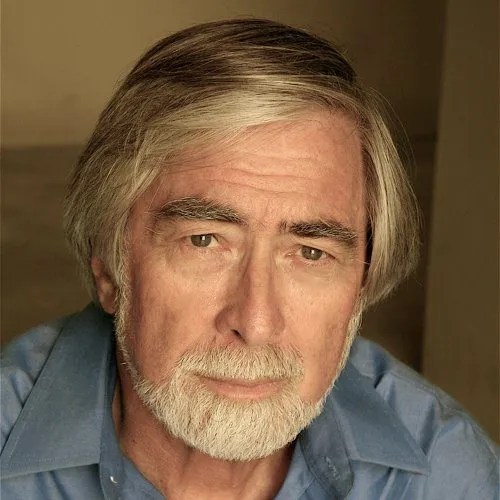
Robert Scheer
Robert Scheer, publisher of ScheerPost and award-winning journalist and author of a dozen books, has a reputation for strong social and political writing over his nearly 60 years as a journalist. His award-winning journalism has appeared in publications nationwide—he was Vietnam correspondent and editor of Ramparts magazine, national correspondent and columnist for the Los Angeles Times—and his in-depth interviews with Jimmy Carter, Richard Nixon, Ronald Reagan, Bill Clinton, Mikhail Gorbachev and others made headlines. He co-hosted KCRW’s political program Left, Right and Center and now hosts Scheer Intelligence, an independent ScheerPost podcast with people who discuss the day’s most important issues.
