

Click to subscribe on: Apple / Spotify / Amazon / YouTube / Rumble
Any urban street in America is guaranteed to be lined with popular fast food chains, the readily available nature of their products being the main attraction, with people barely giving a thought to the process behind getting the food from the farm to the table — or more likely, the take-out box.
Joining host Robert Scheer on this week’s Scheer Intelligence are two people who dedicated their recent film, “Food and Country,” to understanding this process behind food in the United States and how big business, as usual, has almost complete control of the system. Renowned former food critic for the La Times and New York Times, former editor of Gourmet magazine, author of cookbooks and memoirs and PBS food guru, Ruth Reichl and film director Laura Gabbert discuss some of the key takeaways from the film.

Gabbert asserts that big agriculture’s firm grasp on the industry is where the problems begin. Its lobby is amongst the biggest and Gabbert explains that there is no incentive to try and remedy the problems that come from this monopolization of an industry so essential to human survival. “I think that is really the crux of the whole problem, is money in politics,” Gabbert says.
Reichl takes it back to what happened after World War II and how the U.S. government made an attempt to fight communism by cheapening the food making process, which turned farms into factories. “Almost everything that’s wrong with America comes from that policy. We’ve destroyed our health, our environment, our communities,” Reichl tells Scheer.
The heart of their story lies with the farmers themselves, and how, despite being in charge of the most important aspect of human survival, they still tend to struggle the most in society. Reichl explains their significance in the film, stating, “I just wanted for us to be able to listen to their stories that they tell themselves about what has happened to them and what the American system has done to them.”
Check out the film’s website here for screening information.
Credits
Host:
Producer:
Video Producer:
Introduction:
Transcript
This transcript was produced by an automated transcription service. Please refer to the audio interview to ensure accuracy.
Robert Scheer
Hi, this is Robert Scheer with another edition of Scheer Intelligence, where the intelligence comes from my guests. And in this case, we have the producer and the subject of a really terrific new film called “Food and Country.” And I’m going to let Ruth Reichl introduce the director, because I don’t know, I’m just meeting you for the first time, Ruth, I’ve known forever. And I do want to say one thing, Ruth is very famous. She worked with the LA Times as the food editor, The New York Times. She was at Gourmet magazine but I must say, she’s handled fame very well. She’s the same Ruth that I knew back at the beginning when she was living in some crazy commune in Berkeley. It’s not gone to her head. And the movie is reflective of that, and it’s great, because she really respects the farmers, the restaurant people, people who work in the industry. She’s not the big shot, they are. And the movie is just a wonderful love story about food and the people who, in the old fashioned way, produce it, without factory farming and so forth. I also want to make a personal note that Ruth is not known as a chef, obviously more as a critic, but it happens that my mother, and it’s interesting, because some people have talked about, and it’s discussed in the movie, that the people who went in for organic food and so forth, also, yes, you have to charge more, because the people working, and that’s a big theme of the movie, people producing food have to be paid, and factory farming makes it cheaper, but it also destroys the health quality and everything else. But my mother was a garment worker for her whole life, and then when she retired, I moved her out to Berkeley, and my mother insisted. And in fact, she was mugged once on her way to a restaurant called The Swallow at the Pacific Film Archive. Despite that, I said, Ma, you can’t go there anymore. You’ll have to take Meals on Wheels. She said, No, no The Swallow, and she would go with her old lady friends to The Swallow every single day, and then watch an old movie at the Pacific Film Archive, and it was Ruth Reichl and Sherry [inaudible], and I gather other people who were actually preparing the food at the swallow cafe. So why don’t we begin with that and talk about your involvement? First of all, introduce us to your producer, and then your involvement with the film, and really what this movie was about, which I should just say it hangs on the pandemic as a teaching event, that it focused our attention on what it would be like to do without restaurants. What is our food supply? How dependent are we on community? So I promise every week to shut up. I will shut up right now and you take over, Ruth.
Ruth Reichel
Okay, I want to first introduce director Laura Gabbert. I was lucky enough, Laura is probably most famous as the director of “City of Gold,” a wonderful film about the late Jonathan Gold, who was enormously influential in changing food and food writing and introducing people in Los Angeles to a side of the city that the readers of the LA Times did not know before Jonathan came along to say, wait a minute, you’re missing the best of LA. And when Covid started, I had this sense that it was going to be either a disaster moment for people who reduce food for restaurants and farmers and fishermen and ranchers, or it was going to be a change moment when Americans would finally wake up and say, Oh, my God, food is important. I mean, they’d never seen food shortages before, and that it would be this wake up call. And I felt like I wanted to keep a record of what was happening to the food system during Covid. I mean, that moment really revealed how fragile our system was. And, you know, never waste a disaster. I thought, I’m just going to keep a record of this. And I was fortunate enough to partner with Laura, who said, No, this should really be a movie. And I had not had a plan that big. And we started, I mean at the moment it was, it was interesting because when we decided to partner up was about March 20 of 2020, and I said, Laura, it’s too late. We should have started a month ago. Of course, none of us had any idea that, you know, two years later we would still be locked up in Covid. We thought it would be, you know, six weeks and it would be over. And one of the things that I think is unusual about this film is this is really a passion project for us. I mean, all of us, I mean, we put our time and money into it. We didn’t think… it wasn’t like, Oh, we’re going to get rich from this. But really, this is an important story that needs to get told, and Laura has done a lot to make sure that the story really gets out there, which, you know, she’s got a team of amazing people who are making sure that the right people see this, and we’ve partnered with the Union of Concerned Scientists and the Independent Restaurant Coalition and a bunch of other sort of like minded people who are making sure that this film gets shown because it is really an important topic. I mean, if we are not vigilant, we will not be raising any food for people to eat in this country and Covid really showed that. I want to go back to what Bob said earlier, because I’m really very proud of what we did at The Swallow. I mean, The Swallow started in 1971 at a time when very few people were making everything from scratch in restaurants. I mean, we were making wonderful salads and making vinaigrettes when most people were, you know, getting salad dressing out of a bottle, and we were famous for our quiches. And people would come in and say, What’s a quiche? And we made real food at affordable prices, and a reason it comes up in the film is that one of the people in the film, [inaudible], who has a restaurant in the Bay Area, used the Covid time to make her restaurant employee owned. And we were an employee owned restaurant, we were a collective and everybody there had an equal share in it, and we all did everything. And it’s a model for a restaurant that really works, and I’m sorry that there are so few of them. The famous collective that is still there is the Cheese Board Collective in Berkeley, and we were started, actually by the Cheese Board Collective.
Robert Scheer
Well, in addition, across the street from, I don’t want this to be a Berkeley story, I have to remind people, we’re talking to one a world famous gourmand or expert, or whatever you’re called and this is an international story, because really, it’s a movie about… it actually ends on a pretty pessimistic note, I must say, by the way, the movie is now in circulation. I know in Los Angeles, it’s opening this week. Will be open at the Lemley when this is broadcast. But since we get distributed nationally, it already opened in New York, it’s widely available so and it’s called “Food and Country.” And I also want to say it’s a joy to watch. It’s really a very important film, because it unites us with urban America, with rural America, and we revisit the whole story of agriculture, which was done first of all, not only by white people. One of the things I learned from this movie is how important, and I should have known, because, after all, Black people had been involved in agriculture, unfortunately, as slaves and everything else. But when people did what is now called organic or natural farming, the people there was a very representative part of our population, Black and white, ordinary people, people who supported their communities and so forth. And the big issue in this movie is the dominance of the distribution system and the name brands and so forth. So it’s from a sociological, political point of view. It’s a very important film. I don’t want to lose sight of that with our schmoozing around here, anecdotally about the great quality of the restaurant. But I do want to say, in terms of idealism, somebody else who shows up in the movie is somebody I also have enormous respect for, Alice Waters. And I don’t know the situation in Alice Waters’ restaurant, about collective or what have you, but I know during the pandemic, she seemed to be concerned about her employees and their well being, and the restaurant was able to come back from that. And I also know that in Los Angeles, at the Hammer Museum. She is involved with the restaurant there called Lulus. And they deal with a theme that is important in the book that I would like to address, which is, how much do you pay the workers at restaurants? How much do you pay the farmers? One thing I learned from this movie very vividly, is that people doing the actual farming, even when they seem to have considerable land, if they’re doing it in a natural way and free range cows and so forth, they’re not making a living. They’re not surviving. And certainly people working in the restaurant industry, many of them don’t do well. And I think I mentioned before you have in the movie, a lot of discussion about the back of the restaurant, the front of the restaurant, what is wrong with the tipping system. And I think a lot of us who go to restaurants now in places like LA are experiencing some of the… and at Lulus, they pioneered this where the tipping has been incorporated in your regular bill. It’s not really so much at the discretion of the customer, and it’s shared with the people working at the back end of the restaurant as well as the front. Anyway, I found that to be interesting, but take it from there. Tell me about the big themes of the movie? Because it’s really not just about what’s trendy or anything like that. It’s really about how do we survive as a people, in terms of what we eat and its effect on our well being, and, of course, the environment, climate change. So give me the big themes before we just talked about all the celebrities that are involved.
Laura Gabbert
I think I can get to the themes a little bit by kind of talking about the approach of the filmmaking. And I think that Ruth and I jumped into this together, you know, just because we both thought it was so important. But I want to point out that I was actually thinking of working on a short film just about restaurants in Los Angeles, because I had gotten to know so many chefs and restauranteurs during making City of Gold and Ruth said to me, Laura, this is so much bigger. She grasped right away at the very beginning of the pandemic that this was going to affect the entire food chain, and that farmers were very vulnerable, and especially our small to medium sized farmers. And so I think, as Ruth said, she really wanted to record, kind of keep an archive track everything that was happening day to day. We had her record the Zoom calls, which then were eventually incorporated into the film. That wasn’t our original plan, because we thought we would be out shooting much more quickly than we were able to. But I think the thing that Ruth and I really decided we wanted to do is let the have the film really allow the audience to get to know the people behind their food, because we’re so disconnected from our growers and our producers today. You know, we used to be an agrarian country, and now I think we have, I think it’s 0.06 of our population are farmers, and we don’t know farmers unless you’re lucky enough to live in an area where there’s farms near you, and you go to farmer’s markets, most people don’t really know the people who grow their food. And I think Ruth and I always just kind of kept that at the forefront as we were making the film. We really wanted the characters that we were sort of finding along the way to tell their stories, and we thought that was the best way to get into the broader issues about industrialized agriculture and things like tipping or systemic racism and the history of farming. So we they sort of helped us tell the story, if you will.
Ruth Reichel
And I was overwhelmed by how resilient, smart, I mean the farmers amazed me, because, you know, I am an urban person with a fairly limited idea of what farmers do. I mean, we sort of think they put, they put a seed in the in the dirt, and then a few months later, there’s something to eat. And I mean, these people are so sophisticated. Mean, you look at these farmers, and they have these, these walls of computers, and they can tell you, you know, down to the penny, what the price, the commodity price of everything is on the Chicago market. They can tell you the yield per acre of every inch of their land. They are constantly learning things are constantly changing. They are dealing with weather. I mean, one farm family that we chronicle are the Joneses in Huron, Ohio. They have the most sophisticated, I mean, they, when you talk to them, they’re just folksy, decent people who, throughout this , what they worried about most was the people who work for them. They had 125 families working for them, and they were moving heaven and earth to be able to keep them employed during the pandemic. And you see them as these folksy, you know, Golden Rule kind of people. And then you go and look at their farm, and they have figured out every possible way to harness nature in a way that makes farming easier. I mean, they are farming 12 months a year in Ohio because they have these greenhouses that open and close depending on the sunlight and the weather, and they have figured out how to change flavor through lighting. I mean, they’re remarkable, and all of these farmers, Will Harris in in Georgia, you listen to this man, and a problem comes along, and he just finds a way to turn that lemon into lemonade. And I just felt like we don’t know farmers. I mean, we are urban people. We don’t know them, and I was so taken with these people. Kind of fell in love with them, and I just wanted for us to be able to listen to their stories that they tell themselves about what has happened to them and what the American system has done to them. I mean, the Joneses, for instance, their family lost everything in the farm crisis of 1982, everything. They lost the entire farm, their house, their cars, and they had to start from scratch. And they did. But what really sank them was America’s cheap food policy. I mean, the root of all of this is that after World War II, the American government decided that how we would fight communism is by having the cheapest, most abundant food in the world, and that we would basically turn our farms into factories. And everything that’s wrong with and in my opinion, almost everything that’s wrong with America comes from that policy. We’ve destroyed our health, our environment, our communities.
Robert Scheer
You know the irony in your film is we’ve had no shortage of celebration of rural America and the farmer and so forth, and this was part of the whole mythology way before the Cold War, but after, you have, I forget his name, Earl Butz and the Secretary of Agriculture, famous for some racist remarks he made at one point, but the fact the matter is, the celebration of rural America and the farmer is a lie. It’s a lie because these farmers were destroyed by policies made in Washington that favored the concentration of big agriculture and factory farming controlled, I think, in your film, basically by four firms, two which are actually foreign owned, according to somebody that’s…
Ruth Reichel
Two of the four.
Robert Scheer
But what was so interesting about your film is that it strips away this whole mythology. Yes, we meet, in Bluffton, Georgia, we meet wonderful free range farming, you know, blah, blah, blah, wonderful people, and they are articulate, and they know what’s going on. And what they say in your film is, the system is rigged. The system is not working. And you can work your tail off for a whole year, and you can make all those wise, scientific decisions, and they’re thinking about it all the time. You’re not going to make money at the end of the year, because the game is rigged against you. I don’t want to lose that point, because it’s, for my money, the main reason why people should watch this. It’s not going to get better unless you fundamentally alter the system. And what these farmers seem to say is, basically, you have to use antitrust against big agriculture and break up these big companies, right? And, in fact, you have them saying we need more regulation rather than less, because these companies are violating, really the efficiency of what’s supposed to be capitalism, certainly rural-based capitalism. And I don’t want to put words in your mouth, but isn’t that really the provocative message of this movie? That these farmers can do every sensible thing and work as hard as they can, and because the game is rigged, they will not be rewarded. And that’s why it ends on a kind of pessimistic note, that it’s really not getting better.
Ruth Reichel
Well, I don’t think it’s ending on a pessimistic note, because what we did was we chose to focus on a few farmers who have solutions, and their solutions that work. I mean, one of the big problem, one of the reasons why farmers are in so much trouble is, it’s put very succinctly by the rancher, Steve Stratford, who says, I said to him, do you want your kids to do this? And he said, let me put it this way, every year I go to the bank, I borrow $8 million I work 100 hours a week, and in a good year, I take home $50,000 you have to be an idiot to do that, to risk $8 million for $50,000 or as Ricardo Salvador says, if you’re generous, 7% of the people who farm make a living on the farm. Everybody else has to have another job. And yes, it’s rigged, but it’s rigged in a way that the government is is putting a heavy hand on this scale, and what who they are privileging is agribusiness, not small, independent farmers who are raising good food.
Laura Gabbert
And I think I just want to add to that, farmers like Bob and Lee Jones at Chef’s Garden, and a farmer like will Harris in Bluffton, Georgia at White Oak pastures, Those guys have figured out how to work outside of the system. The reason they actually do okay for themselves, I mean, it’s still incredibly hard, and the pandemic was hard for them, the very reason is because they don’t rely on government, they don’t rely on subsidies. They’re completely outside the system.
Robert Scheer
Yes, but correct me if I’m wrong, but I asked Ruth about this before we went on the air, what percentage of agriculture in America is done by this sane, wonderful pro-life, pro-animal, healthy way that you describe in the movie, which I applaud. And as a consumer, I want to pay more for it, because it’s better for my body. It’s better for the world. I’m sold. The reason I use the word pessimistic, and I’m not trying to discourage people from watching the movie. I think the movie is wonderful, you know, I don’t want to use the word entertainment. It’s a wonderful experience. You meet great people, you know, and so forth. The reason I think it’s pessimistic is because the game is rigged. And these farmers tell you that. Yes, and in some cases, their children come back to work. But I had a student in my ethics class just this week give us a report on factory farming, and she used this statistic. It was well over 90% is done under the most barbaric conditions, where, in fact, the animals rarely even see sunlight and they’re so crowded together and they’re wallowing in their own feces and what have you, it was disgusting. And that’s what where we are now, and that’s why, when these farmers… I was amazed at how sharp these farmers that you interviewed were politically, because they said, We don’t care. Yes, well, most people around here will vote for Trump, and we’re conservative by tradition, but they also say, but in fact, is the Republicans are certainly not any better than the Democrats about breaking up trusts, and what we have to do is break up these agricultural trusts. Is that not the conclusion that the farmers in your movie draw from all this?
Laura Gabbert
I think that’s one of the conclusions, absolutely. Don’t you Ruth? I mean, I think that there… Go ahead.
Ruth Reichel
Yeah, no. I mean, as Steve Stratford said, is we just want a level playing field. You know, get the government out of it all together. They’re not asking for more regulation. Just get government out of our business?
Robert Scheer
But how do you get the big corporations… Look, I don’t want to falsely reinterpret your movie to anybody and maybe I’m showing my own prejudice here, but I just watched it this morning, and, and it was a very clear message that you have a stranglehold by these large agribusiness corporations, these cartels and these pathetic farmers go to auctions. Yes, some go outside the system, but basically, your prices and everything will be determined by that. I don’t know what we mean by deregulation, but if government doesn’t break up trust, no one will. And by the way, these trusts came into business according to your movie, because at the end of second World War, the government favored them, and the government did not do the right thing by individual farmers. Is that not correct?
Ruth Reichel
No, that is correct. And there’s certainly a moment in the film where, I think, is like, one of the most poignant things I’ve ever seen on film, where the government has promised these independent farmers something, and then they go back on their promise, and one of our farmers starts crying on camera. And he’s not crying because they are having problems. He’s crying because there are starving people out there. We’re a handful of hours down the road from New York City, there are people there who have nothing to eat, and we can’t afford to pick this food because the government just walked away from us, and we’re leaving wonderful food to rot in the fields because we can’t afford to pay our workers to pick the food. And he said, and I feel like such a failure.
Robert Scheer
So why don’t you tell me in your own words what the solution isthat is, I think, suggested by this movie.
Laura Gabbert
I mean, I would say one. I mean, we don’t get into this in a major way in the film, but I think if we want to take even one more step back, the real problem is money in politics. The agricultural lobby is, I think, the biggest lobby in Washington, isn’t it, Ruth? The Democrats and Republicans, I mean, not all of them, but are sort of bought and paid for. So there’s no incentive for them to tear up the farm bill and start all over, or break up the farm bill, or I’ve read about all sorts of potential ideas about how the farm bill would be sort of reworked, but I think that is really the crux of the whole problem, is money in politics.
Ruth Reichel
I would say what I would like people to take away from this movie, is Americans have never thought of food as a crucial issue. So, abortion, people’s deep seated feelings about abortion have had a huge impact on politics that has nothing to do with money, really. These are people’s values, right? That are really moving the needle politically. I would like people to come out of this film and think we need to start thinking about food in that way and food policy, and we need to let our elected representatives know that we really care about what they’re doing about food policy, who they are giving money to. And I think that’s how you affect change. But Americans have never thought about food as an issue that they would ask what is your stance on the farm bill? What is your stance on these subsidies? We give $50 billion a year in subsidies to agribusiness. What is your stance on that? Don’t you think that we should take some of that money and give it to independent farmers? Don’t you think we should be breaking up the meat packers? We don’t ask those questions of our representatives, but we have plenty of other questions. That, to me, is the answer, recognize that this is a political issue.
Robert Scheer
Well, I that’s all I was trying to suggest before. Is that the movie, maybe I shouldn’t have used the word pessimistic, but what I took away from it is the problem is only going to get worse if you don’t break up big agriculture. And that is what these farmers that you interviewed said. They were very specific about, that the game is rigged. Look first of all, we haven’t even discussed a very big issue that runs through the whole movie: should food be cheap? And after all, a lot of what was done in defense of fast food and big agriculture, oh, we’re going to make food available to people at affordable price. The fact is, there’s nothing affordable about that food, because it makes you sick, it increases health care costs. It’s not good for the environment. It’s not good for climate change and so forth. So we have a false notion of what’s cheap, right? And the movie addresses that. And the fact is, these people… you have these wonderful scenes where animals are released out to free range, and they can actually, I forget the word. The fellow at Bluffton uses it. He believes in instinctive behavior, allowing the instinctive behavior of a cow to munch grass or a chicken to peck around. And you have these wonderful scenes of solar panels, but you can have solar and under the panels, animals can graze and so forth. And really what the movie challenges is, what is efficiency? And you have a real problem now in part of the developing world, particularly China, something else my student brought up, because they’re going more for this very aggressive factory farming, maybe five stories,
Ruth Reichel
Yes, huge buildings filled with pigs
Robert Scheer
Yeah, and so forth and people should just come to understand. It’s interesting. I just thought about that going back to our own Berkeley days, because I also used to cook a little bit and go to different stores. And one of the things that impressed me when I first went to China and other places that, yes, people had less meat, but they extended it with cabbage, with rice, with lots of vegetables, and so a little meat went a long way. You didn’t have to be a full vegetarian. And instead, we embraced the British system of big slabs of beef and so forth as a model of prosperity, what people should use. And I just do think that the movie has these farmers. Forget about the movie. The farmers in your movie, and some of them are in urban settings and so forth, are saying that cheap is not cheap, and that, yes, it may cost more if you do farming organically and so forth, but you’re going to save it in your hospital bills. You’re going to save it in your social welfare costs. I just, I don’t know, I don’t want to graft an interpretation on this movie. We got to wrap this up in a few minutes. But it seems to me, the power of this movie is that there is an alternative way, and it’s really what we did in other industries. Antitrust is not some political shenanigan. It’s the way you save capitalism, right? I mean, you allow a free market. And that’s what we want. We want a free market for agriculture that is not gamed by cartels, I don’t know, am I misinterpreting the movie?
Ruth Reichel
No, no, absolutely not.
Laura Gabbert
Absolutely I think that’s correct.
Ruth Reichel
And I there was a wonderful moment in New York when Karen Washington, the Black farmer activist, I mean, somebody started asking her about cheap food, and she actually has a farmer’s market. She has run a farmer’s market in the Bronx for 30 years. And she said she had to educate people that she’s a farmer and that there are costs there and that she’s charging what it really costs. And people say it’s too expensive. And she says I look down at someone who’s wearing a pair of $400 sneakers and say, well, you know, you make your choice. You can afford those sneakers, you got your iPhone. Don’t tell me that a $2 tomato is too expensive.
Robert Scheer
But also, the reason people make those choices is they’ve been advertised to fast food. They’ve been sold a bill of goods. And since you mentioned the Bronx, since I grew up in the Bronx, and actually, I’m old enough to have had a victory garden. And we actually have farms in the Bronx, believe it or not. And there’s a woman from Oakland who mentions what a tomato tastes like when you’ve grown it under natural conditions, you know, and so maybe if you have one wonderful tomato, you don’t need 10 of them in other forms. I mean, the fact is, and I love what you said in the movie, the food movement that you are so well connected with Ruth, maybe the most famous person at first, made a mistake by stressing what, that food should be delicious, and that that was the goal. And it occurred to me, you know, the main way that we destroyed food or prevented food from being delicious is by making it fast food, by cheapening the production, by making it uniform, by tomatoes having to have a thick skin so they could travel further, and all of that stuff. So this is really an attempt to bridge the gap between people who like fine dining and ordinary people who have been denied fine dining, they’ve denied the taste, as the woman said, from Oakland, of a real tomato, right?
Ruth Reichel
Yeah.
Robert Scheer
Okay. Is that a good summary? Should we wrap it up on that? I want to recommend to people to watch this movie. I just think it’s it’s terrific. Yes, I’m sorry if I used the word pessimistic. I’m not trying to turn anybody off. It’s concerning. It’s concerning. And you cannot watch this movie without feeling these wonderful, decent farmers. Yes, they should be rewarded. They are doing great work and everything, but they also are, unfortunately, an endangered species. And you see it even with the people gathering kelp and all sorts of logical ways you could feed and help the planet survive. But they’re up against this machine and this sad thing that every year they have to go get a new bank loan for $8 million or something, and then spend the rest of the year worrying about whether they’re going to pay off the loan and be granted another loan the next year. It’s a view of rural America that has otherwise been celebrated and so forth, a reality check that I have never seen as vividly explained and accurately as in your film. So as director, my hats off for you for getting that.
Laura Gabbert
Well, thank you. We appreciate that, and it was very much a collaboration. If I may just plug our website. If people are interested in seeing the film, foodandcountryfilm.com and you can sign up for our newsletter and see where we’re playing across the country. We’ll be on video on demand on October 22
Robert Scheer
Great. And I also want to thank the people of KCRW, Christopher Ho and Laura Kondourajian for posting these shows. I want to thank Joshua Scheer my producer, who insisted we do this, and he was absolutely right. And Max Jones, who will put this up on video, Diego Ramos, who writes the introduction, I want to thank the JKW Foundation in memory of Jean Stein, a great writer, for putting up some funding and Integrity Media for doing the same for honest journalism. See you next week with another edition of Scheer Intelligence.
Please share this story and help us grow our network!
Robert Scheer
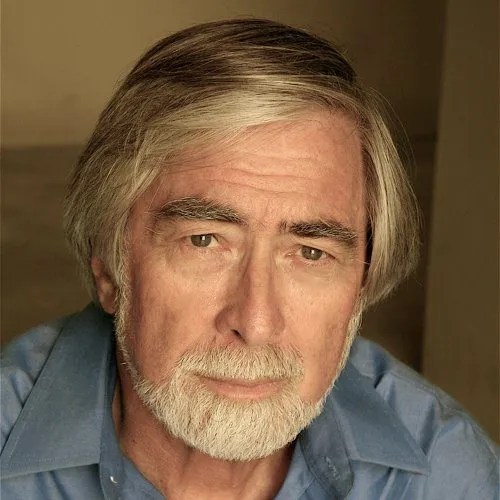
Robert Scheer, publisher of ScheerPost and award-winning journalist and author of a dozen books, has a reputation for strong social and political writing over his nearly 60 years as a journalist. His award-winning journalism has appeared in publications nationwide—he was Vietnam correspondent and editor of Ramparts magazine, national correspondent and columnist for the Los Angeles Times—and his in-depth interviews with Jimmy Carter, Richard Nixon, Ronald Reagan, Bill Clinton, Mikhail Gorbachev and others made headlines. He co-hosted KCRW’s political program Left, Right and Center and now hosts Scheer Intelligence, an independent ScheerPost podcast with people who discuss the day’s most important issues.
Editor’s Note: At a moment when the once vaunted model of responsible journalism is overwhelmingly the play thing of self-serving billionaires and their corporate scribes, alternatives of integrity are desperately needed, and ScheerPost is one of them. Please support our independent journalism by contributing to our online donation platform, Network for Good, or send a check to our new PO Box. We can’t thank you enough, and promise to keep bringing you this kind of vital news.
You can also make a donation to our PayPal or subscribe to our Patreon.
