

Click to subscribe on: Apple / Spotify / Amazon / YouTube / Rumble
Fewer people in the world had access to the personal moments experienced by Steve Wasserman, Heyday Books publisher, former LA Times Book Review editor and former editor at several of the nation’s most prominent book publishing houses. In his latest book, “Tell Me Something, Tell Me Anything, Even If It’s a Lie,” he details his close encounters with a handful of some of the most significant people in the 20th century, including Jackie Kennedy, Susan Sontag, Christopher Hitchens, Gore Vidal, Barbra Streisand, Huey Newton and others.
Wasserman describes these accounts, or portraits, as focusing on people who “inspired me to do what I could, however modestly, to live a life of passionate engagement.”
From the intimate details of a lunch with Jackie O to a deathbed conversation with writer and journalist Hitchens, Wasserman features a multitude of essays that cover a range of issues from politics to literature to culture and life. One memory of Wasserman included how he “never experienced Susan Sontag as a hostage to nostalgia.” Wasserman found inspiration in that and thought “it was a great, great lesson not to become pickled in your own prejudices such that you couldn’t be open to the world.”
Scheer attests that these portraits are brilliant, especially when dealing with controversial figures. He tells Wasserman, “These are famous intellectuals, but you humanize them, and you involve your own criticism.”
Credits
Host:
Producer:
Video Producer:
Introduction:
Transcript
This transcript was produced by an automated transcription service. Please refer to the audio interview to ensure accuracy.
Robert Scheer
Hi, this is Robert Scheer with another edition of Scheer Intelligence, where the intelligence comes from, my guest, and in this case, someone, as I met when he was in high school, full disclaimer. It’s Steve Wasserman. The book is called, “Tell Me Something, Tell Me Anything, Even If It’s a Lie.” That is one of the more honest statements that any reporter could ever make. Tell me something, something I could work into a story. And if it’s a lie, I’ll work around it. I’ll challenge it, what have you. But let’s get awake here. This is a book that you will not sleep through. It’s, I will say, a great read. And let me first of all say, Yes, I have a bias here. I am thanked in the dedication, along with the famous Christopher Hitchens and Susan Sontag, it’s great company to be in. And I first met Steve when he was a high school student. He ended up being a researcher with me and coming to the LA Times when I worked. Obviously, I’ve known him a long time, and I actually grew up in the Bronx, near his parents. So I have some loyalty, although he grew up in a rural town in Oregon, where he points out he was in the only Jewish family in this small rural area, and his father then was working for [inaudible], the big engineering company. But the great thing about this book is it kind of summarizes Steve Wasserman’s lifelong love affair and deep involvement with books, books that some people think are threatened, that may not exist, who’s going to read them, and he’s embraced actually a form of book publishing that publishers don’t necessarily embrace. He published this. He’s now the head of heyday books, which just celebrated its 50th anniversary, very famous, smaller book publishing based in Berkeley, California. And the book is a collection of essays, but they weave together as an incredible memoir. I think I’m hoping Steve will write a full blown memoir, and anybody reading this book would probably encourage him to do that, but it works as a seamless essay, or really, what the hell has happened in our world, not just in writing and reporting on it, but our world going back, certainly to the early 60s. And I’m going to let Steve take it here, but I hope he will quote from some of these portraits. They’re brilliant portraits, and maybe we’ll begin with a controversial person like Christopher Hitchens or even Susan Sontag. These are famous intellectuals, but you humanize them, and you involve your own criticism. So take it away, Steve.
Steve Wasserman
Well, I have put together 30 of the essays I have written over the last 40 or 45 years, I have made my living as an editor and publisher, a kind of midwife to the birth of ideas of others, but along the way, I from time to time, delivered an essay, yes, an attempt to try to understand the currents and complexities of the times I was living through, and of some of the issues that pressed upon me with acute pressure, whether it was working within mainstream publishing as an editorial director of An imprint of Random House, or later directing a a small publisher within the framework of Farah Strauss and Drew and I really have attempted having a seat at many around the table of publishing general in jet in general. I’ve worked as the editor of the LA Times Book Review, as the deputy editor of their Sunday opinion section op ed page. And I really had a chance to work, as it were, almost every station in the publishing kitchen. And now I have put together, trying to make sense of all of this, a kind of memoir in essays. And I leaven the chapters with portraits of people I came to know you among them, who were very influential and who inspired me to do what I could, however modestly, to live a life of passionate engagement. And that has given me enormous pleasure and has inspired me throughout five decades of a so called career. I never had any five year plans, but I seemed constantly, whether by virtue of the great God of serendipity or my own temperament, to stumble into geniuses, and I tried to learn from them.
Robert Scheer
So to introduce us to these geniuses. Sometimes they could be a pain in the ass, you know, hard to work with and so forth. And sometimes they would become the centers of major controversy. I mean, Gore Vidal is one of those geniuses that you describe. Jason Epstein, a great publisher, Jackie Onassis, amazingly enough. Why don’t we begin with Jackie Onassis. How the hell did you get involved with her, and why is she in this book? Is she one of the geniuses, or just an amazingly interesting person. For people who don’t remember her, she was married to our president at one point.
Steve Wasserman
I would call her an astonishingly engaging and terrific personality. Maybe it will help the listener if they get take the temperature of the pitch and roll of my own sentences. So if you’ll indulge me, I’ll read you a bit of that essay. “It’s called scallops with Jackie.” Jacqueline Kennedy Onassis will be remembered by most Americans as the remarkable first lady. She was elegant, beautiful, stoic by any measure. She was a heroic woman, and the trajectory of her life compels our respect. I shall remember her, however, less for her public persona than for her private accomplishments, first and foremost as an editor for many years at Doubleday for it was in that rather invisible capacity that the Republic of Letters had a most passionate Tribune. I first met Jackie, as she insisted I call her, soon after I became executive editor of Doubleday in the fall of 1989 one day, she asked me to meet with her in her office. She wanted to know what books I was reading and what books I might suggest she read. Her voice was a beguiling rush of breath as we spoke of favorite authors, the sorry state of literacy in America, the decline of generosity in our country’s political culture, I was charmed. The most famous woman in the world was utterly without pretension. Her commitment to ideas and culture, serious and sincere. This was a side unknown to most people, despite the best efforts of the tabloid press to prudently expose every aspect of this very private woman. But as ever, Jackie, as she had so indelibly demonstrated in the aftermath of John F Kennedy’s assassination in 1963 conducted herself with consummate grace and dignity, except for a brief interview given to the editor of Publishers Weekly. She never spoke to the press, but for authors in the book beside it, she had all the time in the world. Her interests were eclectic. I envied her range among the books she edited were the enormously successful moonwalk by Michael Jackson, the Empire of the Tsar, a journey through eternal Russia by the 19th century French aristocrat, the marquis dugistan, The Diary of a Napoleonic foot soldier by Jakob Walter, the only account she wrote me of a common soldier in the Napoleonic Wars. And I remember Balanchine a biography of one of the greatest artists of the 20th century. Her taste, dedication and commercial savvy commanded respect from her colleagues. I saw a through line in the books she had acquired and edited. She concentrated on works by dancers, on Hollywood, on courtly life, and on myth. And many of her books were about being the exotic bird in a gilded cage. The bird wants to escape, but can’t, and so over time, resigns itself to being always on view. And I thought the books reflected her life, a life that had required remarkable self discipline and rigor not to let the private woman become tainted by the public persona. They were about the rituals and ablutions necessary to perform in that gilded cage, as well as the almost superhuman compartmentalization needed to keep secrets. The most significant theme in the book she published was the hard work that went into the fashioning of a seemingly effortless, stylized outward appearance. The theme in her list was also a theme of her life. One day at lunch, over scallop salads, of the four plump scallops on her plate, she ate only three. We talked shop, but as was usually the case with Jackie, we found ourselves plunged deeply into a dissection of the country’s propensity toward violence, the fracturing of the social consensus, the erosion of citizenship. Suddenly, she turned to me and putting a slender hand upon my arm, she said, Tell me, Steve. Where did it all go wrong? And she was silent for a moment and then answered her own question. It was Vietnam, wasn’t it? I didn’t disagree. And then we traced the slippery slope that somehow had led from Vietnam to the swaggering films of Arnold Schwarzenegger, movies she refused to see, declaring, I loathe everything he stands for. In a later conversation, she asked what I was publishing, I mentioned a collection of the best of Murray Kempton. Jack had loved reading him in the New Republic, she said, and a wonderfully inspiring biography of Nellie Bly, the early 20th century Daredevil reporter and feminist. Like many people, Jackie dimly recalled the name as part of a popular ditty, nothing more. She was surprised to learn that at one time, Nellie Bly was perhaps the most celebrated woman in America. Her feats of personal courage and social conscience were peerless. She was an extraordinary inventor of her own life. It just ends to here. Jackie sighed and said, How remarkable Don’t you think to have lived such a life? It is how I would have loved to have lived my own.
Robert Scheer
Well, first of all, we’re going to keep these excerpts shorter. Of course, people should buy the book and read the book but you’ve just demonstrated the vitality of your prose and taking the gilded bird, the What did you say, exotic bird in a gilded cage? Yeah, gilded cage. And that’s how most of us perceive Jackie Onassis Kennedy, the trophy wife of Jack Kennedy, who he cheated on all the time, betrayed in so many ways, but nonetheless a figure in our own right. But I dare say that short thing that you just read is more information about this woman than I ever learned from all of the extensive coverage in the media that I was exposed to up to this point, or reading your book, and I think that is, by the way, a great service of your writing, because what you’re really doing is not exploiting her fame. You’re taking her seriously. You’re taking her seriously. And she took her work as as a publisher seriously and working with writers seriously. So she stops being the exotic bird in the gilded case. She turns out to be a literary worker, somebody trying to make the book important, another person you write about, not clearly as famous was Jason Epstein, who was your boy boss at Random House. Now, I actually did a book for him, and I think you captured, really one of the major figures. Along with his wife, Barbara Epstein, they founded the New York Review of Books. They provided a great alternative to the New York Times, ownership of book reviewing, they gave a lot of heft and long essays to books, and you write about Jason Epstein in an incident that actually involves current politics concerning Israel and its aggressive behavior and so forth, but it’s about Netanyahu, father, who was a scholar. And I just love that essay, because he was as to an editor like you, a huge pain in the ass. I don’t want to give away the whole story, but it’s a great one. Why don’t you just explain what your task, not your task, Jason Epstein’s task was, and his seriousness as an editor and how it got rejected, and keep it in order read the excerpt, or, if not the excerpt, just tell us.
Steve Wasserman
People can buy the book and read, read it in its fuller detail. But the essence of the story is one day Jason shows up at my office. We occupied offices on the same 11th floor of the Random House building, then located at 201 East 53rd Street in Manhattan, and it turns out Jason has found me because I’m probably the only other person on the floor who would be interested in this enormous tome that Benzion Netanyahu, the father of Bibi Netanyahu, Benjamin Netanyahu, the current prime minister of Israel, and the also the father of the great hero of the [inaudible]. He turns out,
Robert Scheer
Did you just say the great prime minister or the famous Prime Minister?
Steve Wasserman
I said the great Prime Minister. He’s great, whether he’s the longest lived, the most influential, probably for better or for worse, depending on your point of view, the word great is morally neutral. Okay, I would say, you know the great, Alexander, the great. Well, was that a good thing?
Robert Scheer
I’m not your editor here. Just, just one clarification. That’s all.
Steve Wasserman
In any event, the father was a great scholar of 15th and 16th century Spain and of and he was embarked on a book that would be published called the origins of the Spanish Inquisition. He could read Medieval Latin he was fluent in Hebrew, Yiddish, German, English, all of the relevant languages, and he’d done primary research in the Vatican’s archives, and he was but English was not his first language, and he had delivered to Jason a manuscript of 2,000 pages was very long, and Jason spent two years meticulously editing this thing. And like many scholars, Netanyahu was quite pedantic. His approach was generally, first, let me tell you what I’m going to tell you, then I tell you, and now I’m going to summarize what I just told you. It was a great deal of repetition, so Jason edits it all down. This is in the age before computers. And he sends the whole package off to Israel. He hears nothing for 10 days. Then one day he shows up in my office. He got a small slip of paper and he and I look at him, I said, What’s up? And he says, I’ve heard from Netanyahu. Let me read you in its entirety the telegram I’ve just received: Dear Jason, whose book is this? If yours take my name off, if mine restore what you cut. So Jason looks at me says, well, they don’t call us stiff neck people for nothing. Ultimately, the book was published with many of Jason’s edits restored, but most of them not. And of course, all the reviewers said it’s a terrifically interesting book, but it’s too long by at least a third, and where was the editor, and it was really a lesson in patience and the thankless task of editing a man who really was so consumed and with his own arrogance that he wouldn’t listen to one of the best living editors alive then in the English language.
Robert Scheer
Let’s talk about somebody you edited, not known primarily… well known as a writer. Orson Welles, yeah.
Steve Wasserman
In February, 1979 I was then a deputy editor, the deputy editor of the Los Angeles Times opinion section and op-ed page. And I had awakened on a Sunday to see that the great film director, Jean Renoir, he was a great director, had died in Beverly Hills, and the LA Times, in its infinite wisdom, had consigned his obituary to a little squib from the Associated Press on page 19. And I thought, Oh, holy cow. This is an embarrassment, to say the least, one of the great directors dying in our backyard, as it were, this is the paper of record in LA. We should have a front page obituary of this very considerable director in his important and influential films. And I went to my boss, and I said, Yeah, we got to do something. He said, You’re absolutely right. Who, who could write a good appreciation for the Sunday paper? And I said, suddenly, I blurted out, for reasons wholly mysterious, I blurred out, Orson Welles. He says, Well, do you know who Orson Welles? I said, No, I have never met him, but I remembered that he had a regular table that he ate at at a fashionable French restaurant then in vogue in LA called Maison, run by a guy named Patrick Terrell. But we couldn’t wait till Wednesday to accost him at his regular table. We had to find him earlier, and I remembered that that Wells had shield for the palmazan Winery. Many listeners may recall those deep voiced tones, no wine before its time. And so I called the winery. They referred me to an agent in New York. I call the agent. The agent says, Listen, if you reach Orson Welles, have him call me. For crying out loud, I’ll give you his office number. It’s a local number 213, I call the number. An assistant answers says, Orson Welles almost never comes into this office, and when he does, he sees a stack of pink slip and he basically looks at it and sweeps them to the floor. Next morning, I come into the office, I leave the message. I come into the office, and I see the ultimate boss, the editor the editorial pages, is sitting at my desk, and he’s and I hear him say, yes, yes, yes, yeah. Oh, here he is. Hold on a moment. He cups the receiver. He looks at me in disbelief, and he says. Yes, Steve, it’s Orson Welles for you. I get on the phone, and in that inimitable voice I hear Mr. Wasserman, this is Orson Welles. I did not know until your kind message that my great and good friend John Renoir had passed away. What pray tell would you have me do? And ultimately, I don’t want to tell the whole story. He wrote for me. We haggled over the length of the piece. He we agreed to 500 words. He delivered 2000 amazing words. Every sentence had oxygen in it. We published it on February 18, 1979 we became rather friendly afterward. Occasionally I would see him for a lunch or a dinner at La Maison It was the last piece he ever wrote.
Robert Scheer
So you know, your relations were not always cordial, not that you were. Didn’t intend to be, but you’re running a book review section. You made the LA Times Book Review section, I think, many ways, the most important in the country, certainly on any given week, it could be. It wasn’t as fat as the New York Times, but you did a hell of a job, but it meant also delivering unpleasant news to people, because you had a great deal of integrity as someone should in that position. And I was really touched by your essay about Gore Vidal and delivering the bad news about a tough review. I had similar experiences of visiting with Gore. I had great respect for him, as you do, and you know, but Gore did not suffer fools easily. He could be very sharp in his criticism. And Why don’t you tell that story? Because it shows the contradictions. If you take the business of, well, criticism, of reviews, of writing, of journalism. In fact, you have to cut your darlings. You have to sometimes make your friends uncomfortable. That’s what comes with the territory. And I found that that whole story about Gore Vidal humanized him, because some people just know the tough Gore Vidal dominating the conversation and so forth, but your anecdote reveals that he actually was a very serious person in terms of, I know he was serious in a lot of his writings, but even accepting that a critical review of his book should be published, or at least…
Steve Wasserman
Well up to a point.
Robert Scheer
Well all of us up to a point, nobody likes to be exposed as having failed, and certainly not on writing a book. But I actually want to say I came away from that essay. I have great respect for Gore Vidal. I knew him quite well, but I was touched by that anecdote, because it seemed to me, he was more worried about reassuring you that you hadn’t screwed up than he was worried about the damage to his own reputation.
Steve Wasserman
Well, in 1999 he had written a book called The Smithsonian Institution. It was one of those entertainments, as he liked to call them, that he wrote in between the big historical novels, slimmer books like Kalki and Duluth and the Smithsonian Institution, as against Burr and Lincoln and others of greater depth. But he was proud of all of those books. So when the Smithsonian Institution was to be published, I determined that I should use the occasion of this book’s appearance as the peg on which to commission and hang a larger essay about Gore Vidal, man of letters, and his place in American literature. And so I duly commissioned a lengthy essay about his work. Meanwhile, Gore had requested that the Random House publicity people he was his publisher, was random house that they asked me to be his interlocutor when he was on book tour in Los Angeles, and that we should do an interview much like you and I are having now, with a nationwide hookup from the Beverly Hills based Museum of broadcasting and television that would go out on the Pacifica radio network. And then afterward, we would repair to the Polo lounge the bistro garden at the Beverly Hills Hotel, and we’d have a nice lunch. And then the following day, I would accompany him up to Berkeley where he was going to have a similar interview with Christopher Hitchens at the Berkeley community theater, and then we’d all go trotting off to Chez Panisse for a dinner, and it would all be we’d all enroll ourselves in a mutual admiration society. I was very flattered, and so we were to. Have their interview on a Monday and then have that lunch. Meanwhile, at toward the end of the previous week, I get the review, and the reviewer loves the life, loves a lot of the past work as to this particular book, not at all. And I’m supposed to interview Gore on Monday morning. And I had always had one principle when I ran the LA Times Book Review, that prior to publication, I would never disclose the content of a review to the author or his or her publisher, thinking that the readers of the LA Times deserved to know first, and I wasn’t going to betray the reader by divulging the content of the review. You know, so I get to review, and they don’t like the new book, and I commissioned cover art. It was going to be the cover. So then I think to myself, What do I do? All Rules are made to be broken. Do the bonds of a certain friendship with Gore trump the commitment to the readers of the LA Times, what to do. So I decided I cannot. All Rules are made to be broken. So I think I should be man enough to disclose to Gore the nature of this review. Otherwise, what I risk is I’ll go and interview him. I’ll have lunch with him, and he will think I’ve been brown nosing him, flattering him. And then once this damn review comes out, he’ll go all over the world telling everybody he can see that Wasserman is a shameless flatter, but when it comes time for the real deal, he slips the stiletto between the ribs. I didn’t want to risk that. I was afraid of that. So I wasn’t going to change the review. I was going to run it. So then the only question was, when do I reveal to him the bad news? Do I do it before the interview in the Pacifica radio hookup? I thought, No, I can’t possibly do that. That’ll totally derail the interview. I’ll do it at lunch. And by the way, that even got worse, because I introduced Gore in a very flattering way. And the first thing out of his mouth at the interview, he says, Wasserman, what a lovely introduction. I hope I read words to that effect in the review that you’ll undoubtedly be running about on my new book, huh? So we go, go off to the Beverly Hills bistro garden. And then I’m like, sitting there we and we sit down to table. I glance over and at the other table, unbelievably, there sits Charlton Heston, his great nemesis from the years in which he was the screenwriter of Ben Hur and famously, they were at odds. And I look at Gordon, I said, Don’t look now. But at the other table, Ben Hur is eating his spinach. He says, not missing a beat. Wasserman, it’s the bistro garden at the Beverly Hills Hotel. It’s the La Brea Tar Pits of all US old dinosaurs. It’s where we go to eat and die. The waiter appears. I order a drink, and I think to myself, well, do I tell him the bad news when the salad first arrived? Or do I wait till dessert? When exactly do I do this? The salads arrive, I think to myself, I got to seize the moment I put down the fork, I look at him. I say, Gore. I really have to tell you before we go continue with the lunch, I have good news and bad news. And he says, Let’s be old fashioned. Let’s hear the good news. First, I said, Well, the good news is, you’re the front page. We’ve got a full page to review. I mean, it’s really, it’s a terrific play for the review. And the bad news, oh, the bad news is that the reviewer loves much of your past work, loves the life, but as to this book, not at all. He looks at me and says, and where does the bad news come? At the top of the piece or at the bottom? I say, well, as a matter of fact, it’s the penultimate graph. Wasserman, it’s all good. Do good news. Relax in reviewer as in real estate, it’s all Location, location, location. No one reads the full review. They read the top and the bottom. It’s all good news. Then he paused and looked at me, and he said, taking my me by considerable surprise, and your reviewer, a man or a woman? I was quite taken aback. I said, as it happens a woman. Steve, Steve, never trust a work of this kind to a woman. They have no gift nor ear for irony.
Robert Scheer
Well, just before I let you slip into a whole world of trouble here, let me say something about your book of essays in relation to women. You not only dedicate the book to Susan Sontag, but in your portraits of some very central major figures in the world of books, some famous. Susan Sontag, some temporarily famous like Sister soldier, just take two examples. Your respect for their work and for their place in American society is exhibited very forcefully, particularly in the case of sister soldier, who was treated very shabbily by the mass media. Why don’t you remind us of who sister soldier was her sudden bursts into prominence, how politicians, I think it was Bill Clinton was it who…
Steve Wasserman
Bill Clinton in 1992 used her as a punching bag to accuse her of a kind of reverse racism coming out of comments she made during the Rodney King following the Rodney King riots, and he did it for completely cynical reasons to…
Robert Scheer
Tell us who Sister Souljah was.
Steve Wasserman
She was an outspoken rap artist of a deeply political bent, very outspoken and eloquent, and an organizer seeking equity and justice for African Americans in this country and and she brought down upon her the full graph of the established Democratic Party honchos, and particularly in the form of then candidate Bill Clinton, who used her cynically, in my judgment, and I think in yours, because you did a long Playboy interview with her, and it’s how I came to meet her, when you said, I think she’s been given a bum rap, and she’s far more complex and interesting that she’s been made out to be, and she’s the farthest thing from a racist. And I think there’s a book you said to me in her, I don’t know what the book is, but I think you should meet her. And I met her, and I found her a completely compelling, smart as they come, person, very gracious, energetic, yes, ambitious, and she had really taken a lot of heat. She really got beat up, and I felt for her, and I said, I have no idea if you want to write a book, but if there, if, if that was were the case, what sort of book would you like to write? And she looks at me, and she absolutely dead pans. She said, I’d like to tell the truth about sexual relations between black men and black women. Oh, oh, well, I never read that book. I said. I have no idea what that book would look like, and I’m not in the habit of signing people up to write books on the strength of an opinion over lunch at a very good Lebanese restaurant on Third Avenue. But she said, Well, what do you need from me? I said, Well, it’d be nice to have like, a sample chapter or something. She said, Well, that seems fair. Six weeks later, she gives me 60 type written pages, and they’re absolutely compelling oxygen in every sentence. And from there, we were really off to the races. The book was published in 1995 it was called No disrespect. It is still in print, and she went on to a unbelievably good career as a multi million copy seller of novels based in the African American community and liming the African American predicament and exploring characters in all their complexities and contradictions. She was a hell of a writer, and she failed as a rap star, but she succeeded as a novelist.
Robert Scheer
And I want to say I heard her speak at the I knew her, as you mentioned, I had interviewed her for Playboy, which put to the credit of Arthur Kretschmann Barry Golson, who were the editors of Playboy. They knew she was being taught and feathered by liberal people as well as conservative people, and they were open to an honest, fair interview with her, which we did, but I happened to I was at the Book Festival, which my wife Narda Zacchino founded, along with Lisa Realis, let me just say, but you were a very early supporter for the first year, and then as book editor, played a great role in which, for LA, is probably the major cultural, high intellectual, cultural, print based event, to the Los Angeles Times Book Festival, now done at USC. Used to be at UCLA, but I happened to just wander by this massive event, and I thought, what movie star memoir is being discussed. What rock musician so forth. It was Sister Souljah. And I was amazed, because she began by praising you as a book publisher, and it was really I thought, My goodness, Steve has done the right thing. And she talked about the difficulty of getting her story out and being taken seriously, and at this point, she had a massive crowd of fans of her books, and it was just really nice to hear, to hear that tribute. And you know, so let me say it’s not all people who would succeed. She went from being infamous to being highly respected. And I think the book publishing, obviously was the vehicle. Let’s take somebody else who you were, not the publisher, but she’s somebody you dedicate the book to, Susan Sontag. And I would say what she had in common with Sister soldier was as a woman being taken fully seriously given the respect that a male writer at that point might have gotten. She had, as I recall, been married to a Harvard professor who was thought to be a more serious intellectual, and she found her way as one of the leading lights of American intellectual life, and you developed a lifelong friendship association with her. She was one of your great boosters, mentors. So let’s take a little bit of time here to talk about we could talk about other women here too, Joan Didion, others that you encountered. But let’s talk about Sontag.
Steve Wasserman
Well, I met Susan in 1974 you and I were working together on a book that would be called America after Nixon, Age of multinationals. I was just about to graduate from UC Berkeley. I was 21 we both went to New York and spent a good deal of that summer putting the finishing touches on that book. You were staying with your friend, Jules Feiffer, as I recall, at an apartment on West 79th and West End somewhere there and I at her invitation, I had also befriended her son, David, who was my age, exactly, they invited me to who was an important writer and editor as well. Yes, named David Reef. I mean, at that time, he was not yet a writer or an editor. In fact, he had dropped out of college and he was driving a cab in New York, and then he would return to he finished his degree at Princeton. He started out at Amherst. And we all hit it off and became fast friends very quickly. And Susan invited me to hang out at their penthouse apartment, which had been the artist Jasper Johns old studio at 106 and Riverside. She was for most of that summer living in Paris, and I spent the summer wandering in her very spacious apartment, just as I say, graduated college, getting a near crick in my neck looking at her then 8000 books that lined her wall. It was otherwise very spartan in its decoration. She had an original Andy Warhol of Chairman Mao on one wall. In the cupboard, when you went to get like a plate or a dish, if you could find any food at all, in the refrigerator, there was sort of rotting lettuce and and bottles of something called Perrier, which was my first introduction to the pretensions of an American intellectual who might want to drink this bubbly water from Europe, you open the cupboard, and there were a few dishes…
Robert Scheer
Particularly when in New York, you could get New York seltzer.
Steve Wasserman
New York tap water is the best water…
Robert Scheer
If you had to go for Seltzer, you got seltzer. They delivered it in these big glass bottles to your apartment. So who the hell would bring some water in from France? But go on just a pet peeve of mine, wrong side, yeah.
Steve Wasserman
And you’d see back issues of Partisan Review. And I nearly got a crick in my neck looking at all these books. And they’re amazing titles and and I saw lots of books by writers I’d never heard of other books by writers I had distantly heard of but had never read and but most intriguing was the clock by her bedside table, which was a 24/7 World Time Zone clock that reflected the times, no matter where in the world you might find yourself. I said, Oh my God, this person lives internationally and is a kind of omnivore of culture, and she never sleeps and and then idly drawn to four blue backed volumes of the journals of the great French writer Andre Jean. I came across a lightly underlined passage in which he confines to his journals. I know I shall have entered old age the moment I no longer awaken outraged. And I thought, Oh, that is the key to keeping yourself young and to keeping your moral compass true north, and so I just sort of fell in love and was inspired by this person whose curiosities seemed to deepen and expand the more she learned, and her great enthusiasm for learning and trying to think seriously, and she was always encouraging. One to think more rigorously, more seriously, she had very little patience for people who were engaged in what she called the infantilization of the American debate. So she wanted to be a grown up and she entreated people to behave like grown ups. I thought that was a worthy ideal, and maybe one day I would be able to crack the code and become an adult.
Robert Scheer
But she was also a wonderful friend. I’ve forgotten that I introduced you to her.
Steve Wasserman
At a dinner party in April of 1974.
Robert Scheer
That’s kind of how I show up in your I’m sort of the victor D of some restaurant, virtual restaurant, that you participated in. But I do remember Susan because she had, she could be a very light Gore Vidal, a very tough critic and took no prisoners and so forth. But she was also an extremely generous just as Jules Feiffer, by the way, who led me his apartment, these people were very supportive, younger writers, of people who were not well known. I put myself in that category. I certainly was not as young as you but when I did stay with Jules Feiffer, you know, very generously gave me his apartment in New York as he was going out, where was he going up to, I don’t know somewhere, where they go in the summer, I think, is Martha’s Vineyard, I think, yeah, no, some island, Nantucket or some, wasn’t it? Yeah. But anyway, there was a surprising generosity that I found with a lot of these people. Susan Sontag, I always found her incredibly supportive of young artists of one kind or another. Yes, she had a…
Steve Wasserman
That’s one thing that you and she and the people I admire this book is filled with the admiration, admiring portraits of people that I whose temperaments and sensibilities I was drawn to. And one of the characteristics that you and she and among others in the book, have in common is that I have never experienced you or I never experienced Susan Sontag as a hostage to nostalgia. They never wanted to talk about the good old days. They were always on the contrary. Interested in, what have you read recently? What have you seen? What is your take on this or that, and they did surround themselves with younger people, and it kept them young. I mean, I thought it was a great, great lesson not to become pickled in your own prejudices such that you couldn’t be open to the world.
Robert Scheer
Yes and but also, let me, I’m not going to defend nostalgia, because that’s boring and inaccurate to some evoke some great period that never existed, including the 60s, by the way, full,
Steve Wasserman
Yes, especially so, in fact.
Robert Scheer
I wouldn’t say especially, the 60s were pretty terrific. But leaving that aside, I want to make a point about this book. The book, by the way, is, let me hold it up, since we do also video here. Yeah, that’s good. Thank you. Hold
Steve Wasserman
You hold up your copy. I’ll promote mine.
Robert Scheer
Okay, “Tell Me Something, Tell Me Anything, Even If It’s a Lie: A Memoir in Essays.” Steve Wasserman, but you don’t really mean that you will embrace the lie. No, that would suggest a certain cynicism, because some journalists do, if a lie will sell or increase your ratings or so forth, you might embrace it. And somebody, I forget you were quoting somebody to me over lunch, said that you never sold out. Who was that? Are you willing to mention his name?
Steve Wasserman
Sure, no, I had lunch last week with the long time and but now, former editor of the literary editor of the New Republic, Leon Wieseltier, who runs a journal, quarterly called Liberties and and he said, very flattering, at least I took it as a great compliment. He says, you know, Steve, the great through line in your book is somehow you have managed to remain loyal to first principles and you didn’t sell out. I was very flattered by that.
Robert Scheer
And it’s interesting, because he’s somebody I have disagreements with foreign policy and so forth, but I would also say he is consistent with his own thoughts and research and logic. And these days, students I teach in a college, and I’m not putting that on students. I think they’re great. But I would say, basically, these universities don’t stress very much this question of not selling out, which I dare say, in the Berkeley that you grew up in, was the dominant slogan of the culture. Don’t sell out, don’t betray and so forth. And what is the unifying theme of your book? Like them or not. Have disagreements or not. It is a collection of portraits of people who certainly did not sell out. You may disagree with them, and I’m going to get to the most controversial and. Some ways the most valuable of your critiques in this book of Christopher Hitchens, who, as a person, I can, just to be honest here, I once did a I forget her name, but one of the right wing hosts on television, and I had a whole furious debate with Hitchens over his changed position about war in Iraq and all that, and we were screaming at each other over the phone until four in the morning. We had in common a friend, Carol Blue, who was, after all, his wife at that point. I had met her through you. She was trying to keep us on solid terms with the conversation. So I’ve had my disagreements with Christopher Hitchens and so forth. I believe I well. I met Carol blue through you, but I found your portrait of Hitchens, for whom you were very, very close friend and publisher and advisor his one of his most well known books, was it God is not so great, or God is not great? Yeah, religion poisons everything, yeah, and obviously was a big best seller and so forth. And one thing I will never say about Christopher Hitchens is that he sold out. I could disagree with him, and I did strenuously. We made up after that four o’clock in the morning yelling at each other. But I there’s certainly somebody I would hold up again. He’s not my political lodestone, but he’s certainly someone I think had enormous integrity in every time he wrote, he was not pandering to any crowd. He was not trying to advance his career. He genuinely came to some conclusions that would make me uncomfortable or even angry. But also, I admired even a great deal of his conclusions, but I certainly admired his life work and never so much as reading your essay about it. It’s in the book, but I remember when it first came out, you put Christopher Hitchens in a context that I thought was absolutely necessary to understanding that he was not an agent provocateur. He was not doing it to get his name out there. He was not doing it to be interesting by being controversial. He was a man actually obsessed with finding the truth. He was a fellow almost I don’t want to know. I’m not an expert on Orwell. I’m an admirer of his work, but in that tradition of calling it as it is, telling us what you really think. So let’s wrap this up, but let’s take time to do it. Who was his, Christopher Hitchens, what made him and you probably, I won’t say, probably you are. You are undoubtedly the individual that knew him best in the sense of a total view of Hitchens the writer, Hitchens the public figure, Hitchens the friend. And you get into that in this marvelous, I think the strongest essay in this book, tell me something. Tell me anything, even as put to lie. And it wasn’t that you liked that he had an ability to lie. You actually say no, he was somebody who was into unmasking lies, even some he may have been associated with. So let’s hear about Christopher Hitchens.
Steve Wasserman
Well, thank you for pressing in on an open door. That is the essay that I really wrote for this book because I had not previously written about Christopher. I met him in October 1979 in London. He was then the editor, the foreign editor for the New Statesman. I met him through a mutual friend, Robin Blackburn, a contributor and founding editor of the New Left Review. We met at an exceedingly bad Chinese restaurant. I remember very little of that meeting, other than the pot stickers were lousy, but Christopher was dazzling. And one of the things that was dazzling about him was this hyper eloquence. His ability was the product of an exceedingly good English education. So he could seemingly pluck whole verses committed to memory from Auden and Shakespeare, and used them as apt quotations to enrich the nutritive value of the essays and reportage that he seemed to effortlessly write. He always prided himself on never meeting, always meeting a deadline that he was given and then we became fast friends. Soon he was writing for the LA Times op ed page. At my invitation in 1981 accepted Victor Navasky, then publisher of the nation’s invitation to move to Washington, DC and become a regular columnist for The Nation. And we were really in each other’s lives. Yes, I introduced him. You to the woman, Carol blue, who became his second wife. I was best man at their wedding, which took place in Victor navaskys New York apartment. They were married by Rabbi Goldberg, who had married Arthur Miller and Marilyn Monroe and Christopher repaid the service to me when I married my second wife, and we public and I published his first books here in the United States. I was holding his hand when he died of esophageal cancer nearly 12 years ago at the too young age of 62 and I can and I describe the death bed scene in the end of this book. It’s not maudlin, and it will surprise readers, some of whom might have expected a deathbed conversion. There was no such thing. I’m not going to step on my own tail. But we also had our very severe disagreements. We did disagree a great deal about the propriety and merit of American intervention in a region of the world that he was pleased to call Mesopotamia, but I found interesting his argument, because his arguments were better than the best that Paul Wolfowitz and the other hawks of rushing us to war in that benighted region could ever advance because Christopher’s argument for American intervention did not rest on the purported existence of weapons of mass destruction. No, they it was a moral argument. He said that the United States owed a blood debt to the suffering Iraqi people because the United States had done so much to prop up this despotic vampire called Saddam Hussein, and we had turned a blind eye to his gassing of the Kurds, and we were responsible for much of the man’s terrorizing his own people. By the way, that was true of his treatment or of ordinary people, whether it was a waiter or the receptionist at the publishing house, no Christopher, and it was also true when he was on a book tour, he would spend a great amount of time after the book presentation was over, let’s go to a bar across the street, and there’d always be acolytes or hangers on much younger people. Let’s he would buy them drinks, and let’s talk about these issues till the wee hours of the morning. I remember when a gaggle of fundamentalist evangelical Christians came shown up unannounced to the apartment building where he lived, and one of them was deputized by their their group, to knock on the door, to go to the the doorman and said, it’s Christopher Hitchens. And he was like the devil to them. He had written this book how religion poisons everything, and they wanted an audience with him. I mean, these could have, people could have, like, attacked him. I mean, you know, and he and I were, as it happened, we were working on assembling the essays for a forthcoming collection. He was ill at the time. He was dying, and he said, Who is it? Oh, yeah, send them up. And they cut this guy comes up, very meek and and they proceed to have three hours in near Talmudic dispute on biblical passages and everything. And then the kid goes down, and I look out the window, he goes across where there are about six or seven of his comrades, saying, Well, what was it like to meet with this nebucha Desert, this, this guy. And I could see they were all talking, and it completely blew their minds that he was the model of graciousness, seemingly have all the time in the world, took them seriously, was willing to talk these issues out. No, in terms of his comportment toward others, he was never a snob.
Robert Scheer
Let me just offer a footnote on that, by the way, for people listening to this who might not know, because Iran is now the enemy of one of the enemies of choice. We have a war with Iran where we seem to be solidly allied with Israel that has been aching for a war with Iran, and ironically, the US supported Saddam Hussein because he went to war with Iran, yes, and Saddam Hussein was the preferred democratic alternative free world, alternative to the evil Iranians. And so it’s interesting how history comes around another footnote. And I may be wrong about this, but I think Christopher Hitchens, didn’t you once tell me he was the first one in his family to go to college. Go to college. So I just want to say one of the aspects of Christopher’s background, he was not a snob, he was not an intellectual. But aside from that, his own style was not one of looking down at people who came from different backgrounds, different cultures and so forth, that I found even when I was in very serious disagreement, I think he was dead wrong on Iraq. I think he was responsible for an awful lot of dangerous thought and everything. So I’m not backing off on that, but I never attributed to indifference to the fate of ordinary people. On the contrary, it was the opposite of that elitist, educated, Harvard, Oxford sort of thing. He really respected the people much more than one might think, given that background. Yeah, let me just add on that. By the way, I recounted our ferocious debate that went on for, I don’t know, three hours on the phone, I remember that, yeah, because he had attacked me. What is it? It was forget her name, Pat Buchanan’s sister, that show on CNN. And she, you know, wanted fireworks, so she got Chris and myself on there. And it got very personal. It got very nasty. I was one of the ugliest debates I’ve ever had with anyone. We also had a number of Stage debates at the book festival and elsewhere. We kind of were a regular tour. You arranged part of that tour as a bad bears. But there was even rivalry. You put on something at the where’s the great Rock Hall in LA that your sister…
Steve Wasserman
Polly ballroom at UCLA, yeah.
Robert Scheer
Yeah. And we had tremendous debates. And so, however, when I came out with a book we had 12 published, attacking the military industrial complex, the pornography of power and everything. I was really amazed. Carol and hitch put on a book party for me, and I went to this book party, and it was almost all neoconservatives there, but he didn’t let them just attack me. It was we were going to have a discussion, right? And it was actually the most serious treatment I had of my book, that whole experience, because 9/11 had happened, and everybody was a hawk. Everybody wanted more of the military, and my book was out of fashion. And the only place where I really, I shouldn’t say the only place, but a major place was I found, was in the apartment of Carol Blue and Chris Hitchens, where they actually assemble people, not all who were critical, but quite a few were prominent neoconservatives and demanded that they engage the ideas in my book and engage me and totally forgotten was our televised argument. So this was just at a time, because I want to keep this for an hour so we can keep an audience. But, but what am I missing here? About Hitch, about your book, about everything we got only slept.
Steve Wasserman
I would say this was the best of Christopher Hitchens, that memory of yours. And if I may, I would just simply add to that, and maybe we can close on this, because this was, there was something he had written in an introduction that I always preserve and remember he wrote. And he wrote in that introduction, a passage, a paragraph that, for me, was a kind of credo, almost an active ventriloquism. And they are words that remain as acutely relevant today as when he wrote them, and I hope my book lives up to that he wrote. Nadine Gordimer once wrote or said that she tried to write posthumously. She did not mean that she wanted to speak from beyond the grave, but that she aimed to communicate as if she were already dead. Never mind that that ambition is axiomatically impossible of achievement. When I read it, I still thought, Gosh, to write as if editors, publishers, colleagues, peers, friends, relatives, factions, reviewers and consumers need not be consulted. Call no man lucky until he is dead, but there have been moments of rare satisfaction in the often random and fragmented life of the radical freelance scribbler. Religions and states and classes and tribes and nations do not have to work or argue for their adherents and subjects. They more or less inherit them against this unearned patrimony. There have always been speakers and writers who embody Einstein’s injunction, remember your humanity and forget the rest. It would be immodest to claim membership in this fraternity slash sorority, but I hope not to have. Done anything to outrage it, despite the idiotic sneer that such principles are fashionable, it is always the ideas of secularism, libertarianism, internationalism and solidarity that stand in need of affirmation. And later, he wrote, I feel relatively confident that neither demand for nor the supply of the well wrought essay will ever become exhausted. We are not likely to reach a time when the need of such things as curiosity, irony, debunking, disputation and elegy will become satisfied. For the present, we must resolve to essay essay and essay again.
Robert Scheer
And well, your book confirms that. So let me wrap this up. The book is “Tell Me Something, Tell Me Anything, Even If It’s a Lie: A Memoir in Essays.” I do want to say I’ve known Steve for a very long time, and he does not live with lies. He will expose them. And I do say I respect your relationship to Christopher Hitchens, because it really was in the spirit of Orwell that I think Hitchens most admired, he was his model, certainly as a journalist, and he was quite expert on Orwell. Let me just end that here. Thanks for doing this. I want to thank Christopher Ho and Laura Kondourajian at KCRW for week after week hosting these shows. I want to thank Joshua Scheer, our producer, for getting these things done every week and picking great guests that we have. I want to thank Diego Ramos for writing the intro, Max Jones for doing the video presentation and getting this together technically. Today, I want to thank the JKW Foundation, the memory of someone Steve knew quite well, Jean Stein, who I want to say, given all what’s happening with Gaza and Israel in this horrible, horrible dehumanization of people, in memory of Jean Stein, who was the first person I met, prominent in the Jewish community, who actually developed an alliance with Edward Said, a great but beleaguered scholar at Columbia to try to open the debate about and the concern about who are these Palestinians. And I want to thank Integrity Media for in the same spirit, supporting independent journalism and giving us some support to do these shows. See you next week with another edition of Scheer Intelligence.
Please share this story and help us grow our network!
Robert Scheer
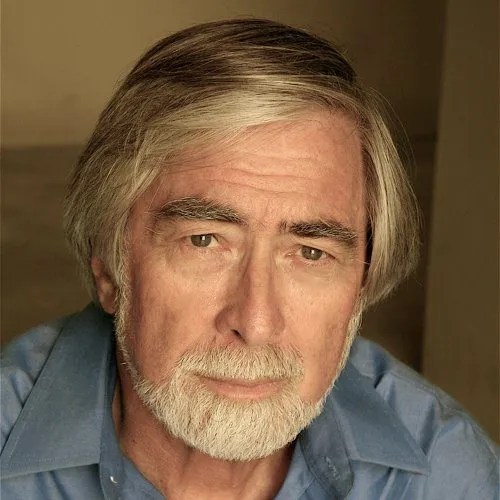
Robert Scheer, publisher of ScheerPost and award-winning journalist and author of a dozen books, has a reputation for strong social and political writing over his nearly 60 years as a journalist. His award-winning journalism has appeared in publications nationwide—he was Vietnam correspondent and editor of Ramparts magazine, national correspondent and columnist for the Los Angeles Times—and his in-depth interviews with Jimmy Carter, Richard Nixon, Ronald Reagan, Bill Clinton, Mikhail Gorbachev and others made headlines. He co-hosted KCRW’s political program Left, Right and Center and now hosts Scheer Intelligence, an independent ScheerPost podcast with people who discuss the day’s most important issues.
Editor’s Note: At a moment when the once vaunted model of responsible journalism is overwhelmingly the play thing of self-serving billionaires and their corporate scribes, alternatives of integrity are desperately needed, and ScheerPost is one of them. Please support our independent journalism by contributing to our online donation platform, Network for Good, or send a check to our new PO Box. We can’t thank you enough, and promise to keep bringing you this kind of vital news.
You can also make a donation to our PayPal or subscribe to our Patreon.
