

Click to subscribe on: Apple / Spotify / Amazon / YouTube / Rumble
Reporting on the election often involves being glued to computer screens dictating the polling numbers around the country and using statistics revolving around race and gender to make assumptions about how the country is politically swaying. Journalist and online host Michael Tracey actually went out to many prominent swing states throughout the election and spoke to various swaths of voters, engaging in what their vote really means and how ordinary Americans view Vice President Kamala Harris and newly elected Donald Trump.
Tracey joins Scheer Intelligence host Robert Scheer to discuss the election, why Trump won and what his second term holds for the future of the country and the globe. On the side of foreign policy, Tracey says people ought to be wary of Trump’s peace rhetoric and look at his record as president. “Although Trump was seen as in conflict with the so-called neocons in 2016, he then undertook a foreign policy in which he escalated virtually every conflict that he inherited,” Tracey tells Scheer.
Tracey cites regime change in Venezuela, trouble with Iran and bolstering NATO. When it comes to domestic issues and why the US went for Trump in such a grand way, Tracey points to the failures of the Democrats to appeal to common voters, pay attention to the issues they truly care about and allowed them to succumb to Trump’s everyman rhetoric, despite what he might actually do once in office.
“What is deficient about [the Democrats’] own messaging, it has alienated such wide swaths of people who, in earlier eras, would have been considered squarely within their coalition,” Tracey asserts.
In the end, the Democrats parading around people like Liz Cheney and ignoring crucial issues like the genocide in Palestine hurt them, as was proven through the popular vote. Tracey indicts their strategy: “Liberalism is so oriented itself around the personage of Trump that it’s kind of been given a free pass from defining itself on its own terms.”
Credits
Host:
Producer:
Video Producer:
Introduction:
Transcript
This transcript was produced by an automated transcription service. Please refer to the audio interview to ensure accuracy.
Robert Scheer
Hi, this is Robert Scheer with another edition of Scheer Intelligence, where the intelligence comes from my guests. In this case, it’s somebody who, oh, my goodness, a third my age, or something, 36 years old, but reminds me of myself at an earlier stage of my life, a terrific, energetic, smart, sharp journalist, kicking ass. And you’re responsible for, of course, the victory of Donald Trump because you wrote an article about why I won’t vote for Donald Trump or Kamala Harris. It was a heresy to take such a position. You also were responsible for the defeat of Hillary Clinton, because you took a similar position of abstaining at that time. But you have the honesty, it seems to me, of expressing your doubts and opinions in public and including who you’re going to vote for and so forth. And I must say, though I found this article that you wrote before the election put me to shame in my own thinking, and it’s left me, by the way, now very depressed, much more depressed about the election than if I hadn’t read it, and that is because it wasn’t as if you were saying there wasn’t anything important going on this election. Quite the opposite. Your defense, let me let people in on the gag here, you voted for Fred Flintstone. You wrote in the name because you figured that both of these candidates were trying to put us back in the stone age and then, of course, it’s a joke, haha. But the fact that matter is, the article reflected a great deal of research, and you came up with stuff that I really had suppressed or was unaware of because I had a pretty simple construct in my mind, and I was given to the same observation. I could not vote for either but in that construct, I thought this is really an argument between an isolationist, which was Trump, and somebody who bought into the whole Imperial America and American exceptionalism and the need to have the rules of law dictated from the Enlightened West and so forth, which is what Kamala Harris and Joe Biden are in, and I felt they were both very dangerous. But reading your article, and that’s a good place to start here, and this is why it scared me more than anything, you point out that Trump was really a quite aggressive, imperial foreign policy advocate, and even though he makes noises about we can negotiate with this one, and he’ll have peace in the Ukraine. And you could go through that history. I’ll let you do it, as you did in your article. But this guy, you know, right now, there’s a feeling, well, at least the neocons and the hawks have gone to the Democratic Party, and the Democratic Party is weakened, except when you look at the Republicans in Congress, like when Netanyahu came and so forth, they were wilder than the Democrats. At least Democrats, many of them absented themselves, but even on the Ukraine, where one wants to limit that war or get out of it, you make the point, no, let’s not forget what Donald Trump did. And you made one very important observation, which I think should guide this interview, the reason why I want to do it, you said, we’re not talking about somebody who wasn’t president. We’re not speculating, as we were back in 2016 this guy’s been in office for four years, and on both the domestic and foreign policy record, he’s got one. And in fact, ironically, while most people I know feel he was a terrible president, he actually did much better in this election. Surprised everyone and you pointed out in one of your other articles that I read, I think it was in Pennsylvania, someplace, that most people, and we see that in the polling result, that a majority of people actually this time around, and judging his past performance, thought it was pretty good. They didn’t think it was a disaster. So why don’t you give me the benefit of your wisdom on all this. You’ve covered, and I’m being serious here, you’ve done what I really admired in journalists past and present, going back to I.F. Stone, you actually got out there and listened to people, talked to them, did it with your listening ears open. Everybody find out where they’re coming from. You didn’t call people garbage or deplorable. You actually listen. And you know, I wasn’t all that familiar with your work, but having caught up on it, I think you do, you have an admirable brand of journalism. I should mention also, you’ve done shows up for Glenn Greenwald. You’ve been on with Tucker Carlson. You have this play on the word heard. Have you heard? You do a big lot in the blogosphere. You have a big following, but basically, give me your take on what you learned in covering the election. What do you think is at stake now?
Michael Tracey
Well, thank you very much for the kind words. It means a lot coming from you. I’ve read your work and followed you for a number of years now, although I might be maybe slightly over a third of your age, but enough that…
Robert Scheer
Let’s have your secret out here. You’re 36, I’m 88. I didn’t do the math. It’s a pretty goddamn big distance, okay?
Michael Tracey
It is a pretty goddamn big distance, but enough for me to have definitely followed you with a sense that there was some wisdom for me to acquire, so I appreciate the accolades. Where to begin? Yeah, I think, I wrote that article on my own individual voting preference or my own voting behavior, because I’ve never bought into the taboo that journalists ought to proactively conceal who they’re voting for, or really any other aspect of their private political activity. Obviously, a journalist can do so if they desire, but I think it’s unwise because it leads to suspicion, or it leads to a sense, maybe in one’s readership or followership, that you’re not being straightforward with the public as to what you would like to see happen in the country. And I do think that with the advent of social media and not being as ubiquitous as it is, and journalists have become less and less able to maintain this facade of so-called objectivity, where they pretend not to have any preferences about real world political outcomes. So I think that taboo has gone by the wayside increasingly, but nonetheless, I’ve made a little ritual out of every four years writing what I chose to do in the election, and then people can take from it what they may. I think I have probably astonishingly little influence, because a lot of people in my readership have a fairly favorable view of Donald Trump, and I think part of that stems from my having covered critically what I would characterize as the left liberal overreach in reaction to Donald Trump, often by employing or making use of the national security state to stifle Trump or to attempt to even criminalize aspects of his conduct. And you do have, I think, an overwhelming sense that the prevailing critiques of Trump have been excessively histrionic, screeching about fascism, or, making kind of frivolous racism allegations over and over again so people just aren’t exposed, at least in my spheres of influence to the rational critique of Trump, the evidence based critique of Trump, and therefore, kind of assume that he’s the preferable option. Now in my piece, I do spend the bulk of it on Donald Trump, for the simple reason that, at least in my spheres, and again, I’m, I occupy a certain sphere of the media landscape where people following me seem to have a very robust understanding of the deficiencies of Kamala Harris. Now I still covered Kamala Harris. I still, you know, went to the Democratic Convention, covered Democratic events, just like I do every cycle, but it seemed like the great bulk of the confusion that was worthy of correction, in my view, was around Donald Trump, for reasons that you alluded to in your introduction. Trump is nothing if not a shrewd political operator, so in 2016, he correctly identified a weariness in the electorate as to endless American military misadventures abroad, and he reasonably identified Hillary Clinton as a personification of that endless military adventurism, not least because, of course, she voted for the Iraq War. She was one of the most belligerent players in the Obama administration, agitating for intervention in Syria and Libya, etc, and so that was fertile ground for Trump to, what’s the metaphor for him to make use, for him to fertilize I guess, let’s say. And he carried on with a version of that same argument in 2024 the key difference being, he had a record for everybody to scrutinize, where, although he had cultivated this impression, in 2016 he got into office. And what are some things that he did? I mean, to go through the full laundry list would have required thousands of more words, and maybe I should have done so, but I just thought I would highlight a few, I think, instructive examples. He claimed that he was disillusioned with the, you know, 20 year US intervention in Afghanistan. He first escalated the Afghanistan war using eerily similar publicly stated rationales Barack Obama did when Obama escalated the Afghanistan war shortly after taking office, and then Trump ushered in record levels of bombings in Afghanistan, so he escalated on the front of troop deployments and munitions expended in that theater of conflict. Now is that commonly known about Donald Trump’s tenure in office? I don’t think so. Does it cut against this impression that he’s seeking to pervade to the public as to what his inclinations or instincts are vis a vis foreign conflicts, I think, yes, it does contravene that impression, and yet it’s not seriously covered. Because, on the one hand, you have the more conventional left liberal media, kind of just chirping endlessly about Trump, Trump’s character flaws, or how he’s undermining quote, unquote democracy, or how he’s a quote, unquote fascist, January 6, et cetera. And so they give him an opening where he was able to elevate as one of his primary political foils in the final stage of the campaign this year, Liz Cheney as a response to the Democrats, the genius democratic consultants, I guess, calculating that it was a incredibly brilliant idea to have Kamala Harris parading around with Liz Cheney in this harebrained attempt to court disaffected Bush Republicans. Now I don’t know who exactly furnished that idea to Kamala Harris. Maybe it came from Kamala Harris herself, because she doesn’t have it this sort of cloistered liberal information system where I would be surprised if she was genuinely convinced that that was an astonishingly good idea. Lo and behold, she lost every competitive state, and the rest of the country trended against her, because could she have bucked it if she didn’t go along with Liz Cheney, probably not. But the point is, it gave this political opening to Trump to batter Liz Cheney, to go to Michigan and appear with Muslim Imams, with the understanding that Trump is going to bring in peace, which is just a meaningless cliche if it doesn’t correlate to any underlying policy stuff says, which in Trump’s case, it almost never does, but the Democrats deficiencies as usual are what enable Trump to highlight those salient political points among key demographics. And I’ll just stop here, because I’m sure there’s plenty more we could talk to I do want to get into my observations.
Robert Scheer
What was impressive about your article, because I am not inclined to that point of view, on Israel I am clearly. And I think for someone who’s concerned about peace and avoiding or stopping genocide, one could almost see and he has said things like, Netanyahu should just wrap it up and do it. And of course, give him a blank check. And of course, he’s taken money from people like Adelson and so forth who want that kind of outcome. So there I could see him, not in the name of imperial interests as so much as opportunism and racism or whatever, giving a blank check, but on the Ukraine, which is this other war zone and also has nuclear implications, well both do, but in a very startling way, and where is it going? He did actually refer to both of them in his acceptance speech, or whatever it’s called, when he won, he said, I’m not going to start wars. I’m going to end them. And he did talk about his supporters, including Muslims, including Arabs and so forth, and and he has said that he’s going to end the war in Ukraine. Now you brought up on Ukraine some disturbing statistics that he very aggressively, for all of his criticism of NATO, very aggressively supported sending military equipment, supporting what was going on in Ukraine or so forth. And we don’t have to go through the statistics, but your reporting is very interesting to me, because it is fact based, and you’re very quick, and your questioning is very quick, it’s a style I admire, because I think this is where you can cut through the fog of politicians. Let’s get down to specifics, you voted for this bill, you voted for that bill, and yet you say this thing. On the other hand, and that’s why I found your article so depressing, it effectively documented the militarist side of Trump, and that things like going to Korea and actually trying to negotiate some peace. Let me cut to the chase here, because I want to know how afraid one should be, and I assume one can describe anybody as mad, but there’s always method to the madness. And Nixon, in fact, indulged the madman theory of foreign policy. Let’s scare them all that we might use the big one and so forth. But there is a genuine distinction. George Washington in his farewell address talked about, let’s expand our influence, but by gentle means, not by war. And that was Eisenhower’s message too. And now the counter view of the neocons who are now with the Democratic Party is, no we have to provide a world order that advances our notion of democracy and what have you. I want to question this, let me put it just in overly simplistic terms, is it possible that Trump would be another Nixon now on foreign policy, and Nixon, after all, with Kissinger’s assistance, but one thing I was able to document as a reporter that Nixon actually over advocated the opening to China before he had met Kissinger, and that is foreign policy article, before he actually became president. But the fact of the matter is, the Cold War ended with Nixon, who everybody I thought was the mad red baiter, you know, anti-communist Crusader. And so is there a potential of that in Trump?
Michael Tracey
Well, then the Nixon analogy is one that I have been thinking about recently because I detected a parallel between Nixon’s campaign rhetoric in 1968 which you may well have been there covering in real time. I hadn’t been born yet, but I’ve read enough about it to know that when Nixon accepted the Republican nomination in the summer of 1968 he sort of debuted this talking point where he’s going to end the Vietnam War with honor. So peace with honor is how he put it, but he provided scant specifics as to how that would actually come about. And, when pressed for details, he was sort of evasive. And sure enough, once he got into office, now we can talk about the Cold War as a whole, but particularly as it related to Vietnam, Nixon, of course, notoriously expanded and escalated the war, including into Cambodia and Laos. And Noam Chomsky contemporaneously was documenting that in the first couple months of Nixon’s tenure in 1969. A record number of munitions were being dropped in Vietnam. And so I do think that there’s a worrying parallel to be mindful of there, because Trump has benefited from a media strategy this election cycle where he can circumvent a lot of the so-called mainstream media precincts, which in the past, he might have been obliged to partake in terms of interviews or town halls. And there are so many new media venues now that will are kind of just awestruck by his very presence and they’ll kind of just like jokingly banter with him for an hour and a half. And these podcasts and such are very influential with younger voters. Like, you know, was just kind of talking to a random sample of younger men in Pennsylvania on Tuesday, and I would ask them, where do you get your information? And you know, a lot of the Trump voters that they watch these podcasts on YouTube, as do I, just as somebody who’s a kind of broad based news consumer, but very seldom did Trump do a serious journalistic interview this election cycle. Kamala Harris also avoided them to the extent that she could, but she’s more kind of culturally in line with the traditional corporate media, like, I don’t know, NBC News or something, whereas Trump, he goes on Fox a lot, and then he has these, all these talk radio or online shows and podcasts that are very hospitable to him. So he was never seriously challenged on this refrain he kept repeating over and over again, which is that the Ukraine war never would have happened, and the Israel/Gaza/Lebanon war never would have happened had he been president. Well, if you notice, that’s a counterfactual assertion. It may or may not be true, but it’s unprovable one way or another. It can’t be proven or disproven, because it’s by definition, a counterfactual assertion is not susceptible to ordinary modes of empirical verification or disproof. And yet, that’s the line that he was allowed to just sail to victory on, because regardless of what may or may not have happened, had he been in office these past three and a half years, what happened has happened, and so it would now fall to him to elaborate or elucidate what policy approach he would take once he assumes the presidency to supposedly end these conflicts. In the case of the Middle East, it could very easily entail, and he’s alluded to this on various occasions in his in [inaudible] way, it could easily entail granting Netanyahu license to accelerate, say, the pulverization of Gaza or the now occupation of Lebanon, or perhaps even taking a more robust, aggressive attitude against Iran. I mean, Trump actually publicly endorsed the idea of Israel bombing Iran’s nuclear facilities all the while, as Robert F Kennedy Jr is gallivanting around the United States saying that Trump is going to make peace with the world, that’s another maddening factor in this whole election. And so my simple heuristic has long been, you know, in 2016 it might have been defensible to kind of settle for simply discerning patterns or themes in Trump’s speech to project or forecast what he might do as president, because he was extremely atypical in the sense that he had no record for anybody to evaluate in public office. He hadn’t served in the military or in any elected office, so he was basically just a celebrity pundit, and so our range of available information to analyze was limited. But in 2016 he was also the object of scorn by the so called neocons right? Robert Kagan, one of the so called intellectual architects of the Iraq War and the Neoconservative project in the early 2000s, he came out and virulently opposed Donald Trump, and even held fundraisers for Hillary Clinton. Or David Frum, who became a darling of the liberal intelligentsia, because he became a Trump obsessive, even though he was the one who wrote the “axis of evil” speech, famously, for George W. Bush in 2002, he was against Trump at that point, as was Bill Crystal, one of the grand poobahs of this whole formation. So the idea that the Neocons as a whole were dead set against Trump was true in certain isolated instances, but in terms of the general so called neoconservative tendency, many of those the adherence to that tendency were very much in congruence with Donald Trump, as evidenced by Trump eventually installing as his secretary of state Mike Pompeo, who is quote “neocon in all but name.” I actually think that the term neocon has ceased to be of any great utility, because nobody self identifies with it anymore, and it allows the the Republican-allied hawks and interventionists to kind of act like they’re not part of that formation. And so just to wrap up, although Trump was seen as in conflict with the so called neocons in 2016 he then undertook a foreign policy in which he escalated every, virtually every conflict that he inherited, and he attempted regime change gambits in Venezuela, arguably even Iran with the so called maximum pressure scheme, and he bolstered NATO despite the liberal critique that he was undermining it, and on and on and on. And so when looking at what he might do in 2024 I’ve been insistant that we need to be tethered to the factual record, rather than getting too fixated on the rhetorical flourishes, as you mentioned, the politician’s rhetoric needs to be compared and contrasted with what they actually do when they wield power. And I think it’s a very telling harbinger that on the final day of the this campaign I was covering, I was at Trump’s final rallies in Reading, Pennsylvania, and much to my surprise, actually, I wasn’t surprised, but I took definitely very conspicuous note of in over the course of this rally, he points out Mike Pompeo, who’s there with him in the VIP entourage, has him stand up for a round of applause and decided that he was going to be in his cadre for the final day of the campaign. That, to me, is very much more indicative of what Trump will actually do when he wields power again.
Robert Scheer
Yeah. So basically, what you were saying is this is much more like a traditional American election in which they exaggerate their differences, but they’re basically on the side of empire, American power, and basically looking to demonize anyone in the world who in any way challenges that or troubles that image. And of course, they then Nixon was described as an absolute maniac. Reagan was described… Reagan, who actually only went to war in Grenada, and was really not a very military… Yes, with the Contras, but basically did not engage in the kind of destructive wars that others, was described as, nonetheless, as a war monger and so forth. And basically what you’re saying and despite Russiagate, which is, after all, they were attempting to paint them as worse than a pacifist, they’re attempting to paint them as an agent of Putin and so forth. You’re actually predicting a continuity of politics here that will have these endless wars and so forth, no matter what he says, and that he’s not really this crazy person, right? But I want to throw one thing in there, the fact is that difference between the isolationist and the empire is a serious one. And what, what Nixon did was basically betray the Empire idea and with Kissinger, I have to give Kissinger credit, by basically saying China doesn’t have to be our enemy. They can evolve to a trading partner and capitalist and so forth. Once they did that, they destroyed the rationale for the Vietnam War. Because, after all, Vietnam was not a military threat to anything else or an economic threat to anything else. There was supposed to be an agent of international communists, and then when there was the Soviet-China dispute, an agent of Chinese communism. The fact is, when we lost the Vietnam, the only military consequence was China, Vietnam went to war. So what I’m saying is, by your assessment, if Trump is sort of a traditional person who believes the world has to be in our image, then it’ll be more or less the same, right? And in that regard, how do you explain Elon Musk being involved? Because, after all, his biggest factory is in Shanghai for Tesla, he obviously can do business all over the world, and that goes along with the model of a non-militarist view of your world, expansion, right of trade and so forth, which Trump seems to endorse. Is there not room for that?
Michael Tracey
Well, I’m not sure that I would say Donald Trump is intent on demanding that the world be remade in the image of the United States. Like I do think there are significant distinctions to be drawn between Trump in 2024 and say, George W. Bush in 2004 when Bush really did promote this almost messianic evangelist conception of American Power and spreading democracy all over the world. I don’t think either party has an appetite for that philosophy of hegemonic power projection, but I do think that the popular conception of Donald Trump as a quote isolationist is incredibly over determined and also inaccurate. I was reading just kind of one of the standard New York Times write ups of the election results, and they just sort of factually assert that Trump is going to be ushering in this new era of isolationism. So my first question when reading that would be okay, how does that relate to his record when he was first in power, like the best available data we have is what he did after he was elected the first time. Was it this golden age of isolationism, or to the I guess, the multilateral liberals, a dark age of like withdrawing from the entire world? No, of course it wasn’t. That’s the line that they attempted to use against him. But virtually any theater that you look at. I mean, even the so called Abraham Accords that Trump cited when he was in Michigan appealing for the votes of Arabs and Muslims. He calls them the peace deal. But what did they do in practice? Has anybody read them? I mean, I take the, you know, sometimes I take the liberty of actually reading the primary source material, which I know in the modern journalism era…
Robert Scheer
That’s why I mentioned you have the credentials of I.F. Stone. And you have the same glasses, probably not as thick.
Michael Tracey
Well, I’ve read, I’ve read many editions of the I.F. Stone newsletter, and I’m well aware about his focus on referring back to the primary source material. And the irony is, they’re more easily available than ever. I mean, I.F. Stone had to get, like, stuff sent to him through couriers when he was at work. And now with with a couple of clicks, you can find it, and most journalists still don’t even bother, which is kind of strange. But yeah the so called Abraham Accords, which Trump was promoting as reflective of his ability to bring peace to the Middle East. They were just arms deals and annexation deals masquerading as peace deals that froze out the Palestinians. There’s a reason why Benjamin Netanyahu was at the White House for the ceremonial signing of these things, and he looked like a happy camper, not because, if there was a genuine peace deal that Donald Trump was brokering in the Middle East, do we expect that Benjamin Netanyahu, would be [inaudible] as he was as when the so called Abraham accords were signed. No, of course, not. Benjamin Netanyahu was so joyous because the so called peace deals were a method by which the interest of Palestinians could be totally sidelined and Trump could make a quote, unquote, deal with Gulf autocraciesot and potentates in exchange for US provision of weaponry or recognition of annexed territory as effectively a bribe for them to begin to normalize relations with Israel. But that’s just one example of an issue that can be referred back to in terms of what Trump’s actual record was. Liz Cheney was at that signing ceremony for the Abraham Accords, and we’re told in these past couple weeks that Liz Cheney and Donald Trump have this deep and abiding ideological conflict, which just so happened to have never been evident when he wielded power, and she was one of his point people, legislatively.
Robert Scheer
Because we’re going to run at a time, but let’s stipulate we’re once again being lied to very effectively on a grand scale, and we really have no basis of predicting what’s going to happen, but it’s all going to make people of wealth and power in America comfortable and they shouldn’t be losing sleep, and so they exaggerate the difference in the danger for partisan political purpose. Let’s relate it to the domestic a bit, and you say in your article you vote mostly on foreign policy, because that’s where America has all this great power. Nonetheless, there’s a lot of fear right now what Trump’s going to do domestically, beginning with the immigration issue. And I know you’re somebody who’s examined the record, not just of campaigns, but what is actually done when we actually have governance. And I want you to help explain this mystery. If Trump is so threatening to non white existence in America, particularly around brown people and is going to deport everybody, how come he did so well with that sector of the population in this election and in the most heavily 98% Latinx community on the border, there was some overwhelming vote for Trump, and that was one of the big so called surprises of this election. So somebody who’s been out there interviewing people covering all this, and how would you actually compare, after all, Obama was known in some circles as the deporter-in-chief, and Biden and Kamala Harris has certainly been pretty tough and exploiting this issue. What’s your assessment there?
Michael Tracey
Well, it shouldn’t have come as too much of a surprise, because this trend was evident in 2020 when, in that Rio Grande Valley, part of South Texas, Trump made extraordinary gains compared to his performance in 2016 and that trend continued to pace in 2024 where now he’s winning outright, literally the most heavily Latino county in the entire country and surrounding counties. And I would respectfully, maybe advise you Bob to consider dropping the term Latinx, because I think that actually…
Robert Scheer
Don’t go there, I understand.
Michael Tracey
But that gets to why the elite, liberal intelligentsia is so clueless.
Robert Scheer
This is an NPR program for NPR, so I’m trying to follow the language. Don’t waste time on this. What I’m saying is, is this guy going to be harmful, hurtful to the Brown community. And then we’ll get to the Black community. A lot of Black, particularly males, voted for him. So let’s cut to the chase. Is this guy, the fascist, racist, blah, blah, blah, who’s going to destroy people at will? And I’ll end with was he going to destroy journalists like us and anybody who challenges the thing, are we in for a new age? You’ve been out there. An age of repression. Let’s try to wrap this up with some view of that.
Michael Tracey
I only mentioned the Latinx thing, not to be cute, but because I do think it actually helps explain why it is that the Liberals have been unable to anticipate or really grapple with the fact that Donald Trump, who they have claimed as this great menace to all brown or Black Americans, is now being vaulted to power on the strength of the most diversified Republican coalition, by far, in many decades. So that really does run counter to a lot of elite liberal conceptions of what the Trump phenomenon consists of. And you’re right, I was, on Tuesday, I was going, talking to regular voters. I went to Lancaster, Pennsylvania, in a part of the city that’s heavily diverse and mixed, and you talk to just ordinary voters, and they, first of all, they have a positive retroactive perception of what Trump did when he was in power. They’re not persuaded by the liberal attempts to tell them or lecture them that they must oppose Trump out of some sort of racial interest. Rather, Trump, it seems, has a much more broad based appeal that includes a huge faction of Latino voters. I was just looking at the election results from my local area, here in Hudson County, New Jersey and Union City, and a little bit north of me, and are extremely heavily Latino, and there are precincts where Trump has won outright in places that would have been unfathomable for a Republican to win in. So yes, I do think this cuts against the idea that, because he projects this image of being a hardliner on immigration, that means that he is inherently contrary to the interests of a lot of Latino voters, who, for better or worse, have seemed to have assimilated into the more conventional partisan distribution in the United States, which I think there are actually some upsides to, because it sort of complicates this idea that you have to make specifically racial appeals to gain support from any particular identity.
Robert Scheer
It also may mean you have to deliver something more than rhetorical support. Maybe you actually have to follow policies that help poor or working class Blacks and browns, which is the last group I want to get to here, who owns labor, who cares about labor? Because class is the great unmentioned subject in America. Everybody’s supposed to… And this is the great liberal conceit, if you want to attack what passes for liberalism is now, is totally based on a presumed meritocracy and worthiness of more affluent people, maybe excluding a few billionaires that they don’t like. But clearly Trump’s performance is based on the idea he can deliver to ordinary working people, maybe more effectively, not maybe, expected to be more effectively than the Democrats. That’s a great betrayal of the whole idea of the Democratic Party. Bernie Sanders pointed that out in a column he had this last few days. So why don’t we close this by talking about really, that is the great shift here.
Michael Tracey
Well, Bob, one thing I wanted to mention that became very apparent to me over the course of discussions with voters, which I grant are anecdotal. I mean, I could sit on my computer refreshing the polling aggregation models all day, which seems to have diminishing utility, or I could go out and talk to people. So I did that in Pennsylvania, Nevada, Arizona, Georgia, North Carolina, etc. And then finally, in ending, in Pennsylvania this past week. And one thing that is very palpable is the observation that there’s an underclass of voters who, in the past, might have been more reflexively identifiable with the Democratic Party, or at least maybe seen their interests advanced more by the Democratic Party, which are increasingly aligned with Trump and the Republicans. Now whether Trump is going to deliver for their interests, I think, is highly in doubt, but nevertheless, I can’t tell you how many voters who I’ve spoken to who express a disenchantment with the “system at large,” who probably comprise something like an underclass. Like I make a point to go to Walmart, okay, and just talk to random people about their political views, because that’s usually a pretty good representation of what the lower middle class has to say about things. And almost invariably, when I talk to somebody who has just like a generalized discontent with the current political order and is contemplating whether to bother voting at all, if you press them for an expression of what their actual preference is, if they had to choose between Trump and Kamala Harris, they almost invariably said Trump. So there was a huge universe of voters for the Republicans to tap into this time that I think the Democrats basically abdicated. I also talked to a lot of people who do cite stuff like being frustrated with the amount of resources that the United States is constantly sending into foreign conflicts while not spending at home on domestic needs. That’s territory that the Democrats have just entirely ceded to Trump because the Biden-Harris paradigm is this fetishization of these multilateral institutions and of maintaining alliances abroad, which basically just gets the United States permanently on the hook for underwriting endless conflict. And Trump, again, talks a good game on this issue, and in a way that resonates with voters clearly, but it’s kind of divorced from the underlying policy program, which I think should be more highly but I do think it is worth emphasizing. Because Democrats have so now taken up cause as the party of institutions and institutionalist probity and reliability that gives Trump a massive opening to curry favor with voters who don’t share the Democrats enthusiasm for these [inaudible] institutions, whether globally or domestically. And I think that’s the big political pitfall that the Democrats have consigned themselves to. As we see with Trump, incredibly winning the popular vote overall. If that’s not a referendum on the Democrats, shambolic political look, I don’t know what would be.
Robert Scheer
It’s a referendum on America, because the conceit is that we have basically solved the major human problems, that we are the city on the hill, and that we have the secret sauce, and we know how to do it, and the rest of the world should follow our model, even when we might appear to be exploiting them or taking advantage or dollar dominance, or anything else. And to me, the key statement was when Hillary Clinton challenged Donald Trump in that election and said, Donald Trump says he’s going to make America great, America has always been great. That sentence, then I thought of Hillary Clinton as the Goldwater girl. I thought that is the American exceptionalist notion that has frozen our entire political education and sense that anybody who’s a loser, it is not fundamentally because of economic oppression, lack of opportunities, skin color prejudice, exploitation, lack of unions that can function, or anything else. It’s that they have failed individually. They are, to use Hillary Clinton’s word, deplorable. And the brilliance of Donald Trump as a salesman, I don’t know if that’s an oxymoron, but the skill of Donald Trump as a salesman is he can talk to those Walmart folks. He can talk to them. He understands that they are genuinely unhappy, and that is something that the elite media denies. They make good money, they live secure lives. Their children go to schools where it really matters if you graduate, as opposed to, I wasn’t picking on your college. I went to the City College in New York and so forth. But the fact of the matter is, these days, you have to go to one of the top schools or that degree really doesn’t mean, unless you’re in a particular technical field, there’s a real sense of loss. Why did I send my kid to state college for four years and so forth? Pay for it, and you have to pay for it now. It’s not free as it was when I went to City College. And so I think what the Democrats don’t get is the very thing the Republicans have picked up, not the Republican establishment that Trump wiped out in that first debate with all the Bush’s son and everybody else, but rather, what he has made this party is we are going to care about the working class. We’re going to care about those folks out there, a lot of them rural and so forth. That is not coming up in the post mortem. That’s why I wanted to talk to you. Because what you are writing and you’re interviewing and your being down there with people that are actually making… I mean you really challenge the whole idea of what’s an undecided voter in a way that I hadn’t really thought of. It’s not someone, as you pointed out one of your articles, it’s not someone who’s deciding to go between party, the Democrats and Republicans, somebody saying, What do I give a damn about the election? Should I even vote? Why should I be bothered? I got something better to do, right? That was a real long insight that I got from from your writing, I must say.
Michael Tracey
Yeah, you’re right, and that’s why that was an early indicator to me that Trump probably had a strong chance of winning, because more often than not, when I spoke to one of those undecided voters, in the sense that they didn’t know whether it was even worth it for them to vote because of maybe their kind of general antipathy toward the system, or their sense that voting didn’t really even matter. When you ask them for what their preference would be, their preference was Trump. So if Trump only gets a modest percentage of those types of people, that’s enough to probably put him over the edge in a closely contested state like Pennsylvania, and I think that pretty much came to pass. I also have to say, the Democrats, when you would encounter a Democratic voter who was hyper committed, or who you know was a was solidly Democratic, and asked them to explain their reasoning. Their reasoning either had something to do with not liking Donald Trump, or it had something to do with like an abstraction, like combating fascism, or something that really does flow from the more elite intelligentsia and then certain classes of voters who sort of absorb that perception of Trump. Very seldom would you hear anything like a rousing affirmative case for Kamala Harris. Conversely, with Trump, more often than not, his supporters would actually make a concrete case on his behalf. Yeah, they, of course, they didn’t like Kamala Harris or unimpressed by her, but the balance of kind of allegiance there, in terms of people thinking that they’re making an affirmative, proactive case for Donald Trump, was very little observed on, at least in my experience, among the Democratic voters, and the Democrats just can’t coast forever on what they think is going to be this ubiquitous antipathy for Trump, because clearly, it does not exist, and they’re just not attuned to it. At least doesn’t exist in sufficient numbers to ensure their continued reign in power. And so yeah, that was something that I think was a pretty perceptible phenomenon, if you wanted to go find it. So let me, actually, I’m enjoying this conversation, so I don’t mind going longer, if you got a few more minutes, but… Yeah, as long as you like.
Robert Scheer
Okay, you mentioned a book that I wrote, “The Great American Stick Up,” and basically it was about how Bill Clinton did something Ronald Reagan was unable to do, even if he had wanted it. And I’m not sure, because after the savings and loan scandal, Reagan got a little angry with the banks and wondered what the hell was going on. But what Bill Clinton did, and with Republican support, obviously, Phil Graham and others, was pushed through the wet dream of Wall Street as legislation, the end of any of the new effective New Deal, control of banking, of the financial community, much of it which had been torn apart, but this was the final blow that Wall Street was going to be liberated from any of the regulations. Wall Street that had caused the Great Depression. And the one achievement, solid, clear achievement of the Democrats because, remember, the Democrats were not the party of enlightened racial behavior, they were the segregationist, racist party for much of the history with this base in the deep south and so forth, was that they served ordinary people, and that included banking regulations, so the savings of ordinary people had to be treated differently than the money of investment banks, all of these very sensible things. Suddenly, people were put into a great deal of pain, which, by the way, can be connected with the inflation and all of the other things that’s still besiegers. People didn’t get out of that. And class difference something we’re not allowed to talk about very much, class difference, without being ridiculed or attacked or abated, class distinction really grew from, all the statistics are very clear, from the time of Clinton to the present in an alarming way, and it seems to me that’s the big unexplored story of this election. You can’t ignore it altogether, because if you look at the voting patterns, but the fact that matter is, we’re not prepared to think about this. Most other countries, they think about class a lot, but we have had disillusion of the classless society. And what you are talking about your journalism is you’re really bringing us in touch, right? And the caution I want to throw in here, because I want you to comment on it, the answer to that argument, the defense of the deplorables argument, is a story I just read. I don’t know a couple hours ago that there’s a lot of hate mail on the internet now that Trump is unleashed and the Proud Boys are back, and these racists are back, and this is the fascism that’s now going to visit us. They’re going to kill us and throw everybody in jail and so forth. And in your reporting, I don’t see much reflection of that in the people you talk to, but let’s sort of wrap this up with that. Are we looking at fascists in the street, and is Trump going to play to that? And should we all be packing our bags and get out of town?
Michael Tracey
I think the fascists, or fascism alarmism is incredibly overwrought. It certainly doesn’t correspond with my experiences of just average Trump supporters. They don’t seem like frothing, would-be fascist to me. They probably couldn’t even tell you what Fascism is, and this kind of castigation of them as somehow being fascist enablers is all the more questionable from my perspective, because it’s just true that Donald Trump’s coalition, as we mentioned before, is incredibly racially diverse for a Republican, historically so. And comprises a larger proportion of lower class people than had been the case in many previous election cycles. I was just looking at some of the exit poll data. And I think the latest numbers show that Trump won voters who make $50,000 or less, whereas Harris won voters who make $100,000 or more. And clearly, the Trump campaign operation identified this as something to be exploited. Look at his final photo ops, where he’s serving french fries at a McDonald’s, or he has his reflector vest on, looking like a maintenance worker. This is the angle that he tried to play up and clearly with some success, so to kind of dismiss or denigrate those people as craving fascism, I think really is mostly an invention of a cloistered liberal intelligentsia that still doesn’t have a very good sense of what it is that makes Trump so resonant, and what is deficient about their own messaging that has alienated such wide swaths of people who, as you mentioned in earlier eras, would have been considered squarely within their coalition. You know, if you talk to younger men in particular, often have this skepticism toward the system as such, but like I mentioned before, have a soft preference for Trump, and enough voted for him that it was a big boon to Trump. Like, what are the Democrats offering, like, your average 25 year old with limited economic prospects? Well, they’re offering them a lot of cultural hectoring. They’re offering them a lot of bizarre speech codes and a lot of identity fixations that are more and more disenchanting for men of every racial background, clearly. So the people who kind of have this reaction to this overbearing, over weaning, kind of liberal homogeny culture, they view Trump as an outlet, and also the right wing ecosystem, which has a number of segments. Some are the overt sort of mission driven right wing media offerings. But then there’s like this much wider universe of new media now that is not explicitly political, but has taken on this right leaning tinge, because the Democrats and the so-called progressives have forfeited such a wide terrain to people as a result of what is perceived as their bizarre identity related hang ups and cultural hectoring around cultural mores that especially younger voters are rejecting. Look at the exit polls from Wisconsin. It’s actually incredible, and it flies in the face of recent Electoral history. Voters aged 65 and over, they voted Democratic. Voters in their 20s are leaning voting Republican. That’s a sea change in terms of the past several decades. And I think Democrats are going to have to do a lot of introspection as to how it is that the average, I don’t know, 24 year old male doesn’t necessarily view them, views them negatively and sees them as obnoxious and as off putting as Trump may be, they see Trump as a more favorable option. I think that’s just something that hasn’t been fully grappled with, and if Democrats have any hope of becoming viable again, they’re going to have to do so, because the shifts among Latino voters, where Latino men, in particular voted in a majority for Trump, that’s a realignment that harkens potentially back to the south in the 1960s as you mentioned. Where if the Democrats are conceding huge swaths of Latino voters to Trump because and those Latino voters are not persuaded by the identity appeals anymore and have been assimilated into the more standard partisan distribution of society, then it’s difficult to see how Democrats are going to be competitive nationally anymore.
Robert Scheer
Well, it broke certain myths that Latinos should automatically identify with the Democratic Party, and that there’s only one issue, or one way of looking at it. This happened with women. I don’t want to go through each group, but it’s really been quite a shock. The abortion issue did not play in the way it was expected to. People didn’t accept the idea that everything was going to crumble or change as was talked about. I want to end with one last note on class of what we mean by the liberal media. First of all, what the great compromise in America is, we can always get other people to fight our wars. So we lost the issue of the draft, which drove a certain pacifist questioning of authority in this country, your own family was going to have to pay the price, even though some people could get exemptions. But also, with the universities or what have you, we increased the pay, at least for tenured faculty of some duration. And this goes for a whole, I don’t know, I call it the courtier class, people who can serve power, getting better jobs and having some extra income. So it doesn’t hit them when you go to the Subway and you buy a few sandwiches and suddenly you got a $50 bill, you know? Oh, that’s real money. Well, it’s not real money if you’re making $300,000 or $400,000 a year, or particularly a couple so forth. So why don’t we end on that note, what is liberalism now? And you’ve looked at all the polling data, do the Democrats really represent, in that sense, a progressive outlook for most people?
Michael Tracey
Well, one of the strongholds of contemporary liberalism had historically been the urban centers, and Trump, over three consecutive elections, has made significant inroads in the urban cores of the great metropolises of the United States. I was just checking the numbers from Philadelphia today and Trump had garnered over 30,000 more votes out of Philadelphia despite declining population levels in 2024 than he did, if you compare it to 2016. So if even urban enclaves are no longer as naturally Democratic as maybe they had been assumed to be, I don’t know what really liberalism is supposed to be offering now. Liberalism is so oriented itself around the personage of Trump that it’s kind of been given a free pass from defining itself on its own terms. That’s the reason why the closing message from the Democrats has been to parade around with Liz Cheney and to talk about Trump supposedly being this fascist menace. It wasn’t like a self validating conception of liberalism that they were promoting. It was just a liberalism that was meant to be some sort of check on this greater issue that everybody needed to be preoccupied with, which is Trump. So I don’t know if Democrats have it within them to formulate a different conception of themselves without constant, frenetic reference to Trump, but I think they’re probably going to have to do so, or else they might see the electoral downside. In terms of abortion, you’re right, it wasn’t as resonant as people might have thought. I was just looking at the the results from the ballot. There were ballot measures in certain states on abortion, and both Nevada and Arizona approved pro-abortion ballot measures by 25, approximately, points each. All the while as Trump won the states overall. So clearly, a cross section of Trump’s voters, didn’t see there being an inherent tension between voting in favor of liberalizing abortion law or against abortion restrictions and also voting to reinstall Trump. And, that’s maybe a part of because, partly due to political adroitness on Trump’s part, where he was, at least, according to many, able to convincingly disassociate himself with the more hard line anti-abortion factions within the Republican Party and also the Democrats, overestimating how single mindedly people are going to vote on this particular issue? Now, I did encounter voters who did vote single mindedly based on abortion. So they are out there, but it’s too narrow of a range of potential voters for it to be the kind of broad, paramount issue, the most like broadly prioritized issue that Democrats wanted it to… I mean, did you hear Kamala Harris speak with passion about much of anything in this campaign, other than abortion. I didn’t. I followed the campaign pretty closely, but that seemed like mostly the thing that animated her.
Robert Scheer
Yeah, I promise to end this case, I could probably go on for days, but I do want to end with one issue here, and that goes to what do they really care about? Is there a there there to the Democrats? Because the main argument of the Democrats, basically, was that Trump is crazy and egomaniac, unstable and threatening to old, decent values, basically an assault on any safety and in the status quo and what have you, and in the media coverage, and it’s interesting that you survive as a figure in media, because…
Michael Tracey
Barely, I’m hanging by a thread.
Robert Scheer
Well, it’s an interesting analogy. I have an internet publication, ScheerPost, and Chris Hedges, who’s our star, but he also is with SubStack in order to survive economically. But he says I run it on a shoestring. And the fact is, and he points out, it’s the Democratic Party that basically led the attack on the openness of the Internet and the ability of people to have serious debate. But in one of your articles I read it was even, I forget his name, the guy who was editor of Talking Points Memo or a liberal kind of publication.
Michael Tracey
Josh Marshall, yeah.
Robert Scheer
Yeah, Josh Marshall said about the Trump menace, hopefully there is a deep state, and hopefully it could still do its thing. My god, that is really quite revealing. Because actually when we think about the Democrats, we do think of them as, this used to be a caricature of government. I mean I’ve always been for government because I was born in the Depression. Thank God we have Franklin Delano Roosevelt, thank God we had progress. My father could get a job digging ditches or something, okay, a government building and so forth. But now we think of the Democratic Party as a party of the war party, obviously, Bush showed the Republicans can be a big war party, but we think of it as efficient bureaucracy and allied, actually, with the surveillance state, allied with big corporations that do that, and quite willing to control the Internet. You know, as a practitioner, and this I promise is absolutely my last question, because I think that was, for many people I know the big argument why Kamala Harris was certainly the lesser evil was, and this is what they mean by fascism, that somehow we’re going to lose our individual freedom of those of who can still employ it, and that doesn’t seem to alarm you as much.
Michael Tracey
Well, I think the Democrats are much more effective practitioners of speech stifling tactics than Republicans, who tend to go about it in a bit more crass way, in a way that is more easy to identify. I mean, look at the Twitter Files, which were roundly dismissed in the mainstream media. As apparently this vanity project by Elon Musk, who you mentioned earlier. But regardless of how you feel about Musk and I do think that it’s a bit dubious how he seemed to convert the platform that he purchased, Twitter/X, into kind of just a never ending geyser of Republican agitprop. I mean, the platform is still useful if you know how to use it, but, the average viewer now is just inundated with kind of Republican propaganda, or at least definitely was in the lead up to the election. But when he purchased the company and he opened the archives, the internal corporate archives to journalists, it showed that there were very robust attempts that were successful on the part of government agencies, and including security state agencies, for Twitter to enforce speech codes that were in line with security state dictates. And the liberals tend to get away with that stuff without detection, at least initially. Whereas Republicans, when they want to ban some form of speech, they don’t bureaucratize the effort in as seamless as a fashion. And so, yeah, I do think that, but at the same time for people to have decided that the Republicans would superior choice here in this election in terms of safeguarding the First Amendment or something, I’ve never seen a more fierce attack on political expression and political speech over the past year than the Republicans have waged as it related to speech critical of Israel, where you had Republican governors like Ron DeSantis fabricating a pretext of material support to terrorism in order to proscribe pro-Palestinian groups as though they were in violation of federal law, by supporting terrorists And and and on and on and on. Donald Trump himself called for the extirpation of the protest movement. Earlier this year, the Republicans passed legislation that sought to codify this very expansive definition of so called antisemitism for the federal agencies, expanding on a definition that Donald Trump himself introduced in 2019 when he signed an executive order around antisemitism. So the Democrats have a lot to answer for in terms of the sly and slightly more clever ways in which they’ve attempted to control the information landscape, including the internet, often under the auspices of countering disinformation or misinformation, which I think is a largely exaggerated problem, not that there is often a lack of reliable fact checking on social media. But the answer for that isn’t to get the security state agencies involved in surreptitiously shaping or controlling what people are allowed to say and what political speech they’re allowed to express. So I think both parties have a pretty poor record on the First Amendment, but I can see why people might vote for one or the other, because they think that they have a superior alternative available. I think that’s mostly a function of sort of motivated reasoning, where you want to vote for Trump, for example, irrespective of any other issue, and then you kind of reason backwards from there. And I guess likewise, similarly for the Democrats, although it’s hard to for me to imagine how any serious and rational voter could be voting for a Democratic candidate on the grounds of preserving free speech when, especially on the internet, when there’s been this hysteria and alarmism that the Democrats have fomented around supposed misinformation being so pervasive on the internet, and then using that as a basis to censor or curtail speech. Again, not that Trump poses a particularly preferable alternative there. But yeah, I mean, that’s sort of strange that you’ve heard an argument for people that Kamala is the better option, because the Democrats are going to be the ones who cherish the first First Amendment. I mean, the idea that Donald Trump is going to wage this ferocious crackdown on journalism, I think, is kind of the canard. The same sort of fears were frantically expressed in 2016 it never came to pass. In fact, the corporate media had a bonanza under Trump. The ratings for all the cable news network skyrocketed. The New York Times and Washington Post had subscriptions out the wazoo, breaking precedent, breaking records and even, I have to say, there was a space that opened up for alternative media to some extent, because people were really invested in political news. It was a very hyper politicized time. So I mean, where is this threat coming from? The one counter example there, which is ironic, is that the Trump Department of Justice indicted Julian Assange in 2019 and then again in 2020 with a superseding indictment, dragged him out of the Ecuadorian embassy in London and threw him in Belmarsh prison. And then he was basically rotting away in a dungeon for six years until, or five years, until his lawyers were able to procreate plea agreement with the Biden Department of Justice. But for whatever reason, I don’t get the sense that the liberals who claim that they want to safeguard free speech, and therefore a voting Democrat, have in mind the one example of the Trump administration the first time really doing serious damage to the issue of free speech or journalistic expression, which was prosecuting Julian Assange, one of the most obviously accomplished publishers of our generation, if not the most. So I think there’s a lot of confused thinking that goes into that kind of calculation.
Robert Scheer
And by the way, recognizing a joint statement by the publisher of the New York Times and The Guardian and Le Monde and I forget the major Spanish paper and Der Spiegel, I think, all saying that Julian Assange was a publisher. El Pais, so okay, this is it. I promised we would end it, but I want to say where do people read more of you, or get more of you, or what?
Michael Tracey
It matters very slightly. You can go to Mtracey.net, that’s MTracey with an e, .net. For better or worse, mostly worse, I am on X/Twitter a lot. So that’s MTracey, Tracey with an E, and you’ll get everything that I do in one or the other location.
Robert Scheer
And you can make a living at this, huh?
Michael Tracey
You kind of can, yeah, I think so. It’s not always…
Robert Scheer
You’re looking for role models here.
Michael Tracey
You can, surprisingly enough, people actually want to pay, I find, like enough people want to pay for work that they judge to be consistent and reliable and transparent. Even if I don’t have the resources of a major media organization, I work with a bunch of different organizations, and I do my own stuff independently. And people are interested in rewarding that. So I find it does it does work. You have to have sort of a niche maybe, or have a bizarre temperament like me in order to do the work required to make it succeed. But it’s possible. I always tell people who ask me for journalism advice, don’t do it unless you can’t imagine yourself doing anything else. And that’s the category that I am consigned to. So I’ve had no choice but to make it work, and more or less, it does work.
Robert Scheer
My slogan is that I enjoy exposing who’s doing the screwing and who’s getting screwed. And I could see it in you, and your writing, getting it straight can be enjoyable. All right, we’ve come to that point. Want to thank you for doing this. I want to thank Christopher Ho and Laura Kondourajian at KCRW in Santa Monica for hosting these shows. Appreciated. Joshua Scheer, our executive producer, who lined up our guest. Diego Ramos, who writes the intro, Max Jones, who does the video. The JKW Foundation, in the memory of a very independent writer, Jean Stein, for helping fund this and Integrity Media based in Chicago for doing the same in the interests of a free press. See you next week with another edition of Scheer Intelligence.
Please share this story and help us grow our network!
Robert Scheer
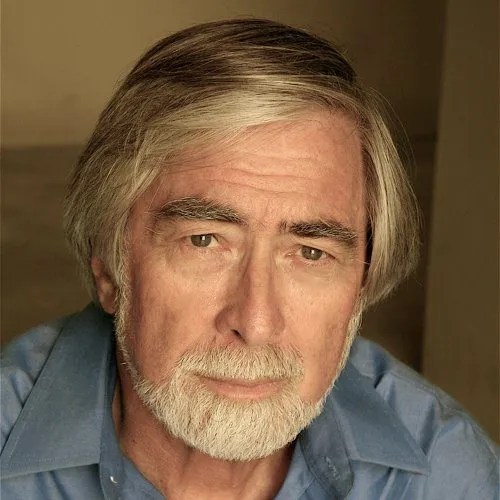
Robert Scheer, publisher of ScheerPost and award-winning journalist and author of a dozen books, has a reputation for strong social and political writing over his nearly 60 years as a journalist. His award-winning journalism has appeared in publications nationwide—he was Vietnam correspondent and editor of Ramparts magazine, national correspondent and columnist for the Los Angeles Times—and his in-depth interviews with Jimmy Carter, Richard Nixon, Ronald Reagan, Bill Clinton, Mikhail Gorbachev and others made headlines. He co-hosted KCRW’s political program Left, Right and Center and now hosts Scheer Intelligence, an independent ScheerPost podcast with people who discuss the day’s most important issues.
Editor’s Note: At a moment when the once vaunted model of responsible journalism is overwhelmingly the play thing of self-serving billionaires and their corporate scribes, alternatives of integrity are desperately needed, and ScheerPost is one of them. Please support our independent journalism by contributing to our online donation platform, Network for Good, or send a check to our new PO Box. We can’t thank you enough, and promise to keep bringing you this kind of vital news.
You can also make a donation to our PayPal or subscribe to our Patreon.
