

Click to subscribe on: Apple / Spotify / Amazon / YouTube / Rumble
The election came and went, and despite Democrats’ heavy emphasis on abortion rights, the election of Donald Trump makes it clear that the rights of women across the country are in grave danger. Joining host Robert Scheer on this episode of Scheer Intelligence to spell out this danger and talk about his new book, “Abortion in the Age of Unreason: A Doctor’s Account of Caring for Women Before and After Roe v. Wade” is “America’s Abortion Doctor” Dr. Warren Hern.
Hern possesses vast experience with abortion and abortion rights, from his days at the first private nonprofit abortion clinic in Colorado in 1973 to his having to shield himself behind bulletproof windows today as a response to the violent right-wing anti-abortion protests in America.
“There’s no debate in abortion. It’s a civil war. The anti-abortion people have assassinated five of my medical colleagues, including one of my best friends, Dr. George Tiller, and I’m on all the hit lists,” Hern tells Scheer.
Abortion goes beyond politics, Hern argues. He states plainly that politicians have no right to be involved in the decision-making process behind abortions: “This is a medical issue. Politicians should get the hell out of this, and we should have a constitutional right to a safe abortion.”
Hern likens abortion to a medical condition, and women should always have the fundamental right to choose how to treat themselves. “What my point has been since 1970 [is] that the treatment of choice for pregnancy is abortion unless the woman wants to have a baby,” Hern says. “There is no justification for any law or any restriction on access to safe abortion services as part of medical care. Safe abortion is a fundamental and essential component of medical care for women.”
Credits
Host:
Producer:
Video Producer:
Introduction:
Transcript
This transcript was produced by an automated transcription service. Please refer to the audio interview to ensure accuracy.
Robert Scheer
Hi, this is Robert Scheer with another edition of Scheer Intelligence, where the intelligence comes from my guests. In this case, there is no question about it; I don’t know how best to describe Dr. Warren Hern. He’s known as the one of the most visible, courageous doctors who’s performed abortions, particularly late term. I’ll let him go into all that. He was recently profiled in the New Yorker, elsewhere. But I’ve interviewed him before about the fate of the planet, and he’s got a new book out that was the early one, the reason we’re doing it again. “Abortion in the Age of Unreason,” published by Routledge. It came out September 3. It’s available and I just want to say, in terms of people being willing to deal with controversial, difficult topics and show courage, this man has devoted his life to that. Not everybody might agree on what he’s spoken about, but he’s been forthright, he’s been out there, and he’s had to go through a lot of turmoil over this. So Dr. Warren Hern, why don’t you tell me about the new book and how that fits into your life’s work, but I’d like you to, because everybody’s been talking about abortion now, ever since the Supreme Court decision, and a lot of people who believe in the women’s right to choose extends to that are we going back to the dark ages now?
Warren Hern
Well, thank you for that introduction. Well, first of all, my new book “Abortion in the Age of Unreason: A Doctor’s Account of Caring for Women before Roe v Wade and After the Dobbs Decision” is designed to help people understand what we’re doing, who we are, and why we’re doing it. And I’ve had many requests over the years, of course, that have asked me, why are you doing what you’re doing? The book starts, actually, in the early ’60s, 1963 when I was a junior medical student and watching women go through terrible problems in the labor deck, and it was wonderful when they had a healthy baby and a healthy pregnancy, and it was beautiful and joyful, but it was also tragic when things went wrong. And I was very impressed with the fact that while my obstetrics textbook in medical school said that pregnancy is normal, it’s the most normal thing a woman can have. Well, what does it mean that when she’s not pregnant, that what she’s for is to be pregnant and have babies? And then in the textbook, it described all the reasons why women could die being pregnant and what to do about that to keep them from dying. So it was very clear to me that there’s something of a disconnect here. And then the book describes a number of experiences that I had during medical school and afterwards, that showed me that abortions can be very dangerous for women, and at that time, abortion was illegal, and that pregnancy is not a benign condition, that women die from being pregnant. And so I saw this throughout the United States. And I saw it in my internship in Panama. I saw it as a Peace Corps physician in Brazil in the ’60s. And I came back to study public health, and I saw more of that. And then I served for two years as a federal medical officer in Washington, DC, starting in developing family planning programs for poor families and for poor women across the country. And again, the effects of the anti-abortion laws were very harsh particularly on poor women, who couldn’t afford to get a safe, illegal abortion. In fact, I wasn’t planning to even practice medicine my trainings in public health and epidemiology, but in 1973, I was asked to help start the first private nonprofit abortion clinic in Colorado, which I did, and I was the only physician there, and I performed all the abortions, and we were quite busy. And I became very impressed with the need that women had for this. In fact, by the end of that first year, I was clear that performing abortion was the most important thing I could do in medicine. One of the things that caused me to understand that was we had a two day procedure in this clinic that I set up in which women would come in the first day and fill out their forms and have their lab tests and have counseling, and then I would do a physical exam and place a laminaria stick, which is a medically prepared seaweed, into the opening of the uterus cervix, and allow that to dilate gently overnight, instead of forcing the cervix open with metal dilators, which was the custom at the time. And then see the patient the next day, remove the laminaria and perform the abortion. Well, on one day, I walked into the examining room to see the patient, who was a young woman in her mid 30s and who had red hair, and I remember quite well, and she was just trembling uncontrollably. And instead of going in, I stopped, and I said, well, tell me what’s wrong, what’s bothering you, and how do you feel? And she said, It’s so different. You’re a doctor, the lights are on, the windows are open, it’s clean. And then she told me about her illegal abortion, which was the most humiliating and painful experience of her life. Then she looked up to me and said, please don’t ever stop doing this. So I didn’t. And the book goes on to describe how I set up, then my private medical practice, Boulder Abortion Clinic, to help women and to specialize in this work in 1975 and then went to develop the various procedures for doing abortions later in pregnancy. So that’s sort of a good part of the book.
Robert Scheer
Let me just interrupt you about that period because I’m even a little bit older than you. I think you’re 85 or so, and I’m 88.
Warren Hern
You’re 88? I’m 86 so I’ll look up to you as [inaudible].
Robert Scheer
But I just want to remind people what the so-called good old days were like. And I came from a poor family in the Bronx in New York, and the Catholic Church had a great hold over the politics of the state, and there may have been places in the country where you could get a so-called, well, a safe, illegal abortion that you referred to, but that was a contradiction in terms for anybody coming from a working class family. It would bankrupt you to try to find some place in the world where you could do this. And I just always want to remind people, we’re talking about, basically, a way of punishing people who couldn’t afford to get on an airplane and go somewhere for a safe procedure. And I had some experience with interviewing people as a journalist who went through this and family members and so forth, it was an absolute nightmare. And that’s generally left out of the conversation. And reading about you and your work, you put an emphasis on safety, on health standards. You didn’t jump in to do it. You talk about telling people you didn’t think was right. We’re talking about late term, when it’s right. So safety, and when we talk about the right of a woman to choose, it’s a health issue. It’s not done in a light manner. My own mother, I know, had talked about it because she had an abortion in the so-called good old days. It was an absolute nightmare. So I just want to put that in as a marker when we discuss this and your life has been devoted to high medical standards that put the safety of the mother, and if a child is born, of the child first front and center, so take it from there.
Warren Hern
Well thank you very much, Robert. I appreciate that very much, and that’s a very important perspective. I think that things have changed radically during my life. I mean I saw women dying of septic abortion when I was a medical student and saw them dying in Peru and Brazil and Panama and other places. And I happen to be fortunate to be present when Sarah Weddington argued the Roe versus Wade case for the first time on December the 13th, 1971 and Margie Pitts Hames argued that over the Bolton companion case at the same day and and, but I didn’t realize what an historic event that was. I mean, I knew it was important, obviously, but I didn’t realize what effect it would have. And now we have come full circle. In fact, with the election of Trump, we’re moving back. You’re going to move back. And have moved back to a long time for many women, not just 100 maybe 500 years. And I think that now we have modern medical care, but it’s not available to women, and that’s been the result of the Republican effort and the effort of the Christians over the last 50 years to make abortion illegal. And so another part of the book, what really the main part of the book is about that, the fact that the radical political right and radical Christian right has combined forces to work over the last 50 years to to replace all the Supreme Court justices for those who are Republican, Catholic, anti-abortion justices who will outlaw abortion. And they succeeded. They succeeded completely and I think part of the problem is that the American people, and particularly the pro-choice people, didn’t realize how serious this threat was to the freedom of women and to other people, and so now they have this majority, the super majority, using it for all kinds of purposes, such as canceling civil rights, voting rights, human rights, women’s rights, protection of the environment, shoveling money to the richest people and all the rest. So that’s one of the main things that the book is about.
Robert Scheer
I do want to but because you are objectified, and articles are written there, you’re the abortion doctor. And I just want to emphasize here, we’re not talking about somebody doing it for personal gain. It’s a frightening thing to do what you do. You’ve been attacked, you’ve been threatened, you’ve been all sorts of things. But also, if we bring it back to the women involved, it’s very odd. In this election, there were people who said they were pro-choice and still voted for Trump and Trump himself. During the course of the election, the Democrats, Harris before Biden, would have made that a big issue, but they had other things, mostly that they got into trouble with. It wasn’t really the abortion issue and here Trump avoided it, as far as I can tell, largely. And the argument that’s made by people who might want to avoid it is, oh, so let’s throw it back to the states, and people will be able to get an abortion in most states, and it won’t change anything. I would like you to address that and why that is a way of… the election sort of bypassed this issue in an odd kind of way. We didn’t, first of all, we only had one debate, but it really wasn’t discussed so I’d like you to address the state’s right argument in a way.
Warren Hern
Well, the slave owners, of course, wanted the state’s rights, and that’s the main reason why we have the Electoral College and why we have the state’s rights attitude. And so here, the party of talking about personal freedom and getting the government off your back wants all the state legislatures to make this a matter of the legislators being in the bedroom. And so this is very hypocritical, but it’s a way of deflecting this and allowing the most rabid anti-abortion and anti-human rights people to make the rules at the state level. So being able to get a safe abortion shouldn’t depend on the results of the last election, your zip code, your skin color, the language you speak, your income or anything else, but it does now, and because of the Dobbs decision by the US Supreme Court, which was engineered, as I said, over 50 years by the Christians and the Republicans. Now it’s gone back to the states, and so that abortion is illegal in 21 states and highly restricted many of the rest. So we are now going backwards while the rest of the world is trying to make abortions more safe, abortion more available to women. And as far as the campaign is concerned, Trump bragged about Roe v Wade and getting it overturned, and then they discovered this was hurting them, so they stopped it. I mean, you know, I don’t know how many abortions Trump paid for himself, but he doesn’t really care about this issue about women. And so this became a non issue. They tried to avoid this. And then, obviously the Democrats thought that this would help them, and it didn’t, which is very unfortunate. So anyway, I think that it was not as an important factor in the election as the Democrats thought it would be. That thing gets my impression.
Robert Scheer
I want to get at this hypocrisy. First of all, you’re using the word Christian, and I’m I have no great historical expertise on this, but my memory is that the protestant church largely accepted abortion, that this was more specific to the Catholic Church. Was that not the case?
Warren Hern
Well it was at the very beginning of this struggle, because even the Baptist Convention said abortion was okay in certain circumstances. And took several years for Jerry Falwell to get on board with this. But what happened was the the radical political right, Paul Weyrich and Terry Dolan and Howard Phillips, people like that decided that the white evangelical Christian were enraged about the rule of desegregation. They wanted to remain segregated. They’re very much a white supremacist movement, and so they went to the White Christian evangelicals and said they wanted to get them away from the Democratic Party and into the Republican Party so they couldn’t really promote segregation. That was not polite anymore, but they said, Look, this abortion issue is really a big problem, and because the Christians wanted to keep women subdued and subservient and under the control of men and the patriarchal view, and so they inflamed the the white Christians about the abortion issue, and that became their consulate. And then then the abortion issue became the Republicans hammering tongs to power as the radical right Christians took over the Republican Party. So now the fascism has two faces in the United States, as did the Roman god Janus, Christianity and the Republican Party. So those are the two face to fascism, and Christianity itself is a an authoritarian, delusional system, and it’s really a cult. And so they’ve taken over the Republican Party, and now it’s they have the personality cult of Trump, which is very comfortable for the right wing Christians.
Robert Scheer
So again, with this change, well, I’m getting older, but I recall in 1976 where I did my interviews with Jimmy Carter and others, and I remember he, in the issue of interviews I did with him, where he was certainly was very proud member of the white Baptist Church, although he was favored, tt that point, obviously integration. But Miss Lillian, his mother, had actually gone to India and was involved in birth control there.
Warren Hern
Correct.
Robert Scheer
And it looked like it was not a big issue for for the Baptist Church, white Baptist Church, I want to just draw on your historical… you’ve been fighting this battle for a very long time. How did that shift take place? I thought the whole idea of birth control really came out of more out of the Protestant church, because they didn’t want too many Catholics being born and they didn’t want too many poor people. There was almost a racist tinge to some of the early Planned Parenthood stuff. How did that shift get made after, I mean, Jimmy Carter, certainly as a president, was the most devoutely Christian politician we’d had, most overt, and was not associated with stacking the Supreme Court against women’s right to choose.
Warren Hern
No he wasn’t. In fact, Ruth Bader Ginsburg got an appointment at the federal bench under Jimmy Carter with the critical help of Sarah Weddington. So Sarah was in Jimmy Carter’s office, so she was a very important part of the Carter administration, obviously, a great advocate of safe abortion services. But at the same time, Jimmy Carter was trying to make peace with the Roman Catholic bishops to make him feel less uncomfortable with his views about women’s and women’s rights. So it was very complicated. There’s a book by, it’s called “Liberty and Sexuality,” by David Garrow. And he’s a Pulitzer Prize winner. And David’s book is very important, a discussion of all the history you’re talking about. And I tried to cover some of it lightly in my book. There are many books about this, but I think that it’s a complicated and evolving political scene. It really began to take hold in the early ’70s, and one of the things that happened was that in 1972, Jesse Helms was elected the Senate from North Carolina with a very highly racist, bigoted right wing agenda, and then included against abortion, because the Christians in North Carolina were against abortion. In 1974, Robert Dole was running for re-election the United States Senate in Kansas, and his opponent was Dr. Bill Roy, an obstetrician gynecologist who had delivered thousands and thousands of babies and done a handful of abortions for medical reasons and and Dole was losing, he was behind about 10 points or something at Labor Day. And Dr. Roy, who was a an obstetrician gynecologist and a physician and a lawyer, was a member of Congress from Topeka and and Dr. Roy was his opponent. And so Dole was losing and about a week or two before the election, there was a debate at the county fairgrounds, and Dole accused Dr. Roy of being in favor of abortion on demand, a concept that had never occurred to Dr. Roy, and within a few days or weeks, Kansas was plastered with all the anti-abortion propaganda. And Dole won by one and a half points, or some one point, something like that, and the Republicans found their issue. And then the same thing happened to Senator Clark in Iowa and so this led up to the nomination of Ronald Reagan in the 1980 Republican convention, where the women characterized by [inaudible] for example, were thrown out of the Republican Party, were thrown out of convention, so they were head of the Republican Women for Choice. Well, that was the end of that. And then Newt Gingrich and the rest used the abortion issue to win elections, and that became the hammer and tongs to power for the Republican Party.
Robert Scheer
I see the history, but it’s a hypocritical history, and I’m not trying to defend the Christian church, what I’m trying to suggest is that it’s used in this very cynical, exploitive way. And it used to be conventional wisdom that there was a split division between Protestant Christians and Catholic Christians on this issue, and so people should understand we’re trying to have a logical discussion about science and medicine and health, and it got hijacked. And it didn’t just get hijacked by Donald Trump.
Warren Hern
This started a long time ago. It had nothing to do with logic, reason, facts or blood loss. It’s about power.
Robert Scheer
Yeah and that’s what I think what’s left out, they would like to present it, and they’re doing this with transgender rights and all sorts of things things as if suddenly there are a bunch of liberal wackos who are trying to change the rules of America, and America, therefore is not great, and they’ll make it great by putting these rules back in. I mean, I interviewed Reagan also. I interviewed a lot of these people, none of them ever wanted to make abortion a big issue.
Warren Hern
That’s not true, Ronald Reagan used the abortion issue get elected, and so did every other Republican President, about 82% of the white Christian evangelical vote. The first thing that Reagan said the day after he was elected to the press was that I’m going to make abortion illegal. And he repeated it at his press conference the next day, on Friday and the Today Show, Strom Thurmond, Republican candidate, Senator South Carolina, said he was going to ask for the death penalty for doctors who perform abortion. And I was watching this interview on my black and white TV screen at my little house up in the mountains, and it was terrifying.
Robert Scheer
Yeah, I’m not disagreeing with you. I’m saying I’m trying to underscore the hypocrisy.
Warren Hern
It’s nothing to do with truth. It has to do with power.
Robert Scheer
It’s also has nothing to do with religion. It’s the use, I mean you…
Warren Hern
What is religion if it’s not about power.
Robert Scheer
But the issue here is, people can be called Christians, and not only, first of all, I think many Christians had a very aggressive view about birth control, which is a separate issue, but certainly were proselytizing about it. After all, it was Ronald Reagan who said, just say no, and you know about drugs and sex and that would solve the problem. They were very happy to reduce the birth rate among the part of the population that they didn’t favor, that was not affluent, was not white, and so forth. The cynicism here is, and I want to get to the more controversial aspect of what you do, which is the late term intervention for which you’ve been criticized and that’s where you get now more of the attacks, but people should understand that religion no more. I mean, you can have your own view on religion, but religion no more than science, has informed this debate. In any serious look at religion as a social phenomena, you could say it’s wide open for exploitation. I just wanted to throw that out there, because it’s periodically entered our politics when it’s been convenient. It isn’t as if the sort Ronald Reagan’s source on this was to get votes, it wasn’t to save souls, correct. Totally cynical, because when I traveled with those people and interviewed them, and I did this for years for the LA Times, and even did the Carter for Playboy and so forth. The abortion issue was not something they wanted to bring up whenever they talked to someone like me, or they were in a place where that was an unpopular yes, if they went to some religious convention or so forth, and the Catholic Church would get caught right in the middle of this, because there they at least claimed they cared about everybody’s soul, poor people, people of color. And yet, you know, when the baby was born, that became a different issue. They could accept conservative positions. I just wanted to put that out there. I don’t know. I think much of it through the modern, well, the post war period, this thing that we came to accept after the [inaudible] and so forth was really done for as a political manipulation, correct?
Warren Hern
This is about power. Yeah. I mean, and plenty of people who’ve said that the Catholic Church wants people to have more babies, that increases the number of Catholics. I mean, there’s what the anthropologist Virginia Abernathy called competitive reproduction. So here you have in the 70s, the white supremacist agreements are against contraception for white women. I got death threats for that the Black men were against contraception for Black women because they wanted them to have more Black babies. And so the Black women in that particular case said, Go to hell. We want birth control to control our fertility. And fact, the maternal mortality ratio for Black women in this country right now is three times higher than it is for white women, and in Alabama, it’s five times higher, where they just made abortion illegal. And Black women have, for example, when I started working at OEO in 1970 and the federal government, the death rate due to abortion for Black women was nine times higher than it was for white women. So the these abortion laws are highly discriminatory against minority groups and people who don’t have access to safe services that are illegal.
Robert Scheer
Okay, we’re not doing justice to your book, and we’re going to run out of time. But I’d like to take at least 10 minutes to discuss why you wrote the book and defend or talk about your considered involvement with later term abortion, which is one way of splitting the Choice Movement, and people say, oh, there’s a date in which we could agree, so maybe you could just take over the discussion here.
Warren Hern
Well, it’s a very complicated subject. One of the first things is to point out that, first of all, I want to say that the phrase that I prefer is late abortion, not late term abortion, was invented by a propaganda term by the anti-abortion people to imply that we’re doing abortions up to the moment of birth, which is false. It’s not true. It’s a lie, and the Republicans have used that to get votes. The in fact, pregnancy is not a benign condition. Women die from being pregnant, whether they want to be or not, regardless of the excellent medical care they get so we know what the death rate is, called maternal mortality ratio. Now, as it turns out, there are many times when things go wrong, the woman is very critically ill, and the pregnancy is really part of the threat to her life. And times when a woman has a pregnancy which is going to end in a catastrophe, that there are catastrophic fetal abnormalities or genetic disorders, which mean that if she has the baby, it can’t survive, or it’ll suffer the rest of its life. And so people want to end those pregnancies, and there’s a spectrum, and the whole division and the trimesters is really quite misleading, because there’s a spectrum of disorders that happen during pregnancy that can kill women. And in fact, many women do not find out about a catastrophic fetal abnormality till they will enter their second or even third trimester of pregnancy, and then ending that pregnancy safely is very complicated and very expensive, and that’s what we do in my office at Boulder abortion clinic. It’s sort of an abortion Intensive Care Unit, if you will. But then that this is a was in the in the 90s, was turned into a spectacular propaganda weapon for the anti abortion people. Am I calling it, quote, partial birth abortion, which I call partial truth abortion, because it was not a medical procedure, and it was very deceptive, was a wonderful psychological warfare weapon for the anti abortion people. In any case, I’ve developed techniques for doing this safely for women who need to have that done. And the point is that that I’ve written in many of my papers and books, and in this book, is that abortion is a medical condition, that it has all the characteristics of an illness. It depends on whether the woman that wants to be pregnant or not, and in terms of whether the treatment but it’s an illness and threatening condition for the lives of every woman who is pregnant, whether she wants to be or not. And so what my point has been since 1970 that the treatment of choice for pregnancy is abortion, unless the woman wants to have a baby, there is no justification for any law or any restriction on access to safe abortion services part of medical care. Safe abortion is a fundamental and essential component of medical care for women, and that’s the point that I make in this book, and that the people against abortion should not have one, and they should leave other people alone. And Ronald Reagan tried to make abortion a political crime against the state, as did Ceaușescu in Romania and Hitler in Germany. And I think that this is a catastrophic problem for women because of the Dobbs decision and the Texas decision, where the maternal mortality ratio in rural Texas is up there with rural Pakistan. It’s a dangerous place to have a baby anyway. So those are some of the things that are about in the book. And the point that I want to make is that safe abortion, is a fundamental component of women’s healthcare.
Robert Scheer
So let’s take your book. Let me give you the title again, “Abortion in the Age of Unreason.” And I forgot the subtitle,
Warren Hern
A doctor’s account of caring for women before and after Roe versus Wade.
Robert Scheer
Okay, and this is the reason why it’s important to listen to you is because you’re changing the terms of debate from what the media has accepted, and the very point you’re making is because they’re going to say, well, couldn’t we find some more moderate position of you know, certain number of months…
Warren Hern
It’s like straddling a picket fence. There’s no debate in abortion. It’s a civil war. The anti abortion people have assassinated five of my medical colleagues, including one of my best friends, Dr. George Tiller, and I’m on all the hit lists. So I’ve talked to you from behind four layers of bulletproof windows, and all doctors that do abortion, and all other people who help with them are at risk of their lives because the anti abortion people have shown that they will stop at nothing and they will accept any level of violence impose their will in other people. This is a violent fascist movement we’re facing. There’s not a debate, okay, right?
Robert Scheer
But it’s presented, even in the mass media, as if there is a debate and there is certain points that are more moderate or others and I want to explore that, because that’s what’s helpful and also provocative about what you’re saying, right?
Warren Hern
Well, yeah, but my point is that there’s no moderate position on abortion. Safe abortion should be available for women, and it either is or it isn’t when it when safe abortion is not available, when women die, and that’s a matter of fact, over thousands of years.
Robert Scheer
But what you said, I thought you put it in your book in a very interesting way, that pregnancy is an at risk, and you said it’s an illness, right? So let’s examine that because, I mean, there’s no question about your courage, and there’s no question about the intimidation that has been visited upon anybody who tries to deal rationally, but that’s what we’re here to do. So I’d like to explore that. As I say, let’s take the time to explain because this is where people you know, this is a subject that we have to explore scientifically. And there are plenty of non-Trump politicians who present themselves as more moderate, including quite a few Democrats, yes, who say, well, it should be for three months, and it should be here, it should be there and so forth. So let’s really explore this position.
Warren Hern
Well, you’re absolutely right. For example, there are a lot of people and some leading political Democrats have pointed out, let’s go back to Roe v Wade. Well, that’s a step backwards. Roe v Wade was very important in its time in 1973 but it has poison pills. And part of it is because the Roe v Wade decision was disemboweled by Sandra Day O’Connor, one of the feminist icons, and substituted the phrase with the state had to have a compelling interest in restricting women’s access to abortion and change it to the point where the woman had to show an end that there’s an undue burden by, the burden of proof shifts it to the woman, not the state, in the Casey decision, and few other things, eliminated the trimester idea, and started the term viability, which, how do you define that? Who knows what that is? Who gets to interpret it? And they one of the points is that the whole the risk to the woman who’s lost in all of this, these decisions and so forth. And the point that I would make is that pregnancy requires medical attention, whether a woman wants to be pregnant or not, and that it’s like any other health problem. If you take pregnancy and if you put it into the cognitive framework of illness, it fits. And this experiment, a thought experiment that I made back there for over 50 years ago, was it in my textbook of Internal Medicine by Harrison, the H, H disease has a chapter written by the expert on that chapter. So I said, and you know, it sort of etiology, pathogenesis, pathophysiology, laboratory, finding signs, symptoms, Epidemiology, etc. So I said, I try to apply this to the idea of pregnancy, and it fits exactly. And I wrote several papers about that, and part of the book discusses that, so that if you look at the the pregnancy as an illness, there’s not a matter of a power struggle over who’s right and whether it’s the life of the woman, life, in Jewish tradition, the woman’s life comes first, if the pregnancy is a threat to woman’s life, the pregnancy is ended, the woman survives. And that’s that is a far more informed and enlightened position than Christian position, which women are there to have babies. They should have as many as possible. And so this, this is a madness in the Christian religions, and whatever sect it is, whether it’s Catholic or Protestant or any and so that this is a condition that must have serious medical care, and there’s a spectrum of treatments. And if the woman wants to be pregnant then and have a baby, then she should have the best medical care possible to assure that she survives the pregnancy and delivery and has a healthy baby, if she doesn’t want to be pregnant, then she should be able to have an abortion at any stage of pregnancy. And although there’s a situation where I’m not going to do a late abortion in my office after about 32 or 33 weeks, because I don’t think it’s as safe as being done in the hospital, but at that point it’s really too late unless the woman has a catastrophic condition. And here’s an example, a woman is happily pregnant with a desired pregnancy and has a perfectly healthy looking fetus, and she’s fine, and at 37 weeks, the fetus has a stroke and it destroys the brain. Is there any point having that woman forced to carry the pregnancy to term, no because he’s at risk of dying as long as the pregnancy continues. So, you know, I work with other physicians to help women end those pregnancies, but that’s not the same thing as doing an abortion at 38 or 39 weeks, which the Republicans are saying, which we don’t do. This is terminating a pregnancy for medical reasons that are very catastrophic, and that’s something is necessary, because as the pregnancy continues, she has a chance of getting a bleeding disorder, having a placental abruption, having uncontrollable hemorrhage, amniotic fluid, embolus, a bunch of other things. So this is a medical issue. Politicians should get the hell out of this, and we should have a constitutional right to a safe abortion. We should have a constitutional right that says a woman’s access to safe abortion care and safe reproductive health care shall not be abridged. That’s the end of it. Okay, doesn’t have to be more complicated than that. And the politicians who concentrate on things they can do something like, you know, fixing the nation’s economy, taking care of Iranian dictators and stopping the war the Middle East and paving the roads and all that stuff. So holding back, I’m not telling you how I really feel about this.
Robert Scheer
I want to explore this just a little bit more, because I want to examine this pro life idea. Because I’ve always, as a journalist, when I interviewed people, including I did interview four [presidents] while I traveled with them. And I’ve kept my ears open, I’ve really tried to understand where they were coming from and so forth. And I one thing I felt it was left out was, what do we mean by pro life? And the obvious contradiction to begin with is there seems to be total indifference to what happens to the baby, any baby that’s born, particularly if they’re born in poorer circumstance. I mean, then what kind of education, what kind of health? Or do you bomb them? Do you attack them? That gets left out, but you’re actually making a very forceful case that sidestepping the pro life by saying it’s not only the woman’s life, that’s what the argument that they basically exploit right?
Warren Hern
If you say pro life, do you mean me because I’ve saved the lives of thousands of women, or the people who want to kill me because I help women? This is a vicious, sadistic propaganda term that enables people who want to kill us to do so, and that’s why five of my colleagues and a half a dozen other people have been assassinated by the anti-abortion fanatics because they think they’re being pro life. It’s killing for life. That’s what this is about. So this is a vicious propaganda term. It is not a neutral descriptive term, and I implore everybody not to use it. The anti-abortion will believe it will do that to imply that those of us who help women are pro death and anti life, which is the opposite of the case. So that is a misnomer, and it’s very ambitious, and I would ask you and everybody else not to use the term, because it’s highly insulting. It’s very pejorative for those of us who help women, I think that it means that the fetus has become a fetish object, and it’s an organizing tool for political power. That’s what it’s about. They don’t care about babies, they don’t care about fetuses, they don’t care about women’s lives. They don’t care about the consequences for family of having a catastrophic abnormality, any of that stuff. This is about power, period.
Robert Scheer
Wow. Well, in many ways, the greatest authority we have on this whole battle over all this time, and yet, you’ve had a lot of experience around the world. What’s happening to the rest of the world? Is it getting treated in a different way, is it evolving? Where do we stand?
Warren Hern
Authoritarian religions and governments suppress women’s rights everywhere. And that is true universally, regardless of geography, society, political designation, whatever. That’s been true, Christianity is a highly oppressive, authoritarian, delusional system that oppresses women, and there’s some that oppress women a little less than the others, but it’s basically an authoritarian system. And the Republican Party is now a fascist party that suppresses women but that has been the tool of tyrants everywhere. From Hitler to [inaudible] to the Republicans, current Republicans, and so people need to understand that the women are being excluded from full role as citizenship and participants in our society by these hideous laws, and they are dangerous for every woman, whether she is pregnant or not and whether she wants to be pregnant or not. We have women who have numerous cases, now almost innumerable, of women who are pregnant with a desired pregnancy, who have ruptured membranes of 16, 18, to 20 weeks. Well, that means at the end of that pregnancy, the woman’s needs to have an emergency operation, dilation, evacuation, abortion immediately that would only take a few minutes, and it would save the woman’s life. We have women dying in this country and others in Ireland, Poland and other places, because they refused that care, because of the Catholic laws, because the anti-abortion laws that have been put up by people like Greg Abbott in the Texas legislature that suppress women, and the women cannot get medical care for the pregnancy in Texas. In Idaho, half of the high risk maternal fetal medicine doctors have left the state, and because they can’t practice medicine there, the doctors are afraid to touch a woman who’s pregnant, so they don’t go to prison. This is a medieval This is earlier than the Dark Ages. This is worse than the Dark Ages. You know, Marcel was a great physician in the 17th century France, who wrote the first textbook of tetric gynecology, [inaudible] diseases of women in pregnancy and childbirth, and the instruments that he had, the techniques he had, were primitive by comparison, but helping women was not illegal. It is illegal in the United States. That is uncomprehensibly tragic.
Robert Scheer
Wow. And so I don’t expect you to be expert, but you’re familiar with, are there any bright spots in the world? I mean, there are countries that get it right. Could you mention some or the examples?
Warren Hern
I mean Latin America. I mean you have Latin American countries which have been very conservative and controlled by a Catholic hierarchy, are moving in directions of making abortion safe and legal. I know it’s happened in Mexico and in Argentina and some other places. I don’t have the full list, but that’s, that’s, that’s what a reason where we would least expect that to happen, it’s happening. We have many people across around the world who are dedicated to helping women and helping women in their agencies in the United States that that manufacture equipment for doing early abortions, like [inaudible] in North Carolina and various other places. But now Trump’s talking about invoking the Comstock Act, to prevent people from either mailing or sending or transporting mifepristone, the abortion drug or instruments or materials for performing abortion. I mean, this is just medieval, and it is anti democratic. Of course, talk about being a dictator and tearing up the Constitution, which I expect he will do on the first days off in office. That’s what the American people voted for. American people voted for fascism. They’re going to get it. And so as far as bright spots, it’s hard to find him, and I think that we have plenty of people in the United States right now who are helping women and having giving and helping to have safe abortions, and there, as we’re still functioning in Colorado, I’m my office and and various states, and it’s we but, but, and we just passed a constitution amendment in Colorado, and I think a couple other states, protecting women’s right to have a safe abortion in the state constitution, but if the Republicans pass a national abortion ban, that’s over. And so the American people voted to go back several 100 years.
Robert Scheer
Yeah, that’s an important point. I mean, you’ve made a lot of important points, but that’s an important one. They believe in states rights and so they don’t.
Warren Hern
They don’t believe in state’s right. That’s that’s a way of getting Republicans elected, and especially in the slave states, the Confederacy and the places in the United States where the Confederacy mentality has metastasized.
Robert Scheer
So, I mean, we should stress that, because it’s small comfort to people that now live in a state where they think they have a considerable degree of women’s right to choose, and yet you’re something we haven’t considered a federal law that would just destroy states rights on this issue.
Warren Hern
Well, look. And we also have a situation where, here we have the we said, the North, supposedly, when the Civil War we didn’t and reconstruction was canceled. And we had Jim Crow for 100 years. And we have, you know, lots of people down there in the South where belligerent ignorance and violent racism is still alive and well, and they will take advantage of the states rights idea to suppress voting rights for black people and others minority groups. And so that’s the purpose of states rights, is suppress minorities and to make it impossible for people to make move forward with their lives. And then the catch 22 you put it back abortion, back to the states that where the Radical Christians will make it illegal, and then you outlaw it at the national level, which is in conflict with the same Republican idea of states rights. It doesn’t matter the hypocrisy is irrelevant, because it’s about, again, about power.
Robert Scheer
Okay, final question, though, how do your colleagues respond? I mean, actually I said final question. If you got a few more, I’d like to talk about our previous podcast and your book. But let me ask you, do you get a lot of support?
Warren Hern
I get some support? There are people who agree with what I’m doing and think it’s a good thing.
Robert Scheer
No, but I mean the polls show that basically your view is the majority view in the country, right?
Warren Hern
It doesn’t work out their way at the ballot box. That’s what matters. Colorado is an exception here, because we passed the amendment 79 by a very good majority, but we lost some for example, [inaudible] was a fabulous person, member of Congress the first term was defeated by right wing extremists. And, you know, I mean, it’s variable, you know.
Robert Scheer
So you really taking me to school, on my own irresponsibility. Let’s put it that way.
Warren Hern
I don’t see you as irresponsible at all. On the contrary, I congratulate you for having this excellent program. You allow people to speak and explore ideas.
Robert Scheer
But, well, you’ve alarmed me about my own, my own state of mind, okay? Because I assume that even opportunistic, extremely opportunistic, politicians would see that modernization, including the application of science to the healthcare of the population, would lead away from abolition of abortion and make criminalization and the very language you’re using that it should have nothing to do with these mechanisms of control. And yet, we’re having a discussion that I suspect is very different than the last time I interviewed. I can’t remember. It was about a year, two years.
Warren Hern
A year and a half ago, something like that. My other book on global ecology was published in 2022 came out officially in ’23 but it was was out in the fall of ’22 and it was “Homo Ecophagus: A Deep Diagnosis to Save the Earth.”
Robert Scheer
Yeah. And in relation to that book, I think your warnings about the destruction of the planet seem more accurate now than when I talk to you.
Warren Hern
It’s worse than it was. But here again, in this election, the concern for the price of eggs beat out the future of civilization. That makes sense to people don’t… Harry Hopkins told FDR back in the ’30s, people don’t eat in the long run, they eat every day, and people having a very hard time because Trump and his buddies have given lots and lots of tax breaks of the rich people, so their disequities, inequities and wealth in this country become much more severe, which means that people can’t care about some of the most fundamental things, because you’re getting close to being hungry and they don’t have enough money to buy food, that’s a big problem. And the billionaires that help Trump don’t give a shit about that.
Robert Scheer
You know, I think that’s a pretty strong and clear point on which to wrap this discussion up. Is there anything I left out that you…
Warren Hern
Well, Robert, we could talk for hours. I’m sure I enjoy talking with you. You’re an informed person, and I appreciate very much your use of your knowledge and experience to have this kind of program where people can discuss difficult ideas.
Robert Scheer
Well, let me tell you my own bias here. I was angry when I discovered in family history that my mother had risked her life having an abortion before me, and I was one of the target people that shouldn’t have had children been born because I was born to a poor person, unmarried, you know, all the things. So I had some resentment about some of the aspect of the early birth control movement. I thought, Well, wait a minute. You know, what is this about? But what people forget and this is how you know the argument gets twisted. The fact is, when I was growing up, and this is beginning of the 1930s I was born in ’36 I’m even older than you. Any woman of means that, meaning she could get on… I mean, they didn’t have jets, but propel the airplanes or get on a ship. Who could have choice, they could do. And that was accepted. And, you know, powerful people in various religions would look the other way, and it was not asked about leading bankers and politicians and public leaders and so forth and and so. But poor people. I mean, you would go to some… that’s how I began this discussion. I want to bring it back to that what you’re really talking about people are going to do what they have to do to survive or they’re going to die in cases where the pregnancy kills them. But if they feel this is, you know, the all the examples we debate about the time you’re raped by, you know, someone, you’re a terrible person, or you’re raped, or you want to try and all that and, and that question was settled for the rich, yeah. All along. They had that right, right? Yeah. So just maybe briefly, tell us about the good old days at which they’re taking us back to because they people like Trump are not going to be hurt. The people in his family are not, whatever you say about it. If they want to on abortion, they’re going to get it and…
Warren Hern
[inaudible] from all injury and prosecution. Yeah.
Robert Scheer
So why don’t you just give a little snapshot to end this about when you say we’re going back to the Dark Ages, what we’re really talking about?
Warren Hern
Well, it sort of depends on how far back you want to go. But for example, before Roe versus Wade, as you said, people with money, particularly white women, could get safe abortions illegally from very competent physicians and other people who were performing abortions. And there are quite a few physicians who actually risked their lives in medical career back then to do that. One was a dear friend of mine, Dr. Ben Munson in South Dakota, [inaudible] in Pennsylvania or Maryland and so forth. But that, but before Roe, there were probably about a million abortions being done per year, all mercy, all of them illegal, and many women died, and many women were trying to do that on the cells with coat hangers or knitting needles. I knew a woman in Washington, DC, who had actually tried to abort herself with using a knitting needle before Roe, and she almost died. And those stories are bound. And many women did die. They went to Mexico or other places. Sherri Finkbine went to Sweden, I think, and so in the 19th century, the abortions were done by midwives and other people, and some of them were competent. Some of them were not. Leslie Reagan has an excellent book called when abortion was a crime, which is very important, and a number of other people have written about this. Ricky Sollinger, one of the historians, has written about this, Joanna Schoen, and many others. And so the history of this is very difficult and terrifying for women, and I think that the Dobbs decision and the Trump administration put us back at least 100 years, if not more, and really much more, comparative to the situation in 17th century France or earlier, because, as I said, Marceau was had very elementary medical care procedures and resources. Didn’t have antibiotics, for example, no blood transfusion. And he took care of women and catastrophic problem in Paris and France, but many of those women died. Semin Weiss discovered the cause of child bed fever, what they called and he was he was taken to the insane asylum and beaten up for that. But it means these are horrible lies, horrible times, you know. And they, and the teaching hospital in Vienna, were civil wise trained. About 10 or 15% of the women died in childbirth or immediately after, because of the poor sanitation, among other things. And so, I mean, I’ve worked in the Peruvian Amazon, the villages out there, and women die from pregnancy. They die from unsafe abortion, and they they die from, I mean, a 14 year old kid trying to deliver twins died, and her twins died also, I mean, and one of those cases, I mean, the we’re, we’re the United States is going actively backward in many, many ways right now, under the Republicans and the new Trump administration, that are just unimaginable even 10 or 15 or 20 years ago, and the American people will, unfortunately, soon enough, find out what they have voted for, and it’s horrible, and what we’re going to have is an absolute. Nightmare in terms of public health, putting a guy like Robert F Kennedy Jr in charge of the Center for Disease Control and the Food and Drug Administration, and he’s an idiot. He doesn’t know anything, and he’s a right winger, and he supports Trump. So I mean that, and he’ll be he’s against vaccines, against that we have had developed, against diseases that are mortal and terrible over the last 200 years, and he’s going to eliminate that. I mean, this is not progress. I mean, this is a descent into the Dark Ages.
Robert Scheer
I’m not going to try to, I mean, that’s it. I hope it’s not the epitaph, but…
Warren Hern
My view is that the American people voted for fascism, they voted for death, and they voted for extinction in this election, and they’re going to get it.
Robert Scheer
Well, not if people speak out and read your book and challenge it, but we’ll see. All right, thanks for doing this. Let me just thank Christopher Ho and Laura Kondourajian at the NPR station in Santa Monica, KCRW for posting these. Joshua Scheer, who produced the show, Diego Ramos, who writes the intro, Max Jones, who does the video. The JKW Foundation, in memory of a very independent writer, Jean Stein for helping support this, along with Integrity Media, which also gives us some funding, see you next week with another edition of Scheer Intelligence.
Please share this story and help us grow our network!
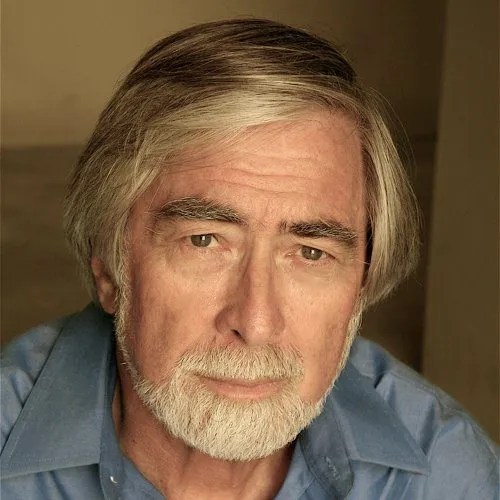
Robert Scheer
Robert Scheer, publisher of ScheerPost and award-winning journalist and author of a dozen books, has a reputation for strong social and political writing over his nearly 60 years as a journalist. His award-winning journalism has appeared in publications nationwide—he was Vietnam correspondent and editor of Ramparts magazine, national correspondent and columnist for the Los Angeles Times—and his in-depth interviews with Jimmy Carter, Richard Nixon, Ronald Reagan, Bill Clinton, Mikhail Gorbachev and others made headlines. He co-hosted KCRW’s political program Left, Right and Center and now hosts Scheer Intelligence, an independent ScheerPost podcast with people who discuss the day’s most important issues.
Editor’s Note: At a moment when the once vaunted model of responsible journalism is overwhelmingly the play thing of self-serving billionaires and their corporate scribes, alternatives of integrity are desperately needed, and ScheerPost is one of them. Please support our independent journalism by contributing to our online donation platform, Network for Good, or send a check to our new PO Box. We can’t thank you enough, and promise to keep bringing you this kind of vital news.
You can also make a donation to our PayPal or subscribe to our Patreon.
