

Click to subscribe on: Apple / Spotify / Amazon / YouTube / Rumble
Gaza today symbolizes nothing but death, destruction and oppression. Israel’s genocide and scorched earth bombing campaign has not only wiped out its people but the rich history that stretches back thousands of years. Juan Cole, University of Michigan history professor and renowned Middle East historian, joins host Robert Scheer on this episode of the Scheer Intelligence podcast to clearly lay out the history behind Gaza through his newest book, “Gaza Yet Stands.”
Gaza, Cole says, was a cosmopolitan place, a place people went through for travel, trade and its rich civilization. “If you were in Beirut and you wanted to go to Cairo by land, you would go through Gaza. It was a crossroads,” Cole tells Scheer. A unique, multinational city with diverse religious significance, Gaza used to represent something grand in the heart of the Middle East. Today, after it was stolen by Israel and Western colonialism, even the history is in jeopardy.
“The Palestinians were 1.3 million, and the British envisaged in the White Paper of 1939 that they’d make a state of Palestine in which the Jews would be a substantial minority,” Cole explains. “It would be a Palestine, just as the British Mandate of Iraq eventuated in the country of Iraq, and the French mandate of Syria eventuated in the country of Syria, there would be a Palestine.”
This arrangement, Cole contends, was uncomfortable for all parties involved and made things worse in each affected region. Many of the Jews persecuted in the Holocaust were now destined to repatriate to this foreign land instead of to Poland and Germany, which displaced the Palestinians and welcomed havoc from settlers. In a world emerging from colonial rule following World War II, Cole explains that Israel’s creation was just a reversion back to that model. “That’s what Israel is, it’s a Western colonial instrument,” Cole says. “What’s been done to the Palestinians is considered extremely unfair by almost everybody in the world, outside of Western Europe and the United States.”
Credits
Host:
Producer:
Video Producer:
Introduction:
Transcript
This transcript was produced by an automated transcription service. Please refer to the audio interview to ensure accuracy.
Robert Scheer
Hi, this is Robert Scheer with another edition of Scheer Intelligence, where I always say the intelligence comes from my guests. In this case, no question, Juan Cole, who is, let me give his full title, the Richard P. Mitchell Collegiate Professor of History at the University of Michigan. I don’t think I knew you when you were a graduate student, I certainly knew you soon after you were at UCLA, you got your doctorate there. And, you know, Arabic, Farsi, Urdu, want to give me some more languages you know?
Juan Cole
It’s a long list, totally not interesting to…
Robert Scheer
Well it’s interesting to me. We’re going to talk about this contentious subject of Israel and Gaza, and most people, frankly, who discuss it are idiots or they’re propagandists, and they maybe know a lot, but they don’t tell us. They spin the story. And here one thing, and I remember that as distinguished as you are, and I consider you actually the best informed, I don’t want to trivialize it by saying academic, I’ll just say I think you’re the best informed person I know on this whole region. And you’ve written really important books. I found, in particular, your book on Prophet Muhammad really to be enlightening as to where the real life Muhammad came from, or his journey and education. But the reason I want to talk to you today is that you put out a book recently called “Gaza Still Stands.” And I was annoyed because with Kindle or whatever, when you get these things, and then I saw there were two reviews, one liked you, one didn’t. But I want to see 50 people, 500 people, commenting on this book so I’m unashamedly promoting it here. And the reason I want to promote it is because the whole discussion about this genocide in Gaza is taking place without any explanation really, or focusing on how did Israel get to control Gaza and the West Bank and the Golan Heights and so forth. And as someone who went there as a journalist at the time of the Six Day War, and I was in the area, I was in Gaza and Egypt and so forth, to my mind, that is critical to the story. This is not as if they were just attacked from inside, by subversives who want to engage in terrorism or something. But the fact is, Israel fought a totally unjustified war, I would say preventive, but it wasn’t preventive. It wasn’t protecting against anything. And I’ll let you tell that story, but it has a whole history and just one historical footnote, the creation of Israel, as I recall it, ironically, either Russia, Soviet Union, was the first or second country to recognize Israel, and I think the US was either the first or second, they were competing for it. And this was not supposed to be a country swept into either the Cold War or the colonial effort of the French and English to restore their power, or of the United States to take over their role. And reading your book, I was reminded that this fight really had not just the Six Day War, which I had some knowledge of, but 11 years before, when Israel was allied with the French and the English in their efforts to control the Suez Canal and control the region. So why don’t you take it from there and just tell us why this book, and in particular, “Gaza Still Stands,” does it still stand? And you justify that quote with the reference to [John] Milton, Samson Agonistes, maybe you can explain the title, the purpose of the book.
Juan Cole
Sure, the book is “Gaza Yet Stands,” and it’s a collection of my journalism, my commentary on events in Gaza and the Israel-Palestinian issue since 2006 when I wrote the first of these essays for Salon, some of them appeared in The Nation Institute, TomDispatch or The Nation. I think one or two of them is from TruthDig
Robert Scheer
When I used to edit it, yes.
Juan Cole
Edited by a distinguished [inaudible] of American journalism, and some appeared at my own site, Informed Comment. But, the internet is not well indexed, and to read these essays in serial order, in chronological order and I chose out a selection of them that I thought had legs, could still, were informative. And so it covers from 2006 when there were elections for the Palestine Authority sponsored by the Bush administration, until the present. But of course, as you say, being a historian, in my essays, I advert to the past. And, I think you’re absolutely right, Bob, let me just begin with Milton. He wrote this closet play. It’s called, it’s not meant to be performed on stage. A single actor is supposed to come out on the stage and just read the script. So that’s why we probably haven’t seen Samson Agonistes performed, but it is obviously about the story of Samson, the last of the Israeli judges, who was an ancient superhero, had super strength and was favored by God and was betrayed into the hands of the Philistines who then controlled Gaza, and when his hair had been cut and he’d become weak, and his hair grew out, and he recovered his strength, and he asked them to prop him up against one of the pillars of their establishment there in Gaza City, and he managed to bring it down. So of course, it killed himself, but he also killed his captors. So it’s a Pyrrhic victory. And the passage that I begin the book with, and which supplies the title of the book is this: A messenger comes and says, Gaza yet stands, but all her sons are fallen. This is a very interesting way of looking at it. The Philistines were killed, the leaders of them and so forth, but the territory is still there. All in a moment, overwhelmed and fallen, the messenger is talking to a man. The man replies, sad, but thou knowest to Israelites, not saddest the desolation of a hostile city. Can’t expect the Israelites to be very unhappy about this. The messenger said, feed on that first there may in grief be surfet. He’s saying that, yeah, absorb what I’m trying to tell you, that there’s been this huge disaster in Gaza, and don’t be thinking that the grief stops there. There may be grief for the Israelites yet to come out of this. So I thought it was opposite to our current situation, and drew the title from it. But, one of the issues that you very astutely put your finger on is that most of the world sees Israel and the Israeli enterprise in Historic Palestine as an extension of the age of European colonialism. And we all know that the Western Europeans got very good at building wooden boats and making cannons, and they went out and conquered the world. At one point, a majority of the world was under European rule, Portuguese and the Spanish in Latin America, the British in India, Malaya, French in Vietnam, they were everywhere, and they were up in people’s underwear. They were telling them what to do, how to live their lead their lives, governing them and taxing them and taking resources out of their country. So this was not a philanthropic endeavor. There’s, you know, tin and rubber came out of Malaya for the British Empire. And that European colonial enterprise lasted strong until World War II, and World War II deeply weakened the colonial powers as ironically, some of them were occupied and colonized by the Nazis. So France, the Netherlands, which had what is now Indonesia, the Dutch East Indies and the British barely survived, and the war took all the resources. They were desperately poor afterwards. And so after the war, the European governments had a difficulty convincing their publics to go on spending money on colonizing India and Vietnam and so forth, there was enormous pressure on the government to get out, and the United States, which emerged as a superpower, also wanted them to get out. But there were a number of places where this anti-colonial and decolonization impetus failed. One was Algeria, where the French were so attached to Algeria, they considered it French soil, and they had about a million French colonists over there who had settled, had property and land, and these guys were rich and influential back in Paris, so the French were damned if they were going to give up Algeria. And then the British had made this colony, or they called it a mandate in that era, in Palestine, and they had promised Jews a national home in Palestine, although they solemnly swore that it would not inconvenience the native Palestinians whatsoever. And that whole enterprise of offering colonial Palestine, British colonial Palestine, to Jewish immigrants from Europe probably wouldn’t have amounted to very much, except that then the fascists rose in Europe, who were crazy. They had this obsession about Jews and targeted them, and so a large number of Jews, suddenly were under the gun, displaced. Their lives were threatened, and so they fled. And there was no place to flee to, the United States wouldn’t let them in, Britain wouldn’t let them in, Brazil wouldn’t let them in. But the British had made this pledge and tried to honor it. And so a lot of displaced Jews, willy nilly, without that being necessarily their first choice, were forced into British colonial Palestine, which did inconvenience the locals, and there were riots about it. And there was a revolt about it in 1936 through ’39. And then the Holocaust happened during the war, and when the war was over, American troops discovered the death camps of the Nazis, where there were survivors. 6 million were killed, but there were hundreds of thousands of survivors.
Robert Scheer
I just want to correct you. You say discovered, but actually they knew they were there. It wasn’t a discovery.
Juan Cole
Well they knew that the Nazis had rounded up the Jews and put them in camps. I think it wasn’t completely clear that they were industrial scale death camps, that they were marching them through gas chambers and just killing them en masse.
Robert Scheer
This was proclaimed by the Nazis that that was certainly their intention, but I don’t want to dwell on that.
Juan Cole
Anyway, the point being is that there were people in these camps afterwards. And so after World War II, the whole logic of Palestine and the Jewish question was the opposite of everything else that was going on. The British Labour came to power in Britain, and they got out of India. But with regard to Palestine, there was a question of what to do with these Jews and the survivors in the concentration camps. And there had been some 500,000-600,000 Jews had gone to Palestine. The Palestinians were 1.3 million, and the British envisaged in a white paper of 1939 that they’d make a state of Palestine in which the Jews would be a substantial minority, but it would be a Palestine just as the British Mandate of Iraq eventuated in the country of Iraq, and the French mandate of Syria eventuated in the country of Syria, there would be a Palestine. But the Jewish immigrants formed themselves into militias, and they were influenced by Zionist ideology, and they fought against this British plan to establish a Palestine.
Robert Scheer
Palestine would be multinational.
Juan Cole
It would it would have been multicultural. Yeah, it would have had Jews and Christians and Muslims. And they fought against it and defeated the entire idea. They took 78% of Historic Palestine and made it into Israel, and they chased out, quite deliberately in most cases, 750,000 Palestinians from this territory that they grabbed so as to make a Jewish majority state plausible. And they committed massacres and spread around the rumors of massacres in order to make the Palestinian peasants flee. And then they declared, once they established Israel in May 1948, the leader David Ben Gurion announced that no Palestinians would be allowed to return to what then became Israel. And they just grabbed all their property, all their farms, all their homes, their cooking utensils, the oxen that they plowed with, they took them all, and they made them their own. They moved in, and they even finished getting in the crops that the Palestinians had planted the previous year. Those were now gathered in by the Jewish settlers, and then those Jews who were surviving in the concentration camps, instead of repatriating them into Germany and Poland, they were sent to Israel. And I think that was bad for everybody. It was bad for the people who were sent to Israel, who often had a hard time in early years, adjusting, and then it was bad for Germany and Poland to now not have any Jews, to become much more monochrome societies. And it was bad for the Palestinians because it cemented the new arrangement in which the Palestinians were now stateless refugees. They had no citizenship in a country, and they had been expelled from where they were. And 250,000 of them, and 250,000 people in the late ’40s turns into millions today, but they were expelled to Gaza where the population of which had been 80,000. And 70% of the families in Gaza to this day are descended from people who were kicked out of their homes and whose property was appropriated by the Zionists 1948. So, it’s a horrible story and moreover, Gaza lived by by trade. If you were in Beirut and you wanted to go to Cairo by land, you would go through Gaza. It was a crossroads. And they made things, cloth and you know, pottery is a specialized skill. You have to write the right kind of clay, and you have to know how to work it. They made pottery, they made clothing, and they sold these in Akka and Beirut and Amman and Cairo. And they were a cosmopolitan place, people went through there all the time, and now they were cut off.
Robert Scheer
I want to just stop you for a second, because this is what I found so interesting. I had read a number of your articles before, but there was life in Gaza. It’s like we marginalize, dismiss every other culture in the world. We did it in Cambodia, where they had plumbing before the British did and so forth. And in reading your book, we’re reminded that Gaza was a vital society. It wasn’t just something that maybe Kushner or somebody could think about turning into a tourist attraction, or just want its beach and that this all gets ignored. But the other point you made, we’re in this crazy thing where the Palestinians are held responsible for two things, which I want to get to. One, there’s somehow the inheritors of the horror of the Holocaust. And there are actually very good Israeli, one particular documentary [inaudible] but there are others, how Israel constantly uses the Holocaust to justify what it’s doing there in this area of Israel, when this Palestinians are after… you didn’t do this to the Germans. Germany was welcomed back into the civilized world in a matter of months, and part of the Western Germany, part of the US and the Cold War, nor were the antisemitic movements that had terrorized the Jews and killed them in large parts of Eastern Europe in any way held accountable. Somehow, the Palestinians were held accountable and Jews had not been able to find sanctuary before the war, they were turned away, even by Franklin Roosevelt from the United States. So there’s this weird, sick blame on the Palestinians, number one, for that, Germany, the Holocaust and so forth. Secondly, and this I want to get to, the Palestinians are held accountable in the David’s Goliath mythology. They’re held responsible somehow for whatever insecurity Jews might have felt in Israel, right? And so let’s get into that. I want you to talk about the ’56 war, the ’67 war, because in your book, you do a very good job of explaining that there’s history. It didn’t all start with this attack on a kibbutz in last October, there’s a history in which Israel lined up with the colonial regimes, right?
Juan Cole
Yeah, in a way, it’s the last colony, Israel. It’s the last colonial enterprise, and was set up that way by Britain and the United States and France after the war. And this is why the rest of the world, when you see these lopsided votes at the UN General Assembly, the Israelis blame it on antisemitism and so forth, condemning them, is that the rest of the world understands exactly what’s going on here, that it’s as though the French managed to stay in Algeria and weren’t kicked out in 62 by the Algerian revolution and went on bringing in French to settle more and more of Algeria and nail it down as part of France. And marginalized the local millions of Algerians, pushed them to the curb and pushed them to the marginal land and the slums and so forth. And so that’s what it looks like to the rest of the world, much of which was colonized. That’s what Israel is, it’s a Western colonial instrument, and what’s been done to the Palestinians is considered extremely unfair by almost everybody in the world, outside of Western Europe and the United States. So yes, and you were talking about the wars that developed after, after Israel was established in ’48, in some ways, they began even during the establishment of Israel in ’48 in the summer of ’48, you had Egypt and Jordan tried to intervene. But it’s been pointed out that Jordan seems to have made a separate peace with the Zionists. It wanted the West Bank, and it didn’t really fight much over the territory that the Zionists took in the areas that they mainly targeted and where they had mainly settled, there hadn’t been Jewish settlements in the West Bank to speak of. And the Egyptians came in but they were the worst army that you could imagine. They had no esprit de corps, the administration was corrupt. People in Cairo were selling off the good weapons so they didn’t reach the soldiers. The sheer numbers of the Arabs in ’48, the Arab forces was about equal to those of the Zionist forces and the Zionists were able to get good new military equipment from Czechoslovakia. The Arabs didn’t really have proper equipment, so they were defeated. And then in 1956 Israel, Britain and France sat down in a room and made a plot over the Suez Canal.
Robert Scheer
Let me be clear about that, because, not that you aren’t, but in your book, you recount, we’re not now talking about when the state is established. But even then, still, at that point, Gaza and the West Bank and the Golan Heights were not part of Israel.
Juan Cole
No, the Egyptians became the stewards of the West Bank in conjunction with the United Nations Relief and Works Agency. So it was joint. And Jordan became the steward of the West Bank until
Robert Scheer
The Egyptians, Gaza, you said, West Bank.
Juan Cole
Egyptians, Gaza; the Jordanians were in the West Bank. The Golan was still in the hands of Syria, was part of the country of Syria, as it developed out of the French mandate. But there were about 21% or so of what became Israel was Palestinians, and they were under internal military rule. They were a little bit like some of the Indian reservations in the American Old West, where the cavalry was out there they were under military rule until 1966 so the Palestinians, they had mostly been farmers. They were rural people, and they weren’t very organized. A lot of them were not literate at that time. So they were just dispersed. And among these various powers, it took a couple of generations for them to respond to what had happened to them, and some of them were exiled by Israel to Lebanon, to Syria, and lots of refugees went to Jordan.
Robert Scheer
I got from your book, because this is not discussed much. I ran a column on ScheerPost by Chris Hedges, and he challenged the David-Goliath. And the headline was, “Israel’s the Goliath and not the David.” And it got banned on the internet somehow, just suggesting that the David-Goliath image was wrong, but yet, that’s exactly what happened here. The Palestinians were clearly in that position of the Jews, biblically, and they didn’t have any army, they didn’t have an Air Force, and they were dependent upon other people, the Egyptians and the Jordanians and Syrians who were occupying part of this area, including part of Jerusalem that wasn’t part of Israel. And so what happened was Israel lined up with these colonial powers and the United States and worked with them. And this is where we get to how much of the world sees it, because the Suez Canal was not unimportant, and Egypt, under Nasser, was fighting for the ability to control it, right? And that first war, the ’56 war, Israel lined up with the French and English colonizers. This is not fiction and these were the settler colonialists, but they were lining up with the major colonials. And then in the Six Day War, the United States gave Israel its intelligence, its guidance, had given it a lot of support. And so let’s discuss those two wars, because most people don’t even understand that, that this was the process that gave Israel control over Gaza and the West Bank. The reporting on this is absolutely shameful. It just stands history on its head.
Juan Cole
Sure, well, the ’50s were the beginning of decolonization, and there were many countries in the world that began trying to be independent of their European colonial overlords, and which started making demands for control over their own resources. And so Iran, in 1953 nationalized its oil, and the CIA intervened to overthrow the Iranian government, they did that and put the oil right back under US and European control. And then Abdel Nasser in Egypt nationalized the Suez Canal, which the British had bought under duress in 1876 from from Britain and the British didn’t really want to give up the Suez Canal, but they had become weak. And again, the British public wouldn’t have supported an attempt to occupy Egypt and then the French were fighting the Algerians to try to keep Algeria as a French colony. So Abdel Nasser was a big champion of decolonization and of the new Arab nationalism. And so he nationalized…
Robert Scheer
And part of the non-aligned world. People should understand that, in the midst of the Cold War, India and Egypt and a number of other countries formed this non-aligned movement.
Juan Cole
Right in 1955 at Bandung.
Robert Scheer
That was a very serious threat to the hegemony of either the Soviet Union or the United States, and it basically got divided and crushed, and this battle over the Suez Canal and Israel ended up being on the old fashioned colonizer side of that, it’s never mentioned.
Juan Cole
Oh yeah, no, the United States and the Soviet Union wanted to make everybody in the world choose up sides. So you’re either ours or theirs. It was like being in prison, you’re under control of some bad guy. And a lot of the countries in the Global South who had been colonized said, no, we were not interested in being recolonized under under the guise of the Cold War. And they tried to make an unaligned movement. And so Abdel Nasser nationalized the Suez Canal. This was unwelcome to the British who had controlled it, and it was important to British maritime commerce and British naval power, which the British still didn’t want to give up, and it was an affront to the French in Algeria, because the Algerians took hope from this kind of thing. And so the Israelis and the British and the French met in a room and made a conspiracy that Israel would attack Egypt and take the Sinai, which Israel would keep, because the Israelis were an expansionist colonizing force, and they wanted more territory than they had. So they would take this Sinai away from Egypt. They’d be right on the Suez Canal. And then the French and the British would offer their good offices to intervene, to internationalize the Suez Canal, take it back away from the Egyptians, as a way of making peace between Egypt and Israel, which wouldn’t have been necessary if the Israelis hadn’t attacked Egypt out of the blue. So it was a conspiracy, and they didn’t tell Eisenhower about it because they knew he wouldn’t approve and he was furious, because they launched this ’56 war just on the eve of the American election. It made Eisenhower look like he wasn’t in control. He could have lost to Adlai Stevenson. So Eisenhower looked into what had happened and finally figured out that it was a conspiracy that he’d been excluded from. And he was furious, and he called up Anthony Eden, the prime minister of Britain, and read him the Riot Act. And historians say he used curse words that Eden hadn’t ever encountered before. And at the time, these countries were debtors. The United States was a creditor nation rather than a debtor nation, and they all owed the US a lot of money for reconstruction after World War II and Eisenhower threatened to call in the loans, which would have crashed the British, the French and the Israeli economies, if they didn’t get right back out and restore the status quo ante. And as part of the ’56 war, not only did the Israelis try to grab Sinai, but they grabbed Gaza. That was the first time that they were in Gaza for a few months. Eisenhower made them give it all back and I think Eisenhower was himself, an imperial figure in many ways, but I think he had this theory that the Arabs still hadn’t gone communist, and you might be able to gather them up into the capitalist world, but not if these old colonial forces were going to constantly be picking on them. So he strong armed de Gaulle about getting out of Algeria, and he was furious over the ’56 war, because he thought it would drive Abdel Nasser into the arms of Moscow, and that was one of his reasons that he behaved in this way. And so So Ben-Gurion attempt to expand and his alliance with the fading but still virulent colonial powers all crashed and burned in ’56, it was a huge failure. And then in ’67, Abdel Nasser had been pushed into the arms of the Soviet Union, and Premier Nikita Khrushchev came and visited Cairo in 1964 and the Soviets became the major backers of the Egyptian military. And the Soviets, ironically enough, told Abdel Nasser, however, that he’s not to start any wars, that they wouldn’t back him in a war. And he then intervened locally in ’67 in a civil war in Yemen, and sent 100,000 of his cracked troops out there. So Abdel Nasser was helpless. He talked big and he menaced Israel in his speeches and so forth, but his best troops were not in Egypt anymore. They were in Yemen, and then his major superpower patron had forbidden him to launch a war, so all he could really do is talk. But the Israeli officer corps saw an opportunity because, of course, Abdel Nasser’s tilt towards the Soviet Union was very unwelcome in Washington, and young people don’t understand this, but it was us or them. The Dulles brothers said you’re with us or you’re against us. It was black and white. And people since John
Robert Scheer
John Foster Dulles, who was Secretary of State, and Alan Dulles, who was head of the CIA, both of them came out of Wall Street, corporate banking and so forth, yeah.
Juan Cole
Right and the atmosphere into the ’60s was that if you tilted towards the Soviet Union, you were evil, you had two horns. And so Abdel Nasser was increasingly vilified, and so the Israelis took advantage of this to launch an attack on Egypt, again, trying to annex the Sinai Peninsula and get some say in the Suez Canal through which Israeli trade went. And so it was a war of aggression on Israel’s part. The Israelis fired the first shot. There was no prospect of the Egyptians launching a war at that time.
Robert Scheer
Well, I want to just say as a footnote, because at the end of the war, I landed in Cairo, in the airport there, trying to cover the war, and the people at the airport showed me that the Israelis had such good intelligence, which had been given to them by the CIA that they knew which were the dummy planes and which were the real planes. And they were able to take out the real planes and not waste ammunition on the dummy planes. So the David and Goliath thing, even though Egypt was, yes, had a big population and so forth, but there was no match. Israel was not threatened militarily, and certainly not from the Palestinians. That’s the other thing. The Palestinians were occupied, in effect, by the Egyptians and the Jordanians. They didn’t really have control over their area. Everybody forgets this. It’s this image that was then constructed of the terrorist Palestinians that you can’t reason with and do there is absolutely a big lie. I was there, and it’s just utter nonsense. They were actually confused and dazed by the whole thing. And you’re right, there was a largely agrarian society, and they were used as the excuse for the creation of a greater Israel. This is where we can get to, because we’re going to run out of time, I’d like to talk about settler colonialism, which you discuss in your book, and my goodness, teaching at an American university, you can get fired for even invoking settler colonialism. But let’s also go there and see if we can, we’ll take a little more time and do this, yeah.
Juan Cole
Well, I think the settler colonial paradigm, and we saw it in Algeria, where the French sent in a million people, has relevance to understanding what happened in Israel and Palestine. And it was the ’67 war when the Israelis grabbed Gaza and the West Bank, and then they started settling them, because that was their ideology. They wanted to nail them down and gradually make them part of Israel and find a way to expel more Palestinians, the way they had in ’48.
Robert Scheer
I want to bring it back to your book, because Israel denies all of this. At least they’re propaganda. I forget the word hasbara or whatever. But they deny all this. They say, No, no, we only do these things reluctantly because we’re attacked. We would love to have been able to get along with them, but these people are basically savages that you can’t get along with, and this informs the whole aggression here. And the fact is, so when I was there, the Labor Party was in power. Then they said, No, we’re not going to keep it and we should give it back. But they really, as you’ve pointed out in the previous interviews I’ve done with you, they had no intention of doing that. I felt I was fooled by people like Moshe Dayan and Allon and so forth, because they talked a good game. We’re not imperialists. The fact is, they were, and they had every intention of keeping these areas and making life miserable. This is the power of your essays. And again, the book “Gaza Yet Stands.” You gotta check that out. “Gaza Yet Stands,” and people should understand this, that the occupied population may turn into an enemy and a menacing force is something that Israel created.
Juan Cole
Wwith regard to Gaza, it’s the most horrible story in the world, because the Israelis occupied Gaza in 1967. They actually sent, over time, about 8,000 Israeli settlers into this very densely populated, desperately poor place where they had already previously crowded in hundreds of thousands of refugees from what became Israel, whose property had all been stolen by the Israelis, and then they came after them and occupied them again and in 2006, the Bush administration, as a result of the Oslo process, had said, well, we should have elections in Gaza and the West Bank for the Palestine Authority and this Muslim fundamentalist movement won unexpectedly. Bush hadn’t expected it to happen and had insisted that Hamas be allowed to run ironically enough, this was an American initiative that the Israelis weren’t happy about. And when Hamas won, however, the Israelis convinced the Bush administration that they couldn’t let this victory stand. So they, in 2007, they staged a coup, and they overthrew the elected Palestine Authority. The Israelis just arrested the parliamentarians and put them in jail and they brought the Palestine Liberation Organization into power. And they did this in the West Bank successfully, but in Gaza, the PLO was defeated by Hamas, and so the coup didn’t succeed. All of the journalists who write about this, or almost all of them, say that Hamas made a coup in Gaza, but it was the other way around. Hamas had been elected in Gaza, not overwhelmingly. It was kind of 51-49 but they had come to power by the ballot box, and they managed to remain in power afterwards, despite the CIA and Mossad attempting to overthrow them. So in the West Bank, the PLO comes to power, in about 40% of the West Bank, which the Israelis allowed them to police for them. But in Gaza, Hamas remained. And so then the Israelis put this blockade on Gaza. They don’t let in certain building materials, certain necessities. They even, at some points, were restricting food imports. One Israeli document emerged, which suggested that they were calculating how many calories a person could live on and not suffer starvation, just no body fat, but not dying.
Robert Scheer
You go into this in some detail in your book, and it’s worth reading the book just for that. It’s so calculating in its inhumanity. It’s all has to do with public relations and appearance. How can we keep these people alive so we don’t have dead bodies all over and starving children who are visibly starving, but just enough so they don’t die. But it holds back their development, their mental and physical development, their ability to be in schools and so forth. It’s really one of the eeriest documents. How do you have a genocide without it being allowed to be called a genocide and that’s really what’s going on now. It’s like the drip torture. They let in three trucks today, I gather three food trucks in northern Gaza. So no, we’re not starving them, and they’re blowing up our tires or something, so it’s their fault anyway. And your book, I want to bring it back to that. That’s the reason why I think people should read it. I feel strongly about that because we’ve denied the basic humanity, the history of the people of that area. Just talk about fake news. I mean, it’s just totally, this is a PR war of a kind that exceeds all previous in terms of concocting a false narrative.
Juan Cole
What’s amazing is how much the people, the Palestinians of Gaza, were able to do even under blockade. They had several universities. They were graduating people in medicine. There were Palestinian scientists in Gaza working on fighting cancer. They had school teachers, poets, musicians. It was a very vital culture which, however, was in this bubble because it was completely surrounded by Israel, except for the Egyptian border. And the Egyptians did whatever the Israelis told them to do, or else.
Robert Scheer
And couldn’t use their their port, they couldn’t travel.
Juan Cole
Yeah, the Israelis bombed their airport, and then they they shot them if they tried to go out too far in their fishing boats. So they were under siege. But inside…
Robert Scheer
I want to again. This is a reason to read your book, because everything now is what happened in the beginning of October. You know, these terrible people from Gaza attacked and, oh, my God, it’s happy, wonderful kibbutz life, and they attacked it and so forth. What preceded that is simply blanked out of any of the accounts and what you’re talking about, I mean, yes, people did build universities and did work on health and so forth. And with the Hamas, which may be one reason why there was some support for it, but the whole idea… this goes into the “they weren’t civilized, they’re savages.” In our own declaration of independence, we refer to Native Americans, they don’t do it now, you know, merciless savages in the Declaration of Independence. I think it’s the word merciless. But certainly savages is there, and that’s how what Israeli propaganda and US media propaganda has been able to do. You have the savage population there, well, how did they get to be, in any way supporting any kind of attack on a kibbutz, because they were forced, they were living in a concentration camp, or certainly a high security prison.
Juan Cole
Yeah, they were in the largest concentration camp in the world. It was open air.
Robert Scheer
I’m not a historian, and you’re a historian I respect as much as anyone, and certainly in this region, and you’ve just said something that will cause somebody to get fired at a number of different universities or lose their jobs in a newspaper or something, when you call it a concentration camp, so tell us why you use that language.
Juan Cole
Yeah, well, there’s a difference, I should underline, between a concentration camp and a death camp, although now increasingly it has become also a death camp. I mean, the Israelis put these people under an illegal siege. The United Nations Security Council said it was illegal. What they were doing was it was against international law and and very harmful to these people who are stateless. They have no citizenship in any state. And now, I mean, the horrible thing is that Prime Minister Benjamin Netanyahu has made great hay out of out of the last year’s military operations. He did a deal with Hamas that he would let them have Gaza as a fief. He would put these restrictions on Gaza to keep it from developing very much, but he would let Hamas have it in return for which Hamas wouldn’t press for a united Palestinian state. So he kept the Palestinians to the West Bank and Gaza divided whenever the United States pushed pressure on him on a two-state solution, he said, Yes, but the Palestinians themselves don’t want a two-state solution. They’re divided between Hamas and the PLO. So he did this deal with Hamas and he pressured Egypt and Qatar to send in money to Gaza. It was one of the ways that the people in Gaza were able to make universities and institutions thrive, was this money came in from the outside, but the money was sent to Netanyahu’s accounts, to Israeli accounts and then Netanyahu had it transferred to Gaza. So it this entire situation of kind of keeping Gaza in this occupied bubble, in this concentration camp under the control of Hamas was for Netanyahu’s own purposes in dividing the Palestinians and making sure that they couldn’t have a state. And Netanyahu, basically was riding a tiger. He thought he had tamed Hamas, but there were younger, radicalized members of it. I think some of them may be influenced by ISIL, who thought up this frankly crackpot operation to go into Israel and kill a lot of people. So it was brutal and it was horrific and gut punching and stupid, also, what the Hamas did, but the situation under which this occurred was arranged for in every way by Benjamin Netanyahu.
Robert Scheer
So what happens now, you say “Gaza Yet Stands” that’s the name, the title of your book, but does it? I mean, it’s rubble. There can’t be universities anymore. Jared Kushner, didn’t he want to turn it into a [inaudible] or a gambling casino or something?
Juan Cole
Well, you know, the quote from Milton says its sons are fallen, but the Gaza yet stands, so the sons are fallen, and the daughters too, apparently. I mean, we don’t know exactly what’s going to happen, because there’s a lot of big think projects going on in Netanyahu’s cabinet, whether they can actually be implemented or not is not clear. I mean, at some points, the cabinet wanted to, Netanyahu’s cabinet wanted to push the Palestinians into the Sinai Peninsula, so just 2.2 million new refugees would just overwhelm that part of Egypt. The Egyptians have made it clear that they’re not going to let that happen, and they’re strong enough militarily not to allow that to happen. And so then another plan is to depopulate North Gaza, which is the area that was near to those kibbutz and make all the Palestinians leave it, which is why they’re not letting any food into North Gaza, or not enough food, because they’re trying to starve people out and make them leave. And they’re continually bombing them, and they hit civilian targets all the time, quite deliberately. It’s ethnic cleansing. They’re trying to force them out. So they’ll crowd all the point 2.2 million Palestinians, or however many are left after they’re slaughtered by the Israelis, into South Gaza and then the north they would colonize, make it part of Israel. So that seems to be the current plan. Why this would be more successful than Netanyahu previous plans for Gaza and why it wouldn’t produce radicalization and war and terrorism and so forth, I couldn’t tell you. And now we’ve got the Trump administration coming in, which probably would let them do whatever they want to the Palestinians. And I predict in the long term, this is not going to end well. The Israelis had a certain amount of success in 1948 in establishing their state and ethnically cleansing a lot of the Palestinians, making Israel plausible, but this Ahab-like fascination with the great white whale of Greater Israel, of expanding, expanding, expanding, and trying to rule over 5 million or increasingly, 6 million stateless Palestinians, this is just probably not a possible political strategy, and the likelihood is that it will continue to produce instability and all kinds of trouble, not only for the Israelis, but for the United States, because you and I have watched the horrors that the Israelis had inflicted on the civilian population of Gaza, where hundreds of thousands have probably either been killed or been put in a situation where they’re likely to die, and so has the rest of the world, and so have all of those Arab young men, Muslim young men around the world. I predict there’s going to be a recrudescence of terrorism over this and the big terrorism attack of 9/11 deprived us of substantial amounts of our civil liberties in the United States, and another recrudescence of terrorism could well push us over, not to mention that that’s the direction that our electoral politics is going anyway. So this could be quite deadly that the entire Israeli enterprise of Greater Israel, ethnic cleansing, genocide, this is not going to leave Americans in their daily lives untouched.
Robert Scheer
Taking it one step forward, and I want to determine to keep this under an hour, not because it’s not interesting, but I have a tendency, really, to go on long. But you, I first encountered your work, and you as an expert on Iran, and you are unquestionably the most knowledgeable academic in terms of the history of Iran, what’s happened and so forth. And can you just give us a brief view, because the fantasy now is that Israel can go to war with Iran, knock out the ayatollahs, that this will actually appeal to the Saudis and the Sunnis elsewhere, and so forth. But it looks like we are actually acting in support of Israel, and Israel is bringing the Sunnis and Shiites closer together. There’s actually normalizing of relations between Saudi Arabia and Iran. So can you just give us, like a brief closing view of how that might work out?
Juan Cole
Well, I think the Gulf Arabs, Saudi Arabia and Kuwait and others, the United Arab Emirates, believe that the United States is now a check that bounces, that were there to be a big conflict with between the Arab world and Iran, like you had in the 1980s the Iran-Iraq War, where the United States, under Reagan, came in on the side of the Arabs. They don’t think that the United States any longer can be counted on to do that. Biden had other fish to fry in Ukraine, and Trump is transactional. And so they’ve decided that they have to make their own peace in the region. So the Saudis have been doing very intensive diplomacy with Iran. They even had an Iranian military official come to Riyadh recently. They’re talking about joint military maneuvers, and they basically have announced in Riyadh today that they’re seeking better relations with Iran and that a Saudi recognition of Israel under these conditions of what the Crown Prince of Saudi Arabia now is calling, openly, genocide is not on the table. So the entire US plan, which was to get the Arabs to recognize Israel, have them do a lot of economic and investment deals, the Abraham Accords, and then set the Israelis and the Arabs as a bloc against Iran, that entire plan has crashed and burned, and because of Netanyahu’s Gaza war.
Robert Scheer
Well, I’m going to end it there, and I really appreciate it. The book is called “Gaza Yet Stands,” Juan Cole, you can get it. It’s really critical background information. He’s a terrific writer, as I say, seems certainly one, if not the single top academic dealing with this whole region. So check it out. Christopher Ho and Laura Kondourajian are the producers of KCRW, the NPR station in Santa Monica that posts these shows. Joshua Scheer is our executive producer. Diego Ramos writes the introduction. Max Jones prepares the video. And I want to thank the JKW foundation in the memory of Jean Stein, one of the rare public intellectuals in America who teamed up with Edward Said to actually tell us Palestinians are human beings. And she came from a long standing Jewish family, very important in Los Angeles and Hollywood, or maybe because of that Jean Stein saw the humanity of the Other and so it’s good to be supported by that. And Integrity Media, a foundation committed to having more diverse approaches in journalism and questioning power as journalists should do. See you next week with another edition of Scheer Intelligence.
Please share this story and help us grow our network!
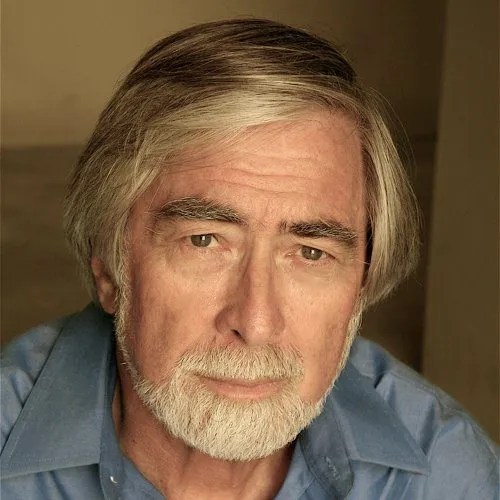
Robert Scheer
Robert Scheer, publisher of ScheerPost and award-winning journalist and author of a dozen books, has a reputation for strong social and political writing over his nearly 60 years as a journalist. His award-winning journalism has appeared in publications nationwide—he was Vietnam correspondent and editor of Ramparts magazine, national correspondent and columnist for the Los Angeles Times—and his in-depth interviews with Jimmy Carter, Richard Nixon, Ronald Reagan, Bill Clinton, Mikhail Gorbachev and others made headlines. He co-hosted KCRW’s political program Left, Right and Center and now hosts Scheer Intelligence, an independent ScheerPost podcast with people who discuss the day’s most important issues.
Editor’s Note: At a moment when the once vaunted model of responsible journalism is overwhelmingly the play thing of self-serving billionaires and their corporate scribes, alternatives of integrity are desperately needed, and ScheerPost is one of them. Please support our independent journalism by contributing to our online donation platform, Network for Good, or send a check to our new PO Box. We can’t thank you enough, and promise to keep bringing you this kind of vital news.
You can also make a donation to our PayPal or subscribe to our Patreon.
