

Click to subscribe on: Apple / Spotify / Amazon / YouTube / Rumble
Much needed attention has been brought upon the for-profit health insurance industry in the wake of the assassination of UnitedHealthcare CEO Brian Thompson. Personal stories about people’s tragic experiences involving not only UnitedHealthcare but many other insurance companies have spelled out a deeper issue that resonates across the American political spectrum.
Sean Morrow, a journalist and writer for More Perfect Union—a nonprofit newsroom that focuses on working class issues—has gained significant attention lately as a result of the shooting. Morrow joins host Robert Scheer on this episode of Scheer Intelligence to further elaborate on the issues millions of Americans are facing and why Brian Thompson’s assassination led to such a widespread public reaction.
Morrow dives into some of his reporting, which has dealt with the internal processes behind the health insurance system. Among insurance companies, there is a consolidation process in the form of vertical integration. Companies like UnitedHealthcare can own multiple parts of the healthcare process and thus set up toll booths along each route people can expect to take. “They’ll have pharmacy benefit manager companies, they’ll have data companies, and then they kind of own this entire system, so that they’re always routing you through there,” Morrow says.
“If you have a health issue, you could theoretically be giving UnitedHealthcare a little bit of money from every step of the process. And they’re their own vendors in all of that,” he explains.
“The system’s not broken. The system’s working as it’s intended,” Morrow tells Scheer. The system, Morrow says, is intended “to funnel more and more money to a certain handful of people at the cost of all others.” Despite the legality of this system, the rigging of it against the interests of the working class is what enables their suffering as well as their anger against it.
Credits
Host:
Producer:
Video Producer:
Introduction:
Transcript
This transcript was produced by an automated transcription service. Please refer to the audio interview to ensure accuracy.
Robert Scheer
Hi, this is Robert Scheer with another edition of Scheer Intelligence, where the intelligence comes from my guests. Otherwise, this would be—I’d be an ego maniac here, and it’s kind of a parody on the Central Intelligence Agency. So it’s Scheer Intelligence, we’re actually trying to get at it. And it’s Sean Morrow. And I’m going to let him introduce himself, but I read a whole bunch of pieces and looked at interviews with him and everything, and he writes for a group called More Perfect Union, which I’ll let him explain. But he’s been great on the health care issue, particularly this last assassination, as they’re calling it, and they now say the person who did it is a enemy agent, or what are they going to say? It’s a terrorism act and so forth. But you’ve been a pioneer, really, in explaining how health care screws people over, Medicare Advantage. It happened in your own family, with your mother and so forth. But you have a range in critique, so I’m actually offering you up as a model of journalism. Can one survive in this business and do what clearly is interesting work on your part. So why don’t you tell me a little bit about your own background, how you got into this, and then let’s begin with the healthcare stuff, since that’s top of the news, okay?
Sean Morrow
Yeah absolutely. I’m Sean, thank you so much. I work for More Perfect Union, we’re a nonprofit newsroom that’s focused on reporting on what’s important to working people. So because of that, we often get misattributed as being a labor publication only. But it’s less about only focusing on labor, and more focusing on what matters to working people, as consumers, as labor. Obviously, we covered labor as well, but covering economic and political issues from this working class lens, because so much of the media is built around a lens that’s for the upper middle—starting from the upper middle class, right? That’s who’s reading a lot of the legacy papers. So that’s where we come from there. Journalistically, I came up through doing social media video, because that was the only jobs that were available. You know, it’s really hard to get…
Robert Scheer
Where’d you go to school? Where’d you grow up?
Sean Morrow
I grew up in Westchester, New York, like upstate above the city. Went to college at Clark University, where I studied political science and playwriting. So I don’t have a traditional journalism background, but studied politics and storytelling, communications, you know, and brought that to politics. And now I live in Queens, New York City.
Robert Scheer
Okay, the reason I keep pushing the model is, in fact, we don’t have journalism now for the upper middle class or the upper class, as we did when I was at the LA Times. We have it for the top 1/10 of 1% or even smaller that could actually buy the Washington Post or the LA Times or support—the [inaudible] New York Times only stayed in business when it got the richest man in Mexico to give them a lot of money at one point. Forget his name, Carlos Slim or something, yeah. And so my point is, though, that we have—the internet, I tell my students, is the best and the worst of all worlds, and yet, there’s a lot of bad stuff happens on the internet. On the other hand, it challenges the dominant established media to a degree. They can always clamp down, and countries can clamp down, and we know that now. We know the internet is not what it was even two years ago or five years ago and so forth, but yet, we have a great deal of very interesting journalism being done worldwide, and people can access it. If we can get them interested, they can find it and access it all over the world. So in a way, it’s the best time to be journalists, not necessarily to make a living, because the guys who can actually pay you a real salary, or the women who can pay you real salary aren’t interested in supporting any kind of decent, interesting journalism. But okay, but let’s begin with healthcare, because that’s why I originally wanted to talk to you. You had personal experience with it. You’ve written in an intelligent way about it, and I believe in your intro, you didn’t mention I think that that organization somewhat comes out of the Bernie Sanders presidential campaign, or not?
Sean Morrow
Yeah, in a way. So it wasn’t created from within the Bernie Sanders campaign. We know we’re a 501c3, not a 501c4 so we’re technically not a political organization in that sense. But our Executive Director, Faiz Shakir, he comes from, I believe he was Bernie Sanders’ political director, and I think he still holds that role, as well. So we come out of his orbit, and out of this movement for populism on the left is also where we gained a lot of our, you know, momentum, right? So we’re not an organ of the Democratic Party at all, and we’re not an organ of the Bernie Sanders campaign at all, or the or the Sanders Senate office at all, but it’s just similar values. And I do say values as an objective news organization, because we are objective. We are telling the truth, but we come at the truth from a perspective, right? And that perspective is that the United States government should be doing things to protect the working class, rather than protecting the ultra wealthy. And it’s a matter of opinion what the best way to do that is or a matter of honesty, what the best way to do that is. But we’re still always be coming from an objective place in that way.
Robert Scheer
So in that respect, one thing you can’t take away from Bernie Sanders, he certainly made a decent, humane healthcare system central to his politics. And he’s turning out to have been absolutely correct, of course, about that. So I want to take it to the recent uproar, finally, the public, because we have the news peg of the killing of a top healthcare executive, and you have personal experience with it. You’ve written about it, so let’s take that one very seriously, and then whatever time we have after, we’ll get to your other terrific articles and comments.
Sean Morrow
Absolutely. Yeah. So I’ve been covering healthcare for a while because I covered corporate greed more generally, but American health care system is just such a clear example of a profit-based problem where it shouldn’t necessarily exist. I covered UnitedHealthcare, specifically, I worked with this excellent producer, Alec Opperman, to do a piece on the history of UnitedHealthcare and how they’re kind of intrinsically tied to the creation of HMOs and a lot of the other predatory things within our system. And then their consolidation, not just among insurance but among other parts of the healthcare system, right? So, there’s consolidation among insurance companies, but there’s also vertical integration, which is where UnitedHealthcare will purchase primary care physicians or they will purchase—they’ll have pharmacy benefit manager companies, they’ll have data companies, and then they kind of own this entire system, so that they’re always rooting you through there where it’s like, if you have a health issue, you could theoretically be giving UnitedHealthcare a little bit of money from every step of the process. And they’re their own vendors in all of that. So we do this piece about UnitedHealthcare a year and a half ago. Doesn’t really make waves or anything. But after the shooting in midtown Manhattan of the CEO of UnitedHealthcare, which is a subsidiary of UnitedHealth Group, which is the larger company, we saw this huge uptick in traffic to this video, right? So cynically, we work in a space where these kinds of views and things are important, but we did nothing to influence that, right? It’s not like we went on YouTube and we’re like, oh, let’s get people to start watching this video. YouTube’s magical algorithm, whatever, started showing this video to people. So it kind of became the one thing people were seeing to learn why someone might have been so upset by UnitedHealthcare, purely from the magic of the back end of whatever YouTube’s technology. So yeah, that’s one of my big experiences covering that. And yeah, I’ve covered other little bits of the healthcare system that I found fascinating as well. There’s the story of the Frist family, they started the first large for-profit hospital system, HCA, which is still the largest for-profit hospital system, and that was actually built out of a business plan that was intended for a KFC franchisee to start having KFC, Kentucky Fried Chicken, start selling roast beef to compete with Arby’s. And this guy took this business plan that was intended for that, and literally looks at this business plan for selling roast beef at Kentucky Fried Chicken and says, what if we do hospitals instead? And that’s where the for profit hospital came out. So lots of just these interesting ways that all these things kind of come together and create the system that’s so broken today, where we’re spending more per capita on people for healthcare, right? And when I say more per capita, I’m not saying that you’re spending more out of pocket, or I’m spending more out of pocket. I’m saying the total amount that the government, that insurance companies, that everyone is spending on health care is way more than every other country, but we’re not seeing that return in life expectancies, plain and simple. It just seems like such a simple fact, and that’s all I’m trying to present to people.
Robert Scheer
So let me—one of the things I learned from reading your articles is you mentioned they purchase physicians. And that is the first time I think I read this anywhere where you said, look, let’s not blame all doctors. Yes, there are some doctors that make a lot of money and more the specialists, and maybe they deserve it, even, if they could save your life or so forth. But you make a point which I have not maybe, I’m sure it’s been made elsewhere, but for me as a reader, it was enlightening that the average physician that you’re going to meet, particularly doing what you know, family practice or general practice, not only is not making a whole lot of money given their education, the time they put into it, but they’re owned very often by people like this UnitedHealthcare, why don’t you take us through that? Because that’s an image of our doctors that even the doctors don’t like to push because they’re egotistical and they’ve worked hard and they want to be considered very independent, but they’re locked into a really crummy system of exploitation by the very kind of company that you’re talking about.
Sean Morrow
Yeah, absolutely. So first of all, I do think doctors should make a good living, just like everyone should make a good living. But if somebody is, say, a radiologist, is looking at your MRIs or whatever you want to be, like you want them to be good at it, right? That’s something that’s well paid. But what’s happening with primary care physicians, specifically, is that there’s these kind of chains of PCP practices. The one owned by UnitedHealthcare is called Optum. So to your listeners, if you go on Google Maps and search Optum doctors or whatever, you’re going to see a bunch of these pop up near you. I’ll go on a walk, or I’ll go on a drive, and I’ll see a couple of them in my neighborhood. And within like five or six miles, you can see two or three. These are chain doctors that are owned by UnitedHealthcare and they’re also the ones—so often the only PCP people able to go through the United plan is Optum, which is owned by them, right? And then, if you’re not a doctor that’s owned by them, you’re kind of kept in this cycle of needing, of needing to borrow money, often from an Optum connected, basically payday loan service. This is all reporting—this part is reporting my colleague Alec Opperman did. So because the insurance companies will take so long to pay a primary care physician back, right? So you go in for your check in, and you charge it to your insurance, your checkup. The insurance often won’t pay the doctor for a while, and just to operate in terms of paying their rent, paying their receptionist or whatever, do all the normal costs of business, then you take out these loans from the insurer until the insurer pays them back. So it’s kind of like they’re taking a little bit from everybody, right? And there’s this idea that all doctors are wealthy and doing great. If you think about, like Sex and the City, it’s like, oh, I want to date a doctor because they’re rich. It’s not always the case, but doctors should be, just like anybody else, should be making a good living, and nurses and the people doing the actual work of healthcare, but due to the greed of these insurance executives and these chain hospital executives, a lot of that money is not ending up where it should.
Robert Scheer
And so we’re getting at the heart of the matter here. I did a podcast last week with somebody who wrote book, very good, from Rutgers University, “Dual Justice” and how somebody robs an iPhone from a student near where I teach, and the second or third time they’re convicted, they’re gone, their life is over. Then they’re going to be thrown away in jail. And we have a criminal justice system that severely punishes people for robbing for taking advantage of other people, for hurting them, and we have a lot of sympathy for the victims, including the people who’ve had their cell phone robbed or worse, violent crimes and so forth. But the fact of matter is, corporate crime falls under a regulatory scheme that the corporations basically invented and which therefore prevents them from ever being treated, really, except in rare cases where they actually put a pillow over somebody’s head and kill them or deny them some basic medicine in the end, ever held responsible in the criminal system. And now you’ve got a situation where the alleged assassin of this head of the healthcare company is now being considered, what? A foreign terrorist or something and you’re going to, Oh, wow. And on the other hand, people who have caused the deaths of millions of people, and unfairly all over the system are, at worst, they’re going to get a slap on the wrist or something. So why don’t you take us through that?
Sean Morrow
Yeah, absolutely. I mean, it comes down to what the nature of crime is, and what the nature of like, what is killing, right? So if you think about an oil executive who is choosing to fight against regulations so that they can continue pumping the atmosphere full of greenhouse gasses, right? That person is theoretically responsible for the end of life on Earth entirely, right? Like, that’s what it’s all building up to. That person’s not committing a crime, because there’s no crime there. And it’s the same with insurance denials. The system’s not, it’s almost like the system’s not broken. The system’s working as it’s intended. And the way it’s intended is to funnel more and more money to a certain handful of people at the cost of all others, right? That’s just the way the system is built. So they’re not breaking laws, they’re not doing anything illegal. They are playing the game as intended. It’s just the game is incredibly flawed. And when you talk about Luigi Mangione being labeled a terrorist—what’s absurd there is, yes, he did have this viewpoint, but the viewpoint is, if you explain exactly why he did this, right, he shouldn’t have gone and shot this man on the street but, like, his viewpoint was something that a lot of people share. And if you ask him what he thinks, he’s just going to explain to you how the industry works, right? He’s not going to say anything untrue. He’s just gonna be like this works by denying care to make more profits. I don’t know it’s it’s hard to really get into what the nature of crime is there.
Robert Scheer
Well, that’s a very important point, because here, for instance, I’ve already made the assertion that it is criminal to exploit people in the name of insurance or pretending to supply medical care. People do die. There is severe consequences. We all know this as patients. My God, I just signed up for a program where you get concierge care in order to be able to get a doctor to talk to you when you think you’re about to die. You know, particularly at being of an advanced age, there are many occasions when I find that, so why can’t I get an answer? And yet I’m not even on Medicare, because I’m still working at this advanced age, still paying in to the system, and yet you have to go this extra slot. I’m supposed to have one of the best health care plans, and yet, no, I guess I’ll give you another $6,000-7,000 to be able to get someone on the phone to tell me, do I need to call the ambulance now or what? And so I think what has happened now with this killing is that a lot of people spoke up and said well, maybe he’s not Robin Hood, but maybe he is Robin Hood. Well, the very assumption that you make a statement like that will get you in trouble with this definition of terrorism, right? I mean, that’s what’s really creepy about it in a very profound way. If you can be profoundly creepy. That the people are saying—it’s like arguing about what’s happening in the West Bank and Israel right now. According to the Republicans at Congress, at least, if you dare question the profound immorality of that, then, oh, you’re a terrorist. So it’s happening here in this particular case, as you point out, if this fellow testifies as somebody we were talking about before the show, Daniel Ellsberg, who—his trial on the releasing the Pentagon Papers, well, the Nixon administration tried to say he was an enemy agent and espionage and all that and put away for 170 years. So that’s what’s happening now with some people, and I think the New York Times, I think one of your articles, or maybe no, one we have on ScheerPost that The New York Times, even, is saying, you know, these people who say, Well, you know, maybe there was some justice or some reason for this. They’re dangerous criminals, so that’s not free speech, that’s advocacy of terrorism. It’s a very dangerous environment that’s being created.
Sean Morrow
No, it’s incredibly dangerous. And I saw a bit of that firsthand, where the week of the shooting, I get contacted by TMZ, which is, of course, a silly, bogus tabloid, but they told me that they had multiple tips saying that I was the killer, with the reason being that I had covered this stuff in the past, that I had covered UnitedHealthcare in the past. And when I told them, I was like, What the hell are you talking about? They were like, the NYPD hasn’t contacted you yet? We’re surprised the NYPD hasn’t contacted you yet, which leads me to believe that the NYPD was searching for people that were critical of UnitedHealthcare online who were also just like white guys with brown hair, whatever similarity I had with this man and making this accusation, right? And so by extrapolating that when you look at something like this bill that passed Congress, that passed the House last month, H.R.9495 which is created by the Israel lobby, but has wide reaching implications, that says that any nonprofit that is known to support terrorism, which is just so broad, any nonprofit that’s known to support terrorism, can lose their nonprofit status. The Department of the Treasury can choose to do that, right? So say they do decide to look at this and point out that he’s being charged with terrorism and then that we’re covering the same issues that he believed in, which were that the health insurance industry is focusing on profits over care. What does that mean for us? Can we be accused of these things? It’s all very, very deeply unsettling.
Robert Scheer
Yeah, and there’s a precedent for it, because this is what we used to think of other governments who are totalitarian do. Of course, they take a poet’s lyrics and say, this really leads people to give aid and comfort to the enemy. We’ve done it in our own country, right? And therefore Daniel Ellsberg, who now is thought of as the good whistleblower, as opposed to someone like Edward Snowden, but the Nixon administration didn’t think twice about quickly charging him with, I forget the number 140 or 170 years of possible penalty. And that’s what’s happening right now. And it ranges from whether you criticize health care or you criticize Israel. Oh, suddenly you’ve hit the third rail, you’re dead, and they could throw the book at you, and the people justifying it are able to back that up with enormous money, because, you don’t even have the we were quibbling a little bit before we went on the air about what is objective journalism. And I personally think that what you do and what I attempt to do is objective journalism. The problem is it also discomforts, comforts the poor and discomforts the rich. I mean, yes, it looks a measure of justice and that. But if you’re very wealthy and you’re controlling the whole dialogue and the whole government, which clearly is happening now, I mean, my God, what if you criticize Tesla? Are you criticizing some [inaudible] will get you called a terrorist? Even though most Teslas are made in China, there’s all those wonderful contradictions. So I really want to get at that, and I want to talk a little bit about the kind of journalism you do, because you’re, as far as I can see, a breath of fresh air and that you just lay it out. You tell it as it is, you it’s well documented. You hold up to your work and the whole crowd that you’re involved with there. So it’s a very, for my money, a very positive view of the internet and the current state of journalism. It’s very easy for people to say, what’s wrong with journalism is we lost the wonderful conventional media. That’s bull, you know? It’s bull because the conventional media didn’t even tell us our US military was segregated in World War II, you know? I mean, come on. They didn’t tell us about union busting and shooting people going on strike, you know. So the conventional media was always lying. My wife is just saying I’m talking too much. Again, you want it’s something to live with a former editor. She was my editor at the LA Times. No, you know what you’re talking about, though. You’re totally right. Hey Narda! He says, I know what I’m talking about. Okay, so go ahead, you tell me your view of it.
Sean Morrow
I mean, like, you use the word criticism, and I might have used this too, but when we say, like, I’m being say, critical of the healthcare industry, right? If I’m just staring directly at the camera and explaining what the business model is, right? You could argue that’s critical, but it’s also just, if it sounds critical for me to just explain what the business model is and the problem is with the business model. If I tell you that they take in these premiums, and then their goal to should be to make as much profit as possible, to provide as little care as possible, right? That’s what their business model is. That’s how any business works, is increased margins, no matter what. So we’re just saying the way it works and revealing this, right? And if that sounds to somebody like a criticism, or sounds like a threat, it’s almost like, no, the problem is—if the truth sounds that bad, the problems of the truth, you know, I like, I Yeah, like that phrase, like, truth kind of always has a leftist bias. The truth has a leftist bias is kind of is kind of true, like we’re just saying that people are losing care because of the profit motive, right? And that’s just simply the truth that is objective journalism.
Robert Scheer
You know, let me object to the use of the word left, and I’ve always been on the left. I don’t deny it and so forth, as was generally conceived. But now in the context of American politics, the Democratic Party is considered left and Donald Trump feeds that image. He calls them socialists and whatever he calls them. You know, he left-baits the Democratic Party, but that’s a great cop out for the Democratic Party. They could say, oh, well, clearly we’re at least a lesser evil. Because, in fact, hey, you’re going to get this right wing maniac and so forth. But the fact is, the Democratic Party has been the center of a lot of repression itself. And because that, if we take some truth seekers like Julian Assange now or Edward Snowden, they were persecuted as well as prosecuted by the Democratic Party. And so I am no longer happy with the term left. One could claim to be progressive. And, I don’t share the anger towards Tucker Carlson that a lot of my friends do, because at least half the time he seems to say interesting things. And I won’t just throw him under the bus. And frankly, Elon Musk is not the most questionable capitalists around. There are plenty that never opened their mouth. You talked about, was it BlackRock in one of your columns or?
Sean Morrow
I have a Blackstone piece, and a colleague of mine covered BlackRock, yeah.
Robert Scheer
Yeah. And so these guys never opened their mouth but they buy up all the distressed housing. They were instrumental in helping to create the housing meltdown, and then they made a fortune from exploiting the people who lost their houses because of these phony loans and phony insurance policies and everything else. So yeah, Elon Musk is a loud mouth, but at least he still is doing business in China. He’s not for having a war with China and wiping out half of—So there’s all these contradictions, and I no longer find—it’s first time I’ve ever said this—I no longer find the left-right label to be even interesting. You know, if being on the left means you believe in aggressive wars all over the world, which evidently many leftists do, well then left is not a good thing, it’s a bad thing, you know?
Sean Morrow
That’s very fair. And of course, I think it’s where we get into a problem. Is when we say, like, all the left believes this one set of beliefs, and you have to take all of it, and the right says all this set of beliefs, and you have to take all of it. I think it should be more fluid, if that makes sense. And I think like, about leftism economically for the most part, right? So in terms of a stronger regulatory structure for business. Social safety net programs and all of that, when you talk about, like, the support of American imperialism or neocolonialism and all of that, it’s like, of course, I think that’s a huge problem with the Democratic Party. It’s something that a lot of the more left wing of the Democratic Party isn’t happy about, right? So I don’t think of it as this packet of beliefs that you have to take all of it. I think it’s important that we all stand up against all of this imperialism of abroad and all hawkishness 100%. When you say something about like Tucker Carlson, right, who, I think he does want to be perceived as going against the establishment or being against war, I just wonder how genuine that is, right, and how much of that is him, when it really comes down to it, how much he will be against those things and how much of that is just talking points for him.
Robert Scheer
Well, let me pull age on you, and whether my wife likes it or not.
Sean Morrow
No, feel free.
Robert Scheer
And respond. And let’s go a little longer than the half hour we were expecting to do good. Let’s go to 40 minutes, if that’s okay with you. Yeah, okay, I don’t first of all even on the imperialism question, yes, Richard Nixon was a war criminal. Yes, he killed. So was Lyndon Johnson. Obviously, the war in Vietnam came out more of the Democrats than Republicans. Eisenhower might not have gone into Vietnam, Republican president. But the fact of the matter is, Richard Nixon also ended the Cold War or did a hell of a lot to end, first of all, negotiating with the Soviet Union arms control agreements, but then the opening to China, and actually, okay, he can do business with Mao Zedong. We don’t think the Democrats now have been leading a whole new cold war against China. If Nixon could go to China and deal with Mao Tse Tung, why Joe Biden couldn’t deal with Xi over trade agreements and so forth. So I’m not sure even on the imperial not even on imperialism, is life and death for the world, maybe Trump will be better. Maybe he will work out some accommodation with other systems and challenge American exceptionalism. We don’t know, we’ll see how it works out. But let’s go to domestic and you’ve written and commented on domestic issues. What happens to working people? There’s a reason, maybe, why so many working people voted for Trump. You know, inexplicable to most of my well paid liberal friends—how could this happen? But the fact of the matter, it’s very interesting. The deregulation you talk about the need for regulation. Yes, there is a need for regulation. It came from, primarily from Roosevelt and the New Deal in response to the Great Depression. I’m somebody who was born in the worst year of the Great Depression, 1936 so I know it quite well. My father lost his job the day I was born. The fact of the matter is, Roosevelt responded to what was then a vigorous trade union movement, to discontent, to the American people, and they put through sensible rules of the road. Glass Steagall being one of those, but certainly a whole set of good regulations, antitrust and what have you. And yes, the Republicans made a lot of noise with Taft Hartley was very powerful, but then also a lot of noise with Ronald Reagan, even though he had been a union leader in Hollywood to destroy unions and so forth, air traffic controllers. The fact of the matter is, it was Bill Clinton who destroyed the New Deal regulation that affected most Americans in terms of their housing and everything when he reversed Glass Steagall and he made an alliance with the Republicans in Congress, I wrote a book about this called the Great American Stick Up. It holds up quite well, but in a movie like Inside Job lays it out very clearly. And the fact of the matter is, Bill Clinton did something because Ronald Reagan had the savings and loan scandal, and so he even pulled back and favored more regulation at the end of his eight years than the beginning, and by the way, he was pretty good on dealing with Gorbachev and trying to end the Cold War, despite his hoary rhetoric about those monsters. I know I interviewed the man. It’s probably more than any other journalists, and knew him even before he was governor. But the fact of the matter is on this basic question of regulating the American economy, the people who destroyed it and did the pivot to Wall Street and unregulated Wall Street, that was Lawrence Summers. That was Robert Rubin. Robert Rubin came straight from Goldman Sachs. He was made Secretary Treasury under Clinton, and they’re the ones who destroyed the whole bloody thing. And I want to, before we run out of time, bring up Bernie Sanders, because that’s the closest we came. Yes, we don’t want right wing populism. Yes, it’s very dangerous, it leads to fascism. We saw that in Nazi Germany, no question about it. I’m not going to have I’m not going to underestimate the danger there. And by the way, nobody ever talks about what happened in Germany, one of the most respected capitalist economies in the world, with the highest level of education and science. How did they embrace fascism? Well, because big business went for Hitler. That’s what happened. But the fact matter is, but the closest we came to any kind of responsible progressive populism that would meet the needs of those very workers who have now gone over to Trump, including many Hispanic workers and so forth. That was done because the Democrats were so horrible. And I would take up one little point, which all, I guess, ignored my beloved wife, who I’ve just been praising or warding off here. Nonetheless, she lost her job. She had been the associate editor. I forget what, she ran half for the LA Times. Then she was in San Francisco. Then she went for the Center for Investigative Reporting, and they shut down during the pandemic. And as I point out to her, wait a minute, we would have been really hurt if we depended upon your unemployment insurers. But Donald Trump is the one that brought your unemployment insurance almost to the level that you were making in your job. Well, many American workers remember that quadrupling, or was more than tripling your unemployment check at that time during the pandemic. I want to keep this under 40 minutes. So to 40 minutes, so we have six minutes or five and a half minutes left. I’m not going to interrupt you anymore, but I would like you to address as someone who’s covered different administrations and so forth. Let’s go to the heart of the matter, because we’re now in for four years of Trump, and I believe in objective journalism, I do believe in keeping an open mind, whether I’m writing about Nixon or Reagan or Bill Clinton, or so forth, and so take it from there, your view.
Sean Morrow
Of course, sure. Well, look, I’m not here to defend the Joe Biden, President Biden, I’m not here to defend the Democratic Party. But I think that there is a lot that was is misleading that the Trump campaign, put out going about during this election about what he’ll do with his next administration. For example, he would say over and over again, I’m going to cut your taxes. He’ll be addressing people, I’m going to cut your taxes. Or he’d be telling people, the death tax, the estate tax is going to come after your money. I’m going to get rid of it. But if you actually look at how his tax plan is going to break down, the most recent one he released over the summer during the election, if you make under $360,000 a year, or maybe 340 something in the threes, your taxes are going to go up. If you make over that, you’re going to your taxes are going to go down. Somebody making $40,000 a year is going to see an increase, is going to have a smaller paycheck go if, in 2026 if President Trump gets his way with that tax plan. He would talk about something like the estate tax. The estate tax affects maybe a couple of tens of thousands of people total of very wealthy people. A lot of the good economic feelings during the first Trump presidency were actually things that the Obama administration may possibly stupidly set up that didn’t go into effect until Trump was president. So it looked like things that Trump did and the same is true for the Biden administration. I’m trying to think of an example off the top of my head. But there are some very popular, you know, populist economic reforms that the Biden administration set up to go into effect in like, 2025 right? And if you’re not somebody that follows politics all the time, if you’re somebody that is just an American citizen trying getting your paycheck and trying to get by, you’re gonna be like, Oh yeah, President Trump did this. But in fact, it was something that President Biden did. And I have many criticisms of President Biden and the Democratic Party as a whole, their support of the ongoing genocide in Gaza and notwithstanding, or their lack of action on health care and all of these things. But I think that if we’re just talking about some very simple bottom line stuff for somebody that’s making $40, 80, 60,000 a year or less, what’s going to make them have a bigger paycheck at the end of the week, and what’s going to have them have more money left over after they pay their rent, after they go to the grocery store. I think the second Biden presidency, or, excuse me, a Kamala Harris presidency, would have been better for that. There would be a host of other problems, sure, but in terms of just those simple bottom line numbers, a lot of what the Democrats would have done, I believe, would have been better. But again, I’m not here to defend the Democratic Party. I don’t consider myself a booster of the Democratic Party. I just see some major flaws in how the Trump administration is going to handle these things, like, if you look at healthcare too, for example, Dr. Oz or RFK Jr, these absurd TV pitchman that he has going to be running health care. They want to do Medicare Advantage for all right. They take the popular language of Medicare for all, throw the word advantage in there. They want to do, expand Medicare Advantage of the privatized plan, which is incredibly flawed, which is built on a system of overcharging taxpayers and overcharging patients just to return money to return money to these private companies they want to make. They want to make that mandatory, basically, and that would be devastating for sick people and for taxpayers. It costs more because it’s this, I’ve been calling it a profit tax, right by privatizing everything you’re saying, like, oh, there’s this extra amount of taxpayers money taxpayers have to pay to hand over to the shareholders in United Healthcare, to Aetna, to Cigna for free, like they’re just being handed this money, like it’s gonna it’s gonna come out of my paycheck, it’s gonna come out of your paycheck, it’s gonna come out of construction workers paychecks, and be handed to the shareholders of United Healthcare if they privatize Medicare. And that’s not something that necessarily President Harris would have fixed, but it’s something that President Harris wouldn’t have made worse.
Robert Scheer
Well, go on, I said you have all this time. I mean, what do you really well, okay, I’m a little flummoxed at this. Why do we have so many unhappy people in this country? That’s at the heart of it, and that was at the heart of the problem of fascism coming to Germany, I know this. My mother was Jewish, and my whole family was killed in Lithuania, which is now held up as a great beacon of democracy, but Jewish people in the pale when my mother was growing up, my mother left after the Russian Revolution because the communist the Bolshevik turned on her move movement, this Jewish socialist bund and two of her sisters had already been killed in the turmoil in Russia. So she got came to United States, but at the other half my family, my father’s from Germany, was an immigrant, just like Trump’s father and I went back to Germany after I went to Lithuania, tried fighting out, how did these nice German people kill all of my other family and and again, it was all about the economy. It was like talking to a Trump supporter. Now, the mark, my uncle, was a farmer, you know, we could grow all this stuff, we couldn’t sell it, and you had to take a wheelbarrow of marks to get buy anything. And, you know, somehow he built that highway. But that highway allowed them to invade France, and he built a Volkswagen and so forth and so on, and I see parallels to that now, but I’m not just going to blame the demagogues of the right. Yes, it’s very, very dangerous. We’re seeing it all over the world, in Hungary, in India and everywhere, there’s obviously vibrant right wing nationalist movements that will not extend human freedom and will kill a lot of people. There’s no question about that, you know. And by the way, Trump may give Israel, the Israeli fanatics around Netanyahu, their wish, and they might have greater Israel. Maybe will control Syria, maybe move into God knows where Trump’s, you know, maybe we’ll turn Gaza into a Club Med or something. I mean, there’s a I’m not denying the capacity for evil of Republicans. What I am doing is trying to hold my friends accountable. I mean, I was invited to Clinton’s last White House dinner, you know, I went there, you know, and Hillary Clinton said I was her favorite columnist and favorite journalist in America. No, the whole world as I went through the line, okay, and so forth, but looking back on it, and that’s why I wrote my couple of my books after that, I said, Wait a minute, these people really did more damage to progress in America. We don’t even have a peace movement now, thanks to Joe Biden and even Obama. Yes, definitely Obama, you know who, and then when the debate between Hillary and Trump, where she said, he says he’s going to make America great. America has always been great. That is the most dangerous line that I’ve ever heard. Oh, yeah, of course, if America has always been great, then slavery was great. Segregation was great. Genocide against the Native American population was great. Not allowing women to vote until 1920-21 was great. I mean, it’s all garbage, you know, it’s all garbage, and yet it’s garbage that is at the heart of what the Democratic Party is now. At least in the Republican Party, they have a civil war going. They have a civil war going between genuine isolationists who look pretty good compared to imperialists who want to take over the whole world and destroy anybody else. So you’re a real sharp guy. And you know what? I’m going to extend this to 50 minutes with your privilege. I’m going to give you the last six minutes. So six and a half minutes to tell me what your view is, how we make progress in this country, how we deal with these issues, and how it relates to journalism?
Sean Morrow
Sure, yeah, and I think I’m somebody. I don’t really cover politics per se, right? I cover political issues, but I’m personally compared to, and I’m not saying this is better or worse, but it’s not even really my beat to be going in and talking about the platforms of specific candidates or the parties or anything. Most of what I’m talking about are the ways that our corporations are interacting with our citizens, right? That’s the majority of what I’m talking about. I do talk about the policies that enable these things, right? So when we talk about, you know, a lack of a regulation in a certain place or something, and I’ll always make sure to equally blame whichever party is responsible. Unfortunately, when you really look into a lot of these things, a lot of it comes down to Reagan, right? It’s always so easy just blame Reagan for everything, but that’s because a lot of this anti anti regulatory structure came out of that administration. But for me, when we’re talking about nationalism, when we’re talking about all of these things where people need to see an enemy, or people need to find somebody to blame, I think we need to, if we’re talking about like how to do messaging and how to make people understand where the problems are really come from, we need to talk about the people that are funneling all of the money to themselves, right? And these are people that never hold elected office. These are our CEOs and our major investors and the heads of the hedge funds, the heads of private equity, who are making determinations that are affecting workers, that are affecting consumers, that are affecting taxpayers. In in negative ways. And yes, it is the politicians that are enabling that, right? It’s policy that’s enabling that. But I want to try to shift the focus away from saying like, saying like, Oh, this was a, you know, this is act. This all goes back to NAFTA or something. Or this all goes back to the like, whatever, you know, the ACA, and shift the focus on to the people that are making corporate decisions that are hurting people every day. And I think that making people realize that when everyone needs an enemy, right? Because we’re raised on stories, we’re raised on like, I don’t know what Joseph Campbell, whatever, we’re raised on stories, and people need to see a narrative to be able to understand what’s going on around them. And I think by shifting the narrative to being the elites or whatnot, will help people understand things a little better. And I don’t have an answer to why, how the Democratic Party has shifted to the right in on an economic, economic level, right? Why? Because, of course, they have there. There’s only two parties, and both of those parties are beholden to corporate interests, right? That’s just just a plain fact, but I do see how the Biden administration has taken some pretty good steps in terms of being pro labor, right? Obviously, it wasn’t perfect. I believe Biden shut down the rail strike. He because the President has the power to do that for certain federal workers. Obviously, Biden continue to ship weapons to Israel. All of these things are true, but I do, if it has to be a party thing, I do see the Trump administration specifically as continuing to kowtow to corporate powers, to hand more power to corporate powers, than, than, than even Biden did, right? I hate to go into a lesser of two evils place, but when it comes down to it, that’s, that’s what’s going to be and Trump will talk about this, this stuff, right? Like he, in his first campaign, he was like, We got to go after these hedge funds and how they’re not paying any taxes. And he was specifically talking about carried interest, which is the money that hedge fund managers and private equity managers make off of their clients. So if you’re you’re a pension fund, and you’re investing in Blackstone for all of their investment gains, they they take a 20% fee on that right? And that 20% fee is taxed as capital gains tax, not income tax, even though it’s income, it’s on their paychecks. It comes in a paycheck, and it’s taxed as capital gains, not as income, right? And Trump was like, they’re not paying the taxes on that. We got to bump it up to what? And he never did that, right? But Joe Biden also never did that. So it’s like just saying that the populist stuff isn’t enough, it’s what has to be done. And we’ll see with President Trump. You know, you have Elon and his department of government efficiency, and he’s like, we’re going to cut all this waste in government, right? And it’s a matter of how he sees waste versus how you or I might see waste. And unfortunately, I think he’s going to see a lot of waste in Medicare and Social Security and climate initiatives, rather than seeing waste in not only the ballooned department of defense budget in terms of we shouldn’t be spending that much money on war, but the large chunk of the Department of Defense budget that is going to military contractors that are price gouging us, right? So sure, we shouldn’t be spending all that money on weapons of war in the first place, right? But when you go to build an F 35 or something, the amount that Boeing, or whoever makes the F 35 is charging the government is far, far, far more than it costs to make the F 35 and to a degree, you’re kind of like, Oh, they’re price gouging the military. Maybe the maybe they’re the good guys, almost. But no, and I don’t think Elon Musk is going to see waste there. Elon Musk isn’t going to see waste in Medicare Advantage where we’re paying, we’re spending, I think, like, $850 more per taxpayer than we’d be spending on traditional Medicare. He’s not going to see waste in any of those places. He’s going to see waste in the Department of Education, Department of Transportation and all these things that are providing the or the United States Postal Service they want to privatize, he’s going to see waste in all these places. And I think what America needs to focus on is cutting down corporate profits and giving that money back to the taxpayer, giving that money back to the American people, and giving that money back to Medicare patients and all of that. So I just don’t see it as a party conversation as much as I see it as solidarity of to go back to like Occupy language, like solidarity of the 99% right? And that that’s kind of where I see it, and is understanding at risk of being labeled a terrorist, understanding who the real enemy is.
Robert Scheer
All right? Well, that’s a good wrap up, but I certainly could endorse that. So it’s a good way to…
Sean Morrow
We come to the same place.
Robert Scheer
Thanks for doing this. And I want to thank Christopher Ho and Laura Kondourajian, I hope I’m not endangering their nonprofit status at KCRW. The NPR station in Santa Monica, which has, I guess I have to use the word courage to post these shows. Joshua Scheer, our executive producer, who found our guest and insisted I read all of his articles before I dare talk to him. So that was a good construction. Diego Ramos, who writes the introduction. Max Jones, who does the video and the JKW Foundation, in the memory of a truly independent writer and thinker, Jean Stein, who had the courage to call out Israel’s behavior as regards Gaza and West Bank long before most people were challenging it, I want to thank them. The JKW Foundation, I want to thank Integrity Media, based in Chicago, for helping us put on these shows and for believing in a serious way in independent journalism, freedom of the press, and putting their money where their mouth is. I think that’s real good. Okay, so we’ll see you next week, and I’m going to invite you back some time to talk about pomegranate and juice and all those things, if you’ll come back. We didn’t get to that, but we did take a lot of your time. So see you all next week with another edition of Scheer Intelligence.
Please share this story and help us grow our network!
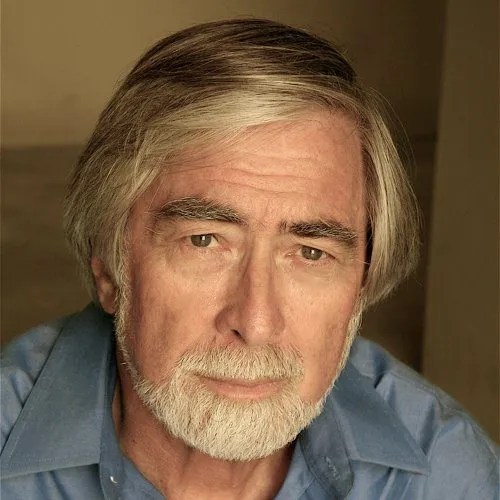
Robert Scheer
Robert Scheer, publisher of ScheerPost and award-winning journalist and author of a dozen books, has a reputation for strong social and political writing over his nearly 60 years as a journalist. His award-winning journalism has appeared in publications nationwide—he was Vietnam correspondent and editor of Ramparts magazine, national correspondent and columnist for the Los Angeles Times—and his in-depth interviews with Jimmy Carter, Richard Nixon, Ronald Reagan, Bill Clinton, Mikhail Gorbachev and others made headlines. He co-hosted KCRW’s political program Left, Right and Center and now hosts Scheer Intelligence, an independent ScheerPost podcast with people who discuss the day’s most important issues.
Editor’s Note: At a moment when the once vaunted model of responsible journalism is overwhelmingly the play thing of self-serving billionaires and their corporate scribes, alternatives of integrity are desperately needed, and ScheerPost is one of them. Please support our independent journalism by contributing to our online donation platform, Network for Good, or send a check to our new PO Box. We can’t thank you enough, and promise to keep bringing you this kind of vital news.
You can also make a donation to our PayPal or subscribe to our Patreon.
