

Click to subscribe on: Apple / Spotify / Amazon / YouTube / Rumble
The wildfires in Los Angeles county have brought a multitude of difficult and prevailing questions to the forefront of the region as well as the system of capitalism. Joining host Robert Scheer on this episode of the Scheer Intelligence podcast is Jacobin Magazine columnist Ben Burgis to discuss writer Mike Davis and how his book, “The Ecology of Fear: Los Angeles and the Imagination of Disaster,” (February 1998) serves as a kind of prognosis for everything going wrong in Los Angeles today.
The two dissect the multitude of issues at play in the wildfire disasters: the conceit of real estate developers testing the limits of nature, the passive and active exploitation of the working class to make and now handle the disaster, the greed of for-profit insurance companies cancelling policies, and the decisions by a major county like Los Angeles in foregoing budgets to handle these inevitable disasters.
Burgis asks, “If the public is just frankly going to be on the hook for it, do we, in fact, need to be building this densely in areas this prone to fire? I think at the very least, that’s something that should be a question for public discussion in a way that it’s just not.”
Credits
Host:
Producer:
Video Producer:
Introduction:
Transcript
This transcript was produced by an automated transcription service. Please refer to the audio interview to ensure accuracy.
Robert Scheer
Hi, this is Robert Scheer with another edition of Scheer Intelligence, where the intelligence comes from my guests. In this case, Ben Burgis. He’s a columnist for the Jacobin Magazine. Finally, we have a socialist publication that’s not hiding in the shadows and a lot of young people writing for it. And I think it’s really quite terrific. You know, the rest of the industrialized world accepts that some degree of socialist organization of society is necessary still now in the age of Trump, you probably can go to jail for even talking about it. He’s an adjunct philosophy professor at Rutgers University. He hosts a YouTube show, “Give Them an Argument.” And he’s the author of several books, most recently “Christopher Hitchens: What He Got Right, How He Went Wrong, and Why He Still Matters.” And as an old friend of Christopher Hitchens and admirer, and yes, he went through an interesting trajectory. I’d love to have you come back at some future date and talk about the book. But today we’re here to talk about this fire in LA. You’re in LA, I’m in LA. And the reason I’ve turned to you is that you wrote an article in Jacobin about this fire, but you brought up someone. And I just want to, if I do nothing else today, I want to celebrate Mike Davis.
And Mike Davis, for people who don’t know him, wrote “The City of Quartz,” which is the definitive book really about LA. But after that, I guess five years later, six years later, he wrote a book called “Ecology of Fear: Los Angeles and the Imagination of Disaster.” And if there’s one thing you want to read or study to understand what is happening right now in Los Angeles with our fires, but what happens with our earthquakes, happens with lots of everything that seems to go on floods, mudslides and everything. This is the book you have to read. And I would suggest that Mike Davis is the most important writer about what I consider to be the most important city in America. It’s my own prejudice, even though I’m originally a New Yorker, but I think Los Angeles and Mike Davis pointed that out for all of its faults and contradictions it has an amazingly varied population of industrious people, creative people, working people of all kinds from all the countries of the world. And it’s kind of what I thought New York was, but I find in Los Angeles it’s far more vibrant and so forth. And so Mike Davis, write that down, Mike Davis, look up his books, read them, and particularly check out The Ecology of Fear.
And my hat’s off to Ben Burgis because he wrote this piece and I’m going to let you take over now. People accuse me of talking too much, so I don’t want to commit that sin. I will anyway, but I’ll try not to. But really, tell us why you brought up Mike Davis and why that perspective is needed. And I’m going to say I’ll tip you off, tip the readers off. I want to deal with one particular chapter in his book. He said the case for letting Malibu burn. And I think that should be the start of a conversation, not because we’re insensitive to the disaster that is before us in all different kinds of communities, poorer, rich, and so forth. But really, what is the lesson from Mother Nature here about the rampant exploitation of our environment? And I’m going to just say one thing that is in the beginning of his book, Mike Davis. says, there’s a quote at the start of the book, “No place on earth offers greater security to life and greater freedom from natural disaster than Southern California. 1934 Los Angeles Times.” And the Los Angeles Times, for people who want, they should check out a movie called “Inventing LA, the Chandlers and Los Angeles,” was the engine for the incredible growth and sprawl of Los Angeles to, don’t know what it is now, 29 cities and so forth. And so take it from there.
Ben Burgis
Yeah, thank you. I mean, I was thinking about the “Ecology of Fear” as the disaster was, you know, was getting worse last week. I kept watching this video. of this McDonald’s that was in flames and, you know, the burning palm trees waving around by the McDonald’s and the sparks flying off the golden arches. And, you know, the sort of apocalyptic absurdity of that kept making me think of that, you know, that book. And in particular, that chapter that you’re talking about, the case for letting Malibu burn. And it seems to me that of course, you know, wildfires happen, wildfires happen regardless of what the social system is, wildfires happen before climate change all of that is true, right? But it seems to me that there is just a cascade of state failures, big and small, has made this much, much worse than it needs to be. And I think that what you’re pointing to, some of what you said about the ecology of fear is, is one of the sort of first and biggest and most obvious, which is that, that Los Angeles is urban sprawl has really pushed deeper and deeper into the most fire prone areas, where you have, as Davis mentions in the book, he writes about that deadly combination of homeowners and brush, right? In fact, just yesterday, I was looking at an article by Katya Schwenk, also Jacobin, called “LA real estate lobby to develop in high risk fire areas.” That is about, you know, exactly this point, right? That real estate interests have, you know, had been pushed to allow more and more development in places that had high fire risk you put that together with the fact that global temperatures are increasing which gives us a dryer brush higher temperatures and that’s already kind of bad enough and then on layered on top of that you get this series of state and municipal failures. So at this point, you know, it’s still an open question what caused some of these fires in the first place, but it would be the least surprising thing ever. If once again the unsecured power lines from PG&E played a role here.
And then there’s a question of how the city and the county respond with what resources are provided to respond. And here too, right? You know, it seems to me that you get this kind of grotesque combination of, on the one hand, real estate developers pushing to do things that increase the problem, that increase the risk. On the other hand, you have homes that are built in risky areas. And as the risk goes up, it gets more expensive and a worse deal for for-profit insurers to insure those homes. So for example, State Farm notoriously dropped 1,600 policies in Pacific Palisades last year. Some of those people have been able to get on something called FAIR, which is California’s insurer of last resort. But that means paying much more for much less service. And then finally, there’s the question of the actual firefighting resources. And in this case, I mean, it feels like something out of a hackneyed movie that the timing is so extreme. I mean, we have, a month before parts of the city started to burn, we have a letter from the fire chief saying, hey, these budget cuts are making it much harder are going to make it much harder for us to prepare for and deal with emergencies such as wildfires.
Robert Scheer
So I want to and your article highlighted that cuts in funding and the reliance on a private enterprise like PG&E that has betrayed the state over and over again with terrible fires and so forth. And also where the insurance should be private. After all, you know, if we’re going to ask people or allow them to live in an area that nature is not welcoming, then somebody’s gotta pay for it and should be in some way, if it’s gonna be paid for by huge fire departments and equipment and so forth, all right, let’s least make it a matter of public policy. And as just a footnote to this, I was surprised that—maybe I shouldn’t have been—that our governor Gavin Newsom said something about he’s going to ease environmental standards to allow people to build back quickly. And that seems to me exactly the wrong response. I want to get to this point that was being made about let Malibu burn. It was not a contemptuous—I mean, it’s obviously a provocative statement. But the point was maybe there are areas where you shouldn’t be living or building or not on that scale. And that because the burden for that falls on the whole society after all, not just the people who are living in that area.
But another point that Mike Davis made that is rarely made about Los Angeles is the class division, the class division. And he has this vivid scene in that chapter. I would read it but then I’ll lose my track here. But I would urge people to read that particular chapter. The book was published by Macmillan. I don’t know if I would get permission to reprint it or something. But he describes what the urban experience is like for most non-rich people in Los Angeles, people working in what are sweatshops, people living in crowded conditions, using the public transportation that is inadequate and so forth. And basically what happens with this sprawl, you know, is exemplified by white flight of the sixties, is people wanting to have an urban experience, but not be part of urban life, living gated communities, living some fake rural paradise that they’ve constructed out of their wealth and imagination. Mike Davis was asked at one point, What do you think, in fact there was a very good article, I’m forgetting now in Gentleman’s Quarterly, I didn’t even know it there by Rosecrans Baldwin, very, very important article. And he called Mike Davis after an earlier fire and said, what do you think will be the legacy of this? And he said, bigger mansions. The people who live in trailer parks, the people who are scraping by and live in somebody’s world, they’re gone.
They’re not going to be covered by insurance. They don’t have the money. So now you have people probably who have wealth thinking, I’ll build bigger, better, and maybe I’ll get some insurance here. And we really and then another little footnote, the fact that we’re using convict labor, you know, evoking the southern chain gangs, paying people five to ten bucks a day, visitors to work in this. It reinforces this idea that the life of the privileged is what is at the center of this and that maybe that goes contrary to actually having an urban Los Angeles where, look, whether you like it or not, you’re going to be around people who have less money than you do. And we’re all in this together. The idea of suburban sprawl is how can I be in an urban environment without being with the urban people? Isn’t that the great contradiction that we’re dealing with here?
Ben Burgis
Yeah. I mean, I think that in the ecology of fear chapter, he talks a lot about the sort of contrast historically between fires in Malibu and how tenement fires were addressed. And that same point you kind of mentioned in passing. But I think it’s worth highlighting, about sort of stark economic inequality, I think is really brought home by that detail about the convict firefighters because you have actual free firefighters make, it works out to about $30 an hour. So here you have people who are making significantly less than that, per day, risking their lives, fighting the fires. As you say, about five to 10 bucks a day based salary, depending on a skill and experience, plus another $1 an hour, in an active emergency. So this, and you think about the fact that this is happening in a city and in fact, in some cases, not all of them, right, but in some cases, fires happening, very prosperous parts of a city that have as much lavish wealth and consumption as this one does. It really kind of says everything that the politics of municipal austerity mean that the actual LAFD, the fire department, was unable to fill a lot of new positions that they’ve been hoping to for the ‘24-’25 fiscal year they had the overtime budget was slashed. I mean that’s what the letter from fire chief Crowley was complaining about. And the gap is being made up by people who are able to be paid these wages that would be again, far less than what their free equivalents would get per hour, per day to risk their lives in the same way. And I should say, by the way, that those budget cuts, depending on which sources you’re reading, different people played up different aspects of it. So the New York Post, which has very reactionary politics, had an article where they said, they cut the fire department budget while spending all this money on homeless services.
That was their angle on it, right? Whereas more left-wing outlets tied it to the increasing budget of the LAPD. But, I’m sure you could tell all sorts of other stories about this too. And, I’d, by the way, I would, know, whereas I think we should actually be spending more money on helping the unhoused population. I do think that the way that it’s done right now, there is a legitimate complaint about sketchy third party nonprofit contractors, pocketing money and not delivering very much. But, I think the larger question is why you can tell all these stories about the ways that the crumbs are divided and between different municipal budget lines and who’s getting what instead of who. But I think the larger question is why don’t we have the kind of tax rates that would support a much better funded suite of city services across the board, right? And certainly, if you’re going to be in a place that, contrary to what the LA Times said in 1934, is this vulnerable to fires and I mean, whether or not, you go full let Malibu burn, you could at the very, very least say, is it safe and reasonable to have this level of housing density in some of the most fire prone edges of the city? And I think it’d be very reasonable to answer that by saying no.
I mean, there’s no reason that we couldn’t have much more planned and deliberate housing policy than that. it would be nice if the time that rebuilding was happening was a time that we’re going to do that. As you said, Newsom is going in the other direction. But if you are going to have this kind of housing density in fire prone areas, then you would think that well-funded fire protection would be a serious priority, right? You can just look at the budget numbers. It’s not. And this is, I think, a really basic failure of, just on a fundamental level what’s the task of an organized society? Right? What does it exist for? Why don’t we all just kind of live on our own? And the classic answer to that from Thomas Hobbes is that life in a state of nature is nasty, brutish and short, right? That the job of an organized society is to, at the very least, keep us all as safe as possible from the ravages of the natural world around us. And it looks to me like you have just cascading failures to do that on every level from those municipal budget lines for the fire department to how we handle the question of, financially protecting people from losing everything in a fire, all the way up to the fact that, as environmentalists have been screaming for a very long time, the frequency and duration of wildfires is going to increase as long as the global temperature is increasing. And even before Donald Trump was reelected, the possibility of serious federal action on climate change was always grim.
Robert Scheer
I think the key issue here is the world is more and more living in an urbanized setting. Whether you talk about China writ large, movement of people from rural living, rural occupation, to the cities, it happened in the Industrial Revolution in England. How do you keep London a functioning place with all the population coming in? It certainly happened with New York and culminated by the way in this class division where the Bronx, which was supposed to be the borough of parks and so forth ended up being divided by Robert Moses with a big freeway and congested and ignored and almost burnt all to the ground, back in the ‘70s and ‘80s. And so the real contradiction is if you want an urban existence or need it, you better care about the social network, the social safety. This applies to the unhoused or homeless population as well.
If you want to have a downtown and we’ve always had this business elite in LA, the Committee of 25, Mike Davis chronicled this brilliantly. I just want to sing his praise today as loud as I can because I’ve been rereading Mike Davis and realizing what a genius we had in our midst. Probably, I would say, along with C. Wright Mills and maybe Carey McWilliams who started writing about LA. I mean, really up there in the top six people you could talk about, I mean, certainly for this kind of issue. And he nailed it. He nailed it. You want the illusion, you want urban life, but basically you want your workers, your maids, your nurses, your whatever, your school teachers to live in misery and get on a bus and come and clean your house and raise your children. That is the really big contradiction of every urban center. And then you suddenly turn around and say, wait a minute, I can’t go downtown. They have too many homeless people. It’s unsightly or I’m scared for some reason. But actually the homeless population is less given to crime than the other population. Certainly any significant crime of the kind we had in the banking meltdown and housing scandal and all that.
You could trace that even clearly to the affluent neighborhood. But the irony here is we’re reminded periodically that life doesn’t work that way, nature doesn’t work that way. And therefore, you’re on your hilltop and you think you’re really safe and you’re really secure. And the next thing you’re ordered to evacuate. And then you look for what’s the thing. The point is you can’t… Life can’t be sliced up that way. If you want to live in a truly rural population, you’re not going to have the convenience, the access, the efficiency of urban life of say a Manhattan or Los Angeles where you can meet all your colleagues and negotiate your deals and so forth. Yes, so can sit on some farm somewhere and contemplate things, but that doesn’t work for modern capitalism. The irony, and I want to repeat that quote, from the L.A. Times. It’s at the beginning of Mike Davis’s book on and let me repeat the title of Mike Davis’s book, “The Ecology of Fear: Los Angeles and the Imagination of Disaster.” And what it really is about was the rampant capitalism that dominated L.A. under the tutelage of the Chandler family, beginning with Otis Chandler, and had this idea that the East Coast, he said, I don’t want these people from back East to come here, Otis Chandler said. They’re full of, and he was referring to union organizers, dangerous people. We’re going to make LA union free. And basically they were going to make it regulation free. And they had a vision of the open market and then they would proclaim, and this is all part of advertising this city to the rest of the country, come here.
No place on earth offers greater security to life and the greater freedom from natural disaster than Southern California. And one could say the Los Angeles Times was the key instrument in educating people to ignore the regulations that could control national disaster. Be zoning free, sprawl endlessly, destroy, they destroyed the transportation system we had in Los Angeles, the beginning of mass transit. Only now, very late in the day, we’re trying to get some mass transit in Los Angeles. And so what you have on exhibit here is the conceit, the extreme arrogance of that vision. And it’s come back to haunt us in a very basic way. And we’re not talking about just the city. We’re talking not just about the county. We’re talking about the whole sort of maybe a whole California experience, you know? They created and yes, it is a great place to be. That’s why so many people want to be here, from the weather to the different populations to the cultural aspect and so forth. Yes, we are ruining a paradise on earth, and ironically, it is a place that sustained life long before the Chandlers ever arrived or anyone else. I’m not picking on… So why don’t we really talk about—first of all, let’s talk about, we’ve talked a little bit about how we got here. What can you do now? And I want to pick up what, I don’t want to be unfair to Gavin Newsom. He’s done many good things and so forth. But maybe I didn’t fully understand his statement. But what does it mean to lower environmental standards in the face of these fires so people can build back quickly when in fact we should have had a higher environmental standards in place. And so why are you going to repeat or intensify the error?
Ben Burgis
Yeah. So yeah, I’m sure the short-term politics of doing so makes sense to him that he can get credit for helping to make it easier for people to return to where they had lived. But I think that given that the environmental standards should have been higher in the first place, this is just doubling down on part of the problem. And I think that one thing that’s going on here is that we have all these trade-offs because of the basic nature of privatized capitalist housing markets that say, okay, we’ll make it harder to build in various places and you’re constricting the supply, while the demand stays constant. The price is going to go further up. And you can limit rent increases or you can try to, I should say, by the way, that there has been an absolute epidemic in the last week of landlords illegally price gouging on rental prices. There were articles about this in the LAist and the New York Times that California law, theoretically, stops landlords from increasing rent more than 10% during the emergency. But there has been an absolute epidemic of landlords just ignoring that and assuming that they won’t get caught, right, because the amount of money on the table is just too tempting for them.
Robert Scheer
California systematically under Democrats and Republicans destroyed rent control, took it away from local… like Santa Monica had a good rent control system and that was destroyed by state policy no matter what party is running it. And so it’s a free for all and can take advantage of any cause of misery to exploit it.
Ben Burgis
I mean, it’s generally a free for all. I mean, in theory, legally, they should not be able to raise rent more than 10 percent right now. But that is the letter of the law. I saw one real estate agent said that her listing service out of the 400 places she was seeing in central LA and San Fernando Valley, that about 100 of them had increased rent by more than they’re legally supposed to right now. Since, again, I think that with this many people who—the influx of thousands of people who need to rapidly move someplace new. The incentive on the part of landlords to jack up the rent is just too strong for the theoretical possibility that somebody will report them and fight the case and all that stuff to do very much. And so I think what this all really points us to is that the basic dynamics of market housing are a terrible combination with a state of emergency like the wildfires. And there is a solution here, you asked what to do.
And this is part of the toolkit of what cities could do that’s sort of in, I mean, not to pick too much on Los Angeles and America in general is sort of not really considered to be on the menu, right? But there is always the wacky option of the city buying up or using eminent domain to take over more buildings, not in fire prone edges of the city, but in places that are more responsible to build and just directly providing housing to as many Angelenos as possible. And it seems to me that oftentimes when we think of that, we think of two things, right? One is kind of the history of public housing as it’s existed in the United States, which has been economically segregated housing for the very poor, which then tends to go along with all the social ills that are associated with poverty. Or you think you crazy socialist, you want to get rid of landlords and just have the government provide it. Don’t you know what housing was like in the Soviet Union? And there were all these shortages and families had to share and all that stuff.
And I would just suggest that there are better models, right? That there are places in the world where, for example, Sweden. In Sweden, about 50% of renters live in municipally owned housing that’s available to people at all income levels. It is not the sort of… image of the three families sharing a small apartment in Leningrad in 1975, that people might have with that. And again, I know that this is kind of unthinkable for a lot of Americans, but it does strike me that just kind of letting the chips fall where they may in a private housing market or even trying these regulatory fixes like, here’s a state of emergency decree, you can’t raise rent by more than 10 percent during the emergency if somebody reports you and they follow through the case to the very end and et cetera, that this just isn’t working.
Yeah. But you know, you’re a professor of philosophy, right? And I’m not familiar with your intellectual work and everything, but it seems to me philosophy deals with big ideas, big ideas that motivate us, organize us, and so forth. And one big idea is the one you’re advocating now, that we have to nurture the land, we have to take care of the people who live on the land, and we have to find some state of harmony and decency and integrity where people can get along and live and survive and not hurt each other and cooperate with nature to make life supportable, sustainable, right? That’s one philosophical view. Another philosophical view would be to say, I want to get mine, I’m going to appeal to individual ambition, greed, and so forth, and I’m going to, and somehow the chips will fall where they are, but you know, it’ll all work out because I’ll employ people, jobs will be here, people will come, and so forth.
That was the dream of LA. There’s no question about it. The irony is we’re counting now on the fire department, on the police department, and in fact, the school system to get kids to school and get those are all highly unionized activities. The great irony of LA is that it was sold to America, to the world as a deliberately anti-union free market environment. You know, we talk about fake news. That was the basic fake news of the Los Angeles media led by the Los Angeles Times. This is where Otis Chandler said, this is where labor will be free and employers and people with ambition and to build. This is the great dream. Summarized in that quote, no place on earth offers greater security for life and greater freedom from natural disaster in Southern California. They did their best, their best to destroy that security, whatever existed in ‘34. But if you go back to native life in this area, it was pretty secure against natural disaster before the colonization brought about. But the reality is, and I mean, this is something that’s lost because of all this world of propaganda. The fact is we like unions when it’s for police and firemen.
And yes, we have to have good schools. That’s another way of bringing some order. But we don’t want government, let alone public input into government like unions or citizens organizations or consumer rights, to get in the way of development. And when your culture is determined by money, which is after all what controls the media, no one raises… This is where I think the brilliance of Mike Davis, he brought it to a human level. What are these people thinking? What are they doing? And for example, you take housing, it’s not just a question of having public housing. Why not multifamily units? Why not, people can rent an apartment in a safe place and things should work? No, the county, LA at least has some encouragement. But the fact of the matter is even in relation to the homeless or any providing housing, you get resistance from much of LA, let alone the rest of the county. They don’t want density. They don’t want other people to be living there. This is the constant NIMBYism that drives the philosophy of NIMBYism is actually the dominant culture of Los Angeles. That’s why you end up with people living on big mansions and on bigger states on places where nature did not intend for them to live, you know.
I mean, look at that. In fact, if you look at the area from the Palisades right up through Brentwood and down to LA, it’s all people escaping the reality that nature imposes. It’s all, I want to be urban. I want to be sophisticated. I want to be connected to the most important entertainment industry, cultural institutions, major universities. But I have to get there fast by a chauffeur driven car. You know, we have to expand the highways and freeways. And if you think of the thing that happened, particularly in this fire, the lack of water to even a very privileged place, the hydrants were empty. You have to go back to the movie Chinatown with Jack Nicholson, I guess the 1970s, and stealing the water. And why did they steal the water that was supposed to actually go to LA, to the valley, San Fernando Valley, because that’s where they were going to have this real estate explosion and they were going to expand the city, suburban, suburban, suburban. And it turns out to be untenable, you know? So I would ask you just sort of if we can wrap this up. I always promise to wrap it up. it seems to me that what happens now is really critical. Again, maybe I’m misunderstanding what Gavin Newsom said, but if the message is let’s just build it back right now and then they say, yeah, better, but meaning fewer environmentalists. It seems to me this is a teaching moment to say, you know, wait a minute, first of all, if you’re gonna build it back better, maybe control over the lines, the electricity, power, water should be more heavily regulated. Maybe we should not have it be the profit motive. Maybe housing insurance should be provided by government, after all. And they try to do it a little bit in relation to earthquakes, but it’s very, very expensive. Maybe there is a social obligation to be in advance, say, this is the cost of this kind of living, and now we should vote. Do we want to sustain it? Do we want to support it? Because you’re going to pay for it. The ordinary person, the workers, the taxpayers, they’re going to pay for it in the end.
Somebody’s paying for all these helicopters flying around and all this stuff that’s going on. There’s a bill due, right? So why don’t we bring it out in the open and say, do we as voters in this larger county community, state community, really do we want to go on in basically an unregulated environment where money talks and you can just build wherever you want on any scale you want because you’re part of the wealthy? Because the people who die in these things are not all the wealthy. They’re usually in some hotels somewhere, maybe even in another country when this is happening.
Ben Burgis
Yeah. Look, I think that the two issues are closely linked. I mean, there’s this question about fire insurance and where we allow building in the first place because in the status quo set up, you have this sort of illusion that, well, all right, you’re buying a home in whatever area and then whatever you’re paying for your own insurance in case of fire, it sort of has nothing to do with the rest of us. Sure, you want to take that risk, take that risk, but as you say, we all end up paying anyway, right? And I mean, firefighters may in fact lose their lives in the course of bailing you out when it comes to it, right? So I think just kind of frankly saying, that whatever insurance happens for this should be public is good, not just in itself, because as we’ve seen, it’s very bad to have this in the hands of companies like State Farm whose profit incentives might lead them to leave people in the lurch, but also because that just sort of frankly puts the public in the position of saying, is this a risk we’re willing to take? If the public is just frankly going to be on the hook for it, do we in fact need to be building this densely in areas this prone to fire. I think at the very least, that’s something that should be a question for public discussion in a way that it’s just not, right. I mean, the sort of easy thing to do is the Newsom thing, that it’s like, oh, okay, well, here’s an emergency, people have lost their homes, we need to rebuild. So in fact, let’s just make it as easy as possible to do so, no discussion whatsoever of where in the city people should be living, where it’s safe to pack how many homes into and then what the plan is if things go south.
Robert Scheer
The problem is as Mike Davis pointed out, we probably won’t do any of the sensible things and as he said, the result will be bigger mansions and I had that quote here. This was in this very good article in Gentleman’s Quarterly by Rosecrans Baldwin. I would also recommend that. That was on January 12th. And he said, he called up Davis after the 2018 Woolsey fire and nearly 100,000 acres around Malibu were destroyed. And he asked him, what do you think will happen after? And Davis said, bigger mansions. What tends to disappear is rental properties, trailer parks, people who don’t have adequate insurance. And they said the fires, this was Mike Davis speaking to Rosecrans Baldwin, said the fires are like gun violence. You always get the same mechanical repetition of action, but nothing changes at the roots. And that’s because basically money is involved and people who actually can survive these situations or they indulge themselves or have their own philosophy dominate of survival of the fittest or something dominates. Just so we don’t have a fake debate here, when Mike Davis said that about Malibu, he was not being insensitive to the people in harm’s way. And often those people are people servicing wealthy people as well as the wealthy people. They are the ones who tend to the lawns and raise the children and clean the houses and they are the ones who are hurt in fires in disproportionate numbers, actually. But I want you to, just so we don’t have a fake debate about this whole thing, it was not Davis being callous. What did he really mean? You could put it succinctly in that chapter, which you said was a provocative title. But what really was he getting at? Give us the title in the…
Ben Burgis
Sure. Right. So again, the title was the case for letting Malibu burn in “The Ecology of Fear.” And again, I think that the point is not, well, screw those people, right? I think that the point is that the ecological decisions we make about this have consequences. And in particular, when you combine that with the sort of basic sociological inequity that leads to fires in different places being handled very differently, that has social consequences. And, we need to think much harder about whether there are places that we should be developing in the first place, right? There’s not a law of nature that says that the city has to sprawl everywhere forever. We can decide.
Robert Scheer
All right, depressing it is. But I’d like to say if nothing else comes out of this conversation, I would really welcome people checking out Mike Davis. Again, I began because your article in Jacobin Magazine just sent me to my bookshelf and reminded me of how brilliant an analyst Mike Davis was. And I just would, you know, let’s turn this into an educational opportunity. There are things we can do about these. We just don’t have to always say let’s go on in the same way.
I want to thank Christopher Ho and Laura Kondourajian at the very good station, the NPR station, KCRW in Santa Monica, which has covered these events very effectively, I think, during this period. I want to thank Joshua Scheer, our executive producer, who really made a big point of my getting a hold of you and insisted that I not do anything else this week. That’s Joshua Scheer. Diego Ramos, writes the introduction and is also the managing editor at ScheerPost where we post this. And Max Jones, who does the video and who put this together technically. And I want to thank the JKW Foundation, which in the memory of Jean Stein, who was raised in Los Angeles and from a wealthy family, Jules Stein, nonetheless developed a great social conscience and was concerned about these issues and many others. And I want to thank Integrated Media based in Chicago, Len Goodman, a very good lawyer there, for giving some support for these shows. So see you next week with another edition of Scheer Intelligence.
Please share this story and help us grow our network!
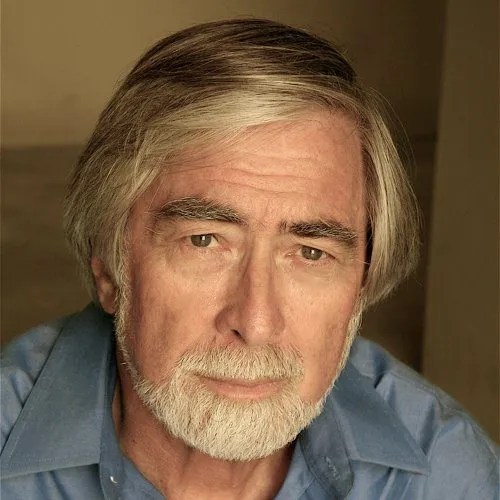
Robert Scheer
Robert Scheer, publisher of ScheerPost and award-winning journalist and author of a dozen books, has a reputation for strong social and political writing over his nearly 60 years as a journalist. His award-winning journalism has appeared in publications nationwide—he was Vietnam correspondent and editor of Ramparts magazine, national correspondent and columnist for the Los Angeles Times—and his in-depth interviews with Jimmy Carter, Richard Nixon, Ronald Reagan, Bill Clinton, Mikhail Gorbachev and others made headlines. He co-hosted KCRW’s political program Left, Right and Center and now hosts Scheer Intelligence, an independent ScheerPost podcast with people who discuss the day’s most important issues.
Editor’s Note: At a moment when the once vaunted model of responsible journalism is overwhelmingly the play thing of self-serving billionaires and their corporate scribes, alternatives of integrity are desperately needed, and ScheerPost is one of them. Please support our independent journalism by contributing to our online donation platform, Network for Good, or send a check to our new PO Box. We can’t thank you enough, and promise to keep bringing you this kind of vital news.
You can also make a donation to our PayPal or subscribe to our Patreon.
