

By Robert Scheer / Original to ScheerPost
Click to subscribe on: Apple / Spotify / Amazon / YouTube / Rumble
Welcome to another edition of Scheer Intelligence with host Robert Scheer. Today, Scheer delves into the profound implications of the Ferguson movement, a pivotal moment in American history that continues to resonate throughout our society. Joining Scheer are two exceptional guests: State Senator Maria Chappelle-Nadal, who was on the ground in St. Louis during the turbulent aftermath of Michael Brown’s tragic shooting, and filmmaker Ray Nowosielski, known for his compelling documentaries that tackle critical societal issues.
As their investigative efforts and the stories of those affected by violence and injustice are explored, the essential lessons learned over the past decade will be uncovered. From the profound impact of police accountability to the importance of understanding our history, this conversation aims to shed light on systemic challenges and the ongoing fight for justice.
Credits
Host:
Executive Producer:
Video Producer:
Transcript
Robert Scheer
Hi, this is Robert Scheer with another edition of Scheer Intelligence where the intelligence comes from my guests. And these guests of mine here, Maria Chappelle-Nadal who was a state senator in St. Louis at the time of the Ferguson shooting and Ray Nowosielski who I first met when he did a movie on 9/11 and “Watch Dogs Didn’t Bark” if I remember the title and why the whole system of security broke down.
And I’m particularly fascinated with the work that they do because they actually take history seriously. And I do these podcasts in a way of rescuing history. I want people to be able to use them in high school and college classes. And we had this event of Ferguson and Michael Brown, the killing of Michael Brown.
That was, well, this last August, ten years ago… And there were a lot of lessons for the nation, the Black Lives movement and so forth and you know if you go to watch a basketball game now in February you hear about black history you hear about… and at that time actually leading basketball teams reacted and affected playoffs and what have you…
And I’m here because I’m really fascinated that a major media outlet, iHeartMedia, our major radio outlet in the country, would put on an investigative program and that one was nominated for the NAACP image awards just recently. And you people have devoted a lot of time to getting history right. And you may have even cracked the case. It certainly wasn’t cracked by the courts and no one went to jail over it, right?
And we’ll let you tell the history. So why don’t you really summarize this major media effort of yours to do journalism right, to get it right, and why it matters and what you came up with. So I’m gonna let you take over at this point. Either one who wants to go first, and you know, you’re directors, tell us what you’re doing at your work, why it matters.
Ray Nowosielski
Maria, can I give a brief intro to the overall concept and segue over to you? Cause I think you’re the right one to pick it up from there. But I would just say that there’s this phenomenon in the last 10 plus years since these incredible people started this movement. They called it the Ferguson movement and Maria was there on the ground repping Ferguson as an elected official.
But, these people who became leaders in this movement spread around the country one by one began to die mysteriously, sadly. And after about the third one, Edward Crawford, State Senator Maria Chappelle-Nadal here, stepped to the State Senate floor and gave a speech that essentially sounded the alarm on this.
And a number more have died since. And this has become this kind of phenomenon that the internet has been following, but that hasn’t really gotten a ton of sort of mainstream attention until you know, our, iHeart podcast came along… But Maria, I mean, what could you say about the mystery deaths phenomenon?
Maria Chapelle-Nadal
Well, you know, we were at a time where there was a lot of confusion surrounding what the responsibilities were of police officers and what our responsibilities were going to be as citizens. And after the shooting of Michael Brown, there was a clash.
Multiple sides didn’t understand each other at all. And so when we got to the point, wait a minute, there are a lot of people on the front lines who are getting targeted in various ways. And, oh by the way, many of them are ending up dead in some kind of way. I mean, something seems strange.
Missouri is a half-free-half-slave state. And, you know, during these times there are a lot of questionable people who were in St. Louis at the time and many of us had to be concerned about our safety and many of the frontline activists also had to be concerned. So when it came to the death of Darren Seals we were nervous about it.
And because he was not the first to die, he was maybe the third or fourth, but one of the more formidable people who were involved in the activism in Ferguson. And we wanted to know, wait a minute, why did people not look up the reason, how, why, who was participating in his death?
Like no one seemed concerned about trying to drill down into the dirty details and figuring out who was responsible for Darren’s death. Was it someone who was against Black Lives Matter? Was it someone for Black Lives Matter? Why did he die? And so that’s what took us two and a half years to figure out. We figured it out.
Unfortunately, you know, the institution that I have belonged to for 22 years was not responsive to the investigation and the calls of concern from the community. So that’s how we started.
Scheer
When you say the institution you were loyal to for 22 years, why don’t you describe it.
Chapelle-Nadal
In 2000, I started working in the executive branch of government in the state of Missouri for the former– for a former lieutenant governor. In 2004, I ran for state representative. I served three terms as a state representative. Then I went on to the Senate to serve two terms, which is eight years. And then I went back to the house for the last term for another two years.
So I’ve spent 16 years in the legislative branch and I have served another six years in some type of executive branch.
Scheer
So that’s really important because you’re not like Ray and myself. We’re media people, we’re out for a story, we have a nose for news, I’m speaking for you Ray…
Nowosielski
No, yeah, totally.
Scheer
You’re in the same racket here. You’re one of the people who believed in the system and you tried to make the system work. You’re not some person just coming in to make trouble or look under the rocks or anything else. And the other thing, I just want to also take you back to your statement about Missouri being half slave and half free.
Unfortunately, we have really no keen sense of history in this country. We bury history, we ignore it. We think everything started 24 hours ago and so forth. And there wouldn’t be the old example of Ferguson if any people had any sense of history, why people in that community felt disenfranchised, why they were suspicious of what had happened. And we should, you we have to even in this show, bring up some of this history…
But I’m fascinated by your role in this because after all, there is a system, there’s state government, there’s policing, there’s the federal government, there’s the FBI. A lot of people have looked at this, the courts have looked at it. So tell me from your point of view, how did the system fail, why? And then what does it mean that you stepped in to solve a murder related to this?
The movie… the program you people did is called “After the Uprising,” right? And so why would you spend two and a half years of your life doing this? And let’s get to the lead here. What’d you come up with?
Chapelle-Nadal
Well, let me just tell you, our system of government, the industry that I had been in for 22 years failed at multiple fronts. When you look at, I guess it is episode seven, episode eight, you will recognize that the system failed when they did not prosecute violent offenders who had been involved in multiple criminal actions.
Those people ended up being back on the streets. Those individuals ended up killing more people. So in a few cases that we have followed and continue to follow, there was a serial killer who still hasn’t been charged. There was the person who organized Darren Seals’ murder.
He had not gone to jail for that particular murder. There are multiple people who have been involved in the Sinaloa Cartel. Many of them did not go to jail. There have been people to murder multiple times who didn’t go to jail.
The person who was seen as being responsible for Darren Seal’s death, did not go to jail but for about five or six days and then he was released without any paperwork. So the county refused to give us the information through Sunshine Request, the release papers of the individual who was targeted as the killer for Darren Seals, of Darren Seals. And the thing is, a year and a half later he dies himself and the people who killed him were never prosecuted either.
I mean, in this, it’s very easy to say the police didn’t do their job, but in the two and a half years that we dedicated to this project in pursuing Darren Seals’ killer, the police actually did their job. The FBI actually did their job. And we’re sitting here right now, 2025, a lot is going on.
We may enter war as the United States. We may have a not only recession, but I think a depression. Right now, we have a sitting congressman who served as a prosecutor during this time period when Darren Seals was killed, when Darren Seals’s killer was killed, when the other suspects were let go of being responsible for killing multiple people.
He never prosecuted them. There’s no paperwork on file. And he’s serving in Congress responsible for these big issues that we’re dealing with, like war, like going into a Great Depression 2.0. And what we’re dealing with here at home in St. Louis is the fact that our streets are still dangerous because the people who we thought– the woke prosecutors did not do their job.
Scheer
Okay, so first of all, because we’re going to have to do a lot of catch up here watching it. When you talk about episode seven or eight, we’re talking about a record that you people have established. So when people get interested, as I am, in what you’re saying, how do they access this record? Where is your show?
Nowosielski
Thank you for asking that. So wherever people get their podcasts, if people listen to podcasts, they can search “After the Uprising.” “After the Uprising,” wherever you get your podcasts and you will find two seasons. First one’s 11 episodes. The second one is 10 episodes. Essentially a documentary. It’s an audio documentary series.
The first season investigated the hanging death of the son of a major Ferguson activist named Melissa McKinnies and her son’s name was Danye Jones. And we found some really compelling and interesting things in particular around an allegedly racist and corrupt detective that led that investigation. And then season two, which is when Maria moved in as host, investigator, producer, writer, reporter, that one looked at the murder of Darren Seals.
And that’s another 10 episode season two. Both have been nominated for NAACP Image Awards, but that latest season came out in June.
Scheer
So, and people get this, you say wherever there’s podcasts and so forth. Now, the way I’m interested in now is this as a murder mystery detective story. People like, shouldn’t, I mean, we’re talking about the deaths of people, we’re talking about injustice. I don’t wanna trivialize it. But one reason to get into this is a fascinating story, a whodunit story.
So first of all, why don’t you tell us about the most well-known person other than— Michael Brown got to be very well known because he was killed. Tell us about Darren Seals and because he’s a central figure in this whole thing. All right?
And again, I want to keep asking Maria to bring in your own… because you’re not… when you confront the police, when you talk to the prosecution, you’re talking about– you’re one of them!
I mean, you really, they can’t just say, “Well, here’s some oddball, you know, who even knows if you’re a real journalist and what you’re doing and who do you represent, blah, blah, blah…” You know, or you’re some activist. You’re a person who actually wanted to make the system work. you spent much of your, you don’t look that old. So if you spent 22 years, you’ve spent much of your life trying to make government work. And you’re basically now saying it didn’t work on any level.
Well, tell us about that, but also begin by telling us about Darren Seals.
Chapelle-Nadal
You know, Darren was a hard and easy person to love. He was a hard person to love because whatever he saw, he would just tell it like it is, whether you liked it or not. And you loved him because he cared about the community and the success for the next generation. You can see that in his relationship with young people on the streets…
The way that he brought in a group of young people who wanted to be rappers and tried to raise money for them. And he was their director, if you will. They were their manager. He gave them opportunities to get out of the hood. He wanted to see them succeed. He wanted to see them make money in a legal way. And he sacrificed a lot for that using his own money to help these young people succeed.
And they actually did really well. They were great rappers. And then there was another component in the story, if you listen to “After the Uprising” Season 2, there was another force at play. The reality of what the streets look like now and in the past with the drug cartels, a lot of people getting involved in gang activity.
The young men that he was trying to support and get on the right journey, the right road, they didn’t do that and they ended up targeting him. But Darren was, he was militant. He was lovable. He would spend, you know, weekends with his mom and his brother watching movies. He would go to family events that was very normal for him to do.
But when he was on the front lines, he would get in the faces of police officers because he wanted to see systemic change. He wanted to see institutional change. And the reason why, as a former elected official, I was so drawn to this story and participating in this podcast is because I wanted to get down to the truth so we could have closure. I mean, there’s nothing like
That’s my dog that you hear.
There’s nothing like a grandmother or a mother losing their child and not having closure, not knowing who killed them, or if they knew who killed them, not seeing that person prosecuted. And there’s this misconception perhaps in the black community and other communities of color that because some people don’t like law enforcement, they don’t want law enforcement around.
Well, the truth is that we are all victims of crime and we want the police to do their job. So in this situation, like I said, they actually did their job. It’s a 200 page report and that 200 page report, which involved work from the FBI was basically dismissed by the prosecutor.
So, you know, now being an elected official, I believe in law and order. I believe in the three branches of government. And by the way, the fourth branch of government, which is the media. You know, those things are part of my foundation as an individual. And when I looked at the fact that our prosecutor, Wesley Bell, had not been doing his job and there wasn’t any paperwork. Now, you know, in government, there is always paperwork. There’s always a paper trail.
There’s always a paper trail. But in this circumstance, as we investigated, there were documents that were missing. There were documents that would not be provided. And that became a huge question that I think is worth exploring, continuing to explore.
Why did government fail us when it came to, let’s see, Perez Reed, what sociopathic, know, someone who went on a crime spree, a murder spree. You have someone called Jaybird, who may have been the orchestrator of this murder. You have someone by the name of Lopez, who’s been tied to two murders. You have someone called Kilo, who has been connected to a murder, the murder of Darren Seals.
And then you have Darren, who was a loose associate of all of these entities, but at the same time, someone who valued the success of young people getting on the right track.
Scheer
So, you know, Ray’s previous movie, which I did a podcast on his work when the– hope I got the title right, “When the Watchdogs Didn’t Bark.” Really, it’s an indictment of government that rings so true because we know, and this was about 9/11 and what caused it, what we know about it.
We know it comes from the foreign policy. When it comes to national security, the government has a built-in excuse to lie. They say it’s national security. You can’t read this. It’s classified. You can’t learn this.
One has the expectation, at least I do as a journalist, on the local level. On the local level, they don’t have the national security argument, right? They’re not going to put troops’ lives in danger. They’re not going to prevent the next terror attack. And what is it about this case? And I saw another very good movie, “Ferguson Rising,” Mobolaji Olambiwonnu, originally his family’s from Nigeria, but very powerful. I show it in class.
And you look at Ferguson, you and you wonder how does it even happen? And I want to get back to something you said about half slave and half free, because it’s like the Watts Riot in LA when the journalists discovered where Watts was all those decades ago.
They were even surprised. It’s a pretty nice community. Why is there all this tension and violence and everything? Well, there are roots to that. So tell me about the roots of what happened in Ferguson and why there would be such major passions.
And my only knowledge of St. Louis is by some weird quirk, I was a St. Louis Cardinal fan as a kid when they won the World Series against the Red Sox. I guess it was ‘46, yeah.
And Enos Slaughter, the great hero, spiked Jackie Robinson the next year going around first base when Jackie Robinson came in to play for the Dodgers. And then one was reminded that in Major League Baseball, the most southern team was the St. Louis, and that it was a community that was right on the border of racial segregation in America.
So why don’t you give us that history a little bit and maybe try to set the tone of why would this otherwise community of, you know, basically private houses and, you know, when you look at the pictures, it doesn’t look like, you know, it’s not an inner city visibly. And you’ve represented part of that community anyway. What is this half, this history going back to the division of Missouri before the Emancipation Proclamation?
Chapelle-Nadal
Well, you know, first of all, you have to look at the fact that, you know, slavery was profitable, but also humanity was meaningful. And you have this collision way back when on humanity versus succeeding financially. And, you know, the compromise was, well, let’s be half free, half slave state, Missouri.
But in St. Louis, what it looked like is you had what we call townships, and a lot of the townships had the French and it had other settlers. But in those areas where the French settled, you ended up, fast forward decades, sundown towns.
And I don’t know if you’re familiar with a sundown town, but what it is is, if you were of color, mainly black, then by the time the sun went down, you had to be out. Now, this is also the case in a place called Forsyth County in Georgia, but in Ferguson, in Florissant, and other inner suburban municipalities in St. Louis County, it was a sundown place.
You could see it at the turn of the century, going into 1900. There was a place called Anglum, and there were a lot of French settlers who were there and they owned slaves. Well, when they figured out that the train was in a different location, many of the Caucasian people moved to Ferguson, and they moved to Florissant.
But they still had this population of freed black people that they would utilize financially and in other ways. And so that became what the backdrop is in Ferguson and Florissant. You had many people of color who unfortunately were not part of the political system, did not own property, did not own businesses, um, were not integrated into government as they should be.
And in St. Louis, there’s this thing where, you know, you’re seen but not heard. Like the perfect black person in, in 2014 was a person who would just still say, “Yes, okay, whatever you say.” And, you know, the Caucasian political elite were fine with that. They weren’t about black empowerment or Latino empowerment.
They were about, this is the system that we have created and designed for you. You participate in your quadrant and do as we say, don’t make an uproar, don’t make a scene, but we’re the ones who are handling you in this black community. That’s what it was like. That’s what it’s still like. You have a lot of, you know, political elite…
They’re responsible for getting Wesley Bell into office. They wanted the kind of person of color who would not fight back. The kind of person of color who would not create any ripples in the system. They wanted a person who would stand with the political elite, mostly white status quo.
So if you go backwards 11 years, know, 2013, 2014, one of the biggest issues that we’re struggling with at the time is public education, funding for public education in high poverty areas, which included Ferguson, which included the Normandy School District where Mike Brown actually, the school district you went to, which was unaccredited.
What you see in the way government works, and I was working on revamping the education law back then and was quite successful at it, and our governor vetoed it two years in a row. The thing is, we were fighting for better educational resources for high poverty areas, and there hadn’t been anyone fighting for equity in the public school system, period.
You know, for years, for decades. And so you have this fight for education at the same time as you have the death of Michael Brown, and it becomes like this perfect storm. The black community has been ignored for such a long time because people were just… you know, doing as they were supposed to do.
They weren’t standing up to the police. They weren’t going to the city council meetings. They weren’t going to the county council meetings. And someone like myself, you know, who has loved politics since I was five years old and voted for Jimmy Carter, you know, like politics is everything. Government is everything. It’s answering the needs of the most vulnerable in society and in our own town, in our own state.
We had people in our own party who were willing to turn their heads and say, “We’re just, we want things to be the way we designed them to be.” And when Michael Brown was killed on August 9th, that opened up the eyes to people and we all said no more.
So as a state Senator at that point, I was at this intersection of, you know, being mother, being sister, being teacher, being legislator, being activist, and understanding the people who I represent didn’t really know how government operated. They didn’t know how activism within government operated.
So the only thing that people had before them is their voices, their feet to protest and be out in public and and cause you know all kinds of good chaos you know for a better community for a better education for better assets for better housing you know not living in food deserts it became of movement of empowerment…
And so when I talk about Missouri being half free half slave state what I’m talking about is an institution that wants people of color to remain behind and not be outwardly responsive to the decisions that lawmakers are necessarily making or the decisions that the political elite are making. They wanted and continue to want to be seen, to be heard, and want systemic change, institutional change. So we’re still fighting that.
Because there are people who, I think it’s a culture clash in many ways. There are people who are accustomed to going to the private clubs that wouldn’t allow black people in for a long time and did not want to see the progress of a community that looked like mine, the one that was left behind.
And then you had people, who we’re just living day to day. Imean, right now the reality is, and it’s only going to get worse with these tariffs, but we have multiple generations of people living in one household because they have to. And even in that circumstance, many of those people don’t have housing– or I’m sorry, they don’t have transportation. They go to like a family dollar instead of going to like a regular grocery store because it’s too far away.
There are isms that we’re still facing even since Ferguson that explain the divide that we had 11 years ago, 50 years ago, 100 years ago, and that is the state of Missouri.
Nowosielski
Robert, you mentioned the book.
Scheer
I’m sorry, let me just respond to what was just said, because I think, I’m sorry, I’ll cut right back to you, Ray. I don’t mean to cut you out here. But I think that’s really, that’s why I’m doing this podcast in general, to try to get history straight. And that’s why I think your work is so important, because we’re living in a moment where whatever else you think about Donald Trump…
And this is not the purpose here, is to start bashing Trump, everybody I know, they bash him nonstop all day long, you know, and he hasn’t been there that long enough to do that much. But there is one consistent theme to Donald Trump, which is this whole notion of Making America Great Again. Now, you know, it involves really a nostalgia about what America was.
And, know, an idiocy to pick on a Democrat here… When Donald Trump first started trumpeting this about make America great, you Hillary Clinton saying “He’s going to make America great. America has always been great.” Well, the fact of matter is, if you think America has always been great, you’re even in a way being dumber about this than Donald Trump is because at least he’s recognizing, no.
But the point is you talk about half slave, half free. You talk about the impact of segregation after you talk about schools that are not accredited, that don’t teach. And right now we have under Trump, a full blown assault on any notion of redemption, of making things better, of accounting for past errors, of improving schools.
I mean, any notion of affirmative action, any teaching about the need for affirmative action is going to be banned in colleges. They’re dropping in government agencies, any awareness of inequality, racial inequality, gender inequality, and so forth.
You’re like, you know, disturbing the party here of how America is great. And what you’re, you know… why I do these shows is because I’m trying to establish some access to history. And it seems to me, you know, after, why should people go watch two years of your programming? You know, why? I mean, give it to me fast. Give it to me in a few minutes.
But what you’re really talking about is the texture, of oppression, of class division, how it gets institutionalized, how it becomes part of our culture, and how even the people most victimized by it come to accept it as normal. And then, you know, you got to look right, walk right, and get along and go along, and so forth. And you get angry with protesters. And we even saw this in the election.
There was a surprising number of Black and brown people who voted for Donald Trump because they you know, all right, we had enough noise, but you’re not really, you guys didn’t help us that much, you know? And actually, it’s funny, you should mention that you got into politics with Jimmy Carter. I’m the guy who interviewed Jimmy Carter for Playboy. And I got very involved with his career before when he was a segregationist and came from the strongest segregationist family in his own county, in the richest.
And then he changed, yes, I’ll give him that. But the whole idea of like the even the inability to view that whole history, you know, when Jimmy Carter was a departure, he knew you had to reckon with it. I’m trying to get people to watch or listen to your programs. That’s the point of this exercise. OK, because we can go on talking. You know, we’ve already done it for 35 minutes. And what I’m trying to get at is you have a wisdom. And I will let Ray talk as he pioneered this whole thing. But that wisdom has to be shared.
That’s what’s being obliterated now. That’s the real significance of Donald Trump. He may do some good things. He may do a lot of terrible things. I don’t know. We’ll see. I believe in being open-minded about this, evaluating anybody, see what he does. And I think there was an overreaction the first time when they were accusing this guy of every crime in the world. You’re a Russian agent. You’re this. You didn’t win the elections or so.
I’m just giving you my take. I think we should be open minded. But the fact is the one thing he seems to really care about is denying our history that people like it… On immigration, for example, you know, my father came from Germany, you know, it was a hell of a lot easier to get in this country from Germany than from almost anybody else. That’s why we have the largest number of immigrants for the longest time were from Germany.
And they were white and they, know, so for England. Of course they even spoke the same language. And so I want to get to that and I want to ask Ray about the difficulty of doing this kind of work and yet you had the success of iHeart putting it on. You’ve tried to reach people, right? You were honored by these image awards. So I want to talk to you as a filmmaker, you know, what does it mean to spend years on something like that? Can you find an audience? Is there room? How does it work?
Nowosielski
Well, as a filmmaker, so I respond very much as a filmmaker to what you said a moment ago, which is I’m trying to get people to listen to this show. And we need that kind of help, Robert. So everything Maria talked about and everything you just talked about is absolutely in the DNA of this show.
But we understand that there’s a whole group of people who aren’t necessarily interested in coming to a show consciously to explore what y’all just talked about. And that’s why we took a sugar with the medicine kind of approach, which was that murder mystery you mentioned. And so over the first 11 episodes of season one and over the 10 episodes of season two, you’ll see a zigzaggy, I thought it was going this way and then it went that way. And my God, did that just happen?
And it’s not gonna go where you expect at the start or at the middle… and we do believe… so what happened… what well I’m sorry, I’m not trying to bob this…
Scheer
So tell me what you reveal without getting me sued for libel because I can’t accuse people of having committed murder here, you know, yeah and so what legally and in all fairness can you say was missed and what have you guys come up with?
Nowosielski
Well, here’s what I think will intrigue a lot of people without naming who we found did it in each case. What is interesting is that when we went into this originally, we thought, you know, all the headlines about Darren Seals and also about Danye Jones’s death were very suggestive. “Who killed Darren Seales?” But there was, right. It was a lot of like, isn’t this convenient that all these activists who were involved, you know, in this movement for black lives are dying one by one.
And we wondered, is this just a lot of paranoia is this conspiracy theory or is there there? And we thought we would go one case at a time so far we’re two cases in, right?
So wouldn’t you know it when it comes out of a couple years ago and we were among the first to make the public aware of the fact that six months before Darren Seals was murdered the FBI did in fact open a surveillance on him that was running through his murder.
Isn’t it odd then that people— that they would never have come— that the case was never officially solved? I’ll give you another one the police, as it turns out weeks before we were dropping the show in June we thought we had solved it and then somehow by accident — we’re still not sure — the police end up handing us over their one hundred plus page report into Darren Seals murder.
How much is it? Two hundred plus, Maria is signaling me and…
And not only do we find out that everything we thought we had solved was accurate, we found more details, but we found out that they had told the prosecutor who the trigger man was in 2018. A team of cops and FBI had arrested this person, held him for three days and the prosecutor let him out. Then a year and a half later, he got killed and those people who are known to have killed him remain unprosecuted.
So those are tantalizing details that I think listeners may get more from our show if anyone’s tantalized by what I just said.
Scheer
Well, take it a little further because, you know, my wife has been involved in the Kevin Cooper case in Washington, and again, starts with a much publicized event… And he’s still, he’s not on San Quentin death row, but he’s still facing this… But there’s been one example after another of the destruction of evidence, denying evidence, it just goes on endlessly.
A lot of people looking at these kind of cases say, “Wait a minute, it can’t be too many people, too many decent people, too many honest people know about this.” And it always seems to be the showstopper then. Would they have all remained silent? Would they, you know, why doesn’t it come out? And you’ve been involved in that very… but you could say it about lots of famous cases in America. The fact is the truth doesn’t often come out or as often as you would expect. So I want you to talk about what you’re up against in terms of your craft, you know, what have you come up with? What have you come up with and why isn’t it just accepted and why hasn’t it changed anything?
Nowosielski
Well, we did some of the last, in fact, Maria sat with the mother of Darren Seals for, you know, what, three or four months of interviews just before she passed away. So these were the final comments from Darren Seals’ mother. And she was convinced the FBI had murdered her son. Now we talked with experts in the FBI, including people who are not huge fans of the FBI, but former agents, guys from the Brennan Center.
And they were like, very low likelihood that in the modern age, the FBI officially targets somebody like Darren Seales. But what’s interesting is the person we found ordered or likely ordered the death of Darren Seals appears to have done so because he was under the impression that Darren was cooperating with the feds. Now it appears that the feds were actively attempting to recruit Darren at that time amidst the surveillance operation they were doing on him.
And whether they were successful or not, our question is, how did the person who ultimately targeted Darren come under the impression that the feds had turned Darren into an asset at the exact time that the feds were trying to turn Darren into an asset?
So in other words, perhaps there are ways, and this is where it does get a little conspiracy land, and I can’t prove what I’m about to say, but there might be ways that, let’s say a rogue agent, who had an agenda could go sort of outside of official dome and still see the same outcome we used to see right when the FBI were doing dirtier tricks back in the day against the same community.
Scheer
Well, also dirty tricks against Martin Luther King to try to get him to commit suicide and smear him, right? That record is, Donald Trump tells us we’re going to get to actually see what the FBI said they did. It’s not going to be a clear record of what happened, but you know, you’re right. I mean, we’ve had a history of learning of what our government agencies do on a regular basis and the lies.
But I just want to throw it back and then we’re going to have to wrap this up. I want to throw it back to that original question. They don’t have a national security argument. And we aren’t in the worst days of the deep south or something, you know, and where the Klan is going to come get you and all that. We have a much publicized event in a community that some people, you know, who are apologizing say, wait, I know.
Because in this other movie, which I have a lot of respect for, Ferguson Rising, you have a number of white people and then some people of color who are actually saying, we like our town. That doesn’t go on here. We have good stuff happening. Then yet you say, “Yeah, but, but…’ So I want to know, despite being honored or being nominated twice now for an award, despite being— the show has been available, and wide-spread and so forth.
How can people shrug it off? How do you get people to, I mean, people can’t even remember something that happened three days ago, the way the whole news cycle works. How are you gonna get people right now? Okay, I got people listening to this and we make it pretty widely available. Again, tell me, because we’re gonna run out of time here. Where do they go to it right now? How do they get it?
Nowosielski
Wherever they’re listening to their podcast, they should search “After the Uprising,” subscribe, like all the good stuff, but “After the Uprising” and start listening right away. And if it doesn’t hook you right away, and I say it will, you don’t have to keep listening, but give it a shot because I think you’re gonna find yourself compelled and pulled into this journey with us.
Scheer
Well, I’m pulled in already, but I’m just saying, what are we talking about hours and hours of listening or you said there’s episode seven? Where do we start?
Nowosielski
It’s great for a road trip, it’s great for if you do– if you commute on the subway right? But, I mean you can start at the top of season one or if you’re more interested in the Darren Seals story we’ve been talking about start at the top of season two and just take that ten episode journey. It’ll go like that *snap*
Chapelle-Nadal
It’s also good to listen to as you’re cleaning the house… Or if you’re doing some detailed cleaning… Or as my colleague said if you’re on the road… I mean, this is a journey. This is a true crime journey. This is about getting to the truth of why this aspiring young man who wanted to do good for the community– why was he one of several people who were targeted and killed?
Why did it happen? Did the police do their job? Who killed him? Whodunnit? When did it happen? You know, all of these things, because it happens in every single major city. What happened to Darren happens in every single major city. The difference here is there was an uprising that moved the world to pause for just a moment.
And we have not… We need to figure out, as we’re in a day where black history is being erased literally from government servers, we have to go backwards and figure out what did government do right what did government do wrong because we’re bound to repeat our history if we don’t know it!
We’re bound to repeat our history when we are not active participants in civics, in our county council meetings or our city council meetings, when we’re not going up to our state capitals and telling people the things that we want to see in our communities. So I really encourage people to take time out for this journey and if nothing more, know that this could be your son. Know that this could be your mother.
Know that this could be your sister. Know that this could be your neighbor. And if you’re not looking at all of the indicators that we talk about in this journey, this 10 episode journey, you know, listen to other people who reviewed it. That’s also on, I think, our YouTube page.
But it’s season two of “After the Uprising,” and season one of “After the Uprising” that delves into the relationship between everyday people who look like me and their interactions with the police. That’s what it is.
Scheer
Well, and let’s stress, you know, when we talk about the trouble we’re in… We know we got a very large, in fact we have the largest incarcerated population in the world. And we know we got a lot of unhappy people of all colors and so forth. The people who voted against Trump and the people who vote for Trump are both expressing unhappiness, unfortunately, at each other. The question is, are there systemic problems? How do we get to this mess?
We know the system’s not working. That much, think, there’s a pretty widespread feeling. Half the country thinks it’s not working because what the other side did, right? And so they want to go after each other. And yet there’s this sort of feeling, but wait a minute, what is at the heart of the whole thing?
What is our democracy all about? Why do we have so many unanswered questions? So on that note, I’m going to end it. I want to thank you guys for doing this. We’ll post some of the material that you’ve given me to show. It is a great true crime story, so it should be pushed that way.
And I want to thank our executive producer, Joshua Scheer, for forcing me to do this, because I kept saying, “What are we going to make of all this?” He said, “Just read all this, do all this.”
I want to thank Diego Ramos for writing the introduction, Max Jones for doing the video. I want to thank the JKW Foundation for giving us some funding to be able to do this in the name of a very independent writer, journalist, Jean Stein. And Integrity Media, which is determined to help bring America’s free press back to some vitality and some sense of responsibility.
So let’s leave it on that note and see you next week with another edition of— well I shouldn’t say this. See you in a few days with another edition of Scheer Intelligence.
I forgot I no longer am doing this just on a weekly basis for KCRW the NPR station in Santa Monica. I now have it going out as often as we can find interesting people to talk to! So, anyway, you certainly fit that bill and I said we’ll show people how to link to it and get the word out! Take care!
Nowosielski
Thank you, Robert. We appreciate it.
Please share this story and help us grow our network!
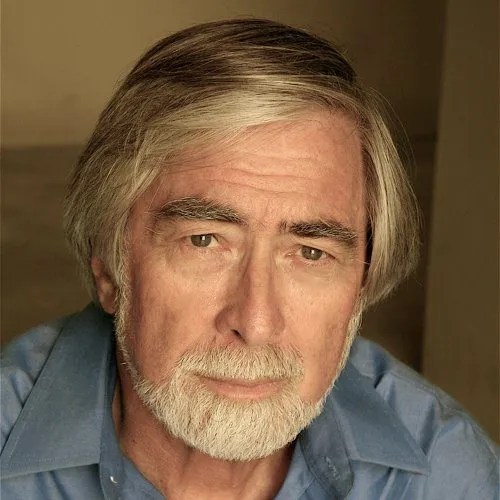
Robert Scheer
Robert Scheer, publisher of ScheerPost and award-winning journalist and author of a dozen books, has a reputation for strong social and political writing over his nearly 60 years as a journalist. His award-winning journalism has appeared in publications nationwide—he was Vietnam correspondent and editor of Ramparts magazine, national correspondent and columnist for the Los Angeles Times—and his in-depth interviews with Jimmy Carter, Richard Nixon, Ronald Reagan, Bill Clinton, Mikhail Gorbachev and others made headlines. He co-hosted KCRW’s political program Left, Right and Center and now hosts Scheer Intelligence, an independent ScheerPost podcast with people who discuss the day’s most important issues.
Editor’s Note: At a moment when the once vaunted model of responsible journalism is overwhelmingly the play thing of self-serving billionaires and their corporate scribes, alternatives of integrity are desperately needed, and ScheerPost is one of them. Please support our independent journalism by contributing to our online donation platform, Network for Good, or send a check to our new PO Box. We can’t thank you enough, and promise to keep bringing you this kind of vital news.
You can also make a donation to our PayPal or subscribe to our Patreon.
