
Click to subscribe on: Apple / Spotify / Amazon / YouTube / Rumble
Joel Whitney, author and writer, explores the life of Pramoedya Ananta Toer, a renowned Indonesian novelist, in an essay about the novelist’s years of imprisonment on a prison island. Pramoedya’s “The Buru Quartet,” is a series of novels written about his exile by the hands of U.S. backed forces.
Whitney joins host Robert Scheer on this episode of the Scheer Intelligence podcast to discuss the implications of the themes in Pramoedya’s novels as they relate to the current moment in the U.S. and resiliency in the face of oppression.
Right-wing fascistic elements in the U.S. government are running similar scripts to the 20th century purging of left-wing groups and people in America and Whitney emphasizes that the differences pointed out by these forces, as explored in Pramoedya’s novels, are exactly what make dissidents stronger.
“What Pramoedya’s books teach them about the independence movement, and by his very presence having returned from exile, is that no student protest movement without labor, the feminists, the farmers, other left-wing groups, none of those can actually bring down a regime without this, now we call it intersectionality,” Whitney tells Scheer.
Whitney recommends Pramoedya’s work in this age of political uncertainty and intimidation. “[Pramoedya] becomes a blueprint for his country out of something like what Trumpism could become if he keeps his word when he says he’s going to run for a third term and remove bans on a third term,” Whitney says.
Credits
Host:
Executive Producer:
Video Producer:
Introduction:
Transcript
This transcript was produced by an automated transcription service. Please refer to the audio interview to ensure accuracy.
Robert Scheer
Hi, this is Robert Scheer with another edition of Scheer Intelligence for ScheerPost.com. Let me just say today I’m going to be talking to Joel Whitney. First of all, responding to a devastating article he wrote about the destruction of a writer in Indonesia, his imprisonment for over a decade and so forth, at the hands of the US government acting through the CIA.
Indonesia, the country where we caused the deaths of a very large number of over a million people, disrupted the politics and so forth. And his article is very moving about the consequence of these interventions. You know, it’s not a game, it’s real and it messes up, not only kills a lot of people, but really destroys the ability of other peoples in the world to make their own history, to find their own realities, deal with their own problems.
So it’s an anti-human, anti-freedom kind of empire of the world intervention. And my guest, Joel Whitney, has written two very important books. I’ve done previous podcasts on them. One is Finks, which is about how the CIA destroyed American intellectuals and co-opted them and recruited them and attacked them and so forth during the Cold War.
And the other is Flight, about people having to leave this country to find some measure of freedom. so, but what I want to talk about now, we’re at a moment where Donald Trump, who experienced the wrath of the deep state, I mean, after all the FBI invaded his house, the CIA and the people in the Defense Department all contributed to an effort to destroy this ex-president of the United States.
And unfortunately, having been a victim of the deep state tyranny, instead of saying we’re not going to do that to anybody, he now seems to be maybe embracing it. I say maybe because it was early in his administration to turn it against… You know, he has no compunction at all about having the FBI arrest a Tufts Fulbright scholar or arrest a Columbia student who dared to speak out against American foreign policy.
So what we know, people who have experienced the oppressive hand of the state, and I’ll give Trump that, he certainly has experienced it, can go one of two ways, including, say for instance, the experience with German fascism. Most Jewish people, for example, and most of the other victims, families and members of other victims say never again, this shouldn’t happen to anyone. And then we’ve seen, as in the case of Israel and Gaza, some people say, now we’re going to be like them so it won’t happen to us again.
Those are two very different, fundamentally different positions. So I want you to begin to introduce us. First of all, tell us what this article in Believer magazine that so impressed me was really all about, but really more important why it’s indicative of really the horrors. And that was done under a democratic administration, LBJ.
And the horrors that we visit upon the world, we’re not the only ones, but we’re the most powerful nation that has ever existed. So our ability to do devil’s work, terrible, I would use the word mischief, but mischief hardly describes this kind of destruction of people. So take it from there.
Joel Whitney
Yeah, happy to and happy to be back on the show. Thank you for having me. Yeah, what you’re talking about is a figure that is super well known, I think in Indonesia and outside of that starts to become less well known. His name is Pramoedya Ananta Toer. And in the mid sixties, while Sukarno was securely in power in Indonesia, there was allegations of a coup.
Some of those who were supportive of Sukarno, who was a socialist in the style of Bernie plus a little something more, like Bernie actually going through a revolution. And he had done something post-independence that was super important, nation building. He had to build up a nation that had been under colonial rule for 400 years under the Dutch. And reliably, the United States didn’t wait too long to start trying to meddle and even overthrow him.
By the mid-50s, there were several attempts to overthrow him. By the late 50s, there was a coup that the US supported, mostly through bombings. We lied about it and our pilot was captured and he was paraded in the media to show that the United States lied. Well, flash forward to 1965, a program of nation building is partnered with sort of cultural battles. The centrists who are often aligned with the CIA through the Congress for Cultural Freedom and other groups were battling with some progressives associated with an organization called LECRA.
The chief of those, sort of the most famous writer, award-winning novelist was Pramoedya, who I mentioned earlier, Pramoedya Ananta Toer. And this attempt to stop a coup in 1965 after several other Western backed coups had gone underway and failed, seems to have triggered some colonels loyal to Sukarno, the socialist, to kidnap a few generals who were reliably Western tilting. Some of those generals were killed and the next thing you know the countercoup was underway. Now it’s very murky what happened precisely and who ordered what, but
Suharto came to power as a result of this, a general and a military dictator leaning fascist, and they started immediately to arrest all of those cultural figures tilting to the left and who were loyal to Sucarno. As you said and as you know, hundreds of thousands, probably more than a million, Pramoedya himself thought it was between two and three million people were killed for being students on the left, being socialists, for being Sukarno supporters, for being outspoken, for being Chinese Indonesians, because the Chinese Indonesians, much like the Japanese Americans here during World War II, were suspected of disloyalty and loyalty to China and therefore communism.
So along with those deaths, many were rounded up, hundreds of thousands probably. Trials would have been mooted because so many people were being arrested.
And the most famous internationally was Pramoedya Ananta Toer. His saga sort of starts there. It doesn’t end until 14 years later. He was in a far Eastern tropical Gulag, 2000 or so miles, 1800 miles from Java. And he was not allowed to write. And in this late 60s, early 70s, he became kind of a cause for organizations like Amnesty. And as you said, this all started under Johnson.
under the rubric of anti-communism. And in The Believer, which is an amazing magazine, sort of literary quarterly with a lot of reportage, I tell his story for Americans because Americans were so, you know, intimately involved with his repression. And he knew that and he talks about that throughout his life. So that’s where the article sort of jumps off from.
And it’s worth, I think it’s worth reading. It’s worth, you can, I think if you want to subscribe digitally or in store, sort of physically rather, thebeliever.net slash subscribe, you can read the article on the website as well, The Making of the Buru Quartet.
Robert Scheer
Now tell us about this quartet because it’s also it’s a major piece of work, major work of art. And it actually tells the story that begins or exists before his confinement. It’s been made into a movie. So talk a little bit about that. But I want to remind people where they have a tendency. Well, that’s their fault in their business. It wasn’t. It was US intervention. I actually witnessed Sokarno in Cambodia when I was covering the Vietnam war in Cambodia and spillover to Cambodia.
And Sukarno dared to criticize US policy in Vietnam at something called the Indo-Chinese People’s Conference. And it wasn’t long after that that the US moved to eliminate him. And he was, you know, by no means a communist or anything. He was an independent nationalist and I guess a social democrat.
The fact that he did challenge American foreign policy, they destroyed him. So, you know, that’s really what’s behind all this. And so we are responsible, you know. And so when Trump says he’s going to make America great again, he means what? Go back to creating gulags for other people. And when Hillary Clinton says, says, no, he’s wrong. America has always been great, as she did in her campaign against him. So we were great when we killed millions of people and it’s a Holocaust level by any definition in their own country.
Joel Whitney
Yeah, yeah, the Buru Quartet, part of the early part of your question, is just a masterful series of four novels and the tropical island gulag where they sent him was called Buru. Sometimes Primoria called this labor camp. He sometimes referred to it as a concentration camp and he’s certainly frequently referred to Suharto, the dictatorship that we supported, funded and installed, helped install a fascist one. And so to tell the story of the quartet, you can’t leave off the labor camp that he was damned to by United States-backed anti-communism.
By the time you hear the full story, you’ll think of a certain aphorism that is inarguable. Not all anti-communists are fascists, but all fascists are anti-communists. That’s why over the quote unquote American century. many people like Suharto were installed. But Pramoedya was at work on Collection of Stories when he was arrested on October 13th, 1965. He was sent to some prisons on Java.
Robert Scheer
He was already a very famous writer.
Joel Whitney
He’d won some awards. He’d run and edited and written for a weekly column where he was making the case for Sukarnoism as he could feel the repression from the American back right hitting Soccarno. So he had a reputation for being a bit of a firebrand. He was associated with a cultural group that was sometimes seen as an adjunct to the Communist Party. And he’s arrested as one of, if not the most famous writer literary writer in Indonesia.
And as he’s being arrested, Bob, he’s got this dream that if he can put the history of Indonesia’s independence movement from the time a hundred or so years before he was, or maybe 50 years before he was born up until the decade of his birth, if he could tell that story through a journalist named Tirto, then he would have done something magisterial in literature. And as he’s being arrested, he’s got Tirto’s, the actual historical Tirto’s diary in his possession, and along with all of his other research and accumulated works, they burn it in his yard as they’re arresting him.
And so after they realized their thrift is causing them not to feed him on Java, and that means that people can visit, families are encouraged to visit to bring food to the prisoners. But that also means where the media and the most of the population is based, again, Jakarta, Java, there could be journalists who will see the torture that is ongoing there. So someone thinks of this body of Eastern islands called the Moluccas, where the Dutch used to send their exiles. And Pramoedya is one of between 12 and 14,000 of these super important exiles who get sent to Buru.
He’s remembering this figure that he wants to write about as soon as he gets there. He’s met with a wild swing in temperatures, really hot during the day, cooling down by 30 degrees or so at night. It’s not farmable conditions, but there’s no other provision for their food, but that they farm their own. So he’s immediately damned to a regime of forced labor throughout those first couple of years, which are you know, reliably described as the starving years.
They’re trying to figure out how to have side projects where they’re farming fish like tilapia and maybe eels. They’re growing food separate from the official barracks based, you know, rice fields. And he goes from daydreaming about his novel to realizing that if he’s not allowed to have pen or paper there, that he has to start composing it somehow. He comes up with something that in all of literary history, I can’t think of another example quite like this. He starts to tell the stories during work breaks to his comrades.
And by the way, his comrades are no schlubs. These are the intellectuals. So there’s a lawyer there who knows colonial law historically. There’s a school teacher named Tomiso who becomes a farmer back in his life before arrest. I’m getting a little New York construction sound. And so all of these experts who are surrounding him are also kind of fact checking his story as he creates it. He’s trying to recover a memory of Turto’s life from the diary that was burned at his house when he was arrested. And at first, that’s all he can do is to reconstruct the stories from memory orally.
Eventually his saga continues and he witnesses death by suicide, witnesses death by torture, he witnesses death for other prisoners having written materials. You were only allowed to have a Quran or a Bible, I think, at that point in the late 60s and early 70s. And so eventually Amnesty gets involved, they make him sort of a cause internationally, and the regime, the Sukarto regime, starts dealing with the Amnesty queries by bringing in these at first loosely curated, later deeply vetted junkets of journalists.
And those journalists are given a kind of script where they say, well, you’re only here because you’re a communist, so why are you complaining? And he consistently pushes back with quotable responses that groups like Amnesty and Penn begin quoting at deepening his international reputation as kind of a stubborn martyr for freedom of expression. Little by little he just continues to play chess with the regime and eventually they decide that it’s not worth the publicity hassle. They decide that they’re going to give him and all the prisoners the rights that they lost when they were sent there, but if he’s a writer or if others of them are lawyers or farmers or whatever they are, they’re also going to be given tasks for the regime.
They’re going to be sort of a blending of the forced labor that they’re doing with propaganda work for the regime. So finally, eight years after his initial arrest, Pramoedya is given an attic above one of the administration buildings on this island, Buru, and he is finally allowed to write.
He doesn’t have any materials. A rumor has it that John Paul Sartre sent him a typewriter. The Goon Squad, as it were, destroys the typewriter because I don’t quite know why his comrades get him another one, but they’re very low on ink. So he writes out the first two of the four novels by hand after having told the stories for several years.
It goes forward from there. He releases the first one in 1981. He’s finally released in 1979. Incidentally, the same year that Solzhenitsyn wins the Nobel Prize for Literature, Pramoedya is finally leaving his own Gulag. And it becomes the first novelist called This Earth of Mankind. He’s released in 79 and in 81, I think he releases
Robert Scheer
This is after he is released?
Joel Whitney
This Earth of Mankind. This is an edition, a recent edition, and it shatters national sales records, but it’s banned instantly by Suharto and the dictatorship. does, his publishing cooperative ignores the ban and they publish the second one not long after, and people start to buy these books as photocopied samizdat.
and he starts to win awards and you know the story goes on from there but it’s kind of an astounding story of survival. He’s not free when he’s released. He’s under house arrest effectively. He finishes the last two. It becomes the famous quartet. It’s getting whispered about internationally but it’s also winning Penn Freedom to Write awards.
It’s winning Asian prizes like the Fukuoka and the Maxese from Philippines. So his reputation is starting to grow, but the key thing that one of his main translators, Max Lane tracks, Bob, that I think is of interest to us is the novels actually play a role. And if you’re very skeptical, maybe you’ll take this with a grain of salt, but it seems to be well established by Lane and others that the protest movements from the 70s after this group of intellectuals is arrested, every decade or so there’s a new protest by students and they keep failing.
When, and they’re only intellectual kind of mentors happen to be these CIA aligned guys who are starting to turn against Suharto, but who were collaborating with him when he came into power, people like [inaudible]. And Mokhtar in particular, I single out because he was a member of the Congress for Cultural Freedom linking this story back to my obsession in Finks, is Congress for Cultural Freedom is a CIA backed cultural front.
So Mokhtar and people like that, Mokhtar even visited him in the Gulag and promised to help him get a hearing aid because he lost his hearing, promised to send him books for his research, never did, but was one of those guys who was vetted to grill him and to tell him, you’re here because you’re a communist. Have you discovered God?
Because they were forced to register as Muslims in the Gulag. They were forced to register. They had like four official religions that they could choose from. So when he gets out, he sees that there have been these failed protest movements where the students have no actual progressive mentors to look up to. They have a lot of former centrists and anti-communists who now are effectively useless against the right-wing dictatorship that they helped install.
But the protest movements keep failing because the students have no sense of what their left intelligentsia who actually helped stop Dutch colonialism in the islands, in the Indies. But once they’re freed, this sort of whole intellectual cohort returns, as Max puts it, Indonesia returns from exile, he talks about Indonesia as having exiled itself with the arrest and death of this many people.
Now, you’ve had Vincent Bevins on the show before, Bob, and he talks about the killings as a method, the Jakarta method, which was then exported to Brazil and other places. But it is this kind of right-wing need to purge the left that is certainly au courant right now, and I know we’re going to turn to that in a minute.
But what’s interesting in Max Lane’s thesis, and I tell an abbreviated version at the end of this article in The Believer, is that what Pramoedya’s books teach them about the independence movement, and by his very presence having returned from exile, is that no student protest movement without labor, the feminists, the farmers, other left-wing groups, none of those can actually bring down a regime without this, now we call it intersectionality. And so finally, the protest movement that comes up in the 90s in the wake of the novels, in the wake of Pramoedya’s return, actually succeeded in bringing down Soharto in 1998. So it’s instructive and, you know, it may be historically unique, but it does seem to me if you look at Columbia and other student movements that without solidarity and certainly without the will to resist threats and other kinds of bullying, these movements can’t achieve their ultimate goals.
They can do a lot of good in the meantime. They can instill courage in us. They can push back against lies in the media about who they are, what they’re doing. But from Odia’s, you know, I pitched this long before Trump was elected to the believer and it did have a long time incubating. But as it was being finished and finalized and fact-checked, it was just interesting to me how relevant Pramoedya’s life is to our moment.
Robert Scheer
No, we’ve had some interruption with the noise, but I think what you’re saying is very clear and I think we. Proceeded. What we can tolerate. So, OK, we have a brief quiet there. Hopefully we can edit out some of the noise. But just to wrap this up, because we do is we’ll have to meet again for another conversation. But I do want to bring it to where we are now.
Because the Democrats, who after all were in power when all this happened in Indonesia, they endorsed it, they paid for it, they helped direct it, whether they want to admit it or not. We’re in a situation now where we’re very much threatened with the loss of everything. Our freedom is no question. What’s being done to people who are here on green cards or student visas or so forth.
It will certainly be done to people who have full citizenship and so forth. As you know from your own research in this area, I’m sure about Finks and everything, Americans who had citizenship had their citizenship questioned and how they got their citizenship and they could be deported as well. As well as being arrested of course. They have no shortage of examples of arresting American citizens for their ideas. So I want to…
If the noise doesn’t become too disruptive, let’s just take a little time to consider what the lessons of this are and why the deep state is a reality and why it matters. And this is a big lie. we saw it during this campaign where, you know, the Kamala Harris campaign had no hesitation to bring in even support from Dick Cheney, who had secret, went along with, went along with the architect of secret prisons, torturing people all over the world.
And his daughter who defended him was a big supporter and she’s something of a hero. And so I think it’s absolutely, now your video just conked out too. I don’t know, there it is. Just to make a few minutes here to describe why this significant now.
This question, is there a deep state? Will Trump be able to now turn it to his own purpose? How does it work? You’re in the middle of this whole story. You’ve devoted a large part of your literary output to it. So take us there.
Joel Whitney
Okay, this drilling hasn’t stopped. your listeners, I apologize. This is an unscheduled bit of construction here in the West Village of New York City.
Robert Scheer
Okay, my point is, yes, we know there’s a deep state and we know it does all the terrible things that they keep it deep and they keep it secret, not because it’s protecting the lives of heroic agents out there, but that it’s concealing stuff that would be repulsive to most people in the world, including torture, of course. And then certainly imprisoning Indonesia’s, as it turns out to be one of the most important writers finally acknowledged after his death. But I want to address that question because, again, there are lot of so-called liberal people who, moderate Republicans, as they used to be, and liberal Democrats or neoliberal Democrats, who actually celebrate the deep state. And now they don’t trust Tulsi Gabbard, who I don’t know where she’s swinging.
But she’s actually in a powerful position. But before her appointment by Trump, she was a critic of the deep state. She was somebody who served in the US military, saw where lying gets you, where deceit, the role of deceit, and was objected to it, whether she’ll continue to read. This is an open question, we don’t know, but power corrupts and people get in those positions, they suddenly find they can endorse things that they otherwise thought were horrible.
And that certainly was the experience in Nazi Germany, where most of the well-educated people went along with justifying that system. So, you’ve written about this your whole life. We now have quiet here on the set. Really give us the broader picture. Why you’ve devoted so much of work, your brilliant writing, because I think this piece you wrote for the believers is just incredible. I’ll try to get permission to post it on our site.
I’ll try to send people to go check it out. But just as a work of art, as a piece of writing, it’s really, that’s why I called you to do this podcast. It’s just terrific. And what makes it terrific is that you really put us there in the body and mind of a person, you know, as in the Julian Assange case, which most liberals forgot about and ignored. What does it mean to be confined for a decade? What does it mean to have your writing utensils taken from you and so forth. So take us there. You’ve written as persuasively as anyone.
Joel Whitney
Well, you’re right on the money in terms of the confusion that we’re operating under in this moment of Trumpism. There was a high watermark for me when I was trying to push back against some of the early DOGE disasters. Between protests, I have to do some of this work, forgive me, on social media. One of my sort of old cafe buddies, who’s a friend on, I think, Facebook, a former actor and maybe magazine editor, he came at me and he said, literally wrote the book, Finks, tells the story of how, I think he conflated the left somehow, he said the liberal left penetrated all of these groups, movements and the media and whatever he said, I’m paraphrasing.
He basically was lumping together the progressive left, let’s say the Bernie left and the Hillary Clinton-Biden center left, the pro-interventionist kind of center. And he therefore sort of destroyed the argument of Finks on his way to defending Trumpism. And I had actually seen that building online. There was this phrase that I kept seeing on Twitter, sometimes associated with Finks and sometimes just associated with the Congress for Cultural Freedom. And the phrase was the synthetic left. And instead of understanding the basic argument of Finks, which is that the new left, the true left, The Black Panthers actually creating healthcare in their Oakland and other neighborhoods for the community and only taking up weapons in a militant posture to make sure they weren’t killed by police, which many of them were anyway.
Rather than sort of putting that whole idea together as an effective left. Same with the American Indian Movement, which I write about in flights. Instead, the CIA penetrated that left with a fake left. That’s the synthetic left, but the way people have been telling it online, and I think this tells us something about Trumpism, is that they assume that the left itself is this creation of somebody like George Soros. It’s a complete misreading of the history. It’s probably a deliberate misreading in some cases, but it’s still powering Trumpism.
It’s still this idea that Trump is an effective and honest and earnest and sincere fighter against the deep state and he burnished that reputation a little bit in his first term. But then if you look at actually who he could bring in, he didn’t have any actual Trumpist people. didn’t actually, he came out of the Tea Party, right? His whole career is launched as a politician by pretending Obama wasn’t born here. Talk about nativism. But in the first term, he’s surrounded by the neocons that are, I think, correctly sometimes lumped together with the so-called deep state. They’re the interventionists.
A lot of first-generation neocons like William Crystal came out of the Congress for Cultural Freedom and the New York intellectuals. Some of them were frustrated Trotskyites who had been leftists once before. The Trotskyites always believed that art and culture could be a weapon in the Cold War. So they have this evolution. They started out on the left, but by the time neoconservatism is born around 1965, let’s say, with Public Interest Magazine, CIA funded.
It’s absolutely got next to nothing to do with the left, except that they have this wise idea of sort of banding together with the liberal centrist anti-communists. And so what they propped up was not leftism per se, it was a kind of ad hoc coalition, sometimes called the Washington Consensus, that would bring together anti-communist liberals with, you know, centrist sounding conservatives who became neocons to push this idea that the United States A had culture, B was a freedom based alternative to communism, C could do anything that communism could do better.
And a big part of that was through the Congress for Cultural Freedom, which created these magazines. When this was exposed in ‘67 for many years thereafter, instead of really having a debate about what the Congress for Cultural Freedom was. The intellectuals are on the scene actually instead debating the Vietnam War. And if the Congress for Cultural Freedom had never existed, I think the intellectuals, Bob, would have behaved better in the lead up to the Vietnam War. think a lot of them were co-opted by the time the Vietnam War arguments and by the way, the Indonesian coup happened.
So that’s kind of the backstory and what you’re seeing and Ken Roth has reminded us that Trump really wants a peace prize. So what I think the right under Trump is doing better than anyone could have imagined is on some level, even though they’re half-assing it and they’re all over the place on this, they’re co-opting the anti-war impetus of the left. You know, term one, Trump tried to make peace between the Koreas. His heart on some level may have been in the right place, even as he was saying stupid things like Rocket Man.
He seemed to be on both sides of it depending on whatever caffeine or drugs he was on. So he’s got this impulse that Ken Roth and others believe we should try to work with psychologically. Like if he wants a peace prize, let him make peace where it’s appropriate. And I think, by the way, it’s always appropriate. On the other hand, he’s even more vicious on Gaza and in Palestine and Israel than Biden was if it’s able to even be the case, if that’s even possible.
So what he’s doing, he’s signaling to his base that he’s destroying parts of the government that he calls, he calls, giving him cover to destroy parts that he calls the deep state. And right there with that one move alone, he shows that he’s already giving, I think, a more effective read on the population and the independent mindset and maybe even the Democratic party’s mindset. He’s stealing voters for himself.
I mean, his total vote count didn’t go up in 2024. We know that. Kamala’s went down, but part of why it went down is she’s lost the anti-war consensus, which is a big part of the independent voter movement. And so it’s very effective, even if parts of the government that he’s destroying have nothing, social security has nothing to do with the deep state, but they’re making it now. They’re sort of linking the deep state, which is a corruption state, by the way.
All of the work that the Congress for Cultural Freedom and other CIA agents or sub-agencies do, movements do, committees do, is they basically do government by bribery. That’s what the whole Iraq and Afghanistan war, they were all fought by buying off stakeholders basically and using CIA agents and things like that. So there’s definitely corruption in the apparatus around intelligence in the CIA.
And it got worse after the war on terror because there used to be a whole side of the CIA that gathered information, reliable information. Some of that got subsumed by covert ops after the war on terror started. But the Department of Education is absolutely necessary to a democracy and good schooling and good universities and universities that have the right to protest. So a lot of what Trump’s doing also, in addition to this idea of pushing back against the deep state, as he’s pushing back against so-called anti-Semitism.
So it’s an amazing array of chess moves that, you know, there’s another framework for all this that I think is interesting. Michael Parenti’s book, Black Shirts and Reds and Other Thinkers, I owe some of this sort of concept to the scholar Gabriel Rockhill in Philadelphia. And it’s this idea that when the liberal face, sort of the moderate liberal face of capitalism is being challenged from the left.
We saw this in the 30s, right? The United Front movement against evictions, joining with the Communist Party and other left-wing groups to stop evictions. When that kind of left is on the ascendancy, like Bernie 2016 and Bernie 2020, then the good cop of liberalism has to cede ground to the bad cop of thuggish fascism. And that seems to me like the read that we’re on.
It doesn’t mean that liberals agree or are behind the scenes working with the fascists. It doesn’t mean that. It just means that there’s a kind of process arrangement that has them working in tandem together, whether the liberals know it or not. So the fascists sort of rally and know to step in when the liberal arguments for capitalism are not working. Good cop and bad cop. another way to think of it is blowback because Trump one was certainly less toxic than Trump two has been so far. He doesn’t need to get reelected.
That’s a big part of it. But as you state, the resistance against Trump, the lawfare, all of those things, again, he lumps them together as deep state. He doesn’t encourage his voters to actually differentiate between a check and a balance in a deep state. Right now we’re seeing that with arguments about whether judges should be impeached or not.
And so I think everything you’re saying makes sense. This blowback is very sloppy. It’s very deliberate. Another thing that we see under far right regimes, even under any Republican regime, is they’re not the job creators that Democrats are. And when there’s high unemployment, they get to make the argument for lower wages. It’s just a win-win for them. So if a lot of people are out of work, then they’ll take anything. They’ll take it for lower wages. And so they can keep prices of labor down while people are being fired. So they make these things into a win-win, masterful.
Robert Scheer
Let me just, I we’re going to run out of time and I’m glad we’re not being interrupted by construction noise. you know, capitalism is always going to be rapacious. It’s always going to be expansionist. It’s always going to want to get new territories. So, you know, getting Greenland or undermining China and so forth. That is normal to capitalism. That’s not Adam Smith’s capitalism of an invisible hand where free entrepreneurs compete, but monopoly capitalism, which Adam Smith was against and that certainly existed before and after his time, you know, you basically are working with people and on the Trump side who are just being outrageously hypocritical in their use of words like communism and left.
I mean, Trump has no trouble at all and will have no trouble at all making a deal with China, Red China. And even the Democrats, when they didn’t want to make a deal with Red China, said, Apple should move its operation to communist Vietnam. So the word communism has absolutely no meaning anymore when it’s associated with powerful economies that can actually produce things and so forth. It’s just a joke.
And in fact, Trump knows this because he was the victim of this whole Russiagate garbage, which never made any sense because after all, Putin is the guy who defeated the communists in Russia. Yes, he started out in their secret state bureaucracy and so forth, but so did Yeltsin, who he backed. He was a member of the Politburo, a leading member. And Yeltsin was encouraged to make way for Putin by our own government because Putin was sober and would advance a cartel capitalism and open shop for everybody.
So it has nothing to do with communism. He’s the anti-communist. So it’s all nonsensical. And here even Trump, who was the victim of red-baiting, they had stories, he’s in bed with the Russians literally with their agents. You know, they red baited Trump, right? He’s a Putin stool, even though Putin’s not a red.
On the other end, Trump turns around and blames the protesters in Colombia for being communists or this dangerous left that’s here. So anti-communism is like Azorwell, who is certainly very strong critic of the Bolsheviks. You know, nonetheless, it’s the invention of an enemy and you can call it anything you want. The distinction, I think you’ve raised an interesting, I don’t mind going a little longer as long as we don’t have construction noise.
The bringing in Gaza is very important because what really Trump is all about is dealing with power in a way that will benefit the ruling group in America and maybe incidentally, people who vote. Maybe tariffs might bring back better jobs and so forth. But he has to be very mindful of what, you know, Russia still has half of the nuclear weapons, you know, and so you have to care about them.
And it was very interesting in the dressing down of Zelinsky where both Vance and Trump said, What do mean? You want to bring on World War III? Yes. You push Russia too far, you can’t get World War III. They have the wherewithal to do it. Palestinians don’t have anything. They never had an army. They were not responsible for whatever happened in the Six Day War. That was with Egypt and Jordan that Israel made peace with. And so since you brought it up, what’s happening with the Palestinians is you can oppress people who don’t have power and don’t have a state even. They certainly don’t have an army and what have you. And so Trump knows that he can be the bully boy with the Palestinians.
Now he has a limit there. He can’t go so far that Saudi Arabia, which already did not cooperate with Biden on cutting off, undermining Russian oil prices. You know, he has to be sensitive. There is, after all, a large part of the world that is sympathetic to Palestinians, maybe most of the world, and their right to have a state and so forth.
So we don’t know. At first he forced us to cease fire. Now he’s all for continuing the genocide there. You’re absolutely right in bringing it out. But I think the interesting point about the deep state, and maybe we can wrap this up at least in the next few minutes, but you’ve written so much about it, the significance of the deep state, the reason anti-communism was useful was not because some extra-trotskyist intellectuals in New York wanted to do it.
It’s because American power came out of World War II with the only major surviving economy in the world and now had to justify creating an empire, in effect. And the glue that held it together was anti-communism. We are the free world. We will save Europe from the communists. So forget about fascism, forget about these agreements we had that Germany will be divided, never…
No, we want, we were critical of Germany only that it didn’t bring up a military and we use German scientists to help us develop better rockets and bombs and so forth. So I think the value of your research and I wanna recommend, I wanna close this by recommending your book, Finks and Flights, your other work as well as this article that I found so impressive is that whether it’s right-wing demagogues or neoliberal demagogues or what have you, they’re going to do what Orwell predicted.
They’re going to find the enemy and get everybody to focus on the defined enemy instead of the enemy at home. The super wealthy, the exploitive, the cynical, know, and the American torturers. The torture can be by just denying people decent housing even though you’re the richest country in the world and so forth. I think that’s the big idea here. And the example, again, Brett spring it back to the quartet. People can watch it right?
Joel Whitney
First of all, this Earth of Mankind is on Netflix.
Robert Scheer
Yeah, and get into this issue because what happened in Indonesia, which by the way is the biggest Muslim country, and we didn’t care at all about religious freedom and Muslim fanaticism and Muslim terrorism, no. We just wanted to keep them, what the Dutch did for, as you say, 400 years, acquiescent to our exploitation of their resources and their life, and we did it so-called in the name of freedom. And it’s just been garbage in, garbage out, you know. So maybe we could.
I’ll give you the last word and we can wrap this up. But it seems to me that’s the value. We had no hesitation, just as we didn’t have any hesitation, keeping Julian Assange in prison, a high security prison under the most barbaric circumstance. And yet we claim we’re for freedom all over the world. It’s garbage. We were quite happy when African people leading the fight for freedom in South Africa, Nelson Mandela and others, we called them a communist.
He was kept in jail with our approval and we approved the segregation government. I mean, we go right down, we killed Lumumba. I mean, the whole history is so sordid and it’s really sort of the main denial of the claim that we are the society of the free, that the vast, vast majority of Americans have no idea who killed Lumumba or who Lumumba was or where the former self Belgian Congress or any of it. And the value of your research, I want to recommend people to check out your work is you felt an obligation to keep digging into this sordid history and expose it. So my hat’s off to you.
You have a last word before we wrap it up? At least let’s keep it to within 50 minutes.
Joel Whitney
Yeah, I’ll keep it pretty quick. I just want to touch on a couple key points. Yeah, the, Buru Quartet is made up of four books and as a recommendation to your, to your readers, the first three are like Dickens novels. And what’s really interesting is the fourth one turns to his Fink, his collaborator, the secret police agent that arrests him tells the fourth because he’s, he’s exiled just like Pramoedya was. And Pramoedya again, is this, is this novelist who becomes a blueprint for his country out of something like what Trumpism could become if he keeps his word when he says he’s going to run for a third term and remove bans on a third term.
But in addition to that, as we do think about Trumpism and as I’ve looked at this series of books, there’s one answer to how protest movements need to band together in solidarity with intergroup collaboration and lots of mass protests moving towards a general strike. Even while I say that, thinking about your other points, Bob.
You know, democratic socialism, I think Bernie and AOC have done a lot to reclaim that word. So what I’m seeing Trump use to try to do this anti-communist work of creating an enemy out of the left, he’s saying the radical left, the radical left, and AOC is out there stumping with Bernie to say, you know what? You’ve been hoodwinked. I’m not going to blame you. This guy’s a liar. He’s got lots of propaganda at his disposal.
The right is ascendant right now in propaganda, memes, video games, and everything in between. But what she’s saying is what you call on the right, radical leftism, I call common sense. And she’s talking about the healthcare that is the norm across Europe. So we really have to get our heads on straight and understand that even if Trump says he’s against the deep state, effectively what he’s doing is so far an electoral version of what Suharto’s dictatorship was like. And if he keeps going, some of us are worried that all of those predictions of real fascism may have already come. And so it is a terrifying time to be alive, but it’s probably always been a terrifying time to have this conversation.
Robert Scheer
Well, but also it’s becoming more visible. I must say the good thing about the Internet is people can check this out for now. Maybe that plug will be pulled even within the next weeks or months. But right now, anything we said here can be checked out, challenged. You can do your own research. And that’s why I keep doing these podcasts. I don’t want anybody to take what we say to be certainly not the final word. But, you know, maybe you put on your bullshit detector, maybe we’re full of it also, so challenge us.
Anyway, if you didn’t get enough to challenge, check out the next issues I used to say every week on NPR, but NPR, concerned about their funding perhaps, no longer is an outlet for this show, but certainly you can get it on the internet, ScheerPost.com, and I want to thank you again for cooperating on this.
I want to thank Joshua Scheer, our executive producer who found your article and insisted on doing this as he does with all our guests. Diego Ramos who is the managing editor of ScheerPost and who writes the introduction for this, Max Jones, who does the video, is also the producer of the Chris Hedges interview show. The JKW Foundation, which in the memory of Jean Stein, a fiercely independent writer and public intellectual gives us some funding along with Integrity Media in Chicago inspired by Len Goodman, a terrific lawyer in that area, defending a lot of people’s rights who don’t get good lawyering, and for giving us also some support. See you next week with another edition of Scheer Intelligence.
Please share this story and help us grow our network!
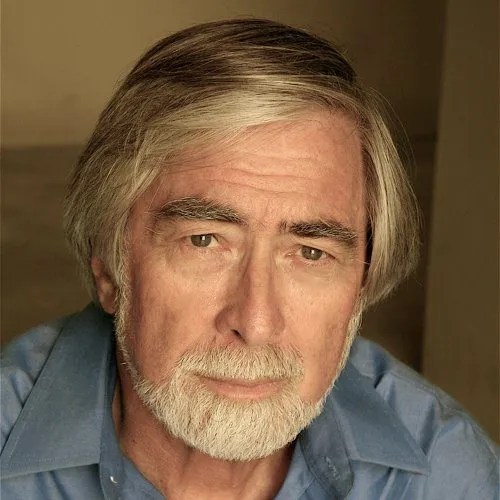
Robert Scheer
Robert Scheer, publisher of ScheerPost and award-winning journalist and author of a dozen books, has a reputation for strong social and political writing over his nearly 60 years as a journalist. His award-winning journalism has appeared in publications nationwide—he was Vietnam correspondent and editor of Ramparts magazine, national correspondent and columnist for the Los Angeles Times—and his in-depth interviews with Jimmy Carter, Richard Nixon, Ronald Reagan, Bill Clinton, Mikhail Gorbachev and others made headlines. He co-hosted KCRW’s political program Left, Right and Center and now hosts Scheer Intelligence, an independent ScheerPost podcast with people who discuss the day’s most important issues.
Editor’s Note: At a moment when the once vaunted model of responsible journalism is overwhelmingly the play thing of self-serving billionaires and their corporate scribes, alternatives of integrity are desperately needed, and ScheerPost is one of them. Please support our independent journalism by contributing to our online donation platform, Network for Good, or send a check to our new PO Box. We can’t thank you enough, and promise to keep bringing you this kind of vital news.
You can also make a donation to our PayPal or subscribe to our Patreon.
