
In one of the scariest moments in modern history, we're doing our best at ScheerPost to pierce the fog of lies that conceal it but we need some help to pay our writers and staff. Please consider a tax-deductible donation.
Click to subscribe on: Apple / Spotify / Amazon / YouTube / Rumble
By Robert Scheer / Original to ScheerPost
Host Robert Scheer in this episode of Scheer Intelligence speaks with sociologist Charlie Derber, author of Bonfire: American Sociocide, Broken Relations and the Quest for Democracy. The delve into the complexities of modern American society, exploring the alarming trends of sociocide and the ramifications of systemic alienation amidst apparent prosperity.
Derber, a prolific writer with 29 books to his name, presents a compelling argument about the forces at play in our current societal landscape, where individualism erodes community bonds and the quest for democracy feels increasingly distant. Scheer and Derber dissect the historical context of these issues, tracing the roots of contemporary authoritarianism and the role of elites in shaping the socio-political climate.
Amidst the grim diagnosis, they also uncover rays of hope, examining the potential for grassroots movements and collective action to challenge the status quo. With insights that resonate deeply in today’s political climate, they not only analyze despair but also call to recognize the cracks in the system where light can break through. They discuss the contradictions inherent in a society at odds with itself and contemplate the future of democracy in a world grappling with profound social and economic upheaval.
Transcription:
00:00:00.80
Robert Scheer: Hi, this is Robert Scheer with another edition of Scheer Intelligence. The intelligence comes from my guests, and I was given this platform by the NPR station in Santa Monica. Thanks to the attacks on NPR, I’m no longer with that station, but I’m available on Scheer Post, which I happen to publish.
00:00:20.99
CHARLIE DERBER:
00:00:23.97
Robert Scheer: I don’t think I’ll be fired anytime soon. I want to introduce my guest, who has had a remarkable career. Charlie Derber has written 29 important books that resonate with the level of C. Wright Mills in sociology, dealing with power in society and how it operates.
00:01:05.50
Robert Scheer: His current book, Bonfire: American Sociocide, which we’ll discuss, is a wonderful and powerful work—mercifully small and clear. It presents a disquieting argument thoughtfully, with great authority.
00:01:55.93
Robert Scheer: By the end, it feels like we might be at the end of times, not with a Messiah but perhaps with the cockroaches taking over after some kind of nuclear disaster. Yet, it’s fun to read and well-written. I highly recommend it.
00:02:18.59
Robert Scheer: I want to challenge the thesis. I learned from your agent, Lorna, that this is part of a trilogy. After reading your book, I wonder if we’ll even be around to see the next installment.
00:02:43.14
Robert Scheer: I’m serious. I want to talk about our age difference; you’re younger than I am by almost two decades. I was born in the middle of the Depression and grew up very poor in the Bronx, during scary times.
00:03:01.30
Robert Scheer: I was amazed by post-war prosperity and spent much of my career predicting disaster. I was influenced by writers like Eric Fromm and Orwell, questioning if fascism could come to America.
00:03:33.30
CHARLIE DERBER: Yes.
00:03:33.95
Robert Scheer: It’s interesting that we often attribute totalitarian regimes to others, yet during WWII, the most dangerous group—the Germans—were a significant minority in America. The question “Can it happen here?” resonates now more than ever.
00:04:30.58
Robert Scheer: After reading Bonfire, I feel truly depressed—not about the book, but about the argument that it may be game over. How could you plan to do a trilogy when we may not even be here next week?
00:04:39.78
CHARLIE DERBER: Thank you for that introduction, Robert. One of the contradictions we share is that contradiction itself drives history. We’re in a grim moment, but it’s not incompatible with new forms of resistance that could lead to more hopeful times.
00:05:24.43
CHARLIE DERBER: The term “sociocide” might not be familiar to many, but it describes a process where society destroys itself. Long before Trump, we were on a trajectory of sociocide. I wrote a book, Sociopathic Society, about how society breeds anti-social values.
00:06:11.35
CHARLIE DERBER: A sociocidal society is one where sociopathy is so extreme that the survival of the society itself is at stake. Emil Durkheim discussed the breakdown of social cohesion, which could lead to individual suicides.
00:07:01.88
CHARLIE DERBER: The subtitle of my book includes “Broken Relations,” emphasizing how America’s individualistic culture is pulling society apart. In a loveless society, people prioritize individual survival over collective well-being.
00:09:14.65
CHARLIE DERBER: Before Trump, sociopathic and sociocidal forces were already fragmenting America. My students spend hours on social media but feel disconnected from nearly everyone they interact with online.
00:10:56.53
CHARLIE DERBER: This disconnect is dangerous for elites, as solidarity poses a threat to their interests. A generation is growing up feeling isolated and distrustful, leading to increased gun purchases for protection.
00:11:17.30
CHARLIE DERBER: Many studies show that social isolation is most prevalent among lower-income and working-class people, particularly in areas lacking community spaces. The epidemic of loneliness is rising, with many people reporting no friends or social connections.
00:14:17.45
CHARLIE DERBER: The social unraveling, along with economic crises, is leading to authoritarianism. The Democratic Party has played a role in this shift, moving away from the New Deal towards neoliberal capitalism.
00:15:12.80
Robert Scheer: Let me take issue with a certain aspect of your thesis. It seems to blame the masses for their responses to alienation and social networking, suggesting that Trump is a reflection of this.
00:16:16.54
CHARLIE DERBER: I’m not blaming individuals. The system erodes worker solidarity and relationships. It’s a more acute phase now.
00:17:06.93
Robert Scheer: I think something significant has happened in the last 20 years, particularly since Bill Clinton. The unions were crushed, and wealth concentration has skyrocketed.
00:17:38.05
CHARLIE DERBER: I agree with you about the role of the Democratic Party in abandoning the working class and fostering a culture of division.
00:22:00.00
Robert Scheer: The U.S. is prosperous, yet we’re coming apart. We have the means to address income inequality and homelessness, but we’re not doing it.
00:23:09.71
CHARLIE DERBER: I think there’s a crisis of social and economic capital in America today. Many people feel they’re living paycheck to paycheck.
00:28:05.58
Robert Scheer: I want to stretch your argument a bit further, as there are signs of potential resistance.
00:55:30.13
Robert Scheer: Before we end, let’s talk about the hope in your book. It’s not all a downer—it holds out the possibility of resistance against these forces.
01:03:20.59
CHARLIE DERBER: I genuinely believe that the grimness of our current situation is also a catalyst for mobilization. People are coming together, and the potential for change is growing.
01:04:43.55
Robert Scheer: Thank you, Charlie Derber, for the insightful discussion. I encourage everyone to read your book, Bonfire: American Sociocide. Thank you to our production team and supporters. See you next time!
Editor’s Note: At a moment when the once vaunted model of responsible journalism is overwhelmingly the play thing of self-serving billionaires and their corporate scribes, alternatives of integrity are desperately needed, and ScheerPost is one of them. Please support our independent journalism by contributing to our online donation platform, Network for Good, or send a check to our new PO Box. We can’t thank you enough, and promise to keep bringing you this kind of vital news.
You can also make a donation to our PayPal or subscribe to our Patreon.
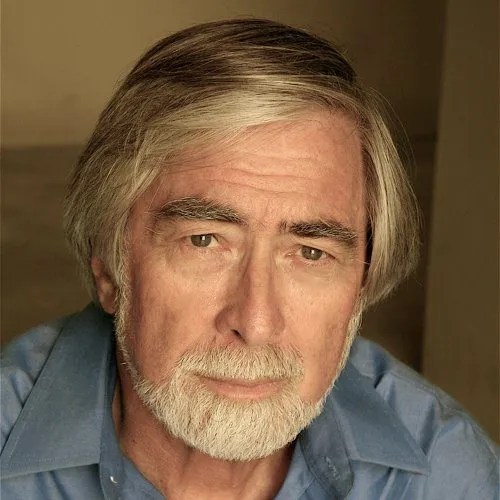
Robert Scheer
Robert Scheer, publisher of ScheerPost and award-winning journalist and author of a dozen books, has a reputation for strong social and political writing over his nearly 60 years as a journalist. His award-winning journalism has appeared in publications nationwide—he was Vietnam correspondent and editor of Ramparts magazine, national correspondent and columnist for the Los Angeles Times—and his in-depth interviews with Jimmy Carter, Richard Nixon, Ronald Reagan, Bill Clinton, Mikhail Gorbachev and others made headlines. He co-hosted KCRW’s political program Left, Right and Center and now hosts Scheer Intelligence, an independent ScheerPost podcast with people who discuss the day’s most important issues.
