
In one of the scariest moments in modern history, we're doing our best at ScheerPost to pierce the fog of lies that conceal it but we need some help to pay our writers and staff. Please consider a tax-deductible donation.
As the world stumbles into a new year, journalist Robert Scheer sits down with former CIA analyst Ray McGovern for a conversation that feels less like a holiday reflection and more like a warning flare. Both men came of age in the shadow of World War II, lived through the Cold War, and spent their lives studying the machinery of American power. Now, they confront a moment they argue may be even more perilous: a nuclear‑armed standoff between the United States and Russia, shaped by political chaos, military inertia, and a peace movement too faint to hear.
In this episode, Scheer and McGovern revisit the promises, failures, and back‑channel dramas that brought the U.S. and Russia to the brink—unpacking Trump’s claims he could end the Ukraine war in 24 hours, Biden’s abandoned assurances, and the quiet but escalating risks that rarely make it into mainstream headlines. What emerges is a sobering, unsentimental look at how fragile global stability has become, and why the coming year may determine far more than most Americans realize.
Click to subscribe on: Apple / Spotify / Amazon / YouTube /
Transcript: A New Year on the Brink: Robert Scheer and Ray McGovern on War, Peace, and Nuclear Peril**
Editor’s Note: This transcript was prepared quickly to make the conversation available as soon as possible. Minor errors may remain, but the substance and flow of the discussion are preserved.
Robert Scheer: Hi, this is Robert Scheer. It’s New Year’s Eve, but hopefully we’ll still be two old coots talking on New Year’s Day. We’re not going anywhere, and we hope to bring you an important discussion. Let me introduce my guest properly: Ray McGovern, who spent 27 years as a CIA analyst specializing in Russia. He briefed three presidents—Nixon, Ford, and Reagan—and is one of the most experienced voices on U.S.–Russia relations.
I was born in 1936, in the depths of the Depression. You were born not long after, Ray. Our whole lives—and the life of this nation—were shaped by World War II, then the Cold War. And now, in this strange moment, we’re facing the most dangerous conflict since those days: the war in Ukraine, involving nuclear‑armed Russia and a heavily armed NATO.
One of the ironies is that Donald Trump, for all his contradictions, promised to end America’s endless wars. He said he would end the war in Ukraine in 24 hours. You once thought he might actually be able to do it. But now you’ve raised concerns that he may be bending to the same old neoconservative forces that have driven U.S. foreign policy for decades. So what’s going on? Are we heading toward peace, or something far worse?
Ray McGovern: Well, Bob, as you know, I’m a glass‑half‑full person. I think the world should be grateful that Russia has a cautious, deliberate, self‑confident leader. The leader we have in the U.S. is unpredictable and mercurial. The good news is that Putin understands this and treats him very carefully—like porcupines mating in the forest: slowly and cautiously.
Let me take you back four years. On December 30th, Putin spoke with President Biden. The next day, Putin’s aide Ushakov announced that the U.S. had promised it had no intention of placing offensive strike missiles in Ukraine. This was a major concession and aligned with Russia’s draft treaty from December 2021.
But when the negotiating teams met in Geneva two weeks later, Wendy Sherman said she had no instructions about any such promise. Lavrov confronted Blinken, who said Biden had been “alone” for the call and told Lavrov to forget about it. That was the moment the Russians realized Biden couldn’t deliver.
Twelve days before the invasion, Biden refused to discuss either the missile issue or Ukraine’s NATO status. That was the final straw.
Now we have Trump, who says he’ll solve everything in 24 hours. The Russians didn’t take that literally, but they saw a new man in Washington and wondered whether he could make agreements. They have a word for this: dogovorosposobnost—the ability to make a deal. With Biden, they said he wasn’t even capable of talking. Trump, at least, talks. He’s spoken with Putin many times.
But can he make an agreement? That’s the question.
Robert Scheer: And the deeper question is whether he’s truly independent—or whether the military‑industrial establishment still controls the boundaries of what’s possible.
Ray McGovern: Exactly. Trump can talk, but he may not be able to act. There have been troubling signs. After the Alaska summit, Putin said, “Next meeting in Moscow.” Trump replied, “I’ll get a lot of heat for that.” The President of the United States couldn’t even say he’d meet in Moscow.
Then there’s the New START Treaty. On September 22nd, Putin personally appealed to Trump to maintain the treaty’s limits. Trump said it “sounds like a good idea,” but still hasn’t said yes. The treaty expires soon.
There was also the drone attack on Putin’s residence near Valdai. Russia says Ukraine launched 91 drones. The U.S. knows exactly where they came from. Trump has said almost nothing. If I’m Putin, I’m thinking: this man knows the truth but won’t say it.
Russia is concluding that Trump is not fully in control.
Robert Scheer: So your New Year’s message is that peace is not about to break out. And this is the most dangerous arena—nuclear powers, attacks on leaders, attacks on nuclear facilities. Reagan, for all his Cold War rhetoric, pursued real arms control once he met Gorbachev. But Trump, despite his peace rhetoric, seems unable to extend even the one remaining nuclear treaty.
Ray McGovern: That’s right. And what matters most is what Putin thinks. He made a personal appeal. Russia said they’d accept even an oral “yes.” Trump still hasn’t given one.
Russia wants to repair relations. They feared nuclear war under Biden. They see Trump as an improvement—but a constrained one. And they’re winning in Ukraine. They could reach the Dnieper in months. Putin recently said Ukraine’s chance to withdraw peacefully is now “reduced to zero.” Russia will achieve its objectives by force.
What Russia wants is a deal: no Ukraine in NATO. That was agreed to in Istanbul in April 2022—until Boris Johnson, backed by the U.S., told Ukraine not to sign.
Robert Scheer: And now Europe, once home to strong peace movements, seems silent. It’s a grim picture.

Ray McGovern
Ray McGovern works with Tell the Word, a publishing arm of the ecumenical Church of the Saviour in inner-city Washington. His 27 years as a C.I.A. analyst included leading the Soviet Foreign Policy Branch and conducting the morning briefings of the President’s Daily Brief. In retirement he co-founded Veteran Intelligence Professionals for Sanity (VIPS).
Robert Scheer
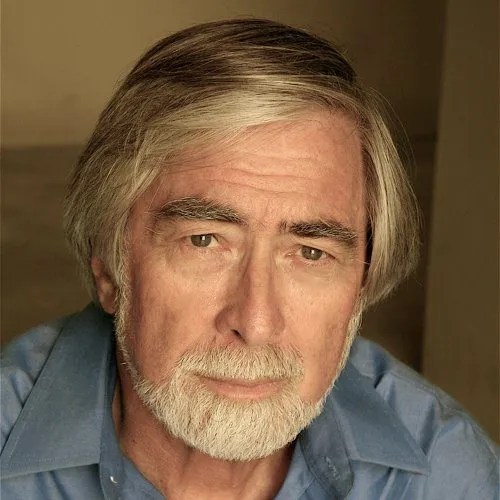
Robert Scheer, publisher of ScheerPost and award-winning journalist and author of a dozen books, has a reputation for strong social and political writing over his nearly 60 years as a journalist. His award-winning journalism has appeared in publications nationwide—he was Vietnam correspondent and editor of Ramparts magazine, national correspondent and columnist for the Los Angeles Times—and his in-depth interviews with Jimmy Carter, Richard Nixon, Ronald Reagan, Bill Clinton, Mikhail Gorbachev and others made headlines. He co-hosted KCRW’s political program Left, Right and Center and now hosts Scheer Intelligence, an independent ScheerPost podcast with people who discuss the day’s most important issues.
Editor’s Note: At a moment when the once vaunted model of responsible journalism is overwhelmingly the play thing of self-serving billionaires and their corporate scribes, alternatives of integrity are desperately needed, and ScheerPost is one of them. Please support our independent journalism by contributing to our online donation platform, Network for Good, or send a check to our new PO Box. We can’t thank you enough, and promise to keep bringing you this kind of vital news.
You can also make a donation to our PayPal or subscribe to our Patreon.