

Click to subscribe on: Apple / Spotify / Google Play/ Amazon / YouTube / Rumble
On this episode of Scheer Intelligence, host Robert Scheer and Les Leopold discuss Leopold’s new book, Wall Street’s War on Workers: How Mass Layoffs and Greed Are Destroying the Working Class and What to Do About It that describes how both political parties created the economic suffering that Trump feeds on. The critical question the book asks is: Did the nightmare of the world economy have to go this way? Or is it really a failure of capitalism? Or is it a failure of people manipulating capitalism?
The book’s two discoveries that help answer this question are mass layoffs and stock buybacks. Before Reagan’s and Clinton’s Wall Street deregulation, mass layoffs were rare and normally only took place during recessions. Les Leopold asks what happened, and provides an answer: “What happened was they allowed several things to take place; one was stock buybacks…to pay for those stocks buybacks, you layoff workers.”
The other change: mergers and acquisitions, and especially leveraged buyouts, which also leads to the mass layoff of workers. Leopold says this has changed the nature of politics. This shift has led to 20 million workers having gone through a mass layoff between 1996-2012. Ultimately, this discussion explores the effects of greed that rampant capitalism allows and feeds on — and the detriment of those who pay the price for it.
You can also make a donation to our PayPal or subscribe to our Patreon.
Credits
Host:
Producer:
Introduction:
Transcript
This transcript was produced by an automated transcription service. Please refer to the audio interview to ensure accuracy.
Robert Scheer: Hi, this is Robert Scheer with another edition of Scheer Intelligence, where the intelligence comes from my guest, in this case, Les Leopold. And he is intelligent, Oberlin College, Princeton University, graduate work. runs a, a major institute called the Labor Institute that for the last, I guess, 60 years or something, has been trying to educate us about the dismal science of, of economics.
And as somebody who did my own graduate work in that area, I always thought it was deliberately designed to be dismal because it would exclude most people from thinking about what they ought to be thinking about. How are they working and how are they getting paid? How are they being exploited? How are they being screwed or benefited?
And so it was kept to some experts. And then with the arrival of a lot of mathematics and econometrics, we can really leave people out with fancy algorithms and you credit the false swaps and collateralized debt obligations all of a way of keeping the public from thinking about who’s getting screwed and who’s doing the screwing, which is really the big thing you want to ask about an economy.
And the main thing I want to get at is political economy, which is something Les has spent his life exploring. and, and the reason that’s so critical is that American democracy is built on the conceit of an ever expanding middle class and ever more inclusive society, which would then empower farmers, workers, ordinary folks.
They finally let women in on the act of voting in the last century. But nonetheless, there was an idea that we all have to, the pot has to be expanding and we have to benefit. The new book by Les Leopold, and I’m very excited to say, this has to be his first interview, because it just came out today, I think.
I quickly got it on Kindle. There are a lot of other ways you can get it. You can get the hard copy or what have you. But it’s called Wall Street’s War on Workers. And the subtitle is How Mass Layoffs and Greed are Destroying the Working Class and What to Do About It. And I just want to, I want to throw it to Les, but I want to say The critical question is, this is not, you know, oh yes, we’ve always had capitalism, we’ve always had issues about who gets despoiled, and so on.
No, the thesis, the reason I wanted to do so much, do this book, and that I’ve, you know, very much learned from it, is it goes to the basic question. Did this nightmare of the world economy have to go this way, or is it really a failure of capitalism, or is it a failure of people manipulating capitalism, using their political power, to prevent what was the claim of a free Capitalist market and they in fact, in the thesis of this book, and I’m going to let, let’s spell it out is basically beginning in 1980 with the Reagan revolution, but very much expanded by Bill Clinton, with his deregulation of Wall Street, we actually sabotaged the expectation of a free market.
It’s irrationality. It’s properly functioning and we have something grotesque now and and in the course of his research and work on this issue for a lifetime, there are two principles that he is kind of the discoverer of. So I’m going to begin with that. What are those two principles?
Les Leopold: Thanks Bob. I really appreciate that lead in. In all humility, I think I’ve come across two discoveries that really help explain the mess we’re in today. Before that period of rapid deregulation of Wall Street in particular, mass layoffs were very rare. They took place during recessions, but not during normal times or booms.
And there were some recessions between World War II and 1980. But, When the economy was growing and employment was steady or coming down, mass layoffs were not considered. In fact, we have documents from corporate executives that say, you know, we’re embarrassed when we do a mass layoff. It’s a sign of our failure.
Well, we also have reports right around 1982-1983, where they start to say, you know what, we’re getting all this pressure from Wall Street and they’re forcing us to lay off people. We don’t like it, but we have to do it. So what happened? What happened was they allowed several things to take place that were controlled before 1980.
One was stock buybacks, which were limited to 2 percent of corporate profits. Now it’s 70 percent, now it’s deregulated, 70 percent of, 7 out of every 10 of corporate profits go to stock buybacks. To pay for those stock buybacks, you lay off workers. And the other, mergers and acquisitions, and especially leveraged buyouts, where a hedge fund or private equity company comes in, buys a company up with very little of their own money, borrows a ton, like 90%, and then sticks the debt onto the company immediately, immediately, then they let off workers.
Well, this is not a little problem. This is a big problem because it’s changed the nature of politics. What happened was there was a mass layoff database put together by the Bureau of Labor Statistics that ran from 1996 beginning Clinton’s second term all the way to 2012 and then the Obama, B.S. austerity, cut, got rid of it. 20 million people had gone through a mass layoff during that period. 20 million. That’s 50 or more people let go at one time. Imagine what that was like in a rural area. So our big discovery was we looked at the rural, we looked at Pennsylvania, Michigan, and Wisconsin, the blue wall states, and we found as the mass layoff rate went up, the Democratic vote went down in county after county after county.
And this was especially strong in rural, whiter counties. And they went from being maybe moderately Republican to gung ho Republican, or Democratic to gung ho Republican. One of the best examples of this, you go a little South and you get to Mingo County, West Virginia. Mingo County was the home of the coal wars.
Mother Jones spoke there. There was a vicious war going on between United Mine Workers and the coal industry in the early 20th century. Lots of people died and basically state and federal troops came in and occupied the place to stop the coal wars and to crush the union. Well, Roosevelt then got rid of the troops, supported the union and Mingo County became a stronghold of the Democratic Party.
Bill Clinton got 69 7 percent of the vote in Mingo County. Guess what Joe Biden got? 13.9%. It went from 67.9 to 13.9. So why did that happen? Which I’ll slide into the second discovery in a second. Well, you could say, there are two theories. The dominant media theory is, yeah, people got hit some hard times and then they basically became deplorables.
They became more racist, sexist, xenophobic, etc. Well, Mingo–
Scheer: You just used a word and your book goes into it, basically the two faces of Hillary Clinton, because she’s the one, tell us what she said about the, she had an explanation of the rise of Trump, really, why, why is there a, a faux dangerous right wing populism represented by this incredibly brutal capitalist. He was presented to us as the guy who wants to fire everybody, milk it for what it’s worth. But he’s able to tap into populism because there’s so many angry people out there. And Hillary Clinton dismissed half of them as deplorables and conceded at least half of them.
Tell us about that.
Leopold: Well, it’s very interesting. In a 2016 campaign, and it’s very relevant because she has two statements that are relevant to Mingo County, actually, she said, basically, she was trying to be sympathetic and to try to understand the Trump vote. And she basically said, you know, half of them, half of the Trump voters are basically beyond reach deplorables that are racist sexist, xenophobic, homophobic people. And in the second paragraph, that’s the one that got all the press. The second paragraph was, we got to understand these people because they’ve gone through hard times. But implicit in what she said was, they’re going through hard times, but it’s not on me that they’re becoming more deplorable.
That’s their problem. They shouldn’t do that. And of course, she got slammed by that. So what’s the best explanation for Mingo County’s collapse of the vote? It’s a white county, 97 percent white or something. Did they all become more deplorable between 1996 and 2020? Well, Mingo County, catch this, lost the most coal jobs of any county in the whole country. Went from 3300 in a population of 25,000 people, went from 3300 to 300. It lost 3000 coal jobs. So what did the Clinton, or anybody, do for them? What did Clinton do? What did Obama do? Well, Hillary Clinton had another line. She stuck her foot in her mouth again.
She says, we’re going to shut down a lot of coal jobs. And she said that, we’re just, we’re going to take your job away. But then in the second paragraph, again, she says, well, we need all this redevelopment and public private partnerships and we’ve got to create jobs. Well, none of that happened ever under the 16 years that Obama and Clinton were in office.
Here’s what happened. And if you want to know why the people there are angry, what happened was that they left it to free enterprise to come in and do its thing. So, what did they do in Mingo County? Free enterprise came in and turned Mingo County into the opioid prescription pill mill of America.
It produced more than one prescription per minute. Cars were lined up from all over getting their prescriptions made out and filled because they had a doctor that was just cranking them out. And basically, It was the opioid capital of the country, one of the little tiny drug stores with number 22 in the country in prescription, in prescriptions, population 25, 000.
So, it’s a little hard to expect that the ex-miners in Mingo County are going to reward the Democrats for getting a few jobs for basically drug pushers. This is ridiculous. So, we left these people, we hung them out to dry, and that’s why they’re rebelling. They were in the Democratic Party. They expected the Democratic Party to defend them, and then the Democratic Party let them down. That’s discovery number one. Discovery number two, was that. White working class people, in fact, have not become more deplorable in the last 20, 30 years. They’ve become more liberal. We have incredible data from these three giant voter surveys that have like 50, 60, 000 people answering these questions.
So, it’s not like what you see on TV before an election. We’re talking about serious, long heavy polling, where they interview people live, and what we found, we selected 23 questions that were extremely provocative, like, you know, should illegal aliens be, allowed to become citizens, should gay or lesbian couples be able to adopt children should, should homosexual sex always be wrong, Blacks should pull themselves up by the bootstraps like Italians and Jews did. These are really like provocative questions. Well, on the 23 questions on 13 of them, White working class people got extremely liberal and on the other ones, it was modestly liberal. In no case did they get more conservative.
The question about immigrants, should they have a path to citizenship? It went from approval of 33 percent back in 2000 to now it’s 67 percent approve that, immigrants. Illegal immigrants who pay their taxes and don’t have a felony and have been here at least working for three years should have a path to citizenship.
That’s way, that’s way to the left of the Democratic Party right now. That’s the white working class. When it came to homophobia, you know, should they be able to adopt kids, it went from 30 percent to 70 percent saying yes, you should be able to adopt kids. So why are we putting them in a basket full of deplorables?
=
The dominant, look, you know the media better than I do. The dominant narrative is that these people, yeah, got left behind, not because of Wall Street. They got left behind because of technology and globalization. You can’t do anything about that. And they become disgruntled and they become angry and they become MAGA people, et cetera, et cetera.
And they get basic, not only did Wall Street trash them, but we’re trashing them. We’re saying that it’s kind of all their fault, that Trump is all their fault. The other thing is–
Scheer: Let me just, let me just interrupt for a second because, you’re taking me to school here.
This is, to use Hillary Clinton’s word, really deplorable on the part of media people or politicians. Here you have people in the town, you know, the United Mine Workers, the Industrial Workers, the CIO eventually, but going back to John Lewis, this was the center of enlightened progressive unionism in America that changed the Democratic Party from being a racist party.
Everybody likes to forget around the Democratic Party that they were, their power base was the segregated South and the Republicans were far more enlightened on the need to deal with racism. And the thing that saved the Democratic Party is they could switch with desegregation from being dependent upon the South to being the champion of labor, to having very strong union support.
The hero was Franklin Delano Roosevelt. And just to join the different themes here, what Franklin Delano Roosevelt did, even though he also was a rich person. He, particularly with the influence of his wife, Eleanor Roosevelt, backed all of these regulation of Wall Street, the Glass Steagall Act and so forth, preventing using, the savings of people and so forth in a totally unregulated way of destroying people’s livelihood by buying up stuff, all the equity capital shenanigans were basically prevented by Roosevelt and then under Bill Clinton, Hillary Clinton’s husband, I would remind, started with Ronald Reagan, but Ronald Reagan, because he had the savings and loan crisis, wasn’t really able to get much passed in the way of deregulating finance. And it was Bill Clinton who got the Commodity Futures Modernization Act.
Before that, the Financial Services Modernization Act that destroyed Glass Steagall, destroyed Roosevelt’s legacy. And, and the irony is Lawrence Summer and, who was after all his treasury secretary and then went on to be head of Harvard and all that was a guy who personally profited from all this and defended this as all necessary to making this a more accountable society.
So I want to, we got a linchpin here, which makes your book compelling reading. And I’m going to tell people why they have to read this book, you know, buy it, read it, study it. The reason it’s compelling is it exposes what is basically the hoax of current American liberalism. And you mentioned MSNBC and so forth.
And that is to, they blame technology. Or celebrate technology, but then say, and the consequences: Oh, yeah, there’s a lot of ordinary folks that are going to get hurt. They didn’t go to the right school. They didn’t study the right program, let them go bankrupt bow, taking out loans and trying to get into some school where they can learn the new skill set and so forth and so on.
And that is just absolute garbage. What you point out in your book and document are two things I want people to take away from this. One is, that’s not why you have mass layoffs, it’s not automation, it’s not any of this, it’s the, to increase profit beyond any morally acceptable level for a group called investors who really are not taking any risk because they can game the system and they own the political system.
And ironically, there is a positive thing in your book. And that is that you don’t, it doesn’t have to be that way to be a successful economy because the most successful capitalist economy outside of China is Germany. And Germany followed a very different model, which is in fact, workers were, because there was such a strong labor movement in Germany, at the desk, at the table when decisions are made.
And they went, the optimistic chapter, I forget what it is, chapter nine in your book, where you say basically, it doesn’t have to be this way. And, and that in fact, if the Democratic Party was really enlightened, they would go, insist that industry be responsible and you not have these sudden mass layoffs to take people who aren’t content enough to be half a billionaire.
They have to become a whole billionaire and then maybe a trillionaire. So introduce us to the big, I think what is the big argument of your book is it’s basically, we can do something about it. It’s not just technology and automation and foreign workers and so forth.
Leopold: Let me just put another log on that.
Scheer:We’re trying to sell books here, so you got
Leopld Yeah, no, no, we’ll do our best. Okay. Wall Street’s War on Workers. Get it everywhere.
Scheer: Let me tell people why it’s not a bummer. It’s not the dismal science–
Leopold: No, it’s not a bummer, actually. It’s not a long book, and I think people–
Scheer: Oh, I was going to say that. Mercifully, having stayed up all last night, when the Kindle version came out, you know, reading it, yes, what, 220 pages or something? And well written, by the way, I want to say, and oh, let me just throw one other thing. You have this ingenious device, which I was unaware of until I read it, of introducing each chapter with the real life experiencen of ordinary folks basically around the school where you went to college at Oberlin and how this callous disregard for people in the name of efficiency disrupts people’s lives. I teach at the University of Southern California. It’s an issue right now on campus. You know, do we care about the people working there, including much of our faculty that doesn’t have tenure and so you have a lively discussion about who’s in the working class.
Well, probably 70 percent of American college education done by people that meet that definition of the working class, you know–
Leopold: And look, I wanted one of the, One of the absolute myths is this technology and, automation and globalization being, you know, just things you can’t do anything about.
And the other one that you hit on was, well, you know, you should get yourself educated so you can get into the high tech industry, right? And then you won’t go through mass layoffs. Well, guess what? Mass layoffs are going everywhere. In the last year alone, a quarter of a million people in these prosperous, booming high tech firms went through a mass layoff.
Since January 1, 40,000 more in the high tech industry have gone through mass layoffs. So there’s no place to hide. get it, you know, at the university, in high tech, in the newspaper industry. They’re in retail.
Scheer: There is no newspaper industry.
Leopold: Right, they’re gone. But the retail industry. Macy’s is going through a mass layoff.
And why is Macy’s going through a mass layoff? Well, they did a billion dollar, they’re only worth $5 billion. They did a billion dollar stock buyback, which means they took their own capital, went into the market, bought back their own shares, jacked up the price of the shares, which enriches the CEOs that get paid by…most of their income is from stock incentives, and of course, the investors, so-called investors, they’re not investors, they’re stock sellers, the time they’re buying and selling, they’re the ones that walked off with a billion dollars.
So that’s one, huge problem. But let me tell you this, the uplifting story of Siemens. I don’t know what it is. It maybe, you know, I’ve got a dark streak in me. The uplifting story has a dark streak as well. And that’s about the Siemens electronics company, Siemens Energy, which has 90, 000 employees globally.
And, it’s, it’s based in Germany. It announced 7, 000 layoffs back in 2020, and 1, 700 in the United States, and like 3, 000 in Germany, and the rest is someplace else. Well, the German workers have this thing called codetermination where they hold half the seats on the board of, board of directors.
The tie vote is the chairman. They don’t control. They don’t own that position, but, you can’t get elected chairman without them. So they have a lot of control, way more control than working people out here. In general, we were very fortunate to be able to interview, the Siemens International, the worker, Siemens Union, I.G. Mattel, Siemens person who works on their international issues for the union. And we expected him to tell us, oh, you know, when these workers get laid off, they have, you know, very good benefits. They’re going to get retrained. They’re going to have a, you know, two years worth of wages, blah, blah, blah, blah, blah.
He said, no, we stopped them from laying them off. I said, what? He said, here’s what we did. First, we investigated. It took us a year and a half of investigation to see whether or not these layoffs were even justified, right? We’re on the board. We want an explanation. And, meanwhile, people got older. Some of them retired, etc.
Then we got them to commit. Catch this. That there would be no forced layoffs, only, if only workers could only go voluntarily, in other words, you’d have to offer them a really good package, then maybe they’ll leave voluntarily, and of course, people that were near retirement, they’re the ones that would leave.
And this was the kicker. So there’s no compulsory layoffs. The second thing that they did was there were six plants that were going to go under in these little towns around Germany. They got the company to put a different product in. Right, they didn’t want to produce the product that was causing the layoffs, which were compressors for the oil industry.
They wanted to produce. So they said, okay, put something else in the plant. So they kept the 6 plants open. What’d they do in the United States? This is, this is a killer.
Scheer: Same company?
Leopold: Same company. 1700 in the United States. And many of the plants are organized by United Steelworkers. I got to interview some of the people in Olean, New York.
Southern tier, right above the New York border. Very rural, you know, MAGA country now because of years and years of mass layoffs there. So what did they, what happened there? Well, Chuck Schumer, this is his state, New York. He comes in, he gets very angry. Why does he get angry? He says, because they didn’t tell him in advance.
So he runs around, tries to get somebody else to come in and put something in the plant. Maybe something’s going to happen. And, 500 workers, meanwhile, are gone. 500 good union jobs, gone. And maybe, you know, a couple hundred will eventually get hired in some new company. Meanwhile, they’re gone. So he doesn’t, this company, Siemens, and its parent company, Siemens International, get 750 million a year in federal contracts, or is that 2 years? Don’t quote me on that, quote the book. Anyway, it could have been so easy to hold hearings on the contract, to go to the Siemens people and say, I don’t care that you’re a spinoff of Siemens, you’re Siemens, and we’re going to take this contract.
We’re going to start investigating this contract. You can’t be laying people off while we’re giving you all this money. Well, here’s what they did. Instead, there are 10 people at the signing ceremony for the infrastructure bill, right? 10 people are there. One of them is the president of Siemens USA, along with Schumer.
And she puts out a press release saying how wonderful this, this new bill is because it’s going to create lots of jobs. She just cut 1, 700 U. S. jobs, and she has the nerve to say that. But so the positive–
Scheer: I just want to say, because what I tell my students, you could check this out. The good thing about the Internet – first thing you should do is buy the book.
It’s called Wall Street, War on Workers, How Mass Layoffs and Greed are Destroying the Working Class, and What to Do About It. Bu t you’re hearing this discussion, okay? This is a real shock. This tells you in one sentence what the whole problem is with the Democratic Party, and why they don’t have the answer to Donald Trump.
Because they’re, they’re, they’re talking, oh, they’re the deplorables, and they’re awful, and they’re racist, and they’re, that’s not what’s going on here. We already heard that, no, these workers are not becoming more racist. No, they’re not deplorables on cultural issues. They’re, they don’t want to deport all the immigrants.
That’s a lie. That’s a slander. What we’re hearing is that in the so-called great, blue area of New York, that a, a solid, reputable company, that has, it’s a German company and Germany has to listen to the community, has to listen to the workers, has workers representative on the board. And they’re still in business and they didn’t lay off anybody in this country.
Thanks to, and frankly the Democrats as much as the Republicans, that whole structure has been destroyed and they can just come and say oh, we’ll do some kind of infrastructure We’re great guys. Meanwhile, 500 jobs are lost. You know, this is something when I say to my students Don’t take my word for it.
Don’t take, Leopold’s word for it. Check it out. Check it out. You can research it. You know, it’ll take you less time than when you find out what kind of shoes you should buy next time or something or where to get your hair cut. And, and the book is documented in detail. It’s solid. this guy has been spending a half-century covering this stuff.
And the reason you got to get it straight is otherwise, they’re going to let you to think, Oh, if we just go to war with China, because they’re stealing all the jobs, or we just hate people in India, because they’re, you know, doing all this high tech stuff, or we hate technology, we got to become a Luddite or something?
No. That’s not it. Choices were made by lobbyists, by money, for profit. And in Germany you had enough of the old social democratic system, whatever way they are on the political spectrum there. They had to make room for workers to be represented in the boardrooms to get the information and then decide, do we need to lay people off?
And that’s got to happen here with Amazon. It’s got to happen with Apple. you know, this is, and it should happen in China with Apple. I mean, those rights should be universal. That’s what I took away from your book. It’s a very positive, book in the sense that, you know, if you think it’s, oh, well, it’s just technology, even so.
There should be take care of your own people, don’t make them pay the price, but the book is arguing just the opposite. This is all done because you’ve got these pirates that run Wall Street that have been unleashed by this government and the person who opened that door wider than ever. This is me talking.
I wrote a book on my own, The Great American Stickup about this so I, I can document the political, I covered it. For the LA times, when Bill Clinton was putting this swindle through, I talked to him about it. I interviewed the people that govern. Oh, we’re going to make Wall Street more modern.There’ll be more people of color working there. It was all garbage. They even talked Jesse Jackson into maybe supporting it. It was just a wonder about these big scams and everything. And it was a big lie. And they gave Wall Street, you know, What it wanted and Wall Street went crazy and we had the housing meltdown and we’ve had these massive job layoffs And we have this incredible concentration of capital, which is a betrayal of capitalism. You know, Adam Smith, Ricardo, all the classical economists said if you have cartels, which they had, in, in England and France and everything, so you do that, you don’t have capitalism.
You don’t have the benefit of a free market and competition. So these people don’t favor competition. They favor opportunity for billionaires that are going to suck the blood out of the society. Okay, I’ll give you another, I babbled along too long, I’ll give you another 10 minutes.
Leopold: No, the way you’re pushing the book, I’d have you keep going for the whole time.
Scheer: Well, look, you know, I want to say something, you know, I know people don’t even read books very much anymore. unless they’re very gossipy or particularly oriented to some taste they have. but, you know, what you have done is make this stuff accessible. And I, I, I can tell you, I spend so many hours interviewing people.
It’s like, you know, Warren Buffett told us what Bill Clinton was doing, he said, all of these collateralized debt, all, all these phony things. He said, they’re financial instruments of mass destruction. That wasn’t Karl Marx. That was Warren Buffett. Okay. And, and I’m, I can show you the testimony of Lawrence Summers. “Oh, don’t question this.”
There was a wonderful, lawyer, Brooksley Bourne. She was head of her class at Stanford. She worked for big banks. She was headed to commodity futures, Trading Commission. She said, this is a disaster. This is unleashing these criminals and so forth. Lawrence Summers and Robert Rubin and all these people in the Clinton administration, where she was working, got her fired.
They said, oh, she’s spooking the market. Oh, the markets are there. We have to do this. This is what the world wants and needs. And they cost, you know, there’s one little statistic I’ll throw in here from the Federal Reserve. As a result of the deregulation of Wall Street, the housing meltdown, and the liar’s loans, which, you know, they were marketing, Oh, this will be easier for ordinary people to get houses because, they’re blocked by discrimination and so forth.
The main victims of this, was that, black, college graduates, black college graduates lost 70 percent of their net worth. They’re worth, not their annual income, and Hispanic, over 60%. That was the group that, those were the groups that were exploited with the liars loans, and they didn’t have family money to bail them out.
You know, and so, you know, you think about it, you watch the Democratic Convention, and they show you, oh yeah, we love the unions. They don’t love the unions. They’ve done their best to destroy tthe effectiveness of unions.
Leopold: I’ll give you what I’m trying to do here is I’m trying to inject the issue of mass layoffs into the political arena.
And I’m hoping, maybe hoping against hope, that there’ll be an understanding, the kind of understanding that I think, like, Sherrod Brown has. Why is he so successful in Ohio? He, he, he actually wrote a series, I just found this out the other day, called Wall Street’s War on Workers. He wrote a series of essays a few years ago, and where he talks about stock buybacks and all these things that Wall Street’s doing is absolutely screw the working class.
These things could be stopped. You could outlaw stock buybacks. Get it back to 2%. You could put a lid on leveraged buyout.
Scheer: Tell about the 2%.
Leopold: Yeah. Let me back. In 1980, you said it beautifully. When Roosevelt came in, they put the screws to Wall Street because they knew Wall Street’s machinations.
All the cheating and lying and stock manipulation led to the 1929 crash. So they, they put a lid on it, they rank it, you know, you basically couldn’t sneeze on Wall Street without, having to behave a certain way with a certain regulation and, you know, the income in Wall Street up until 1980, your basic income for an executive on Wall Street and executive in private industry was the same.
There was no premium for working on Wall Street. Anyway, by the time that the regulation started, one of the, one of the key, one of the first things that happened was, there was this, regulation that said no more than 2 percent of a corporate profit, could go to stock buybacks. Stock buybacks are a form of stock manipulation.
You’re not supposed to, all the classical, neoclassical, economics is all about how individual actors are not supposed to impact the price of anything, right? Competition and the market is supposed to be free of manipulation. Well, stock buybacks are designed to manipulate the market. Well, they allowed a little bit of that, 2%.
Then they took the lid off. And that was literally, as, Professor William Lazonik calls it, the license to loot. They could now take as much money as they could out of the company and move it to, move it into the market, buy shares, and then disappear the shares. Now the company has less shares out there, each share’s worth a little more, and The people who know about this sell their shares. The CEOs get richer. And at the same time, by the way, these leveraged buyouts are taking place and they’re connected because they change the way the CEOs are going to get paid. If I take over Scheer Intelligence, we buy them out. And I want Bob Scheer to do the bidding of investors instead of his stakeholders.
We say forget about those stakeholders, I’m the investor. I bought out the company. You do what I say. You know what I’m going to do? I’m changing the way you’re getting paid. No longer salary and bonuses. You’re only going to get paid primarily with stock incentives. Well, what’s Bob Scheer going to do?
Unless he’s a philanthropist, he’s going to try to raise the price of the stock. That’s the way he’s getting paid. The best way to raise the price of the stock is stock buybacks. So the, the American industry now, this is hard to stomach, but the product of American industry is stock buybacks. Everything is designed to create the cash so that you can do stock buybacks to enrich the stock sellers, the stock so-called investors and the CEOs and top offices. This is happening in company after company, after company, you find a mass layoff. I ask everybody to do this. When you hear of a mass layoff quickly, go to the internet and Google that company and stock buybacks.
And you’ll see six months before three months before they’ve done. Tons, millions, and sometimes billions of dollars of stock buybacks. They’re laying off the workers to get enough money to pay for those stock buybacks. You know, just to take you back to the early 80s, and you know, you’ve done a bang-up job helping the whole world understand this transformation, by the way.
Rastankowski, remember him? Chairman of the, Ways and Means Committee. Democrat. In 1986, he says, hey, you know what? These leveraged buyouts, sticking all this, this debt on the company is unfair to the taxpayer. Because it’s tax deductible. The interest payments on loans by the company is tax deductible.
So you’re lowering a tax bill. You’re putting billions of dollars onto the books of corporations. You’re lowering the tax bill at the same time, of course, you’re laying off all these workers. So he tried to stop it. They basically ran him out of office. They blamed him for the 1987 stock market crash. So I’m going to make a bold statement here.
The political party. It has the guts to take on Wall Street and stop stock buybacks, stop leveraged buyouts, has the guts to stop mass layoffs, is the party of the future. And any party that refuses to do that is going to lose out to the authoritarians. And my big fear is that if we don’t do something about, look, if a democratic society.
Cannot provide a modicum of job stability for working people, Democracy doesn’t seem all that important. Why should I bother to vote? What I really have to worry about is the plant 500 workers just lost their job and only in New York. We’re all running around looking for a job at the same time.
How many of us are going to get a good job? How am I going to feed my family? How am I going to pay my bills? That’s what I’m worried about. You want me to get all upset about, you know, somebody trying to drain the swamp or whatever. I don’t give a damn about that. Matter of fact, Mike Lux, the Democratic pollster, right? Probably one of the key democratic pollsters, did a series called Factory Towns. And in that his conclusion was the following. He says this, he’s a Democrat, he says this, he goes, The working class could care less about this woke stuff. They would hardly even notice it if the Democrats gave more of a damn about the economy.
Replace the word economy with mass layoffs. That’s the future. This thing has gotten out of control. We’ve had 40 years of deregulation, 40 years of Wall Street running while dominating the political system, getting whatever it wants, having both political parties competing for Wall Street cash and competing for jobs after they retire.
You know, it’s very nice to get a fat job on Wall Street doing next to nothing. We got to stop that. And it’s going to, you know, it’s not going to happen from the top down as Bob, you know, full, full. Well, one of the hopeful signs is, you know, autoworkers with Sean fame, having the guts to take on the big 3 and having the guts to speak to the working class as a whole.
He said the other day. I love it. He goes, billionaires should not exist. Now that’s something you would say. He said that. And it’s about if he could just begin to build, not just organize the unorganized, but build a political movement where any of us could join, that would start attacking the whole idea of mass layoffs.
They’re not inevitable. They, you know, they’re not an act of God. They don’t come just, just out of technology or globalization. They are willful acts. By Wall Street players, designed for them to make more money and the hell with the workers. Just put them out in the street. We don’t care.
That’s got to change. And I, I’m hoping my book, I’m hoping against hope, that my book, Wall Street War on Workers can, put this into the public, debate. Also follow me on Substack.
Scheer: You know, it won’t. You won’t get into the debate. And you’re not alone. I, I, week after week after week, I, I interview people who’ve written really important books. Yours is certainly right up there. and I do my best. First of all, I read the books. I learn. I mean, seriously, I mean, I, you know, it’s what I like. I’m gonna be 88 years old in a month or so. And, I’m still going to school. I’ve learned reading your book this week, you know, we had some technical difficulties getting it going, but it was actually a joy to read.
I learned, I love, I like figuring out what’s going on, but that’s not how we do education, but it’s interesting, by the way, you mentioned United Auto Workers, I kind of, not only kind, I welcome the fact that they’re organizing on our campus, they’re organizing faculty. Graduate Students and so forth. I think it’s terrific, because what we really have among the intellectuals, the media and so forth, we no longer have an independent thinkers and scholars in the main, we have careerists who are really function as courtiers for the court, for the court of Wall Street, of capitalism. They get grants, they get money, they play the game.
And what is it, the typical journalist in America is now working for a hedge fund or a billionaire. they’re not going to go to your issues, you know, maybe once in a while, but they’re not, they don’t want to—
Say, this is the whole thing about the deplorables. If they can all blame this on angry, uneducated people, you know, those people who didn’t go to college.
Oh, they’re only high school graduates. And therefore, if they didn’t get the skills so they can’t function right now, I can tell you, I’ve run into a lot of college graduates. Who have trouble getting a decent job and paying back their tuition. And, and so this is a
Leopold: So what do we do, Bob? What do we do?
Scheer: First of all, don’t, don’t underestimate the importance of advocacy, of alerting people. Part of education, after all, it’s not just this, the part of the Socratic method is, yes, we have to examine different things and logic and fact, but we also have to care. And, and the caring part is you have, everybody knows that we have great instability in our society.
Everyone knows that, but they’re blaming all the wrong people. You know, first of all, they’re blaming each other. So half the country thinks it’s something called Democrats, which they, they don’t understand. They think the Democrats are, you know, idealistic. liberals who just want to help poor people or people of color.
It’s a lot of garbage. The program of Bill Clinton and deregulating warships, as I told you with the statistics for the Federal Reserve, hurt, black people and brown people more than any other group. They were the prime victims of the liars loans. That, that’s just a factual matter. And, so there’s a fantasy that somehow, this is all the problem of a disgruntled population that doesn’t work hard and doesn’t want to work hard and is not smart.
It’s all crap! You know, but why does this, why, I’m addressing a question in relation to your book because you’re, we have a good test case now. You’ve written a very accessible, you know, I think you, one cannot deny it. If you want to deny it, tell me what’s wrong. Do the research, challenge it. I suspect your book won’t even be reviewed. Okay.
Leopold: I’ve got one review so far.
Scheer: Yeah. Where?
Leopold: In a labor journal.
Scheer: Oh. In a labor journal. But I’m not singling you out. I can tell you, book after book after book that I review here. And I’m not just picking some, you know, I picked books that have come highly recommended by people who know the field and everything.
That’s how I heard about you. And, you know, and I’m not interested in just stacking it to things that I already know. Otherwise I don’t wanna read. All these books, if I’m not going to learn anything, and I think you educated me. Let me tell you what I got out of this book. Okay? I fall for the trap that, we’re losing jobs because of foreign competition.
We’re losing jobs because, these jobs now require a higher level of education. You know, I, I just fall into that, you know? Oh, yeah. The fact of the matter is it’s garbage. It’s absolutely garbage. And, and your point about, you know, why are we having these, layoffs and a stock price, this has nothing to do with efficiency.
It has nothing to do with effectively using technology. It has nothing to do with workers not being prepared, for modern jobs. that’s a lot of crap. I mean, for instance, in China, You take people off the farm, mostly women that used to not be highly regarded in the workforce. They seem to do very well in the Apple Foxconn plants.
They should be paid more. They should have the right to have unions. That’s the human right. We’re not advocating for Chinese workers, you know, well, why don’t we? Because we don’t even respect it here. We don’t put unionization, the rights of workers, the right to object to how you’re treating the right as the German workers did to be represented on these boards when they’re making decisions to get the information.
So we don’t talk about workers rights as a fundamental human right. But for most people on this planet, the right to speak out about your working conditions and how you’re treated and when you get hired and when you get fired is the most fundamental human right. And without that, you end up not eating and you end up, you know, taking drugs.
That destroy your life, you know, and so, okay, we’re running out of time. I’m going to let you have the last literal minute. I can’t go past 50 minutes, but I want to say I, I’m not hoping that the book doesn’t obviously I would like to be wrong. But I’m telling you, the people who decide on what’s gets reviewed and run even the good outlets and everything are basically people who find it easier to get their cut of the action. They get grants from the very foundations that are set up by the people who are ripping us off. I mean, it’s so obvious, but you bring it up. Oh, that’s pretty old fashioned. But, I mean, John Rockefeller, John D. Rockefeller, and I interviewed Nelson and David Rockefeller, I go back a little bit, not quite to John D., but those people would really be embarrassed, as Warren Buffett has pointed out, they would be embarrassed to do the scams that are being now done in the name of enlightened liberalism and capitalism, that we’re witnessing.
Give you the last minute.
Leopold: Oh, look, first I want to say, I have, I owe a big debt to those laid off Oberlin workers. 100 of them got trashed in the middle of COVID. And, for you know, it didn’t have to happen. It was the absorption by the administration and the board of this Wall Street ideology that people are just numbers.
You just turn it into a dollar number and then you get rid of them whenever you want to. Their human stories moved me and it raised the question of. Is this just a one off situation or is mass layoffs really become such a big deal that everybody does it Well, it’s become such a big deal and everybody does it and like you said so well, it’s not an act of god, it’s not trade.
It’s not you know, tech new technologies It’s the willful acts of wall street and my hope the reason I’ve written this thing and even though I know that, you know, the New York Times is probably not going to review it and it’s going to have, it’s going to have to travel more slowly on its own is that people need this information in order to build a movement and the movement that has to be built centered on labor, including all the other groups that want to participate has to have a target.
The target is Wall Street’s cause of mass layoffs. I think you can build a movement around that. I can talk to any worker anywhere, a Trump person, a MAGA person, doesn’t matter. I talk mass layoffs. We have a conversation. I work with steel workers. We asked how many people went through a mass layoff. Some people, almost everybody in the room, some people had gone through several.
This is their lives. It’s upset. It’s ripped them apart. They want to talk about it. They want to do something about it. And I just encourage all the listeners to really think about what we can do together to stop this Wall Street ripoff. We have a target, we have to build a movement, we have to stop, as you said, splitting ourselves up in a zillion different ways.
And we certainly have to stop blaming white workers for being something they are not. We can build a movement, and if this is my Little contribution to it, I hope it makes some difference and I hope that your show Gets heard and all the great stuff that you’ve written about and all I mean, you’re actually older than I am so I have to respect my elders. You’ve made a difference and I hope the rest of us can learn from that and make a difference too.
Scheer: You know, let me respond to that in a way.
You know, Franklin Del, I was born in 1936. My father lost his job in the depression. You know, he was a machinist on garment, big machines, mostly German made. And, I went through that whole time. And, and when Roosevelt died, we all cried. I was in the streets in the Bronx. I haven’t, we haven’t had a leadership like that since, of any kind. And the fact of the matter is We shouldn’t even be talking about this. That is unbelievable. Unbelievable. I thought, I, I, you know, there was John Kenneth Galbraith wrote, wrote a book, a great economist, and he wrote a book called the Affluent Society. And in that book, he said, all these old struggles about workers and Wall Street, that’s a thing of the past.
And he was an honest fellow. And his son is a great economist, right now. But, you know, the fact of the matter is, that’s the way it should have been. As you become more affluent, you can do things in a kinder way. You don’t use child labor. You don’t, you know, you don’t use slaves, right? Presumably, you can, when, when, if you don’t need a group of workers, you can pay benefits that keep them going. Ironically under Donald Trump, you know, I have relatives and so forth who lost their job because of the pandemic. And Donald Trump doesn’t get enough credit that he was able to what? Triple the unemployment insurance that you got paid. So suddenly, you know, you lost your job, but at least everybody, some people, you know, who have their own foundation grants, put that down.
It’s inefficient. There are people giving up their jobs because they’re getting unemployment insurance. Well, but, you know, the only reason we didn’t have riots in the streets during the pandemic, right, is because, people could, you know, there was a freeze on. Rent increases and, and so forth. So, you know, just a, there’s a bigger point that the very fact that we are still discussing basic rights of workers or the idea of a mass layoff, a mass layoff is an absurdity.
You know, you didn’t anticipate, you didn’t know changes, or you’re doing it for the stock price. But even if it were justified economically, given that your commitment to a town where you’ve been for a hundred years, given your commitment to these people, given your commitment to social stability, which after all, democratic, liberal politicians should have.
Sharon Brown, I’m glad you brought him up as a rare exception, in this regard. You would think this is just common sense. And then the people who are now, let me conclude on this, the people all upset about Trump, They created Trump. And I don’t mean just by celebrating him as a media figure. They did not attend to the pain out there of people they were supposed to be representing.
These unionized workers or people struggling to get by, they betrayed them. And yes, now you have the Right wing populists, you know, after all fascists also had populism. Hitler gave us the Volkswagen, blah, blah, blah, you know, and this is serious.
This book addresses the key question, really, why are we such an unstable, scary society right now? And the key is Wall Street Greed. The book title is Wall Street’s War on Workers, How Mass Layoffs and Greed are Destroying the Working Class, and What To Do About It. It’s a must read. It’s only 220 pages.
I’m going to sign it because it’s not that big a commitment. It’s out now, this week. And please, read it. Let me also Thank you for being here, but also thank Christopher Ho and Laura Kondoragian at KCRW, the very good NPR station in Santa Monica, for hosting these shows. Joshua Scheer, our editor, who forced me to read this book in time to do this and get it done.
Diego Ramos, who does the introduction. Max Jones, who’s our video editor, who will make it available. as widely as we can. And the J. K. W. Foundation in memory of Gene Stein, a writer, a public intellectual, and yes, a child of a wealthy family who actually chose to give back, which is the model. Okay.
See you next week with another edition of Sheer Intelligence.
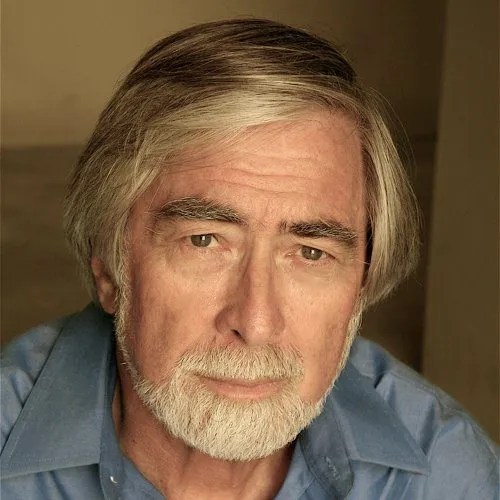
Robert Scheer
Robert Scheer, publisher of ScheerPost and award-winning journalist and author of a dozen books, has a reputation for strong social and political writing over his nearly 60 years as a journalist. His award-winning journalism has appeared in publications nationwide—he was Vietnam correspondent and editor of Ramparts magazine, national correspondent and columnist for the Los Angeles Times—and his in-depth interviews with Jimmy Carter, Richard Nixon, Ronald Reagan, Bill Clinton, Mikhail Gorbachev and others made headlines. He co-hosted KCRW’s political program Left, Right and Center and now hosts Scheer Intelligence, an independent ScheerPost podcast with people who discuss the day’s most important issues.
