

Click to subscribe on: Apple / Spotify / Amazon / YouTube / Rumble
Paralysis from the chest down as a result of serving in the U.S. military during the Vietnam War may sound like devastation beyond reconciliation, but for Ron Kovic, it became a transformative and politically enlightening experience. The two-tour veteran amplified his activism a few years after being discharged from the army with honest and insightful writing about what serving in this war was truly like. His best-selling memoir, “Born on the Fourth of July,” was published in 1976 and later was made into a film adaptation directed by Oliver Stone.
He continued his activism, most notably with his second book, “Hurricane Street,” following his nationwide organization of the American Veteran Movement, which fought for improved conditions in VA hospitals. Akashic Books recently published Kovic’s third book in his autobiographical trilogy— “A Dangerous Country: An American Elegy.”
In this book, Kovic explores his realization of empathy for the enemies he had been trained to hate and how it was the first step in the development of his anti-war position. “In the intensive care ward in Da Nang, days after I was wounded … They brought a wounded Vietnamese gentleman, a man right across from me. They told me he was a Viet Cong. So I had the enemy directly across me. How ironic, how strange. And he had been wounded severely and he was literally fighting for his life, as I was at the time. We were across from each other. And I remember looking at him and, I didn’t see the enemy anymore that I’d been taught to hate, to kill.”
He relates his experience to what is currently occurring in Gaza and Israel, “…We may not be sending troops to Ukraine; we may not be sending troops right now to Gaza, to Israel. We may not be sending our young men as we did in Vietnam but nonetheless, we provided tons of ammunition, bombs, bunker busters. Many of those casualties happening just the other day are consequences of our own country’s involvement, our own country’s contributing of these violent weapons of war and so we continue. I think we are dangerous in this world, dangerous to ourselves right now.”
Kovic wonders if the “average citizens who vote to go to war, in these different polls that come out before any war is ever fought … really know the true consequences of [what a] war does,” and hopes his books can trigger an awakening in the American public about what a danger this powerful country has become. Ron Kovic joins Robert Scheer on this week’s episode of Scheer Intelligence to discuss the third installment of Kovic’s books about the dangerous culture of war profiteering that has taken root in American society with forever wars that serve no one but the war machine.
Credits
Host:
Producer:
Introduction:
Transcript
This transcript was produced by an automated transcription service. Please refer to the audio interview to ensure accuracy.
Robert Scheer: Hi, this is Robert Scheer with another pop edition of Scheer Intelligence. And, there’s no question about the intelligence, but it’s the experience of our author, Ron Kovic. A Dangerous Country is his new book, the third in this trilogy about the Vietnam War, his own experience.
Everybody must know, or should know, Ron Kovic through his incredibly important, I’m going to leave it to the New York Times. His first book, “Born on the Fourth of July,” and the New York Times, which gave it two rave reviews at the time, said, quote, The most personal and honest testament to the published this is far by any young man who fought in the Vietnam War.
And what is so remarkable about Kovic’s writing is that whereas one is perfectly prepared to forgive him of occasional lapses into bitterness, self pity, or excess of rage, he retains the most extraordinary self control throughout. He very patiently, meticulously, unselfconsciously defines the sort of background he came from.
Only by understanding Kovic’s working class credentials can one begin to comprehend the depth of betrayal he has every right to feel. And that, I think, does summarize the Ron Kovic I met quite early actually before this book came out, and, I don’t want to lose track that we’re here to discuss the third book in this trilogy, the second.
The first book was the definitive book on being in the war. It’s right up there with All Quiet on the Western Front, but it’s got the personal element. And it’s one of the, I would argue, the greatest, critical war book of all time. And then you had Hurricane Street, which was about what happened to returning veterans and their fight for decent treatment.
Now this book, I want to hold it up for the people, check this out on video. But, it’s called A Dangerous Country,: An American Legacy. Elegy.
Ron Kovic: Elegy.
Scheer: Elegy. Elegy. And it could be legacy. And, there’s a quote from Bruce Springsteen, Ron Kovic is one of the America’s great voices on war and what it does to the body and soul.
His story is as timeless and tragic as the country itself. Those words are from Bruce Springsteen. And why don’t we just begin by how you first met Bruce Springsteen and, people can go check on YouTube or somewhere, remarks you made when he was given the Kennedy Center Award. It was very touching.
When we post this, we can show a clip, but it’s interesting because, actually Bruce Springsteen is someone who has reminded us in his own music, very powerfully that we do live in a dangerous country, the current book that we had discussed, but talk about your connection with him.
Kovic: I met Bruce for the first time at the Sunset Marquee Hotel, right off the Sunset Strip in Oklahoma in L. A., and the first attempt to make Born on the Fourth of July as a film with Al Pacino at first, had fallen through, and I didn’t know if they were ever going to, I had been working with Oliver Stone, and I didn’t know if they were ever going to attempt it again, and I felt a bit disheartened and lost. I left my apartment that I was living in and I decided to check into the hotel.
I had a friend who recommended it, said it had a refrigerator and a stove, and it was an interesting place. It had a lot of musicians, a lot of rock and roll musicians, in fact. But I, chose it because of the location, and it was right off Sunset Boulevard. Anyway, I got a room there and I was determined to work on another book and, I would write every day for a couple of hours and then I’d leave the room and I’d go to the swimming pool, there were always interesting people around the swimming pool. On one particular day, there was a young man swimming in the pool back and forth, doing laps, and he looked familiar to me, and there weren’t that many people at the pool that day, just this young man swimming vigorously back and forth, and he finally got out of the pool, and I recognized him from having been just very recently on the cover of Time and Newsweek Magazine, both, I think, in the same week. It was Bruce Springsteen and he had broken through in a very big way.
Everybody, people knew who he was prior to that, but this was quite a bit of coverage he had just received. And I went up to him and I said, you’re probably,
Scheer: You were in the wheelchair though. You rolled up. Yeah.
Kovic: I wheeled up in my chair. Yes. I was in a wheelchair there for years, having been paralyzed in Vietnam on my second tour of duty in Vietnam in 1968, January. Anyway, I wheeled up to Bruce, and I said, you probably don’t know me, but my name is Ron Kovic, and I wrote a book called Born on the Fourth of July.
And he looked surprised and he said, I just read that book. He said that he had been on a cross country drive with a friend of his from New Jersey to California, and they had stopped off at a small drug store in, where was it, Arizona? I think it was in Arizona, in the middle of nowhere.
He had gone to the bookshelf or the book rack, and he had seen and picked up a copy of my book, Born on the 4th of July, and he said he had read it, he could not put it down, and he had read it all the way to Los Angeles. He told me it was one of the most powerful books he’d ever read.
I was very touched and I thanked him. He invited me to hear him perform. He was going up to San Francisco in a couple of days and he was going to perform live at the what was the name of the arena? Winterland, I think.
Ramos: Winterland. Yeah.
Kovic: Winterland Arena.
And Bill Graham was still alive back then and Bill Graham was promoting it and setting the whole thing up. But what happened about two or three days later was, I opened up my hotel room door. I had been writing again in the morning and I decided to go to the pool again. But as I opened the door, several albums and a couple of cassettes fell down that had been placed up against the door.
And I picked up one of them and they had been left there by Bruce and he had signed the album, and the album said this is my work, my music and I hope this touches me as much as your book touched me. And I was just really I was really floored, I was really moved by that and I thanked him and a couple days later he left. Long story short, I eventually decided to fly up to San Francisco. I got a room at the Holiday Inn on, I can’t remember which street, but I got a room at the Holiday Inn, and I kept going to the Springsteen concert at the Winterland Arena. I remember the name of it now, at the Winterland Arena, which I don’t think it exists anymore.
And as I said, Bill Graham was promoting it that night. So I had heard a lot about him, Graham being quite legendary as I had heard about Bruce as well. And so I went that night. I let Bruce know that I was there and he immediately, I found him to be such a sweet, kind person inviting me backstage.
There was hardly anybody there. This was just prior to the beginning of the concert. And, we just began to talk and he was interested in knowing more about Vietnam veterans. And, eventually, at the hotel, he was at the hotel several times, he used that hotel when he was in L.A. throughout the years, and, at another occasion, I remember him inviting me to see the screening of, what was it, Apocalypse Now movie, and I remember Bruce driving his car, myself sitting in the front seat, and his girlfriend at the time, I believe her name was Joyce.
This was prior to Bruce getting married, but he did not, this was one of his girlfriends at the time. And she was riding in the backseat with my wheelchair on top of her. And we made it to the screening and we watched the screening. When it was all over, we ended up at a Denny’s restaurant that night in LA and we continued our conversation.
It was great. And so I met him on Sunday. Also, one other thing I want to say, he asked me if I could take him down to, I told him about a veteran rap group that they were having outside of the VA. This was in Venice. I encouraIged him to go down, told him about it, went down with him and he joined a Vietnam veterans talking about the difficulties of adjusting after the war, the homelessness, the drug problem, the alcoholism, those many veterans who ended up in prison, what happens to those who come back fromwar, this was not the glory of the romance of war. This was the truth, the reality of what war does to human beings. And to go back to my latest book, A Dangerous Country in American Elegy, I wanted people to know what war did, and I think Bruce talked about how this book represented what war does physically, emotionally, psychologically, spiritually, how it, in many ways, destroys, our faith and it wounds us on many different levels.
I wanted people to know what war was about, the consequences of these decisions to go to war.
Scheer: That’s what I want to get to here, Ron, because we have war around us all the time. We just had a very large number of innocent civilians killed by American ordinance made by Boeing, part of the military industrial complex, another product.
And one would have thought, as one thought with a great book like All Quiet on the Western Front and other, the few books that really capture what war is about, and as I say, I think yours is right there at the top, your original one. You would have thought there’d be a stronger antiwar movement today, but we have the weakest antiwar movement.
I know you go way back to the beginning, when you came home. And it’s really quite sobering. Now, we have had demonstrations on the campuses around what’s going on with Israel and Gaza, and that’s encouraging. But nonetheless, our country, and I want to get to the third book, A Dangerous Country, I want to get to what’s dangerous.
About this country, and your book lays it out for people because that’s what we’re here to do. I think Bruce Springsteen has enough recognition, but I appreciate what he said. But, the fact of the matter is because we don’t have a draft, and because we have a lot of modern equipment that sensibly can inflict harm without using people like yourself, a Marine Corps rifleman, to actually shoot people, they come in with a big bomb that wipes out two blocks of housing and the people who live in it, and so forth.
Why did you pick this title, A Dangerous Country? And are you talking about the good old USA that, as you point out in the first part of this book, because it’s your diary. And when you were that innocent soldier in Vietnam, your belief in the country, your patriotism, your support for it, and so forth.
Is this a coming home again, finally, and recognizing what your home is? A dangerous country?
Kovic: Yes. It’s about America. It’s America being a dangerous country. But that’s not how I felt when I was a young man writing that Vietnam diary, the first of A Dangerous Country: An American Elegy, that diary was to represent, not only my experience, my innocence, my lack of understanding, my ignorance, if I could say that, going into the, conflict, joining the Marines, wanting to be like my uncle Jim and my uncle Dick, who both served in World War II in Korea.
And, being so born on the 4th of July, that’s my real birthday. Being proud of being an American Cub Scout, Boy Scout, Little League, Americana, wanting to serve my country, inspired by John F. Kennedy’s inaugural address, asked what I can do for my country, not what my country can do for me.
And I belived them. I trusted that they were telling me the I can remember when I was a boy I found a copy of the song, Exodus by, if I’m pronouncing the name properly, Frenchy and Tyser, was it, who, and I remember playing this song about Israel and weeping, having tears come to my eyes as I heard the song, I played it again and again, and I remember, being very sympathetic, empathetic to Israel and to all that they had been through.
But, what’s happening now, I think, is it’s very difficult to me, and you talk about the United States, we may not be sending troops to Ukraine, we may not be sending troops right now, to Gaza, to Israel, we may not be sending our young men as we did in Vietnam, but, nonetheless, we provided tons of ammunition, bombs, bunker busters, many of those casualties happening just the other day, happening in are cosequences of our own country’s involvement, our own country’s contributing, of our own country’s contributing of these violent weapons of war and, so we continue. I think we are dangerous in this world, dangerous to ourselves right now.
And we need to begin to change. We need to move in a different direction.
Scheer: No, I don’t want to interrupt you. I think, this is what I want to get to, because you’ve devoted your whole life to it, and it’s good to see you, in fit form. I know it’s not easy, being in that wheelchair.
I met you, oh, God, a half century, more than half a century.
Kovic: Seventy one. Seventy one.
Scheer: Oh boy, that’s a long time. Memorial Day.
Kovic: Bob, on Memorial Day of all days, you and I met on Memorial Day. We marched with the Vietnam veterans against the war together. You were younger. I was younger.
Scheer: Yeah, just to put it myself in there. So when I met you, I had gone to Vietnam as a journalist, a couple of times and so forth. So we had a connection because this is before the book, we were really talking about the whole experience, but remind me of what we were actually talking about then.
Kovic: We participated in the march. It’s the very first day I met you. I remember that clearly, half a century ago, over half a century ago now. And we ended up in the Westwood, the graveyard. They were digging graves that very day. Perhaps for young men who were coming back from Vietnam, we were still protesting against that war.
Scheer: There were flags all over.
Kovic: There was a sea of red, white, and blue. I can remember it clearly in front of the gravestones: red, white, and blue. It was quite a dramatic memorial day as I think back to it. And many of the veterans against the war who served there came back who eventually turned against the war that he had been sent to fight in, they stayed for a while and then they left, leaving you and me , you know, in the graveyard, quite, quite symbolic. And, we ended up having a very important, interesting conversation that day in the graveyard in Westwood, on Memorial Day, over 50 years ago, it’s remarkable, all those years that have passed, and I told you about what I had been through, pretty much the story of Born on the 4th of July, the story of A Dangerous Country; an American Elegy. How I had grown up, so patriotic and so believing, without question, that my country could do no wrong. But going 13, 000 miles, being in Vietnam not once, but twice, the first time 13 month tour of duty and the second, I lasted only a couple of months. I was wounded, I was shot, through the right foot, blew out the back of my heel; shot to the, right shoulder, collapsed my right lung and severed my spinal cord, paralyzing me from my mid chest down and I’ve been, paralyzed from my mid chest down ever since. But I just want to say that, it was a very painful education, but it was an education for me.
I was very stubborn, very committed to what I believed in. And, it would have taken something very powerful to move me, to change me, to awaken me, to begin to speak out against the war. And I did. There were several moments, first of all, being in the intensive care ward in Da Nang after being wounded in January of 68, seeing the wounded all around me. An American pilot next to me, dying right next to me as they, shocked his heart trying to get his heart to be beating again, just, being witness in that intensive care ward.
Scheer: But Ron, you’ve also, let me just say, because we want to get back to this book, where you’ve been witness to this country ever since you have opposed subsequent wars. I happen to. visit you in the spinal care center in Long Beach where there were people who’d come back from Iraq, some from Afghanistan, wounded.
But I want to take it to this larger picture about our country, a dangerous country. I don’t want to put words in your mouth, but I have read the book. And what you’re really describing is a possibility that violence is us. And that, we need war, and we… we are, you know, soon after you went, Martin, in fact, it was the year you went, in 67, right?
You went to Vietnam.
Kovic: Very true.
Scheer: Yeah, that’s when Martin Luther King gave his speech at Riverside Church. And he said, he called this country, he said, my country is the greatest purveyor of violence in the world today. Those are powerful words. He said, how do I tell a young kid in the ghetto to shun violence when my country is the major purveyor of violence in the world today.
If you look at this modern world, yeah, we could talk about Russia and the Ukraine, we could talk about a lot of things, in the world. But the fact is, consistently now, And since that time of, going back to after World War II, when we thought we would have peace, in fact, we have been at war constantly.
And this, you know, what’s going on in Israel and Gaza now is financed, paid for, the munitions are coming from our country. So please get back to this book now. What was the message you’re conveying in a dangerous country?
Kovic: Say one other thing, but I did mention Israel, did mention Gaza, but I just as strongly oppose, what, Hamas did crossing the border and killing innocent students who were simply, you know, having a concert.
I condemn that as strongly as I condemn, what’s going on right now as with Netanyahu and with Israel. We’ve got to find an alternative and like King, King would say if he were alive today, nonviolent, alternative, a creative nonviolent alternative. There is another way other than the violent approach rather than the bombs and rather than the killing and the guns and the weapons of war.
We’ve got to find ways to, dialogue, to discuss with each other. We’ve got to communicate. I believe. we’re creative, we’re intelligent, I believe we can find a different path for this country.
Scheer: But why don’t we, Ron, this is what I want to get to here, because I did read your book, and what is it you’re really saying, what makes us a dangerous country?
Why are we involved with so much violence, the manufacturing of these weapons, the sale or even giving them, as we have done to Israel, basically, for free, but what, is this wisdom that you’ve accumulated? You’ve been active, you’ve been at political conventions, you’ve spoken all over the world.
What, why did you pick this title, A Dangerous Country?
Kovic (2): Because it felt that the timing was right. I this is what I had evolved to believe. I began to clearly see that my country had become a dangerous country, a danger to the world right now. It was a very difficult thing to say. I love my country. I still love my country, I believe in my country. But my country is going down the wrong, the wrong, road, the wrong path. And I knew I had to speak out, perhaps even more strongly and passionately than ever before, because we were headed, toward a, we were being very destructive to ourselves. Look what’s happening, inside our country right now.
The country’s never, not since Vietnam, not since the civil war, has America been so polarized, so split. so at odds with each other. It almost, sometimes it almost feels that we’re on the verge of a civil war, of a different kind of civil war. This country’s got to change, it’s got to wake up. It’s got to awaken to the reality of what it has become as a nation, who we really are.
I guess I’m asking for a period of great introspection, a period where all of us begin to communicate, begin to really question, where are we right now? Who have we become? Why, why do so many people feel the way that they do about us? I, I’m, struggling to find the words right now.
perhaps you can add something.
Scheer: Well, I think you, you put it, there… But one, one ingredient that’s central here is our enormous power. We make these weapons. We have this wealth.
Kovic: And we could, excuse me for interrupting, but yeah, there’s a tremendous amount of money to be made. There’s a tremendous amount of money through these weapons and these arms.
Let’s not forget that. let’s not forget the bottom line that, let’s not forget, that there are quite a few people being made very wealthy, very rich by all of this, you know. At the cost of these bodies, these, children, these innocent civilians, so many, in these wars are being killed.
This, is, unforgivable. It’s unnecessary. It’s got to stop. And I, believe we can make it stop. We can begin to move in a more positive direction. I look, if I haven’t given up in all these years. What is it? 1968, 56?. I’m paralyzed from my mid chest down. I have a tube inside of me that allows me to go to the bathroom on a bag on the side of my leg.
This is hard. It’s challenging. But, but I believe that if I can keep going and if I can keep speaking toward a more better and more beautiful country and more better and more beautiful world, then the world can change too. If I can change with all that I have to deal with all many other young men and women that I’ve met throughout the years who are as strongly committed to peace and nonviolence as I’ve become, then we can change.
I believe that. I have that faith. That we can’t change. Yes,
Scheer: But as your, one of your heroes, General Smedley Butler wrote, “War is a racket.” And if, you know, if we had a draft now, and we were sending our own troops rather than surrogate troops of Ukrainians or the… Because I know when I met you, I had a draft card, and I actually had gone as a journalist, but I still was eligible, and I had recently been. And tell people, because what you really are witness to is… You know, it’s amazing you’ve lived this long. It really is, and I don’t mean just the physical challenges, which are enormous. I mean you have to be lifted into bed with a crane, right? …You’ve lost- …
Kovic: I have a caregiver now. I mean, there, I have people who help me now and I’m grateful for that. But I am so, I’m so grateful to be alive, and I’m amazed that you’ve lived as long as you have as well, I’d like to say that. But I-
Scheer: Yeah, but I don’t know if I would write a book if I had to go through what you went through. And, you know
Kovic: I had to, You know, if this is book, if this book could keep one young man from having to come back, as I came back; one young man from having to have the nightmares, the anxiety attacks, and wondering whether he even deserved to live because of what he had been forced to do and what he had decided to do in the war. Perhaps because he had killed another human being or because innocent civilians had been killed in an ambush by mistake.
I mean, you can begin to, you can’t- most people, average citizens who vote to go to war… in these different polls that come out, before any war is ever fought; I wonder if any of them really know the true consequences a war does- of what, war does. And if they knew that, how would they vote then, if it had to do with their own son or their own daughter, how would they vote then?
Scheer: One thing I do want to end this with is, one way you go to war is you convince your own public that their safety is involved, their pride is involved, and so forth, and you basically dehumanize the enemy. You mentioned the attack on Israel by, Hamas, these are people who, whatever their reason and their anger and their, sense of justice, are dehumanizing the Israelis.
And then you look at the reaction of Israel, to avenge the deaths of 1, 500, people or so. What we did after 9/11, you can then go make all these wars, all over and very much expand. And involve civilian casualties because that’s what your weaponry allows you to do, your bombs and so forth. And we go along with it, because we basically don’t think that human cost matters a great deal.
Now you, one of the big lessons of your three volumes – and you come back to it in your speeches and everything else – is a recognition. And you see it absent in the diary part of this book. I have to, we’re supposed to talk about this book, Ron, and you’re not helping me a lot, so let me stress the book, and I’m holding it up for people listening on radio, “A Dangerous Country.”
What a power of this book, and even, okay, you’ve read one of- why did you buy this book? The power of it is we’re introduced to that naive, super patriotic, loyal, giving, ‘don’t ask what your country can do for you, ask what you can do for your country,’ The product of our comic books of patriotism of John Wayne.
Kovic: And movies.
Scheer: And someone reading, I found it incredibly powerful, the first part of this book is your real time diary. And there isn’t any sense in that diary, until you encounter it, of the human worth of the Vietnamese.
Kovic: Right.
Scheer: Everybody forgets now. We- they were the gooks, right? They were the commies. They were the… danger. Now we’re in this odd situation. The people you went to fight – or we’d have to fight them here – are actually being propped up by the US, even though they’re still communists, to counter the Chinese communists, right? And then we want iPhones to be made in Vietnam, not in China, because these are now the good communists, you know, they deliver iPhones.
I want you to, when wrapping this up, really talk about a notion of the enemy. Because that’s what drives wars, the expendable enemy, and the need to get rid of them, all right. This was what the whole war on terror was supposed to be about, and you get manifestations of that. And in your own education… you were forced to really, you had started in the hospital where you actually had to deal with this.
Kovic: I was with the wounded. I was with the most, the great catastrophes, quadriplegics. The man directly across from me at the Bronx Veterans Hospital in New York, could move nothing from his neck down. He had been wounded in Vietnam and he had a breathing, a tube in his- a hole in his neck, a tracheotomy. that he had to breathe through. And, I, I can still hear his voice after all of these years. I mean sort of a whining sound, and I wonder sometimes whatever happened to him. But all the young men around me were severely wounded, quadriplegics, paraplegics. Some of them were cynical. Most of the paraplegics and quadriplegics that I knew at the Long Beach VA, because I went there for the… came out here, and I – went there for the first time in 1971. Most of them, if not all of them now, with the exception of myself, and I can’t think of too many others, are still alive, are still here. I mean many of them are gone. And, this particular wound that I sustained in Vietnam, those who were wounded in that manner in, after World War I, they didn’t make it through the first year.
And not until antibiotics came into play and, World War II, did the survival rate go up. And I’m still here. I’m grateful to be here.
Scheer: But in the hospital, you also saw a Vietnamese person who had been wounded.
Kovic: Absolutely, in the intensive care ward in Da Nang, days after I was wounded… They brought a wounded, Vietnamese gentleman, a man right across from me.
They told me he was a Viet Cong. So I had the enemy directly across me, how ironic, how, strange. And I, he had been wounded, severely and he was literally fighting for his life, as I was at the time. We were across from each other. And I remember, looking at him and, I didn’t see the enemy anymore that had, I’d been taught to hate, to kill, the gook, the communists.
I saw a human being across from me. That had a profound effect on me that day and those days that followed, you know until, until there was no one there. As I wrote in, Dangerous Country, there was no one there in the bed anymore, and the nurse told me, in a tired voice, that he had died… he had died.
And, I remember for several days without ever saying a word, looking at him with my eyes, that was my only way of communicating. And I remember thinking to myself, as I looked at him and he looked at me, “Keep living, keep fighting. Don’t give up. I won’t give up if you don’t give up.” And, I remember I didn’t tell anybody about that, even in the early speeches I gave against the war.
I was almost afraid of what other veterans might say if I, if I talked about how early on, even in the intensive care ward, only after a week or so of having been shot and wounded on the battlefield myself, that I was actually feeling empathy for the enemy that I had been taught at Paris Island, was the hated communists.
That my mother told me to go to fight the communists and… This was a human being. This is something that never left me. This was someone, I didn’t want him to die. I wanted him to live as, I would say, as strongly as I wanted to live. I wanted him to survive this place and go back to his small town or village or wherever he had come from to his mother and his father, which he never did.
And I was fortunate enough to have survived that day to go back to Massapequa, Long Island. And to begin to try to make a semblance of everything that happened to me, try to make a life for myself. But I never forgot being, seeing that enemy, so called enemy, across from me and feeling empathy for him, feeling that he had just as much right to live and to survive as I did, regardless of what he had done in the war.
It didn’t matter to me anymore. We were both severely wounded young men. We were, 20, 21 years old, and we just, we just wanted to go home. We just wanted to go back to where it was safe and secure and where we could be, we have our families and be happy again. That’s all we really wanted. And so that, that had a profound effect on me.
Scheer: I’m going to wrap this up, Ron, unless you want to add anything, but I think this last statement is really critical, particularly given the large number of noncombatants that are now killed in these wars. People who, you know, what agency did they have? What power did they have to stop it? And, these weapons that been… I mean the very idea of a weapon, we’ve talked a lot about nuclear weapons, which obviously can’t distinguish between combatant and civilian.
But, these 2000lb, bombs that blow out a whole two blocks of the neighborhood and kill everyone present. We see it’s not just getting the combatants to understand the humanity of the other. But that whole populations, and yes, you’re right, anybody comes over and attacks a kibbutz in Israel and sees anybody they meet, yes, they’re saying they’re all enemies, but then the retaliation that takes out, at this point, what, 37, 000, mostly civilians.
How is a two year old kid beheaded by one of these bombs that were made in the United States, how did they get to be the enemy? And I think the power, I think it’s a good way to wrap it up. The power of your trilogy is to remind us of war is really about the destruction of human beings… Human beings who basically do not have the power in their situation really to stop these wars. That there’s a machinery of profit making, of nationalism, of jingoism that gets set in motion. And the first part of “A Dangerous Country,” there’s a tribute to the, toxic narcotic of patriotism that you were consumed with, and, bought into.
And then in the next two books and the rest of, in this book particularly, you describe the consequences for the world’s culture. The cynicism, the brutality that comes. Is that a fair summary of what you set out to do in describing this dangerous country and its power?
Kovic: One thing I wanted to say was I talked about all the things that were affected, destroyed by war, physical, emotional, psychological, spiritual. Spiritual, I grew up a Catholic. I wanted to be a priest and that, that faith in even God. was destroyed . And that I did, in this book, I talk about how I did come from that, darkness, and I did begin to move into a sense of faith again, after the war. Still struggling with, was it the same faith, that I had been conditioned to believe when I grew up as a young Catholic boy and in Massapequa on Long Island when I would go to church and receive Holy Communion? Or was it a new faith, a different kind of faith that had to do with humanity? Human beings, and the precious right of every human being to live, every human being to be respected, every human being cannot be seen as an object.
It is so important that we begin to awaken. I think it’s important. There is a need in this country and in this world, especially in my country right now, for a different kind of renaissance, a different kind of awakening to who we really are. What direction are we really going in? And what is the most important steps we need to do right now, besides all of these political games?
it’s important that we begin to, begin to awaken to who we really have become as Americans. Because it is time that we begin to, reevaluate, reassert who we are, and begin to move in an entirely different direction. And we can do it. We, must do it. and I believe we will do it.
Scheer: Thank you, Ron.
And the book is, again, “A Dangerous Country.” Oh, by the way, I should mention it’s published by Akashic Books. Full disclosure, I had a book, on presidential politics published by Akashic. But it’s really great that a time when we thought book publishing would be finished and what have you, that important books continue to be produced.
They’re a publisher that’s produced a whole series of very important, they’re a small publisher, but however you’re going to buy your book, check it out, “A Dangerous Country, An American Elegy,” Ron Kovic. And, see you next time with another edition of Shearer Intelligence. I want to shout out to Christopher Ho and Laura Kondaragian, our producers at KCRW, the excellent FM station in Santa Monica, for hosting these shows.
Joshua Scheer, our executive producer, who got me to do this, not that I didn’t want to, but he reminded me we’re… the books have now been out for, I think, a month or so, so we’re late, but, it’s been well received. And I want to thank Diego Ramos for writing the introduction and today playing, video producer, and, Max Jones, who normally does that, and I want to thank the J. K. W. Foundation, the memory of Jean Stein. A terrific independent writer who knew Ron Kovic, supported what he was doing in the peace phase of his life, for giving us some funding for the show. See you next week with another edition of Scheer Intelligence.
Please share this story and help us grow our network!
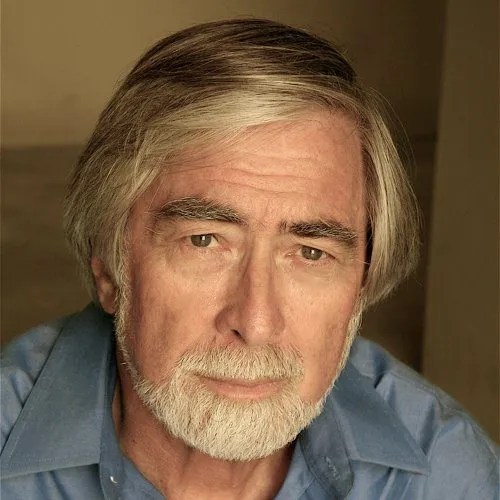
Robert Scheer
Robert Scheer, publisher of ScheerPost and award-winning journalist and author of a dozen books, has a reputation for strong social and political writing over his nearly 60 years as a journalist. His award-winning journalism has appeared in publications nationwide—he was Vietnam correspondent and editor of Ramparts magazine, national correspondent and columnist for the Los Angeles Times—and his in-depth interviews with Jimmy Carter, Richard Nixon, Ronald Reagan, Bill Clinton, Mikhail Gorbachev and others made headlines. He co-hosted KCRW’s political program Left, Right and Center and now hosts Scheer Intelligence, an independent ScheerPost podcast with people who discuss the day’s most important issues.
Editor’s Note: At a moment when the once vaunted model of responsible journalism is overwhelmingly the play thing of self-serving billionaires and their corporate scribes, alternatives of integrity are desperately needed, and ScheerPost is one of them. Please support our independent journalism by contributing to our online donation platform, Network for Good, or send a check to our new PO Box. We can’t thank you enough, and promise to keep bringing you this kind of vital news.
You can also make a donation to our PayPal or subscribe to our Patreon.