

Click to subscribe on: Apple / Spotify / Amazon / YouTube / Rumble
Although Julian Assange is free and home in his native Australia, his story and decade-long suffering at the hands of the U.S. government must never be forgotten for the sake of the survival of the First Amendment. In this episode of the Scheer Intelligence podcast, host Robert Scheer is joined by Kevin Gosztola, who runs The Dissenter newsletter and has been reporting on the Assange case and whistleblowers in the U.S. for more than a decade. Together, they underscore the significance of the Assange case and delve into the details explored in Gosztola’s recent book, “Guilty of Journalism.”
Gosztola makes clear one of the main points of the whole ordeal, which is the inconsistency in the U.S.’s interpretation of its own laws. “The First Amendment and the Espionage Act are in conflict in this country. You can’t reconcile the two, at least the way that the Justice Department wants to use the Espionage Act against people who aren’t even just U.S. citizens. They’re trying to apply U.S. law to international journalists,” Gosztola told Scheer.
The U.S. response to the internet age and the powerful journalistic revelations of Assange and WikiLeaks was to criminalize such actions, sending a clear message: anyone attempting to blow the whistle or expose the U.S. government’s crimes would face severe punishment, including the use of the Espionage Act, which could imprison someone for life.
“Unlike Daniel Ellsberg, [Chelsea] Manning didn’t have to sit there at a Xerox machine making copies. [She] just sent the copies of the documents to WikiLeaks, and then WikiLeaks had all these files that they could share with the world,” Gosztola said.
Despite the online journalism revolution, many in the media space still remained quiet throughout the Assange debacle both because of their ties to government officials and their lack of professional rigor. Gosztola posed several questions to them:
“Where were you? Why weren’t you doing the investigations to uncover these details? Why did this WikiLeaks organization come along and reveal these details about Afghanistan, the Iraq War, the nature of US foreign policy? Why do you accept that all of this information that was classified should be classified?”
Credits
Host:
Producer:
Introduction:
Transcript
This transcript was produced by an automated transcription service. Please refer to the audio interview to ensure accuracy.
Robert Scheer Hi, this is Robert Scheer with another edition of Scheer Intelligence, where the intelligence comes from my guest, in this case it’s Kevin Gosztola, I want to get the Hungarian rather than the Italian. It’s not Costello. It’s what, Gosztola. And I know him as a really terrific journalist. And what was that site you mostly wrote for Firedoglake?
Kevin Gosztola I wrote for Firedoglake for a long time.
Scheer Yeah, one of the really exciting sites when the internet was uncensored and you could actually find an audience out there. You know, I remember my son, one of my sons, Christopher, was doing AlterNet, I think, around the same time when it had a big following. So it’s very exciting. But anyway, he has, over the last 10 years, to point to our discussion today, been covering the case of Julian Assange. And I love, I like very much respect his book and his work. I think he’s probably been the best journalist. I don’t want to insult anybody else, but probably has been the person who was really stuck with the story and figured out its significance. And even in journalism schools and the major newspapers that ran Julian’s stuff, they then suddenly forgot the journalistic significance. There was a statement by the New York Times, Le Monde, the five leading papers, that said that government should never have gone after Julian Assange, because they would go after the New York Times or Le Monde or Der Spiegel or so forth. But people sort of forgot that.
And the title of this book, which is published by Seven Stories Press, and as part of Project Censored, very good organizations, the title is really what I want to discuss, “Guilty of Journalism.” And I want to ask you, I want to begin by asking you, I know you spent, as I say, 10 years on this. You look very young, but I guess when you have good work habits, that keeps you young, I don’t know. But the fact that matter is that Julian has gotten out, and that’s great, because the whole plan was to throw away the key, lock them up somewhere, drive them crazy, or what have you. It was horrible. But I want to take this time to summarize how why was he treated in this way. If our five leading newspapers worldwide said, you go after Julian Assange, you should come what you can come after us. What he did was journalism and as he say in your title, guilty of journalism. And you know, he got out now, because maybe I don’t know what Biden was under pressure or so forth, you could tell us all that, the English government didn’t go along finally with deporting him. But I really would like you to just begin by sort of an overall assessment of what does it mean. Okay, you’re lecturing to some class in journalism if we’re still around 20 years from now, I won’t be. But I mean, if the world’s still around, and just summarize what the ending of this as well as its significance.
Gosztola Overall to me, the Julian Assange case signifies one of the more cardinal sins you can commit if you want to fit in with the media establishment. And when I say that, the term I use in my book is prestige media, which is to say that these are the organizations that act as gatekeepers and are consistently shepherds for the kind of information we get to consume. They try to determine our diet. And so Julian Assange was not like them and did not believe in the kind of policing of information that they engage in regularly. They’ll do it on behalf of those in power. And in fact, Julian Assange and WikiLeaks were not supporters of US foreign policy, or, let’s say not supporters of the American empire project as I know it, as it has been illuminated and detailed by such scholars as Chalmers Johnson or Noam Chomsky or Greg Grandin or Andrew Bacevich. You know these writers that have really dug into and detailed what it means to be a US Empire. Julian Assange did not believe in making sure that these national security programs could work better to advance US foreign policy, making sure that wars are successful for the United States. He was more concerned about the bloodshed. He was more concerned about the human beings that were well, let’s just take the name of the video that garnered WikiLeaks its biggest attention, Collateral Murder.
That Collateral Murder video of the 2007 Apache helicopter attack in Baghdad, where you see two Reuters employees that are gunned down by a gunship and these soldiers are basically lusting for taking out civilians that are on the ground, innocent, completely innocent, and violating the rules of engagement, as could be shown by the files that Private Manning disclosed to WikiLeaks, and then later on that video, we see a rescue operation. We see a father and his two children pull up in a van, and the father gets out, an Iraqi dad, he gets out and he tries to pick up the wounded Reuters cameraman that was gunned down and then ends up being killed as well by this gunship. And so that that kind of event, that small event, but is something that happens daily if you ask someone like Ethan McCord, the soldier who is in that video, rescuing the two children, he rescues the two children from the van. That kind of incident was the kind of thing that moved Julian Assange and WikiLeaks that really made them dedicated to exposing US wars in Afghanistan and Iraq and exposing later on the over quarter million US diplomatic cables that got them a lot of acclaim because they partnered with dozens of media organizations throughout the world.
So that to me, that’s the big takeaway, and then also to say that the end of this case in particular was one that was marked by Julian Assange pleading guilty to journalism. That’s something that people should think about. It’s quite striking. He exited Belmarsh prison, he boarded a plane, a chartered plane, which he had to pay for because the Australian government was paying for it, and then they passed the bill onto him. He owed something like 500,000 pounds for it. And then he flew to Saipan, which is in the Northern Mariana Islands, a location that I must confess I didn’t know was part of US Empire, that it was a US territory, but it’s nearby Guam, and he flies to Saipan, and he enters a US territorial court, and a judge there or gives him a plea hearing and then a sentencing all in one day, all in two hours. This is very extraordinary. It does not typically unfold like this, but at one point, as he’s accepting as he’s making his guilty plea, she asks him to tell her what he did, because he has to show that he understands the crime that he’s pleading guilty.
Scheer He pled to one charge of…
Gosztola Conspiracy to obtain and disclose National Defense Information.
Scheer He was facing a whole bunch of others, and yeah, so those were gone.
Gosztola And but the important thing for those who listen to your show to understand is that he said in court, in a US territorial court, working as a journalist, I encouraged my source to provide information that was said to be classified in order to publish that information, I believe that the First Amendment protected that activity, but I accept that as written, it’s a violation of the Espionage Act statute. He was charged under the Espionage Act. 17 of the 18 charges were Espionage Act offenses. That then prompted the judge to say, so you had a certain belief, but you understand what the law actually says as well, because he was basically saying he didn’t think he had violated the law. So then Assange told her, I believe the First Amendment and the Espionage Act are in contradiction with each other, but I accept that it would be difficult to win such a case given all the circumstances. I think that’s the major takeaway. The First Amendment and the Espionage Act are in conflict in this country. You can’t reconcile the two, at least the way that the Justice Department wants to use the Espionage Act against people who aren’t even just US citizens. They’re trying to apply US law to international journalists.
Scheer Right, so let’s just be clear about this. The First Amendment actually asserts, absolutely, that Congress shall make no law in abridging freedom of press. And that’s what the publishers all said. They said Julian Assange was in the position of the New York Times when it tried to publish the Pentagon Papers and so forth. And then the Washington Post picked up after they were stopped temporarily. And mind you, you should tell people that what we’re really talking about and these charges were not the things that drove Democratic politicians crazy when booking leaks revealed how Bernie Sanders campaign had been sabotaged, or when they revealed the statements that Hillary Clinton may talking to the very bankers that had almost destroyed the economy, that she would bring them to Washington when she got elected, and they could help make the country straight again, particularly Goldman Sachs and others, that was not even part of it.
But there was a reason why the Democratic Party, under Joe Biden, continued this charge that had been launched by Donald Trump, and it was very difficult to get them even to pay attention to the implications for a free press and what the publishers said. I know on our website and elsewhere, it’s very easy, we have that statement. They said very clearly, this included the New York Times, said very seriously and clearly, you are prosecuting Assange on these Espionage Act, you are destroying our protection under the First Amendment, that they are fundamentally in conflict. And the fact is that this, the Biden administration went after him with a vengeance, and the situation was really quite dire in London, where his health was at stake and so forth. But you’re right, the resolution of this and that’s actually very similar to what happened in the Pentagon Papers case involving Daniel Ellsberg. The court actually never ruled on whether Ellsberg should have also gone to jail for 130 years or something, because there was a mistrial, because the judge had been offered the job of being head of the FBI, and so there was a mistrial, and then they didn’t pursue it. But first of all, it shows that whether you have a Democratic or Republican administration, in the Ellsbury case it was by then the Nixon administration, now it’s a Democratic administration, but Trump also initiated these charges, even though he said something admiring about WikiLeaks during his campaign.
But the fact of the matter is, what these publishers said is very clear, if you’re going to publish something that is first of all true, that no one’s disputing, that is not fake news. This is real news, okay, that the US government was doing this, as troops were doing this, committing war crimes. And you have encouraged people who know of war crimes to tell you, well, that’s what a newspaper does all the time. If you know some elected official has committed a crime, or you know somebody who has robbed something, or you know, you encourage people to come forth, and that’s why you have the newspaper there or the radio station. But so what I’m saying is that basically, and your book offers, obviously, tremendous detail about what was involved, and people should get it. Seven Stories, it’s available, “Guilty of Journalism,” and we’re not going to go over all those details. You do, as I say, probably the best job of anyone in laying that out. It’s really not even it’s not really for serious controversy. Anybody who looks at this case knows if the New York Times and Le Monde, El Paid, the Spanish paper, and I think Der Spiegel and so forth, if they all saw this as legitimate news, and you punish the person who reveals the legitimate news.
But in this case, he didn’t, hadn’t taken, as you point out, he wasn’t a US citizen, as opposed to Ellsberg, he hadn’t taken an oath being in office. So he’s a much stronger position than Ellsberg, or most whistleblowers are in. He was in the position of a publisher, and that got forgotten. And let me just take take us through the English court, because what the court there said, ask the US government, can you guarantee that he will not get the death penalty? And they didn’t, we’re not willing to do that.
Gosztola Well, they did. They did guarantee that the issue for us prosecutors was that they couldn’t offer an assurance that Julian Assange would have first amendment rights because they actually can’t make that kind of a promise.
Scheer Let me just qualify the first part. The first they did resist offering that. And then the question was, what kind of treatment, what kind of trial where that came up? So take us through that. First of all. What happened in England, you know? So people know, because that’s really, they were not willing to extradite him at that point without further assurances. So let’s nail that.
Gosztola So there were two times that Julian Assange was basically winning, and by winning, I mean the courts had ruled against the United States. The first instance was January 4, 2021, and on that date, not because his rights as a journalist were upheld, but because the judge determined that there was a legitimate fear that if Julian Assange was extradited to the US, it would be oppressive for mental and physical health reasons, that he would try to commit suicide in a US prison, and he wouldn’t be able, the US prisons couldn’t be trusted to stop him. That she was unwilling, judge Vanessa Baraitser was unwilling to sign off on extraditing Julian Assange, and you know, meanwhile, as he’s going through all of this anguish and suffering, she refused to grant him bail so that he can be out of this high security prison that’s supposed to be for terrorists, that are people who are accused of terrorism in the UK. Anyways, the next time that Julian Assange managed to win, because basically the United States government offered these empty promises that they called assurances about what they would do for Julian Assange if he was extradited and put in a US prison.
So now they ended up back to where the UK government authorized extradition and signed off on it, and then now Julian Assange got a full appeal, and in this convoluted process, as it moved through the British courts, it reached the High Court of Justice, the appeal. And the High Court of Justice said that none of the stuff related to press freedom could be litigated again, but they were interested in the question of the death penalty, because Julian Assange could not be extradited to the US if he would face the death penalty. It’s against extradition law to extradite somebody to a country if they will be put to death. And they reviewed that, and the US Justice Department ended up offering an assurance that Assange’s legal team accepted. So that issue was moot, and then the next thing was the First Amendment, the question of the First Amendment and whether he could make a challenge that he had First Amendment rights so he should not be prosecuted under the Espionage Act. And the problem for the US government is the US Supreme Court has actually ruled that non-US citizens, who have no ties whatsoever to the US, have zero First Amendment rights. So that’s in there. So there was no promise or assurance that they could give the High Court of Justice that would satisfy their request. And then that’s when we saw panic.
So the Washington Post one of two times, and I can’t believe it’s only two. It’s such a small number, given how long this saga has unfolded, Robert, but only two times did we see what I see, what I could call the establishment press step up and make some kind of meaningful contribution to our understanding of what was going on inside of government as they prosecuted Julian Assange or went to war against WikiLeaks. The first time was when Yahoo News!, through Michael Isikoff, Sean Naylor and Zach Dorfman put together an expose that showed that CIA director Mike Pompeo and others have been plotting and putting together these war plans to go after, to kidnap or kill Julian Assange. All right. Well, that was separate from this matter. The Washington Post, after the plea deal was inked, revealed that the Justice Department was in a panic mode back in April because they had received word from attorneys they were working with in London that the case was going to collapse, that they would lose at the High Court of Justice because they could not satisfy what those judges wanted, and basically that brought the Justice Department back to the negotiating table. They called Julian Assange’s legal team, and in June, discussions about a plea deal accelerated, and it’s also how I believe he got a pretty favorable plea deal, because if you look at the terms, there are things that the US government offered that I, as somebody who had covered this for five years in great detail, never would have thought US prosecutors would agree to.
They put in writing in his plea deal that he can never be prosecuted for any journalism that he did, any act that he committed that they might consider criminal on their terms. Of course, I don’t see it as a crime, but they said that nothing related to the DNC, nothing related to CIA hacking materials that inflamed and upset Mike Pompeo, none of that can ever be the basis for a case so they can’t bring charges and try to extradite him from Australia, and that’s a huge win for Julian Assange. There’s no gag order in the plea deal, and there’s also nothing in it that says he can’t return to work for WikiLeaks if he would like to do so.
Scheer So let me get the concession that was made, and you put it in your words, what he did agree to.
Gosztola Yeah, what Julian Assange agreed to was that he had conspired to obtain and disclose National Defense Information, that was the, you know, if we consider that to be a criminal act, which I don’t, but that was what he pled guilty to doing. It would be a criminal act if he had been, as you were describing earlier, someone like Ellsberg, someone who had taken an oath, someone who signed a non-disclosure agreement or a security clearance. But the important point that has to be emphasized repeatedly anytime you talk about Julian Assange is that journalists like you, me, any of our colleagues, we never sign anything that requires us to ask a government employee for permission to reveal information, and if I receive documents, I shouldn’t have to contact someone at the Pentagon and ask them if it’s okay if I share this with the world.
Scheer But what he agreed to was, let’s say you’re covering the Pentagon and you’re trying to find out did they lie to us about weapons of mass destruction in Iraq or not? And you go around and you ask people, do you know anything about it? Is there controversy? Is there facts? And you’re saying by the terms of this plea deal, if, because that’s what journalists do, is this real? Is it true? Are there documents? Does anybody know? And so forth. And then if somebody said, Well, yeah, I know something. There was, you know, an investigation or Pentagon Papers, for example, was an investigation of how we got into Vietnam, was done internally in the Defense Department.
And one could even argue that didn’t have any secrets that were real, but they had secrets that were embarrassing, or information that was embarrassing, that the whole Vietnam War was really a fraud and had been sold. It was a fraud that was sold as a national security concern. And what I find ominous about the words used that he agreed to is that, basically, if a journalist does his or her job and tries to investigate what is going on, right, they would be guilty under this term and the US government, the Biden administration, was really asking that you admit that you will never be an aggressive, determined, effective journalist when it comes to national security questions. Give us the words again.
Gosztola Conspiracy to obtain and disclose National Defense Information and so, as was said all along by constitutional scholars, First Amendment scholars, particularly Ben Wizner at ACLU and Jameel Jaffer at the Knight First Amendment Institute, they consistently pointed to the elements of the indictment against Julian Assange to show that this was criminalizing standard news gathering practices. My friends, colleagues, people I’ve worked with and talked to at the Freedom of the Press Foundation, that do some excellent advocacy work, were out there pointing to all the different things that it said, you know, they criminalize the way that online journalism has been revolutionized, has changed. You know, the idea that WikiLeaks had to set up a submission system, where there was an electronic Dropbox. So then what happened was Private Manning jumped online, submitted somewhere around 700 to 800,000 documents.
You know, unlike Daniel Ellsberg, Manning didn’t have to sit there at a Xerox machine making copies. Just sent the copies of the documents to WikiLeaks, and then WikiLeaks had all these files that they could share with the world, and they were forming partnerships with media organizations in the various countries so that they could maximize the impact of these revelations so that this was done was something that you know was hugely important to all of our understanding, and the the government is basically criminalizing that kind of activity, and that was well aware, anybody who was a first amendment or constitutional scholar was well aware that that was the goal of this, or at least it was going to be a byproduct. That’s why there were all these warnings to the Justice Department that went unheeded. Well, I’m obligated to put an asterisk on this, just to say, because there are attorneys who have made this point, that the plea deal does not have any legal force when it comes to bringing cases in US courts as it’s a plea deal. And so it’s not as bad as a conviction at trial. It’s not as bad as a jury convicting Julian Assange. It’s not as bad as a judge, but it’s still troubling.
Scheer No, it’s not only troubling, it defends the title of your book, guilty of journalism. Because the fact of matter is, this is what journalists are supposed to do. It is you’re supposed to see, including, after all, the protections of the Bill of Rights were put in there to help the citizens guard against government excess, government excess, right. That’s the whole idea of it. You know, a government that was checked in the way that the King of England was not checked. And so really, it’s an absolute, Congress shall make no law ill-bridging freedom of speech, assembly and so forth. And so what’s really here, and I stress the Biden administration, because I want to know where were the good people, suppose, where were the lesser evil people? Or, you know, where were the legendary newspapers, or the traditional newspapers? And with very few exceptions, Julian Assange did not get much support from the established media. And I consider that a scandal, personally. I kept looking for it, and even that statement of the five leading publications really didn’t get much attention. And it came a little bit late, quite a bit late. And I think we should understand then that at the end of the story, one can’t blame Julian Assange, you know, because he was, they were trying to kill him, in effect, drive him crazy, kill him, get him to commit suicide.
There’s no doubt about it. Would have been, you know, at best, put in a maximum security prison, and you know, hardly ever see anybody. But really, you have to ask yourself the question, why, when our government goes to and legitimately goes to the defense of people arrested elsewhere, for instance, in Russia, you know, and legitimately we should defend them, particularly if they’re American citizens, but anybody arrested for doing journalism, guilty of journalism, that’s a no brainer. Why isn’t there more of an outcry here? Why didn’t Julian Assange get more support? And I think there’s an obvious answer, but I want to ask you, in the few minutes we have left since you spent a lot more time on this issue than I did, it seems to me that he just not did play favorites. He revealed embarrassing information of, first of all, governments all over the world, he did what a journalist should do without fear or favor, you know, revealed it.
And the real deal breaker for a lot of otherwise well intentioned Liberal Democrats was he embarrassed the Democratic Party when it sought officially, in its DNC, to undermine Bernie Sanders campaign, and when Hillary Clinton committed this, I’d consider outrageous act of telling the bankers yes in a private meeting, not that they did anything wrong to create the great banking meltdown over collateralized debt obligations and credit default swaps and all the gimmicks. But no, we need your wisdom when I return to Washington. Well, that’s something voters had a right to know if they didn’t want to vote for the bankers to go back to Washington. So really, I’d like you to give me a summary. We got a few moments, if you got the time. But seriously, the big takeaway is, why aren’t there more people defending freedom of the press?
Gosztola Yeah, so Rebecca Vincent was an advocate who worked as an international campaigns director, still does works as an international campaigns director for Reporters Without Borders, this organization that’s working on press freedom struggles all over and described Julian Assange as the best known political prisoner in the world when he was in Belmarsh. And I thought, yeah, that’s appropriate. And the problem with the media by and large in the United States, all these journalists who are well to do and like to socialize with each other, and they’re going to parachute into Milwaukee and Chicago for these political conventions and then parachute out. But while they’re there, they’re going to socialize and talk to each other with their friends and make sure they still fit in.
The problem for them is that they are uncomfortable showing solidarity with somebody like Julian Assange. They don’t see any kinship with Julian Assange. They believe he’s different. That’s intentional, but also says a lot about them and how poorly they perform at their jobs. Some of them feel threatened by an organization like WikiLeaks. I believe there’s jealousy. I believe they see that WikiLeaks was able to reveal all this information, and the question then should be turned around rightfully to these media organizations and say, Where were you? Why weren’t you doing the investigations to uncover these details? Why did this WikiLeaks organization come along and reveal these details about Afghanistan, the Afghanistan War, the Iraq War, the nature of US foreign policy? Why do you accept that all of this information that was classified should be classified?
Why do you accept that there can be these lines drawn by the US national security state or the military industrial complex, and that we’re not allowed to know what the government is doing in our name, because so many of them accept this. And in fact, the final point here, they play the role of gatekeepers or stewards of these lines that are, they keep this information, they’re willing to collaborate with the Pentagon or the State Department or the CIA and say, okay, they’ll call them up on the phone. You know this just as well as anybody else. Hey, I’ve got this story I’m going to expose. And then they tell him what it is, and then the person on the other line says, well, go ahead and print your story, but hide this thing and this thing and that thing. And I’ll end here by mentioning that Charlie Savage at the New York Times published an article where he was warning that this could be a chilling precedent for freedom of the press that Julian Assange had secured this plea deal and also going back to the prosecution that was brought against him, and that it may mean that there’s a chilling effect that journalists throughout the United States hold back on publishing certain stories.
And I thought to myself, well, okay, you’re not wrong, but the US press has been withholding and refusing to publish stories for numerous, numerous years, if not decades. The fresh memories that I have, you know, I’m a younger, much younger person than you, the ones that I know in my lifetime. The biggest glaring one is not publishing the details of Bush warrantless wiretapping in 2004 with the New York Times sitting on that story and refusing to release it until George W. Bush was reelected, and that was a decision that his own newspaper made. So to sit here and act like this is going to fundamentally change journalism. I don’t actually believe that it’s actually more negative for people like me and the alternative journalists and independent journalists who don’t have institutions where they can turn to a legal department and send a lawyer out on our behalf to negotiate. I don’t have that ability, so I have to be very careful about what kind of stories I publish. But the Charlie Savages, the David Sangers at the New York Times, or the David Ignatius at Washington Post, or these people who work at these different publications, Ken Dilanian at NBC, they don’t have to worry at all about their work because they’re very tied into the network of spies and military people, and they’re going to be careful about what they publish?
Scheer Well, yeah, let’s wrap this up. But you just really touched on a very basic point when it comes to foreign policy. You know, it’s one reason why the founders, in their saner moments, you know, George Washington and Jefferson and others, warned about empire, even though they quickly proceeded to build an empire, but that if you have an empire, you’re not going to have freedom of any kind. That’s how the Roman Republic got corrupted, and they know that Washington in his farewell address warned about the imposters of pretended patriotism and so forth. And just to put a finer point on what you said. As somebody, I worked for the LA Times for 29 years, but I also did alternative journalism with Ramparts and others and the fact of the matter is, most of the reporting concerning national security, certainly in foreign policy, is based on selective leaks from the government. Okay, it’s not a question of the journalist has found something out, and then a lawyer can negotiate. No, it’s worse than that. Most of the actual reporting is someone in the government, like about China now in our policy, or what’s going on with Putin and Ukraine, or whatever, is that, they will give you the story. They’ll give you the story. That’s what happened around, that’s what Ellsberg revealed. They don’t give you the whole story. So they were giving you classified information on a selective basis about Vietnam, why we’re there, how we’re winning, so forth and so on.
The biggest lie about Vietnam was the Gulf of Tonkin incident. The second one in which we were supposed to have been attacked, and that became the justification for attacking North Vietnam, expanding the war and getting millions of people, eventually, civilians killed and so forth. It was a lie, but it was and it was a lie the government knew on day one, the documents were kept secret for the next 20 years, and then got released. And as I happened to publish, I guess, the first story, Daniel Ellsberg thanked me for it on a number of occasions. I got a copy as soon as it was released that it was a fraud. So all of what had happened, how we got into Vietnam, why we expanded to Vietnam, why, you know, what McNamara said, three and a half million people, but then another couple of million were killed after that. You know, one of the great tragedies of foreign policy and intervention were justified by this fake event, fake reporting, but details about that attack selectively were released that involved national security. They just didn’t tell the whole story. They didn’t tell it right, the inconvenient truths about the story, which is in fact, we were not attacked in the Gulf of Tonkin on that day was a phony.
You know, this reading of radars here, and they knew it in real time. So I want to sharpen this point a little bit. Most of what these journalists, these establishment journalists do, in the area of national security, war and peace, foreign policy is based on leaks, based on leaks. What is at issue here with Julian Assange is the government wants to reserve the exclusive power to leak material and suddenly announce, well, this isn’t really classified. That’s really what’s going on. Julian Assange offered a way of other people who knew this information and say, wait a minute, they’re lying to the American people. Let me tell you the truth. No, we shot innocent people there in that incident. We committed this war crime. It’s like Sy Hersh and milai in Vietnam that what the government has done is really more treacherous than you’re suggesting.
It is said we want exclusive power to control the narrative. Anything that gets in the way is criminal. Anybody who challenges our authority and provides information, facts that are accurate but inconvenient, we can punish them with 130 years or whatever it is in jail. I’ll let you have the end to wrap it all up, but and I want you answer one other question as we go, because I haven’t talked about you and your work, which I think is incredible, and you’re not alone. There are the good side of the internet as it’s freed up, you know, can’t make a living probably at it most times, but it’s freed people up to do really significant work. Why, first I would like you to comment on what I just said, but also why do you, how can you keep going? And how do you, for me, a model giving hope that journalism will somehow thrive, but how do you see the game out there?
Gosztola Yeah, what you’re saying is absolutely right. It is about the control of the narrative. And it, you know, it is deeply linked to being able to control the flow of information, and that’s why you have people out in this space who have said the war on whistleblowers was a war on journalism. And often these newspapers, like the New York Times or The Washington Post, are treated as separate. They go cover these cases where a whistleblower is prosecuted under the Espionage Act, say, like John Kiriakou or Thomas Drake, for example, and they don’t recognize that this is an attack on them as well, because they’re going after media sources.
The government is punishing media sources when they put these people on trial. So anyways, my work that I do, the way that I keep going, is basically because I have people who agree with me that it is important to follow whistleblowers and their cases, to stand up for them, whether they’re in corporate or government settings, to follow the threats against freedom of the press, these journalists that are being brought under attack globally, we have somewhere around a 120 perhaps more, journalists in Gaza who have been massacred at this point, and that is really significant to me. And our profession doesn’t do enough to talk about it, especially in the US sense. You know, we completely exclude.
Scheer You know, it’s amazing that these talking heads we see on MSNBC has seen it. It’s incredible that they’re not talking about, that they’re talking about anything else. It just doesn’t come up. I want to thank you for for bringing that up, but it’s an incredible outrage, you know.
Gosztola I see what’s happening there, that censorship regime that the Israeli government has imposed, I see that closely mirroring the kind of censorship regime that the security apparatus wants to enforce against WikiLeaks and other organizations. Because, you know, they decided that, I know we need to wrap but they decided that basically, not a single journalist is allowed into Gaza. They block them, and then anybody who is found to be working with Al Jazeera is considered an accomplice to a terrorist media organization, as they have labeled Al Jazeera. So that is why the Associated Press found that their media equipment was confiscated, and this was a couple months ago at this point.
But you know, there was one day where they lost the ability to actually broadcast the feed where they just sit outside of Gaza and show you this plumes of smoke that are coming out from the bombings that was completely dismantled by the Israeli security forces, and it was because of the censorship regime. So I see this all as being connected, and I think that’s what you know, the reason why I’ll keep going is because all of these issues are at such a heightened point. I mean, there’s, there hasn’t been any break. It continues to get worse and worse. The Justice Department believes that they can decide who is and is not a journalist, and that’s something that has to be followed. And so the fact that I have readers who I’ve been able to convince that these are important issues. I work primarily in the realm of issues based journalism.
Scheer Give us the places where you print.
Gosztola My newsletter is the dissenter.org and in fact, I thank you for republishing my articles over at ScheerPost, because my most recent article that I did was an Espionage Act case that nobody’s talked about against a Chinese graduate student at the University of Minnesota, and he was found to be engaged in drone photography around these military installations in Virginia, Norfolk, Virginia, Newport News, Virginia, and they accused him of violating the Espionage Act in this unprecedented manner, prosecuted him. He just pled guilty to it. It’s unclear if he really has ties to the Chinese government, but the important thing is that the Justice Department never printed in their indictment against him that they accused him of being a spy. They just used that language. They just abused the Espionage Act once again, to go after somebody who was taking photographs with a drone. He was flying a drone. He was taking this, these photographs, and they treated him as suspicious, because…
Scheer Well he’s Chinese, right? Well, I’m going to wrap this up, and I just want to put a finer point on this. The whistleblowers, most of whom we refer to in our own country, were people who were patriots by the most traditional militaristic standard of patriot. I mean Daniel Ellsberg believed in the military. He went into the military, yes, from good education and so forth, but nonetheless, he actually believed in the Vietnam War. John Kiriakou, who you mentioned, was recruited into the CIA from college. He captured, at one point, involved in the capture of the highest ranking al-Qaeda person, Drake. You mentioned all of these people, Binney. I can go through the whole list. We don’t have too many whistleblowers, which itself, is amazing. But you know Bradley now Chelsea Manning, somebody who was in the military, doing their job, and they see evidence of crime, crime. And in Daniel Ellsworth case, he was actually on a fairly, very high level, doing this report. And the report says the American people have been lied to about Vietnam from day one, and we know all this. It’s just not questionable. It’s just been deliberately withheld from them. Therefore our democracy is a hoax or something when it comes to war, national security and so forth.
And so he then risked 140 years in jail, or whatever was going to be. But you know, clearly the case here is something that the Constitution and we could end on this, is really all about. I mean, we should take the high ground and condemning any government in the world, let’s just be clear here, it’s wrong for Putin to imprison or jail a person or a dissenter or anyone disagrees, it’s wrong for Xi in China. It’s wrong for Saudi Arabia, clearly, to dismember a Washington Post reporter. I mean, the point is, I used to be, at one point, on the board of the Committee to Protect Journalists and so forth. And I think you have to be consistent. You have to have a consistent standard. You can’t apologize for any one in the world who does violate this. Why? Because if you don’t have a free flow of information and independent journalism and the right of citizens to speak their mind, investigate, the whole thing becomes a hoax. The whole thing’s a hoax, whatever, they call their government, whatever names they use. And the fact of the matter is, for the most powerful empire that’s ever existed, but the most, certainly most powerful government, has a great influence in the world, to send out a message of hypocrisy that it doesn’t apply to us. This is where the rub is, okay. Maybe Saudi Arabia, okay. Maybe Xi in China, he has a different philosophy.
Maybe Putin and Russia, whatever his philosophy is, but, you know, okay, but we claim to have the basic, you know, mantle here. That is really what the issue is. And I think the Julian Assange case has really been the most revealing about the limits of our respect for freedom, because you’re not even talking about a military opponent. You’re not really talking about somebody who’s your adversary in war and wartime secrets. You’re talking about somebody doing what any honest journalist should have been doing, getting the story and getting the most important story. So give you one minute to answer or respond and we’ll say goodbye here, but I do really applaud you, having spent 10 years on this case, and if not for a few people like yourself, Julian Assange probably wouldn’t have gotten be free now.
Gosztola Yeah, well, and then if we throw in Manning in all of this, these documents came out in 2010 so it’s been 14 to 15 years. It’s, you know, it’s been as long as, almost as long as Julian Assange has been in some kind of arbitrary detention, or was that I followed this so I agree with you that the mask came off of the US Empire as a result of the work of Assange. WikiLeaks, of course, that was made possible by Manning
Scheer Which, by the way, I’ll take your correction. We shouldn’t leave Manning out. And what Manning did you know was just like the house servant, a low level person in the military, says, wait a minute, the emperor has no clothes. What’s going on, right? And without the credentials of Harvard, without all of that said, wait a minute, this should be a no no, and Chelsea Manning is really the great hero of this story. Well, what Julian Assange is doing was what any honest journalist should have done. But unfortunately, he turned out to be a rarity, and he was punished for it.
Gosztola So I’ll close here the last few seconds that we have. I just want to emphasize that anybody who truly understands what unfolded with the Julian Assange case has to become an opponent of the Espionage Act. I truly believe that we need, you know, usually, sometimes you have these conversations like, well, people think, what can we do next to me, in my mind, it’s over 100 years old. You could say it’s extremely, extremely, extremely overdue. There are going to be people out in the space that I work with who are going to be fighting to unravel this Espionage Act. That’s where the Justice Department found its locus of power, the kind of thing that they can use to pull lever and go after journalists and whistleblowers. I think we have to go after it aggressively.
Scheer Yeah, and don’t talk about the virtues of the US Constitution, and particularly its first amendment, if you also have an Espionage Act that makes a mockery of it. Want to thank Christopher Ho and Laura Kondourajian at KCRW, the excellent NPR station in Santa Monica, for putting new shows up. Joshua Scheer, our executive producer who got our guest and insisted on doing it this week, Diego Ramos, who writes the introduction, Max Jones, who puts it on a video. I want to thank the JKW Foundation in memory of writer Jean Stein and Integrity Media for giving us support. See you next week with another edition of Scheer Intelligence.
Please share this story and help us grow our network!
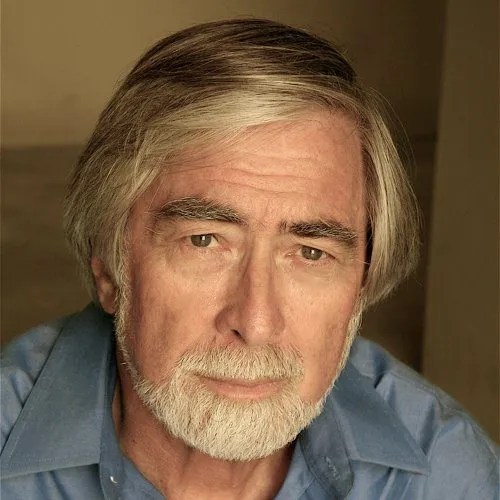
Robert Scheer
Robert Scheer, publisher of ScheerPost and award-winning journalist and author of a dozen books, has a reputation for strong social and political writing over his nearly 60 years as a journalist. His award-winning journalism has appeared in publications nationwide—he was Vietnam correspondent and editor of Ramparts magazine, national correspondent and columnist for the Los Angeles Times—and his in-depth interviews with Jimmy Carter, Richard Nixon, Ronald Reagan, Bill Clinton, Mikhail Gorbachev and others made headlines. He co-hosted KCRW’s political program Left, Right and Center and now hosts Scheer Intelligence, an independent ScheerPost podcast with people who discuss the day’s most important issues.
Editor’s Note: At a moment when the once vaunted model of responsible journalism is overwhelmingly the play thing of self-serving billionaires and their corporate scribes, alternatives of integrity are desperately needed, and ScheerPost is one of them. Please support our independent journalism by contributing to our online donation platform, Network for Good, or send a check to our new PO Box. We can’t thank you enough, and promise to keep bringing you this kind of vital news.
You can also make a donation to our PayPal or subscribe to our Patreon.
