
By Robert Scheer / Original to ScheerPost
Click to subscribe on: Apple / Spotify / Amazon / YouTube / Rumble
Vijay Prashad joins host Robert Scheer on this episode of the Scheer Intelligence podcast to discuss the emergence of a multipolar world and how the Trump administration, although domestically threatening, appears to be shifting from the traditional adversary world force seen in previous administrations. The two discuss China’s rise in technological advancement and how the world, especially the Global South, has responded by shifting away from US domination. Trump’s recent foreign policy actions and staff picks, Prashad points out, also signal a potential embrace of a multipolar world order that strays from conflict.
Credits
Host:
Executive Producer:
Video Producer:
Introduction:
Transcript
This transcript was produced by an automated transcription service. Please refer to the audio interview to ensure accuracy.
Robert Scheer
Hi, this is Robert Scheer with another edition of Scheer Intelligence where the intelligence comes from my guest, in this case, Vijay Prashad and no question about his record. I can’t even believe it, he’s written 40 books. I’ve only done, I don’t know what, 10 or something. So I mean, hats off to you. And I should mention, the reason I wanted to have him here is he just writes incredibly effectively. He’s the director of the Tricontinental: Institute for Social Research. He is chief correspondent for Globetrotter, chief editor of Leftworld. He wrote a book with Noam Chomsky. But what I really like about his writing is that it’s incredibly densely informed, knowledgeable. And the one article that really got my attention recently was about China and the whole question of rare metals and exploiting them in Greenland and Trump’s idea of taking over Greenland and then also taking over the Panama Canal, all in the effort to stop China.
And he wrote what I thought was the clearest article about what the real threat from China is, which is not a military threat, it’s not an expansionist, is that they actually do capitalism maybe better, not maybe, they clearly do capitalism better than the world’s dominant so-called capitalist powers, which have seemed to have lost the whole competitive edge. They lost it first in the car industry with Japan and then even South Korea coming along and wiping them out. We can’t even produce a decent electric car in this country. And in that respect, it seems to me we’re picking a fight, not just with China, but India, with Brazil, with South Africa. And it really goes to the question of do we believe in international trade comparative advantage?
The value of it or do we want a cartel capitalism where already nine of the top 10 billionaires live in the United States, where we control the action through our financial community and so forth. So I’m also going to bring up some other issues, but I want to start there. I’m doing this from California where the article I read by you about China showed bullet trains. And statistically in China, 95% of the people who live near a moderate city or a big city can take a bullet train, a rapid train, and go anywhere. I can’t go from Los Angeles to San Francisco by any kind of train without getting off, changing, and so forth, but it’s certainly not going to be a bullet train. Instead of taking two and a half hours, it’s probably going to take 12 hours. So what happened to capitalism? And are they really going to go to war with China because China is a better economy or this excuse that China is some kind of global military threat?
Vijay Prashad
Well, first Bob, it’s a real pleasure to be with you, you know, and to hear you talk about my work makes me want to hide or cry or something like that. You’re so generous. The first thing is between Los Angeles and San Francisco, it’s about 550 kilometers, 340 miles, something like that. If there was a Chinese train, a normal average Chinese high-speed train, between San Francisco and Los Angeles, you could make that journey in an hour and a half. Because the trains between, say, Beijing and Shanghai, the very best of the high-speed rail, although you see them all across the country, run at an average speed of 300 kilometers an hour. This is about three times faster than Amtrak’s Acela service.
And I have to say that Amtrak’s Acela service between Boston and Washington DC doesn’t really ever get to 100 kilometers an hour. And the reason is the lines are just not good enough. The engine is pretty good, but the tracks aren’t good enough. So the Chinese trains not only run three times as fast as the fastest US train, but they actually maintain that speed. They don’t just do it theoretically. The Chinese are now developing a train which would go at 600 kilometers an hour. If it ran at say 80% of its speed, which is understandable, you’d be able to get from the center of Los Angeles to the center of San Francisco in an hour. That would make your life a lot easier. Now, Bob, to think about your question, we have to also think about the evidence. I just spoke about trains.
It’s not sufficient to use the train as a metaphor for everything, right? Also, I spend a lot of my time reading reports not written by the Chinese government because I would find that an audience, say in the United States, may not believe it. They’ll say, well, it’s propaganda and so on. So I try to look for other evidence. Recently, I discovered that the Australian government, its defense sector, in other words, its military funds a think tank in Australia called the Australian Strategic Policy Institute. Very interesting mainstream think tank. Well, this think tank released a report early this year in January. In fact, the full report was available last year itself. This report is a 20 year study of what they call 64 critical technologies.
So in the year 2000, they picked 64 critical technologies and they found a mechanism to start grading which country is the leader in which of these 64 technologies, who’s second, who’s third, who’s fourth and so on. These include artificial intelligence, biotechnology, robotics, cyber, computing, advanced materials, quantum technology and so on. The top things that were there 20 years ago. And then they snapshotted this every year for 20 years, including last year, 2024. Well, interestingly, in the year 2000, the early years of their study from 2003 to 2007, the United States led in 60, six zero, out of 64 of these critical technologies. At the time, China was only in the lead in three of the 64 key technologies. This is in the early 2000s.
The most recent numbers that they have are the exact opposite. China leads in 57 of 64 key technologies and the United States merely in seven. Now, this is interesting. This is not, again, the Chinese government’s view. It’s not my view. It’s the Australian Strategic Policy Institute. They argue that in the leading critical technologies, the new qualitatively advanced productive forces are better in China than they are in the United States, which means that the United States, which had an enormous advantage in intellectual property rights, no longer has that advantage. China has overtaken the United States in that. Now, there is a way you can deal with this.
The US government can say, well, look, let’s put a lot of investment to upgrade our science, upgrade our technology, get the kids learning science again. This could have been a second Sputnik moment, Sputnik being the Soviet satellite which went into space in 1957. It was a wake up call in the United States. And people remember there were science bees and all kinds of things organized in the US to get kids interested in science to compete with the Soviets. But no, in the United States, even though Joe Biden tried to get some investment for industry and so on, private capital is simply not interested in risking its money in building a new scientific and technological capacity in the United States. It has gotten lazy. Microsoft is a lazy company. It buys startups. It doesn’t really invest very much in new technology, it just buys it from other places. The Chinese state, in fact, is investing in an enormous way in the new technologies. In fact, over the last five years, Xi Jinping, the president of China, has been talking at almost every meeting about the importance of what they call the new qualitative productive forces, the term I just used. It’s a very important term in China.
So rather than compete, like capitalists, against the Chinese and say, we’re going to invest, we’re going to make our robotics better than theirs, we’re going to create superb high-speed rail. No. Instead of that, the United States has taken a different approach, which is they want to squeeze China to prevent China from developing and to force China to go backward. This is akin to the century of humiliation as far as the Chinese are concerned. They’re not going to have it. And that is the basis of the new Cold War on China. It’s not about Chinese security or military threats to anybody. This is about the fact that the Chinese are galloping ahead in science and technology. And the US believes that military force and intimidation are the only weapons available to the United States against the Chinese right now.
Robert Scheer
Yeah, so let me, by the way, just to throw in some guidelines here. I know some people listening to this, they’ll say, yeah, but can you trust Chinese statistics and all of their successes based on stealing information and subversion and so forth and so on. And I think there’s one answer to that and just look at Elon Musk, who is now maybe the most important person in figuring out how to run America. And I can’t for the life of me believe that he thinks that China is primarily a military threat. The fact is he’s making most of his Teslas now in China. He knows darn well how the system works and an important ingredient is that in fact they are a mixed economy. That may come as a shock to some of my old leftist friends. But the fact is we just had in China the two sessions meeting, right?
Where they, in no uncertain terms, endorse a robust private sector that have their own billionaires. Yes, they believe in common prosperity or you’re not going to have stability. And one reason to go to high tech is maybe to be able to pay more instead of making just t-shirts and assembling iPhones with women taken off the farm that you actually can get into the profit that Cupertino has from doing the high end. That’s why a company like Huawei and so forth is a threat. I understand all that, but also to, listeners to understand what happened, I don’t have any expertise about this anymore, but as a younger person back in the early 1960s, I was a fellow in the Center for Chinese Studies as a graduate student at Berkeley, and there was no question then, and throughout the United States, whether it was Harvard or Berkeley or what have you, the consensus was that China could never develop.
The population was just too big. There was exhausted farmland, exhausted resources, and they didn’t have any petroleum to speak of. And for that reason, China would be a basket case forever. That was the conventional wisdom, and that the Chinese Communist Revolution at first seemed to endorse that. They had the backyard furnaces. had all the sort of go back to more traditional medicine and so forth. Now, the big shock, and it is a shock, and that’s why our leadership, I think, is whether it’s Democrat or Republican, is kind of just forced into denial and distraction, is that China has, in fact, been able to make this great leap forward. And even now on the old scientist dream, the nuclear scientist, of having actually post-energy products of a new nuclear type reactor, the neutron and so forth. They even seem to be pushing ahead there. There’s a steady stream and one of the ways that the Trump policy backfires, you already have Chinese scientists highly regarded fleeing the United States and showing up in China to run new institutes. But what I want to get at is whether capitalism can ever be rational. This is really the big question.
Because at times I think and Trump is an exponent of kind of the modern capitalism where it sort of lay it all out. A part of Trump as a business person, certainly with people like Elon Musk at his side, has to know that it would be advantageous for American people to continue trading with China, even as China moves up the ladder and work out, okay, decent means of exchanging goods. And some things are good, maybe like guaranteeing decent labor rates or not using prison labor anywhere in the world or maybe even a guaranteed minimal income, you know, so that it’s not just the exploitation of foreign workers. The question I want to throw to you is basically why are they, well, first of all, what do you think they are up to? Because, I mean, clearly American top business leaders know, and it’s not just China, they know India is not going to settle for less. They know Brazil is going to want to develop. And I want to get to this idea of the, sorry, I want to get to this idea of the multipolar world that is being pushed as opposed to American exceptionalism. That in fact, you know, we’re looking at a whole conglomeration of nations in the BRICS alliance, for instance, which seems to be rapidly expanding. And they clearly have very different systems, different ideologies.
And so the old idea of the Cold War of a simple, ideologically driven enemy, and then we have freedom, they have slavery, they have communism, we have democratic capitalism, blah, blah, that doesn’t work now. Now you have, it was supposed to be India and China were rivals. I’m older than you, so I can remember. I actually met [Jawaharlal] Nehru at one point. I can remember when India was held up as the great alternative to China. Now there’s less thought about border war fighting and maybe cooperation. And you see it, you write about it very effectively. And so why don’t we talk about that, this multipolar world? And isn’t there a part, this is the disturbing idea I’ll throw out there, isn’t it possible that Trump has an insight into this that the Democrats didn’t have? After all, it was Nancy Pelosi who picked the fight over Taiwan. Let’s use that issue. And Trump, you know, he’s now able to make peace. Actually, oddly enough, he even gets Israel involved in supporting Russia against Ukraine.
And why are we fighting about that? You know, there’s a certain capitalist madness to Trump’s vision, even about Gaza, that we’ll make it a Riviera. If he had only said, and the Palestinians will stay and they’ll love it, then there would have actually been a lively argument. He has to connect that with the genocide and defending ethnic cleansing, so then he’s, yes, he’s the center of evil. But the fact is, this idea that we can avoid these wars and actually negotiate, that is so odd, that it’s coming from a guy who’s sometimes, I think Chris Hedges, who I will mention soon, does describe as in the grips of a kind of Christian fascism and irrationality and so forth. But if he is actually being the capitalist that Elon Musk is, you would think that they would try to make some deals. And so I only want to use one starting point. The idea that he didn’t really go after China and Russia, he went after Canada and Mexico, and particularly with Canada where he’s now, as of today, up the tariff to 50% on their aluminum and steel. So I’ve talked too much about it, but I’m trying to shape the discussion to… Is there a side of what’s going on that we’re missing if we just think about the new fascism?
Vijay Prashad
Yeah, I actually think there’s a lot that needs to be said to this. The first thing is, it is true that there are absolutely irreversible changes taking place in the world. The center of gravity of the world economy is no longer the Atlantic Ocean. It’s now Asia, it’s China, it’s Vietnam, it’s Indonesia, it’s India. These countries are growing at a pretty fast clip. Largest section of the world’s population is there. But it’s not just about population. It’s about new technologies. It’s about new forms of goods being produced for the market, new kinds of markets, in fact, you know, new kinds of transportation networks. They’re building green cities in these countries, you know, things that are not being talked about in Europe or the United States. They’re talking about building trans country railway lines. mean, you know, when is the last time new rail has been laid on the European continent?
There is no discussion of rail lines connecting Mexico and the United States. You talked about within the United States. Well, what about with neighboring countries? There’s no talk about that. Meanwhile, here you have rail lines going across international borders, linking Laos to China, Vietnam and so on. The conversation is different in those parts of the world and people generally misunderstand China, Bob, because when Chairman Mao and others went to Tiananmen Square in 1949, they didn’t proclaim the socialist republic of China. They proclaimed the People’s Republic of China. They actually don’t even say that it’s a socialist country. It’s a People’s Republic led by a communist party. In fact, Xi Jinping has been saying in the last few years that maybe in 2049 we will start the socialist transition. It’s really funny how people in the United States and other countries have this debate, you know, is China communist? Is it capitalist? Even they don’t say that they are communist or socialist. They say we are a people’s republic. It includes all the classes. We are building up our national strength. Later, we’ll move to socialism.
I think that’s a pretty well understood idea whether it’s in the party documents or the statements made by party leaders. So this actual fact of history of the emergence of these different centers of power, that’s a fait accompli. You can’t turn this around. I mean, India is not what India was 60 years ago. China is definitely not what it was even 30 years ago. The Japanese recognize this. Forget anybody else. You know, Japan’s principal trading partner is not the United States, it’s China. When the war broke out, when Russia entered Ukraine, invaded Ukraine, the Japanese were having a tough time condemning Russia because they have a major investment in Sakhalin Island for natural gas. They understand that their energy future is with Russia, not with Saudi Arabia. So these countries understand that we are in a new or entering a sort of new historical period.
In fact, what’s interesting is this is not about Trump. This is about the Trump administration. And I think something that’s being missed among particularly liberal commentators in the United States who have their hair on fire with Trump back in office is in fact, Trump has broken a consensus that started from Bill Clinton, which was an idealist globalization consensus from Clinton onward, even inclusive of Trump term one, right through Biden, you had a liberal globalization agenda, dominate US policy, an agenda that said, you know, use words, hollow words like democracy and human rights. But what they meant was that the United States would be simply the world’s policeman and that the economy would center around the US and European markets and the whole world would become essentially factories for those markets. That was the idealist globalization narrative.
In fact, Trump number two has junked the idealists. His administration has a lot of conservative realists, people like Elbridge Colby, who will run the China policy. Very interesting, Michael DiMino who is going to be in charge in the Defense Department of Middle East policy. Who are these people? These are international relations realists. They are not idealists. So, for instance, to take the example of DiMino. DiMino has publicly said it doesn’t impact the US whether Iran has nuclear weapons or not. He said it’s irrelevant. Because if Iran did get nuclear weapons, they wouldn’t dare to attack the United States. They would get obliterated. So they’re having nuclear weapons is irrelevant to the US interests. That’s a realist approach to Iran. We don’t have to throw overthrow the Iranian government. They can remain. They are hemmed in as long as they don’t interfere with the rest of the Middle East and harass Israel. We don’t need to go to war with them. He’s publicly said that. Elbridge Colby was very interesting. He’s the grandson of William Colby, former head of the CIA wrote a very, very interesting book published by Yale University Press. Mr. Colby makes the argument that look, China is a major power. It is the only threat on the planet to the United States. Russia is not a threat. Russia is merely a producer of raw materials. It exports unprocessed and some processed gas.
Robert Scheer
You mean it’s not an economic threat, it’s still…
Vijay Prashad
It’s not an economic, but that’s exactly what’s interesting about Colby’s realism. That it’s not an economic threat. And the only threat to the United States is China. So China needs to be hemmed in. But at the same time, Mr. Colby, in his confirmation hearing, basically said, you know, Taiwan, it’s not a real issue for the U.S. It’s not the principal issue. The principal issue is how to prevent China from overwhelming the U.S. economy. These are realists. This is the first time the US government has had realists dictating policy since perhaps Henry Kissinger was around whispering in Richard Nixon’s ear and then later in Carter’s ear. You may remember Henry Kissinger didn’t disappear because it was his protege of one kind or the other, Mr. Brzezinski, another realist, a right-wing realist who was Carter’s main guy in the administration of Ronald Reagan, you also had realists.
It was from Clinton onward that US foreign policy had this sort of messianic, crazy idea that you can use US weapons, just blow up Yugoslavia, create democracy, blow up Iraq, create democracy. This is a crazy idea. But this is an idea that the Trump administration has U-turned. And I don’t understand why liberals don’t read enough and try to study what are they doing. Rather than merely listening to Mr. Trump and running around on the internet, on social media, exasperated with Trump’s lunacy. Look beneath there. Look at the people. are not exactly who you assume they would be, which is why, for instance, the guy who’s there in the CIA, John Radcliffe, another realist, very interesting pick by Mr. Trump.
They have a different view of the world. What appears to be America-firstism, is indeed America first-ism, but it’s not America first-ism that is evangelical. We want to go and make the world America. In fact, it’s the opposite. We don’t care what you are. You do whatever you want. Just make sure you don’t disturb us, don’t send your people to come and live among us, and you have to bow down to our economy. Those are the parameters of the Trump agenda. And indeed, in that sense, Bob, you’re right. There is a tacit recognition that there are other centers of power in the world and the US government is going to have to accommodate itself to those other centers of power.
We’re in a very interesting time, it’s true, but it’s not the interesting time of, oh my God, this is a horror show. In fact, people need to calm down a little bit. You know, there’s nothing to be afraid of with the rise of different centers of power. In fact, it’s ironic that so many American liberals are now sounding like American evangelists, worried that the American power in the world is going to be diluted by Trump. What they don’t realize is Trump is not diluting American power. It’s already diluted. He has to acknowledge that it’s diluted and find a way for the United States to accommodate itself to the new world.
Robert Scheer
Okay, but let me now play devil’s advocate here.
Vijay Prashad
The worst kind of advocate. Why isn’t anybody the angels advocate Bob? Why are they always the devil?
Robert Scheer
I can be the angel’s advocate. I can do that. Let me be the angels advocate. And yes, it would be good. It would be wonderful if we learn to live in a world in which there are other countries that are talented and productive, and we benefited from international trade. You know, the Chinese with their productivity saved us during the last pandemic. Everything that came to where I live, I live in a high-rise place here, everything came, seemed to come from China. There’s a table that I eat my breakfast at that somehow came from China, you know, the toilet paper, everything. Yes, one could take the view that free trade, you know, this goes back to Adam Smith. I mean, yes, some notion of an unregulated economy. And yes, I personally believe you have to factor in human rights in that, not to have prison labor, to have people make a decent living, the right to be in a union, those never get raised.
And ironically, let me say something positive about Trump and his renegotiation of NAFTA, they actually, for the first time, put in that people in Mexico working on an American car had to be paid $16 an hour. I didn’t even know he had read that. I read the whole NAFTA agreement. And the fact is they could take the grievances to a local court rather than the International Trade Court if they wanted to join a union or if they wanted to go on strike or so forth. I hardly see any reference to that. So yes, you know, some idea of the invisible hand, free trade, let the better, you know, we should have Chinese cars in America now because I could go out and buy one for probably $15,000 instead of $40, 50,000. You know, so there’s no question American consumers would benefit, you know, and what have you.
What I’m worried about is we’ve been raised, and maybe this is because I’m here in the United States and you’re not, we were raised on the religion of American exceptionalism. That whatever we do is the best in the world. That was very much, again, as an older person, I can remember when it became dominant religion, it was after the victory in World War II, which after all, the Russians deserve a great deal of that credit, but we never accepted it, we were quite late to enter, but the fact of the matter is, all the other economies have been destroyed. We were the ones that could make everything, and I know I come from a working class family of welders and mechanics and everything. Good jobs, good union jobs, good times. And so then the question is, and particularly from this group that people demonize now workers, particularly white workers, they want to know what went wrong.
Why are my kids not living as well as I did? Why are there no opportunities? That’s where the fascist specter comes in and where Trump evokes that. Because if they don’t get our economy kicking, then they’re going to kick other people down and they’re going to scapegoat. That’s the great fear. I say, Chris Hedges, who I admire enormously. I was going to ask you about something since you are going to read it now unfortunately I keep losing the quote but I think I read it to you before but basically he was pointing out the walls are closing and totalitarianism is now in the order of day but he made it instead of an American perversion which is the way I see it he pointed out in fact we are competing against a lot of countries including India that you know more much more about them almost anybody and now has a Trump-like leader in Modi. Certainly Russia has a strong capitalist, pro-capitalist leader in Putin. Not a social democrat even has swung quite far to the right. His abrasive religion is a cover for all this and rampant capitalism. China is torn between these two of the common prosperity and the social obligation yet wants to unleash all of this, the profit motive and everything else and attract foreign capital.
And so we look around the world and we wonder where does the ordinary human come in? Where are human rights? Where are the rights of workers? And Chris makes the argument that if we don’t develop stronger unions, if we don’t fight back, if we don’t resist, this tide of authoritarianism, the power will be worldwide and crush the individual spirit and the whole hope of the enlightenment and everything. So I’ll throw that to you is what do you make of it? I read you before we started. If I could find it.
Vijay Prashad
Don’t worry about the quote. The point is interesting. As I said at the beginning, I read a lot of mainstream reports. One of the reports that crossed my path is produced by the Alliance of Democracies. Now, I don’t expect you to know about the Alliance. It works doing polling with a firm called Latana. And one of the patrons of the Alliance of Democracies is Jens Stoltenberg, who used to be the Secretary General of NATO. And, you know, he’s always blurbing whatever reports they produce. Well, their most recent report of what they call the Democracy Perception Index is very interesting. Now, again, this is produced by an upper European, you know, think tank, the Alliance of Democracies. They released this report at the Copenhagen Democracy Summit every year.
The main patron of this organization is Jel Stoltenberg, who is the former NATO secretary general. I just want to credentialize this report because again, this is not a Chinese government study. This is done by a Northern European group. The main person involved with this is a former NATO head, very close to the United States, very, very much in the Atlantic spirit. Well, when you look at their report which is based on polling data and they have an enormous methodology section. They say that for the first time in the United States more than 50% of the population no longer believe that the United States is a democracy. More than 50% no longer believe it’s a democracy. Okay, I kind of expected that, you know, because people are worrying about on all sides of the political sphere worrying about elections being stolen, January 6th, you know all of that. It’s not just the left or the right or the liberals or whatever. It’s a range of people don’t have confidence in the democratic system in the United States. However, they understand their whatever their perception of democracy.
Okay. Then I looked at the other countries, Bob, and you’ll be really surprised with the numbers. The Chinese number actually really surprised me. And by the way, this Alliance for Democracy and Latana have a big section methodology where they talk about how they make sure that people aren’t afraid to give answers. They must be free to give answers. They’re very careful, blah blah blah. They claim to be the gold standard in polling. Okay. In China, 78% of the population polls say that they think their democracy is fine and they call it a democracy. It’s interesting. So, the question then comes to me is what do they think is a democracy? How do they understand democracy? The last time I was in New York City, walking around the street, I was horrified to see how many homeless people were living on the streets. This was around the time of the UN General Assembly in September. The streets seemed packed in Midtown Manhattan with homeless people. There was a man roaming around without pants on. The majority of the people were African-American and Latinos who were living on the street.
It’s a horrendous sight and right past them you have middle class people, professionals and so on just walking by, absolutely inured that this is a democracy, we can vote so everything is fine. That’s one scenario. When I’m in a place like China or even actually increasingly in places like Vietnam, you just don’t see homeless people anywhere. And I have asked people, like not just government officials but people who live in who I know socially and so on. What has happened? Well, when China abolished absolute poverty, one of the things that did happen was people got housing. They got the ability to have a basic meal. A basic floor was set under people with transfer payments that go into your phone.
Everybody was brought into the digital systems, a big part of poverty eradication. When they eradicated poverty, they did something truly democratic to their society. And we need to understand that. I mean, if you have a cartoon understanding that the West is free because there are elections and that countries around the world are unfree because they don’t have elections, you have a very narrow understanding of democracy. Other people might understand democracy to mean we don’t have poverty. We’ve been liberated from the site of disease and poverty on the streets. We don’t have that. This is therefore a democracy.
Why should we understand democracy solely around elections, particularly given the fact that elections have become so expensive. It’s so difficult to run an election. In the Democratic primaries in 2016, I was very much hoping Bernie Sanders would prevail. But no, a group of people within the architecture of the Democratic Party shut him down and ensured the victory of Hillary Clinton. What kind of democracy is that? It does not give you confidence around the world. Mr. Modi, yes, is an extremely aggressive and dangerous politician, but Mr. Modi won elections with an enormous amount of money, almost above 85% of the money spent in the last three parliamentary elections which elected Modi, 85% of the money went to his party, a lot of money. And there are instruments that don’t allow the money to be publicly declared. Similarly, as in the United States. This is hardly giving people confidence in what I would call money democracy. It doesn’t give you confidence that it’s democratic. It’s not just Modi that’s the problem. It’s the entire system of money democracy. So, you know, when we have these sort of, you know, Hannah Arendt-like categories, freedom, authoritarianism, these don’t mean what they perhaps did in some arcane period.
Now, people who live in India look at the parliamentary elections and say this is no longer a democracy and they don’t point the finger at Modi. They point the finger at the structure, at the system. And I would suggest to people in the United States that this is not about Trump. This is about the fact that you don’t have a democratic political system. You have an oligarchic political system where money effectively produces the candidate. It’s very hard for people around the world to look at a US election and say My God, we want that system in our country.
Robert Scheer
Yeah, and so I wanna, because there’s reopening a lot of doors here, I wanna stick to the basic, and if you have the time, we could have conversations in the future, but I wanna stick to the main issue here of this threat of China and threat of multipolar and how the US responds. Because I think there is one standard of accountability for government that anyone in the world can accept. And that is you have to deliver enough so the people don’t storm the gates of power and cut off your head. I mean, this has been understood ever since we’ve had government. Confucius talked about that in his advice to the Emperor. Aristotle talked about it. Everybody talked about it. That there has to be whatever system of government you set up. And interestingly enough, I actually was on loan from the LA Times to Moscow News when Gorbachev came to power, was in power in Russia. And I had an advance copy of his book on a perestroika and I reviewed it in Moscow News. And I raised this point that Gorbachev will succeed or fail if he can deliver because the system is not delivering. And he has sort of an idea we’ll just make it fairer and democratic and accountable, but the question is, know, where are the goods?
And so I wanted a quote from the Communist Manifesto. This goes to your point about the relevance of ideology or all and so forth, you know, or the Thomas Friedman playing with ideas of ideology. And so I wrote in my review of Gorbachev’s book, which was the first review that the Russians could read of. They didn’t have the book yet. I recorded for the Communist Manifesto where Marx praises capitalism for ending the idiocy of rural life, building major cities, and creating a new mass of working people who have opportunity. Marx, Karl Marx, in the Communist Manifesto pays tribute to capitalism. Then he goes on to talk about why it won’t last and the contradictions of dialectic and so forth. And at the time, I knew a very good editor, his name was Igor, I forget his name. He was a good guy, but he said, no, it’s not in the Communist Manifesto. I said, yes, it is. I said, you have one here. They didn’t have one. That’s so much for ideology. So I had to run around. I finally found one in, I forget, French or German somewhere. Couldn’t find an English one. And I came running back to show, look, this is what he said here. So they let me put it back in my article.
But I think what you’re really getting at is, and this is where I will raise, return to the Hedges point about the specter of fascism, which I think is real, all too real. And we’re seeing a lot of manifestation as an irrational, fascism is an irrational response to real problems, just as Stalinism was, you know. But I think what you’re saying is absolutely correct. If we just could get on the level of fair competition, and see who can produce things better. Yes, this is not a threat. It becomes a threat when you can’t deliver to your own people. And in my own attempts, because my father came from Germany and he was not Jewish, my mother was Jewish, so I grew up trying to figure out why did these otherwise reasonable people that I was related to on half of me commit the worst barbarism of modern life against the Jewish people. So I went back to Germany quite a few times and then I even went to Lithuania to find my mother’s family. They were all killed. But I tried to. I found my father’s, one of his brothers and he had been in the German Army and wounded and everything. It was all about the collapse of the economy. It was all about the failure, you know, farmers, these were farmers. You would have a real barrel of [inaudible] and you couldn’t buy a loaf of bread, you know, and so forth. And then Hitler came and he fixed that highway, you know, didn’t know the highway was what took the tanks into France, you know, or made the Volkswagen and so forth.
What I’m concerned about, and I think this is what Chris Hedges was getting at, is that Trump is really not doing the things or even talking about doing the things that would bring a good skilled workforce back into America and introduce high tech manufacturing and be able to compete right? Or at least develop some guaranteed annual incomes of people so they have housing, have a stake in the society. And so ultimately when capitalism is failing, irretrievably so, they have to have scapegoats. They have to do what Hitler did. They have to demonize, divide and conquer. And that is really what Hedges is getting at with his notion of Christian fascism and it’s an other, it could be Muslim-fed, could be Jewish-fed, you know, but the hunt for the scapegoat, the irrationality of it all. So there are two sides to Trump. I agree with you totally on that there is another side to Trump that he at least raised these issues. He knew that people weren’t happy. I mean, to my mind, the most important line of the whole debate with Hillary Clinton is she said, he says he’s going to make America great. Trump is going to make America great again. Hillary Clinton then looks at the camera and says, America’s always been great. And you think about that statement.
Vijay Prashad
Completely cut off from reality.
Robert Scheer
No, but think about it. Was it great when there was slavery? Was it great when they killed the natives? You know, was it great when? I mean, you go down the list, you know, and people watching it have to know whatever your romanticized view. But she actually believed it because for her, it had been good from small town Illinois. You go to Yale, you meet this guy, you know, everything is great. You know, and so what I am worried about in this current world situation.I welcome the multipolar world because maybe some of these other societies will find better ways of doing everything, trains or better ways of having elections, lots of ways. But the threat comes from the failure of what’s been called late stage capitalism. That in that situation, then we, and this is why people are scared of Trump, I suspect a lot of them are scared around the world.
Because even the Russians at one point said they’d rather deal with Biden than Trump because it’s a knowable quantity. I’m sure in China, there’s a lot of concern. Which Trump are we going to get if he comes to visit here? And so I would like you in the little time we have left, I don’t know how much time you have to talk to me, but I’d like you to address that concern. There is, for my money, a real danger of fascism, which I have felt. I’m an old guy now, I’m going to be 89 in a few weeks. I haven’t felt this since the time when I was a teenager, okay? It scares me. It clearly doesn’t scare you as much. So maybe you could tell me where I’m wrong. I’d like to be proven wrong.
Vijay Prashad
Well, you know, Bob, it’s hard to prove you wrong because we’re talking about anticipating trends and trends are only anticipations. We don’t know what’s coming exactly. But I would say that the most dangerous people around Trump are not the people that are being talked about. The most dangerous person, in my opinion, around Trump is Peter Thiel, who developed PayPal and is a very close adviser to Mr. Trump. Peter Thiel is publicly on the record saying that he thinks freedom and democracy are incompatible. You know, he is a outrageously flamboyant libertarian who funds all kinds of right-wing causes, including a very well-known magazine in that circle, which routinely has an ad, maybe you don’t know this. It it runs an ad, one page with a glass of milk. That’s all it is. Glass of milk.
You may not know this, but in the world of the right-wing blogs and internet, a glass of milk symbolizes white supremacy. This is the kind of world that Mr. Trump trucks with. These tech billionaires, it’s not just Musk, it’s Peter Thiel, very dangerous character. These are people who believe that the rich don’t actually have an obligation to the people. They can buy islands in the Caribbean, they will live there fine, they’ll have their helicopters, they’ll have their own armed guards, they’ll create their own paradise. That’s the worldview of Mr. Peter Thiel. So they are actually not concerned about solving the everyday problems of people. Peter Thiel, Elon Musk, they are not scientists, but they know about science. They mobilize science to make their fortunes. They know that the United States is deteriorating in terms of the upper end of the productive forces. They know that. As you said earlier, they have outsourced their own companies to places away from the United States. They don’t even pay tax in the United States. They refuse to. That’s why the tax base is so shrunk in the US. These are dangerous people. If there’s anybody to take the country back from, it’s not the Trump’s. He’s just standing in for them. It’s these billionaires.
It’s the billionaire class who have basically been on a tax strike, a class strike against their country. They don’t pay tax. And it turns out that both Peter Thiel and Elon Musk are white South Africans, by the way, who naturalized into the United States. They are both white South Africans. They are both raised in the [inaudible] years of apartheid, the last few years of apartheid. They grew up in apartheid South Africa. That’s their sensibility. And they are, at least Peter Thiel, is an out and out racist, you know, and he wants to create a kind of racist paradise. These are the people who are actually calling the shots. What you need in the United States is not a rebellion merely against this Trump administration or that Pete Hegseth administration or whatever comes next, whatever nightmare comes next. The United States needs to have a rebellion against the billionaires. It’s been decades coming, you know, it’s been a long time since these guys have entrenched themselves and suffocated the political system.
That’s where the problem is. And that’s why I feel positive, because I feel that the road ahead from Trump is not necessarily going to go to fascism. Because remember, Marx, in that same text that you talked about, the Communist Manifesto, he said, either we fight to build socialism or, and this is quoting from the first English edition, he said, either we fight to build socialism or we’re going to see the common ruin of contending classes. It’s a very important phrase. Either socialism or the common ruin of contending classes. That means that both the working class and the property owners are going to be ruined. It’s not just the ordinary people. He says the common ruin of the contending classes. That’s a choice between humanity which includes the people of the United States. You choose. You want to go to chaos and a nightmare civil war dystopia or do you want to produce something humane? You can’t beg the elites to do it for you. You got to do it for yourself.
Robert Scheer
But you said something very important before, not, you said a lot of important things, but when you talked about China, seeing socialism as in the future, what was lost in all the Bolshevik revolution and the Russian experience and so forth was a denial of stages of history. After all, Marxism makes no, does, I’ll probably lose the last three people still listening to this, but, you know, because we don’t really study any of these, take seriously any of these ideas, but part of, I mean, I do think Marxism had a great deal of wisdom, Marx Engels, and so forth, and the whole idea of stages of history and the dialectic, and so forth, and you have the sense that, you you have to have prosperity. You have to have an advanced economy before you can even think about socialism. This, I think, is built into the whole Marxist view. Capitalism accumulates, it accumulates ruthlessly, it shapes social force. You saw that in China. You get these young women off the farms, they’re separated from their family, they’re basically locked into Foxconn, Taiwanese-run factories, they produce iPhones more effectively than anybody else in the world can do.
But they’re caught in the middle income trap. They can’t get out of it. They’re denied any political institutions like labor unions, which after our Great Depression, at least we had some common prosperity for people who had skilled jobs in auto and steel and so forth. What is lost in this whole discussion is basically how do you make that transition? And in the United States, we didn’t make that. We ran away. And then the Cold War became the vehicle for destroying the labor movement, red baiting. UAW had to get rid of their best organizers and members and so forth. So under the guise of protecting America against communism in the Cold War and the caricature of what communism was threatening, we went from being threatened by American unions. They said, well, these people are agents. So in San Francisco and LA, you had very enlightened Longshoremen Union under Harry Bridges. They baited him, attacked him. And what was he trying to do? Control the mechanization. He knew mechanization was coming to the waterfront. He just wanted to make sure the workers benefited from it and their children could have a car. And so this was true in much of the progressive unions.
Instead, they fled to the South. They went to non-union areas. They got, beginning with Taft-Hartley, they got laws preventing making more difficult and even now at American universities it’s difficult to organize a union even of teachers and so forth. So my feeling is, my concern is talking about socialism now the very concept we have to talk about the reality and you did it very effectively in your article. The reality is how do you get to a point of greater accountability for capitalism and get past the middle income trap. How do you make them give back? And so what would happen, this is going to take longer than I expected, but I think it’s a very important departure. This is, I would blame Bill Clinton for much of this happening. With the rise of the internet, they suddenly, everything they had learned about controlling capitalism. No, this is the new thing. They can’t be government regulation. They want to break it, they have to make it, then break it and so forth. And they can be, forget about competition, forget about antitrust, even forget about Teddy Roosevelt. No, they have to have dominance and what you said, buy up all the startups, buy up the competition.
So we accepted a caricature of capitalism. Now in China, you have a similar phenomena, but what I get from your writing is you’re suggesting that they have plenty of billionaires and plenty of rich people. But they can because of this mechanism, and this is going to get me in real trouble if I say something positive about the Chinese Communist Party, I’m sure. But the fact is they have a political mechanism for being able to control rampant capitalism that we thought we had with our elections, but the capitalists were able to buy the political parties. Money destroyed the election, and then we destroyed the basis of forming unions and so forth.
So the irony here now is there actually is a struggle in say China, and I’m not expert enough on India or other countries, where they’re saying, a political structure, in which people are saying, no, you’ve got to share the wealth. You’ve got to have common prosperity. Now, maybe that’s just a slogan. Maybe I’ve been fooled by the rhetoric. But it would seem to me that’s the big difference, that in this country, we’re not struggling over the power of Apple or Google. We still fantasize that they’re good people and they’re on our side. And China gives a recognition, yes, we need BYD, we need these companies, but we have to control them, not so that we suffocate them, not so that we, you know, but there has to be some sharing of the wealth. Maybe we should see, let me give you the last time we have here. You’ve been very generous with your time. Is that not maybe the thing that they’re most afraid of, that they might have a capitalism in China developing that actually has appeal?
Vijay Prashad
Yeah, this is a really good question and it’s really timely. It’s timely, Bob, for a couple of reasons. Firstly, you know, we just saw over the last few years when the founder of Ant, Jack Ma, started making comments about politics. You may remember he was sent off to go and do some reading. What that experience taught me was that in China, of course, the capitalist class exists. But they’re not allowed to operate as a class. They’re not allowed to consolidate class power in political terms. In other words, they can, you know, make money, they can have businesses and so on, but they can’t have the, you know, chambers of commerce and industry. They can’t have lobbies and so on. They can’t build the phalanxes of capitalist power. That is actually not permitted. They are not permitted to have those associations.
There is no freedom of association for capitalists. Okay, let’s just say it outright. That’s just not going to happen because there’s an understanding that that will needlessly corrupt the system. So that’s one interesting thing. The second interesting thing is your question about the middle income trap is really well timed. The World Bank just released its World Development Report 2024, just maybe a few months ago. I’m in the middle of reading it. That’s the timing issue. It’s a very, very interesting report. It’s called something like Escaping the Middle Income Trap and it’s designed with ladders in each of the chapters. There’s a cute little way of how do you walk up the ladder. What’s interesting is, it’s fairly conventional neoliberal text, but what’s really interesting is that the ladder to escape the middle income trap is effectively improving your productive forces, innovation, technology and so on.
And indeed, that’s what these economies in those parts of Asia describe. That’s exactly what they’re doing. They are leaning into innovation technology to try to escape the middle-income trap. One of the problems with the idea of the middle-income trap is the concept itself is suffused with culture. It’s about how, for instance, one of the theories is that, well women are not able to work in these societies so that they can’t be a more productive and broader workforce and so on. Another one is, you know, that there’s too much, you know, basically the trap of being in your neighborhood, not just your own neighborhood, but the neighborhood in which your country is and so on. It’s unable to become global. Your businesses can’t become global. Those problems have all been surmounted some time ago. This theory was constructed about 50 years ago. But this World Bank text is interesting.
Because as I read it, kept reflecting, you know, it’s going to be a fascinating issue for Germany because Germany is sort of slipping into a middle income trap slowly as its economy is U-turning and beginning to shrink slowly. If Germany doesn’t get a new source of power, if the Russian energy is cut off for good, doesn’t get a new source of power, the shrinkage is going to happen quite dramatically. And then how will a country like Germany accelerate again? Their advantages for Germany, for Britain, for France, were all colonial era advantages. They were old advantages from the period of colonialism. And some of them were the so-called flying geese advantages. As the US developed new technologies, it handed off the yesterday’s technology to its European allies. But the geese that are flying in the lead now are not the Americans. So who’s going to hand them technology? This is a serious issue.
No longer really for countries in Asia and so on. The African continent is very interesting. The Chinese started a China-Africa dialogue about 15 years ago. And in recent years, the Chinese have been saying publicly, we have too large a trade surplus. We want to decrease the trade surplus. The trade surplus is not healthy for the Chinese economy. Therefore, we would like to help finance industrialization in Africa, because we would like Africa to hold on to more of the surplus value produced and not drain it all to China. If they are able to do this, this is going to create for us a new theory of development. Very interesting thing if it actually happens because people have talked about industrialization in Africa for decades and it’s not happened. Now, if it happens as a consequence of this, let’s see what’s going to take place. But you’re quite right. There is the middle income trap. There is the being caught in a stage of producing goods and services and just being in stasis, a kind of stationary state for the economy.
But I don’t think this is a permanent condition for the planet because what Joseph Schumpeter taught a long time ago when he taught at Harvard University, melding classical economics with Marx, was that technology plays an immense role in breaking through some of these traps. And we’re seeing it again. We’re seeing new things happen today while we were speaking just a few hours before we were speaking in Italy, scientists were able to do some pretty miraculous stuff with solidifying light. This is an incredible development. We’ll see what kind of impact this has on a number of different fields. I mean, I am not a pessimistic person. I look optimistically at the world. Humans are incredibly creative people. We are more creative, I believe, than we are destructive. Let’s see if our creativity can save the day.
Robert Scheer
Yeah, the problem is the destructive power now moves. What did Marx say about the truth and lies? Lie gets halfway around the world before the truth can put its pants on.
Vijay Prashad
Let’s see, let’s teach the truth to put his pants on faster.
Robert Scheer
This is the wisdom that even people of power saw. You can blow up the world now very quickly. That’s what I’m trying. Okay, finally, and I really, first of all, people should read your books. I mean what should I recommend here? How do people get more of you?
Vijay Prashad
Well, every week I put out a newsletter at thetricontinental.org. People can sign up for it. That’s a pretty good place to read the material our institute produces. And it’s a letter I write every week. It comes with superb paintings from around the world. So I just recommend people can go to thetricontinental.org and sign up for the newsletter.
Robert Scheer
Okay, that’s a place to start. Hopefully we could talk in the future and I’m getting a message here. Can we repost it?
Vijay Prashad
You can use anything because I don’t, the reason I’m wearing a t-shirt is that I don’t monetize anything and I’m broke most of the time. So you are welcome. Everything is Creative Commons. What is mine is yours.
Robert Scheer
Okay, and the public should know that too. So look the reason I wanted to do this you’ve been very generous with your time. I read what you write and I do think you are able to cut through and what I thought of Chris Hedges in the conversation, I feel obviously very much the same way about Chris Hedges. I really respect his independence of thought. But, you know, I finally, I mean, I don’t know, I’ll just editorialize here. I, for the longest time, I went to Israel during the Six Day War. I was in Egypt, I was in Israel. I assumed, because I talked to enlightened Israeli leaders, I talked to, I was there with Nasser, I actually met briefly, you know, I thought this problem would be solved in no time. Nobody would keep the West Bank in Gaza.
You would recognize you have to have a bi-national state you have to recognize. And people who, I met plenty of people in Israel in the leadership who had read me in Ramparts and knew and they agreed, my God, the whole thing went the other way. On the other hand, with China, it’s gotten better, but it’s gotten better not because an early variant of Maoist socialism turned out to be enlightened, but rather, the Chinese figured out how to handle capitalism better than we’re doing in many ways. I don’t know. I can’t speak for all the other countries of the world. But I do think there’s a wisdom to what you say, which is basically we don’t and Thomas Friedman comes to mind, the way to put it. They get these basically PR gimmicks of conversation, labels, conversations and so forth. And unfortunately, democracy and freedom have become one of those things.
And they get the power to stick these labels on, you know. And really, the devil’s in the details. What are they delivering? How are people living? And you raised it. Where is wealth being shared? And again, I’ll end the way we began with those trains. If you can get, if you’re here in LA and you can get to see your family, you know, four, 500 miles away in an hour, you know, and do it in a way that’s friendlier to the environment. Why are we being denied that opportunity if America, as Hillary Clinton has said, has always been great? I guess humility. Looking at the rest of the world is maybe where we can learn from. There are other things happening. For heaven’s sake, don’t blow it up. Just because they’re different, I think is the message, which is what I like about your journalism a lot. It’s very open, clear.
We’ll end it at that. Let me just thank the people helping us do this. Joshua Scheer, our executive producer, who whips all this together. Diego Ramos, who writes the introduction and is the managing editor of ScheerPost. Max Jones, who does the video effectively, and he also produces Chris Hedges’ show. I want to thank the JKW Foundation, in memory of a very strong, independent writer, Jean Stein, who had the courage coming from a very well-established old Jewish family to embrace the idea that Palestinians are also human beings, that that’s not antisemitic to have that notion, and was a very strong supporter of Edward Said, who had the courage to predict, unfortunately, the tragedy that’s only gotten worse. And I want to thank Integrity Media in Chicago, a very good lawyer there, Len Goodman, for giving us some money, and they’re devoted to having media that’s more accountable. On that note, see you next week with another edition of Scheer Intelligence.
Please share this story and help us grow our network!
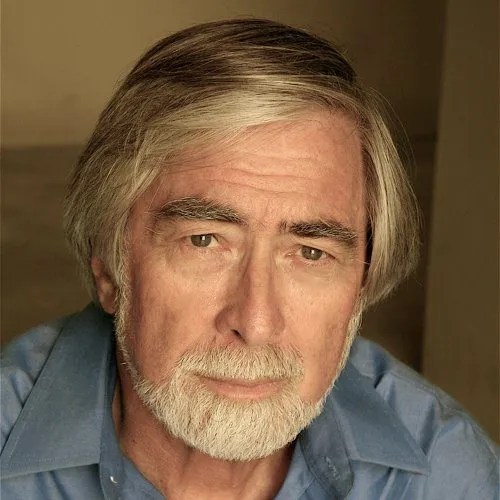
Robert Scheer
Robert Scheer, publisher of ScheerPost and award-winning journalist and author of a dozen books, has a reputation for strong social and political writing over his nearly 60 years as a journalist. His award-winning journalism has appeared in publications nationwide—he was Vietnam correspondent and editor of Ramparts magazine, national correspondent and columnist for the Los Angeles Times—and his in-depth interviews with Jimmy Carter, Richard Nixon, Ronald Reagan, Bill Clinton, Mikhail Gorbachev and others made headlines. He co-hosted KCRW’s political program Left, Right and Center and now hosts Scheer Intelligence, an independent ScheerPost podcast with people who discuss the day’s most important issues.

Vijay Prashad
Vijay Prashad is an Indian historian, editor and journalist. He is a writing fellow and chief correspondent at Globetrotter. He is an editor of LeftWord Books and the director of Tricontinental: Institute for Social Research. He is a senior non-resident fellow at Chongyang Institute for Financial Studies, Renmin University of China. He has written more than 20 books, including The Darker Nations and The Poorer Nations. His latest books are Struggle Makes Us Human: Learning from Movements for Socialism and (with Noam Chomsky) The Withdrawal: Iraq, Libya, Afghanistan, and the Fragility of U.S. Power.
Editor’s Note: At a moment when the once vaunted model of responsible journalism is overwhelmingly the play thing of self-serving billionaires and their corporate scribes, alternatives of integrity are desperately needed, and ScheerPost is one of them. Please support our independent journalism by contributing to our online donation platform, Network for Good, or send a check to our new PO Box. We can’t thank you enough, and promise to keep bringing you this kind of vital news.
You can also make a donation to our PayPal or subscribe to our Patreon.