
Click to subscribe on: Apple / Spotify / Amazon / YouTube / Rumble
The biggest problems in the United States—healthcare, housing, drug abuse, energy costs—seem to have surpassed reform. Healthcare premiums will continue to skyrocket while coverage continually gets denied. Housing will continue to exist as a speculative asset for Wall Street to toy around with. Drug abuse will continue to fuel mental health crises and deaths of despair. Award-winning journalist, author, university lecturer and former ScheerPost alum Natasha Hakimi Zapata aims to restore faith in a future for the American 99% with her new book.
In “Another World Is Possible: Lessons for America from Around the Globe,” Hakimi Zapata illustrates how reforms to social systems are possible and effective in other countries such as the United Kingdom, Uruguay and Singapore. She joins host Robert Scheer on this episode of Scheer Intelligence to dive into some of these examples.
“Americans are needlessly suffering in the wealthiest country in the history of the planet and I really think that that’s the message that I want everyone to take away from this,” Hakimi Zapata tells Scheer. “We are getting a bad deal, but we can do a lot better for ourselves and our fellow citizens and hopefully also for the rest of the world.”
In the U.K., universal healthcare is a model to be looked at. In Singapore, public housing is exceptional despite its hyper-capitalist economy. In Norway, its highly subsidized childcare is admirable. Hakimi Zapata demonstrates the viability of programs that could be considered unrealistic or even extreme in the U.S.
“What I wanted to do was show how these policies work, talk to policymakers and activists and union leaders, but also to just everyday citizens who are living with these policies day in and day out,” she explains. It is the stories behind these policies that show their true effectiveness, Hakimi Zapata points out.
Credits
Host:
Executive Producer:
Video Producer:
Introduction:
Transcript
This transcript was produced by an automated transcription service. Please refer to the audio interview to ensure accuracy.
Robert Scheer
Hi, this is Robert Scheer with another edition of Scheer Intelligence, where the intelligence comes from my guest. In this case, Natasha Hakimi Zapata, who has the best name a writer could possibly [have], I mean, my God. And I have actually known about her originally because she won a poetry prize at UCLA. And I read some of her poetry and I was blown away by it. It’s very strong, very evocative, that’s the word you can use.
And then hired her or yes, at Truthdig, where I forget all your titles, but you were instrumental in Truthdig’s winning five or six Webby Awards. You ended up being the foreign editor because you fell in love and got married and went to live in England. So we had to call you the foreign editor since you were no longer in L.A. But you really did great work. You’re one of the people who defined Truthdig.
I could say that. I think I’ve said it in a couple of your applications, scholarship or something, but it’s all true. But you’ve written, the reason we’re here today is, and this is what I love about mentoring to the degree that I was ever a mentor here, I love it when your mentees go on to do better work than you have done. So then you’re succeeding as a mentor. It’s a complex relationship, quite often the mentee is not as happy as they might be with the experience.
I know this because I teach in a college and we have all these internships and a lot of people feel they’re exploitive, they don’t work. Anyway, let’s not get into that. But Natasha Hakimi Zapata, and I’m going to go into that name as a way of beginning, has written an incredible book for the real press called “Another World Is Possible: Lessons for America from Around the Globe.”
And the great thing about this book is it’s not a bummer. I mean, the current situation is so goddamn depressing that at my advanced age that we’ve reversed in so many ways in the effort to try to find a more peaceful and just world is absolutely bizarre. So for no other reason, pick up this book if you want to have a more cheerful and legitimately cheerful. This is not a conning book to try to get you to feel good about what you shouldn’t feel good about.
This is a serious, realistic appraisal of other paths taken, not that could be taken, but that have been taken in what is it, eight countries, nine countries, very different countries around the world that actually have found another world that is possible, having experimented with everything, education, housing, employment, gender relations, drug policy, everything.
I’m going let Natasha do that, but I want to just say a word to show, in addition to all the reasons why she’s quite an expert and she’s a linguist, she actually teaches translating languages and so forth. But her very name, Natasha Hakimi Zapata, which is not made up, is actually, I thought it was made up, I said, come on, girl, look, it’s great. No, it’s a real name, and it shows the, you know, the coming together, it’s not exactly the melting pot in America, her family ended up not melting so well, but the mixture, that is the one strength of being in the United States, particularly if you’re in one of the more urban areas, actually the country’s now quite urban, where you get to see these different waves of migration, which is now being, I mean, it’s been turned into a curse by the Trump administration.
It’s bizarre. You know, they round up people, they call them gang members, they put them in, you know, El Salvador and then the Homeland Security person leaves our home, goes down there, looks at these half naked men in the prison and says, yes, this is going to happen to everybody. We’re going to hunt you down. There’s a real barbarism now. However, Natasha is a reflection of a time when we’re a little bit more optimistic about that also. Her mother’s from Mexico, her father’s from Iran, and she was exposed to these different cultures, both of which are very vibrant in Los Angeles and represent millions of people on both sides.
So I’m going to leave it there. Tell me about yourself or tell the people listening about yourself and why this book. Okay, and I know I had you in my class with hundreds of students, well, 100 students, and they found it fascinating, and you’re closer by far to their age than I am. So it’s a book that has a positive message that I think will inspire people. I wanna put that out there. I’m not asking people to do gooder chore. I’m asking them to have a positive experience. So tell me.
Natasha Hakimi Zapata
Yeah, first of all, Bob, thank you so much for having me on the show. And for all of those kind words, I, you know, it feels like coming home, I worked on summaries of this show for so many years and, you know, worked with you for so many years. And you absolutely and as I said, in the acknowledgments, you and Narda are two of my greatest mentors, if not my greatest mentors and also great friends. The great, the great Narda Zekino.
Robert Scheer
Who’s that Narda you’re talking about?
Natasha Hakimi Zapata
The great Narda Zacchino.
Robert Scheer
Yeah, she used to be my boss at the LA Times where she was the associate editor. I was a mere peon reporter, correspondent and then columnist. But yes, Narda Zacchino. You’re right. She deserves the credit for everything. Good. That’s going on. Yes. Go ahead.
Natasha Hakimi Zapata
Well, and just to say that both of you really influenced me throughout these years. My political upbringing was absolutely with you and Narda and others, and Chris Hedges and so many others that I worked with at Truthdig over a decade. It seems impossible to think that I started there as an intern, I think, before I was even 20 and then ended up there for about a decade of my career.
It was really during that time, I talk about this book as coming from two parts of my life. And one of those parts is the professional part. It’s the about 15 plus years now that I’ve worked in progressive media and worked with you mostly actually, in which we were writing and reporting on all of these issues that in the US really felt intractable. But at the same time, as you noted, I was living abroad in a number of countries. I now live in London, in the UK, in which some of these problems were solved problems or at least countries had made a bigger dent in these problems than we had.
And so I really wanted to share these stories of success that I was seeing that I felt were less reported or under reported in the US and share them with fellow Americans that like me want to see our country going in a very different direction from the country, from the way that it has gone, from the way that it’s going now.
And of course, acknowledging that I’m not, especially here I am talking with you and with all of the great work that you’ve done and all of the movements that you’ve been a part of and acknowledging that this is another step in a long line of American history and activism and labor movements and civil rights movements, LGBTQ movements that have had great successes in the US. And just sort of wanting to add to the tools at our disposal as we fight for a better country and hopefully for a better world.
So that’s the professional side of things. And the personal side of things really comes from my story, my family story in the U.S. and that’s that, as you noted, I come from a family of immigrants. My mom was undocumented for many years and I grew up partly in Chicago, then in Mexico City, then in Los Angeles. And this narrative, especially when we were in the US about my brothers and I being these little American dreams that my parents had was very important to my family.
And I was the first in my family to get a college degree. My brothers went on to do the same. But as we got older, I started to really feel that that American dream was actually more possible in some of the other countries I had been to.
And part of that stems from a personal story that I write about in the introduction and that you actually know quite well, Bob, since you know my mom, where my mom called me from a hospital while I was in grad school for many years. She didn’t have, she couldn’t afford health insurance, health care, and was diagnosed with diabetes at the moment in which she was being rushed to the emergency room and was going to have her right foot amputated because of this lack of care that she had.
And at the time, I remember feeling this overwhelming dread, concern for her wellbeing, for her future, for her survival in the most literal sense, but also an added dread, an added question of how are we going to afford to pay for the care she needs moving forward? How are we going to afford the insulin she needs to stay alive? And I knew because I had lived in countries like the UK where I live now and others where there’s universal healthcare, that this didn’t need to be the case.
That we could do better by our citizens at their most vulnerable moments and at other moments in their lives. And that we could do better because I had seen better. And so that’s really the personal side of where this story comes from.
Robert Scheer
You know, you left out your father here, who’s not from Mexico, actually, he was from Iran. The reason I’m bringing it up, because I know that he’s had a big influence and you’re familiar with the, I don’t think you speak Farsi, but some, no, but you’re with this huge Persian community we have in Los Angeles and in the United States. And one reason we have immigration is because the US looms so large and so mischievously, a word I haven’t used for a while, in the world.
I mean, we created a lot of the problems that cause refugees and desperate people to try to get to a zone of safety, and one being a very prosperous country like the United States. So you really grew up as a witness to the trauma that the US produces in the world including our policy and obviously seizing half of Mexico and our policy towards Mexico and our contradictory immigration problems.
And that’s really front and center now to a lot of the madness we’re experiencing. We’re blaming immigrants, like your parents, for our problems when we in fact created not only our larger problems but a lot of the immigration in the world, you know, and whether it was Cubans coming to Miami, I can go down the list, Chinese people brought for the work on the railroads and mines, but then we also were involved in Chinese politics and in their economy and caused a lot of this disruption and so forth.
So I like, I mean, this book is really, there’s something wonderful about this book. Let me just put it this way. When I grew up with a very naive period, I was born in 1936, so I experienced the Depression as a young kid and I experienced World War II, but I grew up in the glow of FDR and the post World War II period.
And people don’t write about that enough. When we had the GI Bill and every one of my relatives now was going to get a chance to get educated. And we had already the beginnings of, you know, some enlightenment. The armed forces had been segregated, but now we actually were having the Civil Rights Movement that was working and we had a strong union movement and so forth.
And the U.S. was kind of a pressure cooker for enlightened progressive ideas about how to reorder society. And then through our involvement or creation with the U.N., that was going to be spread worldwide. And what happened is the world got cynical about the U.S. model and our ability to solve these problems. And we’re now in a situation where we have a president who is very sensitive to other powerful nations.
China, whatever, Russia, you know, whatever. Very sensitive. And that might be a good thing, at least he knows that we don’t have the total dominant power, but he seems totally indifferent to the importance. I forget how we refer to it in some very derogative way, those countries that don’t count, shithole countries, or I forget the name, there was a phrase.
Natasha Hakimi Zapata
That’s what he said. Yeah, he called them shithole countries.
Robert Scheer
Shithole countries. You actually have looked at some of these countries. so go through the countries and tell us why they’re not shithole countries. They’re actually, in your book, enlightened laboratories for dealing with a lot of our problems. Just take us through. I’m not saying Trump would say they’re all shithole countries, but he’s pretty broad. I think right now, even the Western European countries and Germany and France.
Maybe even England, although they’re kissing his tuchus. But nonetheless, you know, everybody seems to be shithole now, in one way to Trump. But talk about that, because these are countries that have actually tried and successfully dealt in these cases with real problems. So, you know, I’ve been accused correctly by my wife and anyone else who listens to the show of talking too much and interrupting.
So I promise to shut up for the next 20 minutes or so that we have here. Take us through the book. I think it’s worth doing case by case just so people understand that there’s a lot of stuff going on in this world to make it a better world. And these are people we just think maybe we should bomb them. But we do bomb them. And let’s get to a different perspective. So it’s your show now.
Natasha Hakimi Zapata
I really want to point out that when I set out to write this book, I wanted to make sure that although I did go to some European countries, I did go to Scandinavia, when we often talk about social democratic solutions, we often talk about these countries, that there were some great policies that come from there. And I went to Norway, I went to Finland, and I’ll go through the list of the places that I went to. But I also wanted to go sort of further afield, so to speak.
And take a very global perspective on these kind of policies that we would consider progressive in the US and that actually in a lot of these countries oftentimes don’t even come from a left or if they do if they did initially come from a Labour Party for example they are now so popular that they go beyond left or right political meanings and are actually just widely beloved and we’ll talk about the the National Health Service in the UK first that’s that’s where the book starts.
But I just wanted to point out that I not only took a global perspective, but took a crib to crib approach to these policies. And I started at the beginning of life where you would start, which is at a hospital with universal healthcare in the UK. Of course, there are many other countries that have universal healthcare, but the United Kingdom where I live now has the first ever statewide universal healthcare system at the National Health Service. And I then moved on to family friendly policies in Norway. They have great paid parental leave policies that are beneficial not just to young parents, but also to wider society and also highly subsidized, high quality childcare.
Then I went to public housing for all in Singapore, which was a really interesting example, which I’ll get into a little bit later why I wanted to include Singapore. Universal public education in Finland, drug decriminalization in Portugal, another country that I lived in for quite a while.
Internet as a human right policies in Estonia, renewable energy transition in Uruguay where they broke all records and greened their grid in less than 10 years. Biodiversity protections in Costa Rica. And I finally ended in universal non-contributory pensions in New Zealand. And essentially, throughout all of them, what I wanted to do was show how these policies work, talk to policymakers and activists and union leaders, but also to just everyday citizens who are living with these policies day in and day out.
And as much as I could, I tried to pass the microphone to the people who live in these countries. I don’t live in most of them. And so that was very important to me. I wanted it to feel like you were reading stories as well. I think that that’s a really powerful tool for talking about these issues. Oftentimes we talk about policy, well, and having sifted through quite a lot of dense policy texts, it feels kind of alien.
It doesn’t feel like it’s personal. It doesn’t feel like we’re talking about real people. We’re talking about sort of numbers and theories and ideas. And so I wanted to take that away and really make it about stories. And then I also wanted to show the comparison to the situation in these countries with regards to each of these policies and what’s going on in the US.
And of course, we’re now speaking at a time in which things are deteriorating quite quickly in terms of our government, in terms of what the Trump administration is doing across the board. And I want to highlight before I even get started talking about these policies that a lot of them come out of very dark periods in these countries’ histories.
And so you have, for example, the National Health Service in the UK coming out of the ashes of World War II and the devastation of that period. You have drug decriminalization in Portugal coming out of a dual epidemic. You have Uruguay’s energy transition coming out of periods of literal darkness in which the country could not keep the lights on and a number of other countries that were looking to very different policies to bring themselves and their country and their economies and their people to a better place.
And so I just, as we are being plunged into this period of darkness in the US, I want to highlight that I acknowledge that it is a very dark period, but that it does not mean it is the end and that we can and should be talking about successful examples both in the US and abroad as we try to consider how we will move forward, how we will build and rebuild from this period.
Robert Scheer
So there’s one you just threw out, New Zealand, and I read your book. I never thought of New Zealand as a model, but not for any negative reason. I don’t think it’s a shithole country or something. But you mentioned, let’s begin with that one, because this whole idea of a pension, I’m of the age where pensions matter. I’m fortunate that I actually earn so much, I mean enough that my social security is something, but not enough and then I’m still working, let me just put it that way.
So pensions in the United States are real issue. I’m gonna be 89 in a week or two and I’m still working full time and that’s not totally out of love. I have a lot of love for it, but I am working. I’m sure I’m not alone. There are plenty of people still working. You mentioned this is a non, you’re not given the pension in proportion to your working. So why don’t you, and this is not, we’re not talking about some fantasy, lefty, utopian, failed, commie kind of place, right?
We’re talking about good old tough New Zealand, the rugged individualism. So square that. How do these rugged individuals get along with this? Sounds dangerously like some wild socialist utopian fantasy.
Natasha Hakimi Zapata
I want to point out that New Zealand actually kind of has a competition with the UK over who had the first universal healthcare system. And so there were quite a few quite progressive ideas that were taking hold, quite progressive policies, socialist policies that were taking hold in New Zealand quite early on. And yet one of the most interesting to me is their superannuation, they call it, which is a universal non-contributory flat rate pension for all people over the age of 65, I think it still is.
Yeah, they have that age requirement. They have to meet some residency requirements. And what it is is that it’s actually calculated as a percentage of average wages annually, and changed a little bit depending on inflation rates and things like this. But there are really important parts to this. So I’ll kind of break it down. So first of all, universal in that most people, in fact, everyone who meets the age and residency requirements will receive it, regardless of whether or not they’ve worked in New Zealand, whether they’ve paid taxes in New Zealand, they’ve, you know, as long as they’ve spent that time there, they will be entitled to it.
The fact that it’s non-contributory, which kind of goes hand in hand, is really important because what they found in New Zealand is that contributory models—and I just want to point out that I think social security is great in that I don’t want to be too mean about it because I think it’s one of the great things that we still have from the New Deal—but I do think that it can often be too complicated. It’s certainly too low.
And the fact that it’s contributory, entrenches inequities that happen throughout a lifetime and is, I believe, less fair to women and historically oppressed groups who suffer from discrimination throughout their work lives, for example. And so that is one of the things that in New Zealand, by making it non-contributory, they worked around. It no longer depends on how much you earn throughout your life, but rather that you live in New Zealand.
Robert Scheer
Let me just stress the non-contributory part because what is a recognition is that when you have old people living there, unless you’re heartless and you just want them to die in homeless encampments or they don’t care about them, but the fact is any decent society, you’re going to want to take care of your older people. And if you don’t, you’re going to incur big social costs, illness and other things that come from this visible poverty that in the case here of Los Angeles is destroying the city.
And so taking care of the old, I mean, this was something ingrained in almost, I guess, every major culture in the world, whether it’s China or, you know, the claims of the original pilgrims to United States or anybody, there was always an idea you have an obligation to take care of the least among us. And certainly when the old becomes less capable of earning or whatever happened to them, that’s a social obligation.
As I say, social security. I don’t even think it’s the Trump administration seems to be wreaking havoc with it. You know, when you don’t know when the offices are open, you may have to go sign up and do all this. And Elon Musk is going nuts with it. And, you know, maybe we should talk about South Africa, where he came from. But the fact of the matter is, it’s really not controversial in America. You try to attack social security is the quickest way to become an unpopular president.
And I think it’s happening already now to Trump. mean, that’s one, because it does work, does work. And I want to move from this one. And when you finish with how it works in New Zealand to the English health care system, because that’s clearly a very big problem in the United States. And one way we deal with it, well, they tried it in England and it didn’t work and so forth. Your book sets the record straight on that one. So finish with New Zealand and go to England and then we’ll move along to the others.
Natasha Hakimi Zapata
Well, and just to say that, like I said, I think Social Security is great, but I think that it is also important to consider how contributory models can entrench these inequalities and that it is a quite complex system. I spent quite a long time trying to understand how Social Security is calculated. And one of the things that people love about New Zealand superannuation and makes it so popular is that it’s quite simple to understand. It’s the same rate for everyone.
And so what I would argue is that while social security is great, it would also be great to have a universal pension that everyone was entitled to, regardless of whether or not they had paid into a system. I think that that’s a very American model for something to make us feel like we’re contributing, whereas really through general taxation and through so many other ways that capitalism leaves out, people are contributing to a society and its economy.
So moving beyond New Zealand and universal pensions to the National Health Service in the UK, which I have the most experience with. It’s such an incredible model because it’s actually an example of socialized medicine that comes from a period in British history in which after World War II, Britons were coming back to a physically devastated country and that many of the hospitals and other buildings obviously had been bombed and there was this period of rebuilding and they actually voted out Winston Churchill and the Tory party and voted in their first Labour government under Clement Attlee.
And I think that this decision shows a lot about what direction the majority of Britons wanted to take the country in. And so you have Clement Attlee who at the time starts to re-envision the welfare state in the UK and with a Aneurin Bevan who is this Welsh former union leader from the mining towns of Wales who heads up the health ministry and understands very quickly that if there was going to have to be massive public investment in rebuilding a healthcare system that up until then had been private hospitals and charities and private general practitioners offices, and had left out many people, especially women and children, from being able to access care, that if this massive public investment was going to be needed in order to get them back off the ground, that it should belong to the people of Britain, that it was their resources, and also it should be a system that’s made for them.
And it is a very good example of how social solidarity can come out of universal systems, universal policies. It is widely beloved in the UK, even as there have been attacks to it and unfortunately some successful attacks and underfunding and understaffing and all of these different problems that, you know, everyone from Margaret Thatcher to Tony Blair up until the most recent Tory governments have all participated in. It is still a system that people love and fight for.
And that is another thing that I’ve really learned from living in the UK is that even once you get these wonderful policies like universal healthcare, you still have to fight to keep them. And I think that that is something we cannot forget about that, that it’s not the end. It’s not the end to get something like universal healthcare. And just to point out, I mean, I think probably all of your listeners are as familiar as you and I are with how broken the US healthcare system is, health insurance system really.
It’s hard to call it a healthcare system when so much of it is about insurance and whether or not your insurance is going to deny you access at any point or whether or not you can even afford health insurance at any point. That we are getting such a bad deal in the US when it comes to healthcare. We are spending nearly double what the UK does in percentage of GDP and what many other countries spend that have universal healthcare systems, and we’re getting much worse outcomes.
So almost across the board, we’re getting worse health outcomes when you look at different measures, but we’re also living four years less on average than Britons do. So to think about a universal healthcare system in the US, and I think probably the closest we’ve come to in recent years, imagining something like that would be the Medicare for All bill, which is still not even what the NHS has done, right?
It would be great. It would at least bring us to universal access, but is not talking about the state owning and running all hospitals and doctors offices. I mean, this is a very radical model that has worked incredibly well in the UK.
Robert Scheer
You know, you mentioned Medicare for all, which again, is made to sound like some wild, crazy idea in the United States, and you say is commonly accepted in England. And what’s so amazing about it is, you know, I’ve been, I actually can’t get Medicare because I’m still working. I can when I go to the hospital, thank goodness, or I’d be broke all the time.
But because I’m working full time, even as I’m approaching 90, but when I’m in the waiting rooms, I’m still paying my deductible. I’m still having to worry here. You have to pay extra to get a concierge so you can actually see somebody, even though I supposedly have good coverage. I sit there with my fellow senior citizens. It’s the one thing about America they love most.
Finally, they got there. They didn’t like the healthcare system until they turned 65 or something. And they constantly sort of pat me. I said, God, I don’t know what this test is going to show and I don’t know what this is going to be. They say, yeah, well, at least they’ll still cover it, you know? I say, maybe under your system, because you’re getting Medicare A or whatever it’s called. I’m not, you know, so I still have to go to my private provider and see if they will cover that test. And I have to check with them and so forth.
So I live with that. You know, when you get to my age, you’re in the hospital quite often or at the waiting rooms. And so what I want to stress with your book is what you’re saying about the British health care system. And I’ve been in England and actually when France had that kind of a system to some degree, they saved my life in a French hospital and even Czechoslovakia. I shouldn’t say even Czechoslovakia when I needed a major hospital care. They were helpful.
So I’ve been around the world as a journalist and so forth where I occasionally needed help. And yet because of propaganda, because of profit making, because of self-interest, these discussions are always clouded by misinformation, lying and so forth. So they’ve been able to inculcate in the American public the idea that the English system, no, you have to wait in long lines. It doesn’t really work. Cause I’ve been hearing that all my life.
And then somehow we don’t hear much about when it doesn’t work here, as in your mother’s case. So I’d like you as a journalist, as a writer, to address that. Because what your book says rings true to me, not because I’m on the left or anything else, because I’ve been a patient in many countries. I’ve seen healthcare systems up close.
And it’s always been startling to me that why am I being envious of countries that had a much lower standard of living, supposedly? Why did the French Notre Dame Hospital save my life? And then even then I got on a train and went to Czechoslovakia and had a reoccurrence of a serious illness and they were able to save my life under their kakamani, you know, when they were still part of the old Soviet empire. Actually, it worked out.
So I want you to address that because I want to talk about disbelief. Your book is a book of optimism. The automatic response of people is to say, yeah, well, she doesn’t know it. She doesn’t know the other half of it. If you talk to other people, I want you to address that cynicism now and give us a few more examples from the book because it keeps coming out. For instance, I’ll tell you one that really shocked me in your book is Singapore, which is a top down society and everything.
How did they do public housing, which we can’t do in the United States. That’s why we have this unhoused population. We had some good public copies. When I grew up in the Bronx, that all got, the people attacked it. The media, know, it’s not working and so forth. Tell us about Singapore and then let’s quickly go through another examples of the nine examples you have in your book. Because that’s the power of this book. This stuff does work. What is the title? “Another World is Possible: Lessons for America from Around the Globe.”
That’s the reason I’m pushing this book, because it doesn’t have to be this way. And it’s incredible. The world has never had a more prosperous country in the United States, and we waste much more than we even use. And yet, I can go four blocks in any direction from where I am now, and I’ll see people sleeping on the street and miserable and not getting any care, including psychological care when they need it.
But let’s switch to Singapore, because we think of as a fat capitalist country, and then let’s go through the others pretty quickly.
Natasha Hakimi Zapata
Yeah, so I just want to point out that what you’re talking about is a problem I see at the core of American society in that if you’re among the wealthy few, you have access to the best health care, to the best housing, to the best schools for your children and daycares and elderly care. And yet, if you are among the majority of Americans, despite living in the wealthiest country in the history of the planet, you have very limited to no access to those same great things.
And part of the problem is that we create these off ramps for wealthy people, right? We, not just within our tax system, which definitely needs to get more progressive, but just in general, by not having more universal systems, we allow this off ramp for people that then makes it worse for the rest of us. And so just to say that, to kind of combat this myth that people talk about when they talk about the NHS, is that we have waiting lists here as you do in the US that emergency care is very similar and that you will go to an emergency room, you will not be denied care and you will be seen in a sort of somewhat timely fashion.
I’ve been in emergency rooms in both countries and I know the waits are pretty comparable. And it’s actually true in general for waiting lists for different procedures and for treatments. The difference is that the NHS is still free at the point of delivery for everyone. In the US, you might get to the end of that line, of that long waiting list for something, and you could still possibly get denied coverage, as you were talking about, or be saddled with thousands in medical debt, like so many Americans are, or not even…
Robert Scheer
Let’s try tens of thousands of medical debt, sometimes hundreds of thousands. I could tell you, again, being of an age where these bills arrive and I’m still in the private system, it’s shocking. And who’s swindling who? I don’t know. Is it the insurance company? Is it my plan? Is it the hospital? What have you? But suddenly you’re looking at what? That costs $20,000? Fortunately, I’m only paying what, $1,000, $2,000, but it’s adding up.
You know, and who else is paying? And we don’t even get to ask those questions, know, waiting lists. One thing I’ll just speak out of personal experience. I now pay an extra seven grand and then I also pay an extra seven, six to seven grand from my wife in order to see a doctor, even though I’m supposed to have one of the best health care. And I went in on the most expensive level because we have our waiting lists. I’m waiting to see doctors. And if you’re lucky, otherwise you get a telephone call and you’re supposed to be happy they’ve just done a thorough exam over Zoom.
But I just, you know, the lies, that’s what your book is refreshing because of its honesty. You show the problems in each case, you show the complexity, you show sometimes how accidental the success was. It’s honest reporting. That’s really needed here.
Because I don’t want to add to all the propaganda from left or right or anybody else. But usually it’s from the wealthy. It’s usually from the establishment, the line, whatever the establishment calls itself. And what I think readers will recognize in this book, these are not cherry picked examples. You didn’t pick all the best cases. And it’s a very good survey of, yes, another world is possible.
Yes, it’s positive in that the people are succeeding just as we have at times, know, public education at times. And then we’ve done our best to kill it. But, you know, when you went to UCLA, you’re much younger than I am. When I first went to the City College in New York and then did graduate work at Berkeley and everything, tuition was not a factor. You know, even textbooks at one point were free in college. And I’m sure it was a much lower rate at UCLA than they’re charging right now.
I mean, you so, you know, talk about this. I want you to talk about you’re an anti-prop—you’re a bullshit detector is what you are. Seriously, because for reasons of profit and power, we are lied to constantly about what is being done around the world. Constant lying. And then we’re told America will be great or has always been great or blah blah blah.
And the idea that there are other ways to do things. That’s the power of your book. Right? And they don’t come from one ideology, they don’t come from one religion, they don’t come from one system. But there are things that work when people want to make them work and your bottom line is when the public demands that they work. Right?
Natasha Hakimi Zapata
Absolutely. And just to say, just to add a quick anecdotal thing about the healthcare system in the US, I have not had to deal with health insurance for 15 years or something like this. And just hearing the stories and seeing my family struggle through getting things approved or getting all of these bills, even just that stresses me out. And it’s just like, because it is such an inefficient system in which we are spending so much per capita on a system that people still cannot access.
So it is absolutely absurd, honestly, to watch from a country that has universal health care. But going to Singapore, which is the example that you were talking about, that was interesting. And I know I’ve lived in Los Angeles and my family is there as well, it seemed to me sort of an impossible dream to go somewhere where they had essentially universal public housing for all citizens and permanent residents.
It was so important for me to include Singapore because it is so different from some of the other places that I went to and that it cannot be called a sort of bastion of leftist politics and that you have a hyper capitalist country, a hyper capitalist government that is more pick yourself up by your own bootstraps than even the US can be in that even schools, you know, we have public schools in the US, like you said, they’re being torn apart, but they still exist and all schools in Singapore are fee charging, just to give you an example.
But they decided early on that housing was very important to a country’s stability, to a society’s stability. And so over the years, and it’s looked different, but it’s basically started since the 1970s after the end of British colonialism and Singapore becoming its own country, that you have this radical experiment in affordable housing, affordable public housing for all, that today has 80% of Singaporeans living in public housing and with the Housing Development Board Apartments, HDB, and 90% of them are homeowners.
And it’s just this incredible example of how when you decide to build high quality public housing and make it affordable based on people’s actual incomes and you also destigmatize this idea of public housing, people will take pride in living in it. So many Singaporeans told me time and again, like, what’s the big deal? We all live in public housing, it’s wonderful. And oftentimes, even if they could afford to live, there is still private housing in Singapore.
Many Singaporeans, even when they can still afford to live in a private apartment that’s next door, maybe it has more amenities like a pool or something like this, they prefer to live in the HDB housing because it is high quality, it’s affordable, and it’s just a better deal. And that is one of the things that’s really important about Singapore is that it shows that if you have a public option, it regulates the private market as well.
And so that I don’t think Los Angeles, for example, is suddenly going to have 80% of Angelenos living in public housing. I mean, to an extent I would like to see that, but even more public housing than the meager offerings that we have right now and making it mixed income, affordable public housing for all would have a massive impact on the entire housing market and the entire offering of housing in any place like Los Angeles.
But in general, I think most of the US could learn from this. And what’s really fantastic is that as I went about researching this book, I came across examples of other Americans that are not just reporting on these ideas the way that I am, but are actually implementing them and contextualizing them for an American space.
And so you have a representative out of Sacramento, Alex Lee, that is looking to Singapore and to Vienna. That was another interesting public housing model.
Robert Scheer
What was the other name?
Natasha Hakimi Zapata
Vienna in Austria is a very interesting, it’s a very different public housing model in that it’s mostly rented. It’s not a home ownership model. And yet also incredibly successful.
It’s within the reach of 75% of the Viennese to be able to live in public housing and it’s kept affordable for 75% of people in that the top 25% will then possibly live in more expensive housing. So it’s never obviously the bottom for 25% of income earners. And so…
Yeah, so as I was saying, you have this example of a representative in California and Sacramento that’s looking to Singapore and Vienna. And then you have a senator, state senator in Hawaii, who’s also made a proposal based on the Singaporean model that’s been adapted for Honolulu and takes a lot of the great ideas that Singapore has proven to work and applies them to hopefully what will be a mixed income affordable housing development in Honolulu.
Robert Scheer
You know, I have to make this point because it’s not that there’s a lack of good ideas or good models. It’s that they’re not followed because you can’t make as much profit. You can’t exploit people as effectively. When I was growing up in the Bronx, I aspired, not me, I mean, was five years old, but I was there until I was 24 years old. And my mother, who, you know, worked there in the garment industry until she retired at 65, aspired to get into public housing.
Because the fact is New York City had, and you met mixed income, they had moderate income, middle income, low and so forth. And it was very desirable. In fact, one reason the South Bronx ran into trouble, a lot of people went to public housing in the North Bronx and so forth. And in Los Angeles it’s just the opposite. We have very little public housing. We’ve had it historically because we believe in laissez-faire.
Ironically, the biggest problem now for China and its economy is it screwed up housing market despite it’s called a communist country where by the way in urban sections about 80% of employment is private and everything. We have these labels, what’s communist, what’s left, so forth. But in China, they turned the housing market into a model of the United States or a copy of the United States where it became a zone of speculation, investment you’re saving, it’ll grow, grow, grow, instead of being a place where people to live.
And China is the biggest problem they have right now as far as I can see. There was a very brief time in my life when I was in the Center for Chinese Studies at Berkeley. I thought I had some expertise or was developing it, but I don’t claim to be. And one of the things in your book, you’re very careful about trying to become expert and really know what you’re talking about in these different examples, because they’re not simple.
But ironically, China, and we have some manifestations, by the way, right opposite what used to be called the Staples Center where the Lakers play and have hockey. We have failed Chinese investment there because their company, Evergreen or whatever, wasn’t able to put together because it was all speculative. Housing is speculation as a source of getting property wealth.
So let’s, we’re going to run out of time, but I do want you to quickly—the common denominator here, and all of the chapters are really worth reading, not because you’re particularly interested in the housing thing or the drug problem or so forth. What is that Nike slogan? Just do it? No, don’t, do it wisely. And there are these examples that if you actually want to solve these problems of the unhoused or whatever, you can do it.
The problem is that most of the decisions are made because there’s a bureaucracy or an authoritarian government that wants to do it its way, or it’s the profit motive. That’s the main thing. How do you turn this question of the four freedoms that Roosevelt talked about, proper housing and food and so forth, how do you take them away from the rapacious effect of the market and make them human again? So just quickly go through your other examples to show the scope of the book.
Natasha Hakimi Zapata
I just want to say that one of the great myths at the heart of the US is this idea that we can’t have these things because we would have like we the average Americans would have to pay so much more tax. And there was this really great piece by Matt Bruenig in Jacobin quite a few years ago, that looked at calculating the labor tax rate compared to other countries in the US, compared to other wealthy countries.
And what he showed was that when you take into account health insurance, which you should because the Affordable Care Act makes it mandatory to have if you’re a worker, that, and you’re also comparing to countries that have universal healthcare systems, and you add that to the labor tax rate, the UK, where you have this great national healthcare service, you’re looking at a 26% labor tax rate for a married person with two kids.
Norway, And I won’t be able to talk too much about it, but as I said earlier, that has universal healthcare as well, also great paid parental leave policies and high quality, highly subsidized childcare where every Norwegian.
Robert Scheer
And by the way, happier people, because I just was reading the Gallup poll, which they’ve been doing for some time about who’s happy in this world. US, yes, but Mexico, Mexico is ahead of the United States by quite a bit. I mean, the US is really quite low. So this whole claim that Hillary Clinton said, we’ve always been great, Donald Trump’s wrong. He said, he’s going to make it great again.
Well, great or not, the fact is we don’t rank and have for a long time not ranked very high on the happiness level and whether it’s the Scandinavian country or even Mexico, know, now outranks us, certainly the Scandinavian countries. So talk a little bit about that. We’ve left out Finland and Norway.
Natasha Hakimi Zapata
Well, and so just to say, so for example, Norway, where you have this great, these great policies, like I said, every Norwegian child has access, has a right actually to a daycare, a spot in a daycare from age one, and their parents will never pay more than $400 a month, more or less, for each kid, and there’s like discounts if you have more than one child.
Anyway, they’re looking at a 32% labor tax rate, Finland, which you mentioned, where they have this great universal public school system that I think is really a great model and that I encourage people to read about in the book, they’re looking at 38%. In the US, you’re looking at actually over 43%.
Robert Scheer
Explain what this means 43%, 30% and what?
Natasha Hakimi Zapata
This means that in terms of your actual, what your actual income is, this is how much is going towards things like healthcare and other public service or what should be public services, I should say, I know that healthcare in the US it’s not really a public service unless you look at Medicare and Medicaid, but this means…
Robert Scheer
This is not money going to the military or bailing out failed banks or something.
Natasha Hakimi Zapata
Well, exactly. Exactly. It’s like what I want to highlight by this example is that Americans are getting a bad deal, that we are paying quite a lot of tax. The average American is. And part of the problem is that the wealthiest Americans and corporations are not paying their fair share. And that’s getting worse now. But this myth that we’re going to have to pay so much more in tax is something that really can hold people back from understanding that actually these things would you more universal programs like the ones that I talk about would be so beneficial to most Americans, not just a few.
And going to I don’t think we have time to look at many other policies, but I just want to say that, for example…
Robert Scheer
Let’s round this up with an hour we’re at almost 50 minutes. You got six minutes to cover all the other examples.
Natasha Hakimi Zapata
I won’t do that. I’m not going to cover all the other examples, but what I will say is that I end the book on lessons that I collected from all of the countries. I would go to a lot of different countries and I would sit in front of a Norwegian judge and they would ask me, what are you learning from all these other countries? And a lot of people would ask me this as well. And so I collected sort of broader lessons.
And again, I won’t go through all of them, but I will say that one of the big lessons that I found, for example, that is a good example is not just the NHS in the UK or the Finnish system, that Uruguay is a great example with this renewable energy transition. Public ownership over private profit really needs to be at the center of policies that work for people. And Uruguay is a good example because they have a publicly owned utility at the heart of their renewable energy transition.
And it is a huge reason why, and I think it’s something that we really need to talk about more in the US, why they were able to green their grid so quickly because they were doing it from a publicly owned utility. And so when the government wanted to invest in it, they didn’t have to negotiate with all of these different companies, all of these different private actors and some public actors like we would in the US. They were just able to mandate it and work from the central government.
Robert Scheer
I’m sorry, I’m talking about Uruguay. You’re talking about Norway.
Natasha Hakimi Zapata
Uruguay’s renewable energy. So Uruguay, that’s a really good example. But as I said, public ownership over private profit is an example throughout the book and many of the countries.
Robert Scheer
It’s an example in Norway because after all, they got this oil resource that put them right away about people. then the question is, as opposed to say Alaska, which at first they said they were going to give it back to the people in Alaska. But I don’t know where that all goes now. But the fact is, think Norway, which I thought you were maybe talking about, is an example where they took this fossil fuel asset and actually try to push it.
Ironically Saudi Arabia is actually trying to do that a little bit in terms of solar now and thinking of a post fossil fuel future. anyway, what are we leaving out from your book because we now have less than four minutes.
Yeah, the main points you were just giving.
Natasha Hakimi Zapata
Well, we need a society for the many, not the few. We talked about that quite a lot. We can make the best out of the worst of times. We also talked about that. But I really also want to point out, and I’ll leave out a few lessons here, but end on this, we can have it all. And we should. A lot of these policies intersect with one another. And so you have this great universal pension system in New Zealand, but it’s being hampered by their housing problem. They also have a housing problem in New Zealand.
When you look at things like drug decriminalization in Portugal, it would be very, very difficult if they didn’t have universal health care in Portugal as well. A lot of these questions intersect with one another. And I really truly believe that we need to be very ambitious, even though right now I’m sure people are overwhelmed and stressed and feeling that this country cannot succeed for the many, not the few.
I know that we can because we have in the past, as you’ve pointed out with the New Deal, as you’ve pointed out with the Civil Rights Movement, as you pointed out with the Labor Movement, there have been so many successes. But we also need to, we cannot afford not to. Americans are needlessly suffering in the wealthiest country in the history of the planet and I really think that that’s the message that I want everyone to take away from this is that we are getting a bad deal, but we can do a lot better for ourselves and our fellow citizens and hopefully also for the rest of the world.
Robert Scheer
You know, this is a good point on which you and I both, by now I’m no longer a Bronx-ite. I’m an Angelino. I worked for the LA Times for 29 years. I’ve been here. You know, I teach in Southern California, USC, and so forth. And I think we know what’s great about Los Angeles. We have an incredibly varied population. It’s a wonderful place to live. And it’s been messed up horribly.
And so Trump would like to say it’s messed up by those do-gooder liberals or something. But I think we know damn well, and by the way, the people are not mean-spirited. They actually vote to increase taxes on themselves for the homeless to try to solve their own. People, you have to be an idiot to know that it’s not the homeless that are screwing up L.A. It’s our inability to deal with the unhoused by providing housing, is one example.
This is also true of drug problems, whether legal or not. It’s true of medical problems. It’s over. If you don’t take care of people who need medicine, then you have pandemics. So you don’t do the scientific logical thing. You know, we all accepted a great deal of government intervention under Donald Trump, by the way, to deal with the pandemic. When we don’t have a pandemic, we don’t, we ignore the course of not providing health care. That was a rare moment. He actually even increased unemployment wages to make them sustainable.
You know, in a conversation. So I think that the main thing, the value of this book is these are not unsolvable problems. And we haven’t talked about climate change and all that, but there are solutions out there. The question is two things, the will to do the right thing, even when it interferes with profit and privilege and so forth, right? And secondly, the inability to think clearly about it.
Your book is an exercise in thinking clearly about what are supposed to be intractable problems. And no, if you actually think about it and use common sense and look at what works around the world, these are not unsolvable problems. They are readily solvable, actually, and they save money and they save lives.
And the idea that we can’t have a rational discussion has a lot to do with the built-in propaganda of our systems, whether it’s an authoritarian system or it’s a presumably democratic one run by money, campaign financing, who’s rewarded and so forth.
We cannot think logically about these problems. That’s really your book is, here’s this young woman from UCLA who sets about to look at this world and says, wait a minute, these are not intractable.
There’s sensible things to do. Why aren’t we doing them? So that’s all I’m going to say about this book. You want to and yes, I’ll repeat what I said at beginning. It’s a feel good book. You can solve these problems. There’s no reason why—and if you don’t solve them, you lose your city. As we’re doing, Trump is right. L.A. has been made unlivable. So is New York, by the way. And so is good part of Florida by inattention to problems, whether it’s global warming or what have you, or poverty, what have you.
And so we’re taking, you know, what probably the greatest piece of real estate to use the language of the real estate moguls, the United States, with its vast resources, it’s not having an ancient history. So most of the stuff hadn’t been mined out already. The land was not exhausted. And we’ve done our best to screw it up. And so I think that, okay, anyway, the title of the book, “Another World is Possible.”
We better get another world because we’re not going to survive in this one. Lessons for America. That’s really important. We’re the major cause of a lot of these problems from around the globe. That’s Natasha Hakimi Zapata. And I want to thank Joshua Scheer, our executive producer, for pushing the show and Diego Ramos for writing the introductions, Max Jones for doing the video.
The JKW Foundation, in the memory of a great independent thinker writer, Jean Stein, for helping support us. And Integrity Media, a progressive lawyer in Chicago, Len Goodman, who cares a lot about saving the planet, for additional funding. And we’ll see you next week with, or actually nowadays I don’t do it just weekly. I’ll see you maybe in a few days with another edition of Scheer Intelligence on ScheerPost and so forth. My 10 years I did with NPR, they’re still on our website. You can access them. But times change and we moved on. Okay, see you next week. Take care.
Please share this story and help us grow our network!
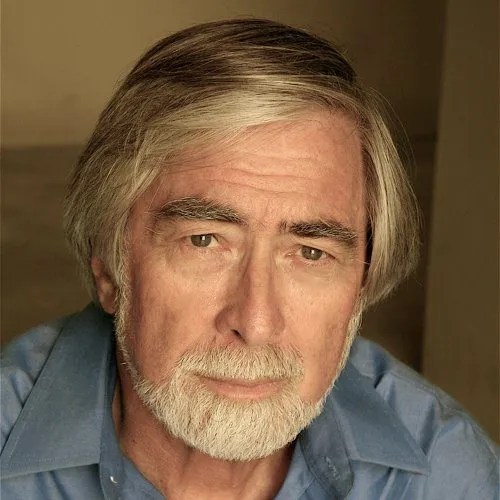
Robert Scheer
Robert Scheer, publisher of ScheerPost and award-winning journalist and author of a dozen books, has a reputation for strong social and political writing over his nearly 60 years as a journalist. His award-winning journalism has appeared in publications nationwide—he was Vietnam correspondent and editor of Ramparts magazine, national correspondent and columnist for the Los Angeles Times—and his in-depth interviews with Jimmy Carter, Richard Nixon, Ronald Reagan, Bill Clinton, Mikhail Gorbachev and others made headlines. He co-hosted KCRW’s political program Left, Right and Center and now hosts Scheer Intelligence, an independent ScheerPost podcast with people who discuss the day’s most important issues.
Editor’s Note: At a moment when the once vaunted model of responsible journalism is overwhelmingly the play thing of self-serving billionaires and their corporate scribes, alternatives of integrity are desperately needed, and ScheerPost is one of them. Please support our independent journalism by contributing to our online donation platform, Network for Good, or send a check to our new PO Box. We can’t thank you enough, and promise to keep bringing you this kind of vital news.
You can also make a donation to our PayPal or subscribe to our Patreon.
