
Click to subscribe on: Apple / Spotify / Amazon / YouTube / Rumble
With tariffs on China reaching comical numbers, the instability in Donald Trump’s economic strategy continues to grow. Geopolitical Economy Report editor and journalist Ben Norton, who lives in China, joins host Robert Scheer on this episode of Scheer Intelligence to make sense of the developments and why the U.S.’s typical economic bullying tactics will not work this time around and inevitably backfire.
Trump, according to Norton, “had a rude awakening realizing that China has been preparing for a decade now for this kind of trade war and that China actually can withstand this economic pain much longer than the U.S. can.” Norton also explains, “It’s a kind of economic game of chicken. And Trump thought he could force China to sign this deal, but it’s looking very unlikely, which is why he’s taking a few steps back.”
While the big idea behind Trump’s tariffs is to bring manufacturing back to the U.S., Norton explains that the sort of infrastructure necessary for this takes years to establish, something China has already mastered and people like Apple CEO Tim Cook acknowledge and reference when it comes to their choice of country for manufacturing.
Norton tells Scheer, “[The Chinese government] has invested in all of this education and technical training. And [Cook] pointed out that China could fill many football stadiums with these skilled workers who know how to use all this equipment. Whereas in the U.S., Tim Cook pointed out, the U.S. couldn’t even fill a room with the people who know how to use all of this equipment. So that’s part of why China is still so competitive.”
Credits
Host:
Executive Producer:
Video Producer:
Introduction:
Transcript
This transcript was produced by an automated transcription service. Please refer to the audio interview to ensure accuracy.
Robert Scheer
Hi, this is Robert Scheer with another edition of Scheer Intelligence where the intelligence comes from my guests and there’s no question, one of the really most well-informed people I know about China, a journalist, is actually living in China, working there and is getting his PhD. He converts it with the language, which is not always true of people who claim expertise about China. He’s got vast experience and he is the editor of the Geopolitical Economy Report and check it out. Let me just begin. We’re here. It’s now Thursday evening in California time with the president of the United States, Donald Trump, has just made comments as he was signing one of his executive orders talking about, we’ll have a deal with China.
He said maybe in the next three for weeks, which I took as a good sign. I’d rather we have a deal with China than go to war with China or destroy each other’s economy. But I’ll leave it to you to tell me, where are we in this whole… And he keeps professing respect for the leader of China, Xi [Jinping]. So what’s going on?
Ben Norton
Yeah, well, my guess is as good as anyone’s. It’s really hard to know what Trump’s doing. He’s kind of pursuing this madman theory that was pursued by Nixon. But in the case of China, I think this is a clear sign, as some analysts have said, that Trump is blinking, right? That essentially he’s acknowledging that his trade war on China has backfired very significantly. And Trump has already made several steps back.
So while he keeps raising the tariffs on China to cartoonish levels, they’re now at 245%, which is mostly symbolic because once you get over like 100%, you’re going to limit basically all trade, the vast majority of trade between the two countries, which is why China was responding to Trump’s tariffs. Every time he raised them, China would impose reciprocal tariffs, actual reciprocal tariffs. And after 125% or something, China said they’re not gonna increase them anymore because after this point, it’s meaningless.
Now, after Trump did that, he also issued an exemption for the most important products that China exports to the US, which are cell phones, computers, and semiconductors, as well as several other electronics goods. Now, electronics make up more than one third of China’s exports to the US. Trump exempted them from his sky-high tariffs.
Which also raises the question, I mean, if he thinks that the US is going to re-industrialize with tariffs, then why is he exempting the most important electronics goods that he says he wants to make in the US? I’m very skeptical. I don’t think he’s actually going to re-industrialize. In fact, the evidence suggests that these tariffs may lead to further de-industrialization, de-industrialization of the US.
But as for this most recent comment he made about making China sign a deal, I don’t think that’s going to be nearly as easy as he expects. In China people have been preparing for a US trade war for years. Trump started a US trade war on China in 2018 during his first term. And then Biden continued those policies. This was bipartisan. Biden imposed 100% tariffs on Chinese electric vehicles, semiconductors, batteries, and solar panels. So China has been preparing for nearly a decade now.
And they didn’t expect 245% tariffs, but essentially they expected that the US would try to economically decouple. This has been a term that’s been popular in Washington, decoupling from China. Many think tanks have been calling for this. And China essentially rerouted many of its exports and increased its trade with other regions of the world. So China’s largest trading partner is no longer the US. That was true a decade ago.
Now its largest trading partner is Southeast Asia, the ASEAN countries. And if you look at China’s exports, in 2018, 19% went to the US. And as of 2024, a bit over 14% went to the US. So that’s a pretty significant decline in just a few years. And that number continues to decline further. Another point about China’s economy that’s important to keep in mind is that there’s this idea that China is so dependent on exports and without exporting, its economy would collapse.
But if you look at exports as a share of GDP in China, it’s about 20 percent of Chinese GDP. But the world average is 30 percent of GDP. So, in fact, China’s economy is less dependent on exports than South Korea, than many European countries, certainly than Germany. And over time, China has been massively expanding domestic consumption because it has 1.4 billion people.
So there’s an enormous internal market. So if they don’t export something, they can sell many of those products locally. So Trump thinks, and not just Trump, the people around him. So his Treasury Secretary, Scott Bessent, who’s a billionaire hedge fund manager from Wall Street, and also his Commerce Secretary, Howard Lutnick, who’s another billionaire from Wall Street. Both of them have constantly claimed in their interviews that the US holds all these cards. As Bessent claimed, China only has a pair of twos.
But it’s actually the other way around. It’s actually the US as we’ve seen from some of Trump’s actions in recent days. It’s the US that is much more dependent on China than vice versa. Because yes, China does export to the US market, but again, it can redirect those exports elsewhere or increase domestic consumption to replace for the fall in exports. But the US can’t easily replace all of these goods that it gets from China, which not only includes electronics, it includes, for instance, 80% of iPhones in the US are made in China, and many computers and legacy chips.
So not the most advanced semiconductors, but the chips used in most modern consumer electronics. But furthermore, a bit over half of the ingredients and inputs in US pharmaceuticals come from China. So US drug companies, which are one of the few areas in which the US is still economically competitive, without Chinese inputs, they simply cannot operate.
And this is true for so many other things. I was talking with a friend last night who just had a little kid and she pointed out that 97% of strollers in the U.S. are made in China. 97% of car seats are made in China. So Trump says he wants to reindustrialize. I mean, and I’ve been clear on record for many years that I think the U.S. does need to reindustrialize. But this is a process that will take years, if not decades. It’s not something that you can easily solve simply by imposing tariffs and cutting off trade with China.
All that’s going to do is cause a recession, which is why many U.S. financial institutions, including big banks like JP Morgan Chase and Goldman Sachs, have significantly increased their forecast, their probability for a recession. And I think it’s very likely there will be a recession in the U.S. and it’s quite likely that there will be inflation because China exports so many important consumer goods to the U.S.
And now those are going to cost over twice as much, three times as much, depending on how the tariff costs are borne by US importers. Because, you know, Trump claims other countries pay for tariffs. It’s not true. It’s US importers, which means that inevitably US consumers will eat a lot of that increase in cost. So what we’re going to see is an increase in prices and a recession. So this looks a lot like a recipe for the stagflation that we saw in the 1970s.
Robert Scheer
You know, let me try to demystify. First of all, every time I talk to you, I realize you really bring up all sorts of stuff that is left out of the reporting, the conversation in the United States. And then after I talk to you, I go and check these things. You know, I used to consider myself a budding China expert. I was in the Center for Chinese Studies in graduate school at Berkeley. I was a fellow there and I actually tried struggling with the language.
My hat’s off to you for actually being able to go further, I mean go get into it. But you know, the perspective, and you took me to school last time we talked that this is not China of the low cost, low product qualities. That a lot of the discussion about China’s economy 15 years ago or something. And somebody who agrees with you, I don’t always agree with him, is Thomas Friedman. And I happened to watch a podcast last night, Thomas Friedman, who’s been going to China quite a bit lately, and was talking to, I guess, Ezra Klein of the New York Times.
They did this podcast, and they both were in agreement that not only the Republicans and Donald Trump, but the Democrats really don’t understand the Chinese economy anymore. Now Elon Musk obviously does, but generally we’re still talking about China that produced cheap goods with cheap labor. And still there’s some of that. And one of the points I wanted to raise, I see this sort of a meme war or something going on in social media in China, and they have made a big joke about like Calvin Klein and the markup is so high on what they actually pay, you know, the Chinese producer of t-shirts or whatever else they’re talking about, suits or I don’t know.
I suppose almost everything I’m wearing was made in China. It wasn’t my intent, but every time I check labels, it’s still the case. But that’s not where China’s really going. They’re going into high tech. They’re going into, and in fact, some of the very stuff that Trump says he’s now going to not subject to these high tariffs, right? Their ability and stuff we really need in terms of climate change. I mean, why do we want to punish a country for producing solar panels at a reasonable cost so we can all take advantage of the free, ultimately freer source of energy. But why don’t you tell me about that? I mean, from our last conversation, I found so interesting.
I see today, for instance, story in the South China Morning Post that China has had a breakthrough in actually the peaceful use of nuclear energy, if it works, the switching from uranium to thorium and that there’s an ample supply of that in Inner Mongolia that can carry China for 10,000 years or something as a source and a more reliable source. They’re very successful, obviously, in shipping.
I noticed that there’s now a decision made by the US government to slap higher tariffs on their shipping or tax them at the ports. I don’t know if you follow that. So bring us up to date here on what the Chinese economy is all about. And this other one I wanted to add to you is if they turn to their own consumers and supply them with more goods instead of people in the United States and can expand that market, that should help with the common prosperity that Xi says that he wants to have.
Yes, let the Chinese, I would think that’s a great thing for human rights, let the Chinese live better, improve their consumption and so forth. So it’s a big package to take apart, but try to go there with that.
Ben Norton
Yeah, well, this is all related. If you look at average income in China, according to World Bank data, in the past three decades, average income, daily income has increased by 10 times in China. And if you look at manufacturing wages, this was reported by The Economist, you know, which is not in any way like a pro-China outlet. The Economist noted that China’s industrial wages for manufacturing workers are significantly higher than all of the countries in the region.
I mean, excluding South Korea and Japan, but if you compare China to Southeast Asia, which is where a lot of manufacturing is now happening in Vietnam, Thailand, Malaysia, Indonesia, India, Chinese wages are significantly higher than in all of those countries. But the reason that China is still so competitive in manufacturing is because the government has planned out very carefully over decades, all of the different inputs needed and infrastructure and education needed to be competitive in manufacturing.
So wages are just one small part of it. For instance, the Chinese government still has state ownership of the commanding heights, the most important parts of the economy, including infrastructure, telecommunications, public transportation, finance. So China has minimized the cost, for instance, of energy, because the energy grid is state owned, it’s very cheap for companies to get energy. It’s very cheap for workers to have public transportation. It’s very cheap.
The state-owned banks provide very cheap loans to strategic industries, and that’s how they can move resources away from things like, for instance, real estate. They had a real estate bubble. The government wanted to pop the real estate bubble because, as President Xi said, houses should be for living, not for speculation. They popped the real estate bubble partially by imposing three major restrictions on leverage, on debt, in 2020, what were known as the three red lines.
But then also, the state-owned banks were ordered by the government to stop lending to real estate developers, and instead they redirected a lot of that lending to high-tech industries, like electric vehicles, like solar panels, like semiconductors and artificial intelligence. So wages are just one small part of this. And Trump, you know, again, I think the US needs to reindustrialize, and I’ve said this for a long time, but Trump is ignoring all of the other parts of a necessary industrial policy.
Every single successful industrial economy in the world has industrialized and developed advanced manufacturing through a state-led campaign. The government identifies certain sectors that it’s going to target to provide subsidies and other benefits and infrastructure investment and education spending in order to develop that sector. This is what the US did originally, ironically, the father of industrial policy was Alexander Hamilton, the first US Treasury Secretary.
This is what the European economies did. This is what Japan and South Korea did. The Asian tigers and China followed that path, except with even more state direction and state ownership. But Trump is ignoring all of that part of it and just relying on tariffs. But he’s talking about dismantling the Department of Education. He’s cutting spending on infrastructure and all these other necessary parts. So that’s why China is so competitive. And this is why, you know, Tim Cook, the CEO of Apple, there’s this famous interview he did with Forbes where he’s asked about why Apple still makes some 80% of its iPhones in China. And he said, look, we’ve tried to go to other countries.
For instance, they’re trying now, they’ve been trying for years to open up factories in India. But he pointed out that India’s infrastructure is not very good. The government has not invested significantly in infrastructure. There’s very little public transportation for workers to get to those factories. And furthermore, they have a shortage of the skilled workers needed to actually make these very advanced electronics. We’re not talking about like little toasters or something. We’re talking about some of the most advanced electronics in the world today. You have to know how to use all of these machines, these machine tools that are very complex.
And as Tim Cook said, you know, China has, the government has invested in all of this education and technical training. And he pointed out that China could fill many football stadiums with these skilled workers who know how to use all this equipment. Whereas in the US, Tim Cook pointed out, the US couldn’t even fill a room with the people who know how to use all of this equipment. So that’s part of the why China is so competitive still.
Robert Scheer
I want to hear the rest. But it’s interesting because I keep trying to follow this thing from afar. And I’ve seen remarks that have actually come out of the Trump administration and others that they trivialize the production of an iPhone as just screwing little screws in. I don’t know if you’ve seen those references.
And it’s almost like let them have that kind of work. Maybe, you know, Chinese women have smaller fingers or something. And but you’re presenting a picture of China’s industrial success that is not often in the mass media in this country. And, you know, it once was true to some degree. But now we’re talking about advanced robotics, advanced machinery, obviously the use of computerized functions and all sorts of production.
So I just would like to throw that in there. You know, and in fact, that’s what those, I don’t know if you’ve seen those social media in China. We always talk about that. There’s no room for dissent in China. But I know during the pandemic, there was a lot of…somebody I worked with in the graduate school specialized in how medicine medical issues were being covered. There was a vibrant debate about the inadequacies, failures of the medical system or the successes during the day.
And right now there’s this lively discussion, I gather, I’ve just read about this in the American media or elsewhere, in China mocking this idea that it’s all this unskilled work. And they even show a Nike plant, if you had it in the United States, and they show out of shape American workers trying to assemble a sneaker or something.
But you’re really presenting a different image here of, and it’s interesting you have this expression of the labor cost is not the major cost. This is a big factor. But anyway, continue with where you were before.
Ben Norton
Yeah, I mean, was even Tim Cook, again, a billionaire CEO, the CEO of Apple. It was even he who pointed out in this interview with Forbes, said, look, labor costs in China are much higher than in neighboring countries in the region, we could, we would like to go to somewhere in Southeast Asia, or even India, to make these iPhones, but simply, the cost would be too expensive in the other elements in terms of infrastructure, in terms of education and training. So despite the higher wages, they still are more effective in China.
Another big reason for this, as you alluded to, is automation. There are already so many automated elements in many of these factories. There are so many robots. A good example of that is the car industry. So I have had the privilege of being able to visit an EV factory, like an electric vehicle factory here in China. And it’s really amazing. I mean, there are, of course, a lot of workers still there, but so much of the process is already automated. And you can go online and find videos of this.
Seeing these very modern factories, they now even have these things that are known as like dark factories where at night there are basically no workers there, but the machines keep operating. They turn the lights off to save money. So it would take many years, if not decades to replace all of these aspects in the US to create a new supply chain to build these factories. And then if I mean, again, and again, like I’m not in any way opposed to reindustrialization. I’ve been saying this, and one of my close friends and my mentor really is the economist Michael Hudson.
He’s been saying this for decades. I mean, this is, you know, but from a more left-wing perspective. But the point is, is that you can’t just magically do this overnight and then use tariffs to cut off trade, especially considering that, let’s say the U.S. does actually have a plan, which Trump doesn’t, but let’s say there is a plan to re-industrialize targeting certain sectors. Think about all of the machinery and all of the capital goods, all of the equipment that would have to be imported from China.
Well, there are now 245% tariffs on all of those machine tools. China is the world’s leader in producing machine tools, in producing much of this equipment. So even if you make the factory, how are you gonna make the… because you know you can build a factory, but it’s gonna be empty. You have to have all of the machinery. The US doesn’t make that machinery. So if you look at the supply chains and the production process for an iPhone, for even Android phones, for computers, these are very complex.
There are parts from many different countries, not just from China. For instance, now a major part in the global supply chain is Southeast Asia. Vietnam has been closely following the Chinese model. It’s like 20 years behind China now. I’m very optimistic about Vietnam’s economic growth is incredible. Incomes are rising rapidly. It’s industrializing. But then also Malaysia, Indonesia, all these countries are becoming major manufacturing hubs. And especially because, you we were talking about China’s technology.
You know, China is a huge country. It’s basically a continent or a subcontinent 1.4 billion people. So yes, it does have now some of the most high tech industries. We saw this with artificial intelligence with the company DeepSeek, which released an AI model that is just as good as those produced by OpenAI, which is 49% owned by Microsoft. And a big difference though is, you know, OpenAI despite its name, it actually has closed models that are not free for anyone to use.
Whereas DeepSeek, this Chinese company, released these open source AI models. Anyone in the world can use them for free and install them locally on their computers because the code is open source. So of course, there’s been a lot of attention to that. There’s been a lot of attention to China’s electric vehicle industry. The Chinese company BYD has become the world’s largest producer and exporter of electric vehicles over…
Robert Scheer
Which Warren Buffett invested heavily in that, right? I mean, this is not some commie trick. This was America’s most effective investor who was very early to the BYD. And he’s made taken a lot of profit out of it. He’s sold a lot of shares and then still has a very big holding on the contrary. By the way, I just want this one connection there.
You know, I was unaware. I wanted, I’ve owned General Motors electric cars. I had two versions of them for six years. Nothing wrong with the car, but you couldn’t get them fueled. This Tesla had an advantage, but they also were very pricey. I was paying actually more for my electric car than I would have for a gas car. And then I also bought a Tesla and so forth, but I wanted to get one of those Chinese cars.
And I didn’t realize the difficulty, it didn’t come from Donald Trump. People blame Trump for everything, but it came from Joe Biden. I didn’t. I just learned that a couple of hours, I don’t know, yesterday. I was reading that Biden put a 100 percent tariff on these cars, right? Onn BYD. I don’t know why I didn’t know this before. I don’t know how many people watching this or listening to this know this. But, you know, so you can’t blame Trump for idea of trying to punish China.
The Biden administration really went out of its way to punish China. mind you, we’re not punishing for developing weapons, which they do do. We’re not punishing them for having a very significant military force now, which is one reason why they can have some confidence in resisting this bullying, as they put it. But the irony is, and this is I want to get to a basic question.
I think it’s a mistake. I just had lunch with someone who was in the old Clinton administration and everything. And a lot of people are freaked out about Trump now. Most of the people I know are very freaked out. There are a lot to be freaked out about. But nonetheless, I kept asking, what is the method in his madness? This guy… You know, he got reelected and this guy manages to pull off a lot of things. And as you mentioned, he’s got a bunch of billionaires around him, including Elon Musk, who are not fools. They may be immoral, but they’re not fools.
So what is he doing with China? Because now I don’t know if it’s just blinking. He’s obviously has to take a recognition of their resolve and the Chinese are not just tumbling back there. Robert Reich had a column just today, he said there’s three obstacles to Trump. One is China, one is Harvard, and I forget what is the third one. Oh my goodness, I forgot. You know, resisting Trump’s, there’s some people pushing back. But what is Trump trying to get from this? And isn’t it possible that his tactic is art of the deal making and all that, that yes, okay, he’ll get some concessions? And some of them are probably valid, right? You can always get a better trade deal, right? What’s really going on?
Ben Norton
Yeah, I will respond to it one second. I just want to finish this thought about China’s technology, just because it was an important point that I was going to make really briefly, which is that, you know, so China now is seen around the world for being a leader in these advanced technologies. And you’re absolutely right that it was Biden, the Biden White House that imposed 100 percent tariffs on Chinese EVs and solar panels and semiconductors and batteries, which are of course very important for the energy transition away from fossil fuels to mitigate climate change.
Robert Scheer
Which makes it a stupid, reactionary thing to do. We want people to have solar panels. If the Chinese can make them cheaper and if they can make electric cars cheaper and they’re good, why would you deny American consumers the opportunity to buy a deal? Get a deal. Get a deal. You know, why do they have to pay so much more? You know, we can’t even find them. We have shortages if we cut out China.
In fact big screen TVs, you know, the Chinese obviously are very good at that. Why do you want to punish? You’re punishing as you point out the American consumer? But I want to ask you one because we have time, but I want to ask you one specific thing about infrastructure before I forget.
Ben Norton
Well, I just want to finish his thought on technology. Thank you. Well, just to briefly answer that question. I mean, the Biden White House, their argument was that they wanted to pursue a kind of industrial policy to reindustrialize the U.S., but in certain sectors targeting green energy. That’s why the Biden White House administration passed the Inflation Reduction Act, the CHIPS Act. They were targeting those sectors and saying the government is going to provide investment subsidies, infrastructure development to make electric vehicles in the U.S., to make semiconductors in the U.S.
And also, there’s an element of corruption in here because ironically, was Elon Musk last year in 2024 before he was even in the government and before he was like really openly campaigning with Trump in early 2024. Musk told investors on a call. He said that we really need protection from the government because without protective measures like tariffs, Tesla is going to go bankrupt. We can’t compete with BYD.
And a few weeks after he said that, the Biden White House put 100% tariffs on Chinese EVs. So I think there was clearly some kind of lobbying going on by Tesla. But really briefly on this point of technology. like I said, around the world, people see China as now like a leader in high tech. And it’s true. But like I was emphasizing, China is a continent. And it’s so big that really, if you look at the kind of international division of labor, if you look at the most high value added capital intensive products like technologies, semiconductors, artificial intelligence, China is competitive in those sectors.
But if you look at other parts of this kind, if you think of the global division of labor as a kind of pyramid, at the bottom of it, you have the lowest value added, most labor intensive products like textiles, like basic consumer goods, t-shirts, hats, shoes.
China still produces a lot of that, less and less over time as wages have risen. But because the country is so big, there are a lot of people still making that. And also if you think of like this pyramid in the middle of the pyramid, you have consumer appliances, refrigerators, washing machines. China still produces much of that. So you know, normally what happens when an economy industrializes and develops, they lose the low end of that production because wages increase a lot. And instead of emphasizing production of low value added labor intensive goods. They emphasize high value added capital intensive goods.
And China has been making that transition, but because it’s so big, and because some of that development has been uneven, and some areas like the coastal cities in particular have developed much more quickly than parts of the center of the country, more rural areas. So China, because it’s so big, China is at all the parts of that pyramid. But what I’m getting at is that over time, China is gonna be losing the kind of lower end of that value chain and it’s gonna go to other countries and it’s especially going to South Asia and Southeast Asia.
So what’s happening is, you know, the US says it wants to re-industrialize and they want all this foreign investment but they expect that the foreign investment will go to the US but in fact, what’s actually happening is that a lot of this foreign investment is going to other parts of Asia and China’s supply chain is being integrated especially with Southeast Asia. So when Trump put tariffs on China the first time in 2018, China’s exports to the US decreased, but what also happened is that a lot of Chinese investment went to Mexico, and went to Vietnam, and went to Indonesia, and then their exports to the US increased.
So these supply chains are very complicated, and if Trump targets one country, they can move somewhere else. So he’s using these tariffs also to try to block off other countries, but that regardless, it doesn’t solve the problem, which is that if the US wants to re-industrialize, you have to have a plan to re-industrialize. And if the US wants to re-industrialize, why should the US make all of these textiles and sneakers? That doesn’t make sense to make those in the US. It does make sense, I agree, to make things like electric vehicles in the US, to make computers, to make semiconductors. At the high end of the value chain, that makes sense.
And again, I was infinitely critical of the Biden administration, especially for his support for Israel and the war crimes in Gaza and all of that. But despite my critiques of the Biden administration, at least that policy made a little sense, like saying we’re going to target these sectors, whereas Trump just has blanket tariffs on all exports, except now he has exceptions on the most important sectors from China. So what is the U.S. going to reindustrialize? only because, you know, China does, for instance, its main exports to the U.S. are electronics.
But they represent about 40% electronics of Chinese exports to the US. But China also still exports textiles, plastic products like Tupperware, office supplies, furniture is another major Chinese export. So is the grand plan to re-industrialize the US people getting good manufacturing jobs making Tupperware and sneakers? I don’t think that’s realistic. So this whole tariff strategy needs to be rethought. But to answer your question again, briefly, your other question about what is Trump trying to do? Like, what is his goal with all of this?
Well, actually, it was spelled out by Trump’s top economic advisor, Stephen Miran, who’s a Harvard educated, very right-wing economist, but he’s a smart guy. And in November, when Trump won the election, Stephen Miran published a paper, a lengthy report, and it’s titled something like, like reshaping the global trade system, global financial system, a user’s guide to reshaping the global financial system.
And in this report, he outlined some ideas in which the US could use the exorbitant privilege it has as the printer of the global reserve currency, the dollar, in order to pressure other countries to take measures that would benefit the US. And he determined two main problems of the dollar system that the US created that gives the US this privilege of
The term exorbitant privilege came from France’s finance minister in the 1960s. They were complaining that the U.S. will never run a balance of payments crisis because there’s all this global demand for U.S. dollars so they can keep running big deficits. In fact, they have to run deficits in order for the system to work because other countries need dollars in order to use the dollar in international trade and to hold dollars in their reserves. If the U.S. doesn’t run a deficit, there’s going to be a shortage of dollars and there’s going to be a liquidity crisis which could cause a financial crisis.
So what they’re trying to do is they want to have their cake and eat it too. It’s a very difficult, it’s very difficult what they’re trying to do. But essentially they’re trying to use tariffs to force other countries to subsidize the U.S. This is what Stephen Miran said. Stephen Miran had proposals he made. One, other countries can convert the U.S. government debt they own or buy new U.S. government bonds at 100 years with no yield. So they’re subsidizing the U.S. government.
They’re losing money. But in return, as he put it, these countries benefit, according to the Trump administration, from two public goods provided by the Trump administration, provided by the United States, which they say are the dollar system. So the dollar itself and the Treasury security, U.S. government debt as the main reserve asset in the global financial system, which backstops loans across the world.
It’s used as the most important form of backing, of collateral around the world. So that’s the one public good. And then the other public good that they claim they’re providing is what they call the U.S. security umbrella. So, you know, the U.S. has 750, 800 foreign military bases everywhere. And the U.S. spends a lot on that. And the Trump administration says, well, other countries should subsidize us. And what we’ll do is we’ll put tariffs on them. And if they want the tariffs to be lifted, they have to pay us.
So essentially what they’re really calling for is tribute, is paying tribute to the US. And they think that because the US plays a central role in the financial system, they have all this leverage over other countries. And they have some leverage, but actually what this is also doing is accelerating the search for alternatives, which we’ve seen for years now, countries, especially Russia, with all the sanctions on Russia and China with the sanctions and tariffs, they’ve been seeking alternatives and trying to create new institutions, a kind of alternative infrastructure for a global financial system.
So this strategy by the Trump administration can also very much blow back. And maybe they’ll force countries that are close US allies that are militarily occupied, like South Korea or Japan or Germany. Maybe they’ll come to the table and sign what they’re calling a Mar-a-Lago Accord, which is based on the idea of the Reagan administration’s Plaza Accord in 1985, where the US pressured its allies, Japan, West Germany, France, and the UK to appreciate their currencies against the US dollar, to devalue the US dollar, to make manufacturing goods more competitive in the US.
What they want to do is what they call loosely a Mar-a-Lago Accord based on that idea. But there’s no way China is going to come to the table. I think Trump thought, and Scott Bessent, he hinted at this, they thought that by putting these heavy tariffs on China that China would become afraid very quickly and that China would bend over backward to reach a deal with the US that would be more advantageous to the US.
But I think they had a rude awakening realizing that China has been preparing for a decade now for this kind of trade war and that China actually can withstand this economic pain much longer than the US can. It’s a kind of economic game of chicken. And Trump thought he could force China to sign this deal, but it’s looking very unlikely, which is why he’s taking a few steps back.
Robert Scheer
Yeah, he’s taking a few steps back because it’s scaring the hell out of a lot of people in America who even voted for him. And as I say, he’s no fool. And there is method to his madness. I think one of the big factors is that to talk about tariffs and bringing manufacturing jobs, all of that is very important for the public to hear because, you know, people remember the time when you could be an auto worker and make 50 bucks an hour when 50 bucks an hour was a lot of money and get all sorts of benefits and job security and medical coverage and everything else.
And so there was already some talk in the United States of a labor aristocracy. It was not bad to be a skilled worker.
Ben Norton
Well, that was also thanks to unions, which, of course, the Republicans are against. It was strong unions.
Robert Scheer
I understand that, but the fact is a lot of Americans, I come from a working class background and I was told not to go to college actually by my relatives who were machinists and working on airplane construction and everything else, that I would not make as much. But if I was going to go to college, at least I should study engineering, which I did to be able to get a job.
But what I’m saying is I want to cut from the propaganda of this whole thing to a reality that America will not increase its overall wealth by going to manufacturing because the main source of America’s wealth and privilege and why we’re such a big consumer market is our financial industry. And that is what has been the big dramatic change in the last, what, three decades or so, four decades.
And the US financial industry rips off the whole world. And part of that is this thing of we also represent security. So your funds are security. We’re not a banana republic. We’re solid and everything else. That is all being challenged now. And people are scared. What is it all about? I think there’s a reason why Trump might want to make a deal.
And yet keep up the pressure. Yes, we want to bring back manufacturing jobs. And there are good manufacturing jobs that could pay well, that it would be good to improve. For example, just in terms of infrastructure, I just saw an item now, Trump today cut the funding, Trump administration, for the bullet train that the Japanese were building between Houston and Dallas in Texas. And that’s now a four hour drive between your two major cities there and that you could reduce it very much by having a high speed.
And they killed it because it sounds like a socialist idea or something. You know, Biden had actually delayed the funding for it, but they still thought it was a good idea. And, you know, here is China where, you know, I think the figure is somewhere like over 90 % of the people who live in a large or medium city can have access to a bullet train and actually go see their ancestral home or go visit relatives or so forth on the lunar holiday and move around in the hundreds of millions of passengers and so forth.
So I think the method to Trump’s madness is that he knows we’re not gonna bring back a lot of manufacturing. There’s some manufacturing that’s environmentally friendly. We still do have a lot of laws about what you can produce and where you can produce it that also could involve more skilled labor, you know, that would be attractive to bring back. But I think the real threat and the reason they’re pushing back on China is something that they didn’t discuss in their talk was the BRICS alliance and the whole idea of a multipolar world in which people will be less dependent on the financial community.
We already have trading without even using currencies and so forth. But I think that’s the big fear. And he’s actually at times made a threat. If you go off the dollar, you’re going to really see what we’re about. Now, it would seem crass to bring that up, that this is really about preserving the superiority of our financial community backed by the dollar. But I’d like to talk about that a little bit because I think that, you know, because when you look at the BRICS threat, this other kind of alliance, that includes China. It even includes Saudi Arabia in a friendly, not as a member, but friendly relations. It’s something that’s not focused on enough. This is really, I think, a war against China is really a war against the multipolar world here. And maybe you could develop that if you agree with it.
Ben Norton
Yeah, you hit the nail on the head. The war on China is a war on a multipolar world. And what the US really would love to do, but they’re recognizing that it’s not going to happen, is to go back to that moment in the 90s, which famously Charles Krauthammer, the neoconservative columnist called the unipolar moment. And he famously wrote that article in the Washington Post. And he warned that the unipolar moment would not last for the US should take advantage of it. And it did take advantage of it. The US attacked Iraq twice. The US then attacked Libya. destroyed.
Robert Scheer
After the collapse of the Soviet Union.
Ben Norton
Yeah. So the unipolar moment was the time in which we saw the new conservatives ascendant in the 90s and early 2000s. We saw the Bush administration, the war on terror, the peak of U.S. unilateralism, bullying the entire country. And when you engage in that kind of activity, of course, this is much bigger than just Trump. This goes back decades when the U.S. empire bullies the rest of the world. You know, in the 90s, the U.S. was so strong that many countries could not resist, eventually those countries are going to fight back, especially when they’re strong enough to fight back.
You know, there are always small countries trying to resist like Cuba. You know, the people of Cuba have been suffocated for over 60 years by a U.S. blockade. And, you know, Iran is a country that had a revolution and it’s a medium sized country, but not strong enough to actually really fight back substantially only kind of through a kind of international guerrilla warfare, if you will, like that kind of parallel. But China has 1.4 billion people. It has the largest economy when you measure its GDP at purchasing power parity. And that’s been true since 2016. So I mean, it’s also like the case with Russia, right?
Like, these are countries that are so big that the US is used to bullying small and medium sized countries, Venezuela, Nicaragua. It’s easy for the US to do that. It’s like a big bully picking on a little kid. But in 2022, the US and the EU froze hundreds of billions of dollars of Russian assets thinking that and they post heavy sanctions on Russia. And as Biden said, the US wanted to turn the ruble into rubble, the Russian currency. It didn’t work because we saw that Russia was too big to sanction. And China is much bigger than Russia. Its population is 14 times the size of Russia. The entire global supply chain, not all of it, but huge parts of it are located in China.
These are countries that are too big to sanction. So as the US has abused this kind of sanction weapon, it has actually accelerated the process of the further multipolarization of the world. You know, the Washington Post reported last year that one third of all countries on Earth are under some form of US sanctions. One third and 60 percent of low income countries are under some form of US sanction. Eventually, those countries, despite their differences, they’re going to come together and seek some kind of alternative. So a good example of this is China and India. Politically, they have a lot of differences. Their parties are very different.
The BJP, the ruling party in India, is very conservative and anti-China. Obviously, China is ruled by Communist Party. They’re very different. They see things in a different way. But they have some common interests that have brought them together in BRICS, which is one, a pursuit of a more multipolar world with a weakened West in which the global South has more protagonism, two, a new financial system because the financial system was created by the U.S. largely at the Bretton Woods Conference in 1944 with the U.S. dollar at the center.
But also, you know, when Richard Nixon took the dollar off of gold in 1971, it gave the U.S. even more power as the economist Michael Hudson famously showed in his book Superimperialism, where the U.S. could weaponize its currency because the currency was no longer linked to gold. There was no limit to how many dollars the US could print to fund wars. And the US deficit didn’t really matter.
US deficit ballooned global demand for dollars guaranteed that whereas most countries when they have a deficit, they would have a balance of payments crisis, they would have hyperinflation, if they have significant sustained deficits over a long period of time. For the US, it doesn’t matter. They can do this over decades ad infinitum because they have this exorbitant privilege. So all of these factors have pushed together many countries, even countries that have historically been US allies, like Saudi Arabia, like you mentioned.
And BRICS is a kind of loose alliance of these countries. It’s a bloc that brings together the Global South plus Russia. And what are their two main goals? The stated goals of BRICS, as articulated by the current chair of BRICS, which is Brazil, every year they have an alternating chairmanship. Last year it was Russia.
Brazil has emphasized constantly that they have two main goals. reform of global governance institutions, as they say. That means reforming the UN Security Council. They’ve said this for many years. India doesn’t have a permanent seat. That’s ridiculous. Why do the UK and France have permanent seats? These are countries with 70 million people, whereas there are 1.4 billion people in India. There are hundreds of billions in Pakistan and Bangladesh and Indonesia. So they want to reform the UN, reform the IMF, reform the World Bank.
All these institutions they see as colonial, which they largely are. So that’s the first goal. And the second goal is, as they say, deepening global south cooperation and integration. So they want more trade, more political groups of the global south. So I see the BRICS as very much continuing in the footsteps of the non-aligned movement, right? And we talk about the original Cold War, we often forget that it wasn’t just the Soviet Union and the US, there was the entire global south, most of which was in the non-aligned movement.
And many of those countries in the non-aligned movement were actually revolutionary, socialist, nationalist, anti-imperialist movements. And they wanted to create a kind of new international economic order, as they put it, the NIEO. So I think BRICS is very much following in those footsteps. And the more that the US lashes out, this is not just Trump, this is Bush with his wars and the war on terror. This is Obama with his wars in Libya and Syria. This is Biden with his tariffs on countries around the world and now, sorry, with his sanctions on countries and now Trump with his tariffs.
All this is doing is accelerating this process we’ve been talking about of the multipolarization of the world. So much so that at the Munich Security Conference this year, which is a major meeting of basically NATO and they invite a few other countries.
At the Munich Security Conference, they published an annual report every year. And this year, the title was multipolarization. They’re acknowledging that the world is increasingly multipolar. And this is why the Trump administration, they’re trying to use their control over the financial system, the role of the dollar, to try to force countries to pay the U.S. tribute, essentially, as Stephen Miran, Trump’s top economic advisor, argued openly.
But again, in my view, this is actually just going to continue to accelerate that process of the creation of alternatives and actually weaken U.S. hegemony. So we’re at this moment where, you know, when an empire is in a moment of decline, they often lash out. The Roman Empire did this, the Ottoman Empire, and of course, the German Empire culminated in Nazism. And they tried to use violent force and threats and aggression to lash out.
And we’ve seen this in recent years, especially under Bush, but also under Obama and of course under Trump. And all this is doing is accelerating that decline further.
Robert Scheer
Well, you say, of course, under Trump, but Trump’s a mixed bag. I would like to get a deeper understanding and not just be scared of the guy. And it seems to me there’s two ways to look at it. And I think we’re on the right track here. And this is where Thomas Friedman and Ezra Klein. Yeah, where they went wrong because they said, let’s just face it, it’s going to be the United States and China running the world and we have to adjust and accept some kind of balance.
That’s their notion of an enlightened view. You can’t reverse it and so forth. So they agree with you that you can’t do, China, it’s over. You can’t just push them back in their place. However, I think we’ve opened up a really interesting idea here, which is it isn’t China and the US.
It’s that the US being willing to be a more normal nation, not be an empire, and living with other centers of power. And the Chinese basically have gotten hold of this idea and say, we don’t want a Chinese empire. They’ve never been inclined to be an empire. There’s nothing in Chinese philosophy, going back to Confucius or anything else. In fact, they’re actually one of the few places that you know the Han majority I don’t know what’s well over 90 percent isn’t it in China
Ben Norton
It’s like 89 % now, but it’s still the majority.
Robert Scheer
Yeah, but I mean, it’s incredible. It’s not a society that really depended on large inflows of population and attracting other workforce and so forth. But the interesting thing, the threat, I think the real threat here is the BRICS thing. And Trump has called it out. And that is, the United States will never be a poor country unless it’s totally mismanaged.
Here is Trump is right. If you want to make America great, the way is to make it proportionate to its population. You know, so we’re, know, what are we, 8% or 7% of the world’s population? forget now. 4% now, it used to be 6% when I was in graduate school. So we’re 4% of the world’s population. We got a great landmass, good climate, you know, a lot of resources. The land is still quite virginal compared to many others and not exhaustive. So there’s really no reason why the United States can’t be per capita the most prosperous, and should be probably the most prosperous country in the world.
You have a well-educated population and so forth, and there’s no reason why they can’t figure out ways to have a very productive economy and trade with the rest of the world. It’s just when you have this idea of the empire that it has to control everything.
The wisdom to Trump, it seems to me, is he recognizes that the cost of empire is prohibitive, that you’re paying for this notion of security for you. However, he doesn’t want to lose the intimidation factor. He wants the advantage. But he sees contradictions. Right now, you’re being very generous with your time. But if we could just take a few more minutes. Right now, there was a hope in the Biden administration and elsewhere that despite Vietnam, this is an irony.
We fought this whole Cold War over this word communism. The irony is that we spent this last what, 20 years trying to get communist Vietnam to be a rival to communist China. And we want Apple products to be produced in communist Vietnam, not communist China. So communism is now just a neutral flavor or something, color.
But the irony is here that Trump, in order to get leverage over these other people, and this is where we see Trump the selfish, Trump the powerful, where he said, well, can push them around and get something better from my home country here. We’re going to get them, as you said, to pay for a lot of other stuff, everything. Suddenly, we are doing again what communism couldn’t do.
We have brought Russia and China together. Now Russia is not, it’s anti-communist, but we brought them together. We’re now bringing communist Vietnam and China together, maybe closer than they were before. They’re actually doing now joint military deals there. We wanted to stress the fights over the man-made islands and everything, but now we’re actually, and we are bringing China and India together. Now China’s not stupid. They know you can’t bring them together. And with Saudi Arabia, after all the thing that prevented the boycott of Russia over the Ukraine and everything was that Saudi Arabia didn’t go along and they wouldn’t lower the price of oil.
So Russia has been able to actually improve its GMP and I don’t know what, 4.7% growth last year because they have this natural resource and they can also build up, they can have a military industrial complex and do it the old fashioned American way of prosperity through armaments.
But the irony is, the threat to the old American empire idea, pre-Trump at least, is precisely that they’re rallying all these other countries to argue for a multipolar world, to go their own way, to feed their own people, to succeed. The test for Trump will be if he can accept that and still have a notion of American greatness, and America will be very prosperous if it stops messing around all over the world.
On the other hand, he’s under pressure, ironically, from people who should know better. Supposedly, you know, we don’t have much of a peace movement anymore and people who don’t really want peaceful competition with the multipolar world and are really looking, so he’s being attacked from all sides. And I suspect being that he’s not always so balanced and that he can be intemperate, that he will welcome certain hotspots.
He will welcome certain conflict and that we will remember he came in saying he’s going to end wars, not make them. But the fallback position of a failing empire is to pick more fights and to have more wars.
That’s the fallback position. At a time when this planet is threatened by, yes, climate change, but also by possibility of nuclear war, that is really scary. So I’ll let you wrap this up, this discussion. Take it wherever you want, and what do we leave out?
Ben Norton
No, I agree with you. You raise some important points there. And this is what I often emphasize. The most important thing that we need to try to do is to do everything we can to prevent a military war. I mean, unfortunately, I think it’s uncontroversial, this point that we’re in a new Cold War, a Cold War II, if you will. But we want to we need to prevent that from escalating into a hot war, a direct military war between the US and China. These are both nuclear powers. It could be catastrophic for humanity. And in Washington, I think many people recognize that that would be catastrophic.
Robert Scheer
Excuse me. You didn’t say can be catastrophic. is no question. It’s the end. No, it’s the end. I people lost the proper language to. I’m sorry. You know, go ahead.
Ben Norton
Yeah, good point. It would be inevitably catastrophic. And in Washington, I think most people recognize that. In fact, you can see these reports in the military media in the US that every year the Pentagon runs these war games with China and they almost always lose the war games. In the best case scenario, both sides are destroyed. But that’s the best case scenario. So I think there are some level headed people, but there are also a lot of hawks and really crazy people in Washington. And one of those people is actually Pete Hegseth, the defense secretary.
This guy is really crazy. Trump found him because he was a Fox News host and he wrote a book in 2020 called American Crusade and in the book he proudly declared that he’s a crusader. On the first page he said that the United States is in a holy war, it’s the term he used, a holy war against China, Islam and the international left. This is the guy who’s now the head of the Pentagon. He’s a fundamentalist.
He wrote in his book against secularism. He said that the U.S. needs to destroy the Communist Party of China, all this stuff. I mean, that guy is running the Pentagon. So there are some people in the Trump administration who are really crazy that really concern me. And Pete Hegseth just went. He took a trip to Asia. He visited Japan and the Philippines and in both countries he met with their defense secretaries and made very provocative comments. He said that the U.S. is turning Japan into a war fighting base and they’re vastly expanding their resources and their military investment in Japan.
So that’s what really concerns me is that this could escalate into a full on military war, especially over Taiwan, because there are a lot of separatist forces in Taiwan who are pro US and who are really pushing the envelope here and they’re they’re poking the bear and they’re trying to provoke a conflict. And there are lot of fears that this could become like the new Ukraine, right? So that’s really what concerns me and keeps me up at night.
I don’t think it’s inevitable, but I think it’s quite possible. And in terms of Trump, I mean, he’s really a wild card because he did say he wants to be a peacemaker, which is obviously good to hear from a president, but he immediately came in. He’s now bombing the hell out of Yemen and boasting, posting on social media about how he’s killing all these people in Yemen. And he’s also, you know, he brokered the ceasefire.
And then immediately Israel violated the ceasefire and it was reported, including by Fox News, that Trump gave the green light to Israel to renew this war in Gaza. So, Trump says he’s a peacemaker, but let’s not forget in his first term, he killed Qasem Soleimani, the Iranian top general. He did not withdraw from Afghanistan as horrible as Biden was. And he was one of the worst presidents in my lifetime. He did withdraw from Afghanistan. Trump didn’t. I mean, so Trump also boasted of taking Syria’s oil.
So I don’t think we can keep Trump at his word. Trump says that he wants to withdraw from the world. But at the same time, a lot of his policies are, he says he wants to expand the territory of the US. He wants to colonize Greenland. He wants to take over the Panama Canal. He wants to take over Gaza. In his inauguration speech, he invoked manifest destiny. And also a few days after his inauguration speech, Trump gave a speech in Las Vegas and he said he promised we’re going to vastly expand the territory of the United States.
Trump says one thing and does another. And I’m not saying that like Trump is, I agree with you that like Trump is not like this, this uniquely evil cartoon villain. All US presidents are war criminals. They’re all the head of an empire. I mean Obama carried out so many wars and yet has this per se. He won the Nobel Peace Prize. It’s crazy. I mean, he bombed Yemen, bombed Afghanistan, bombed Pakistan, destroyed the Libyan government, tried to destroy the Syrian government, and which later succeeded. mean, Obama was one of the most hawkish presidents of my lifetime, I mean, second probably to Bush, and yet he won the Nobel Peace Prize.
So I agree that Trump is not unique, but I also think that we can’t take Trump at his word when he says that he’s pursuing peace because in his first term and still today, he’s continuing many of these very aggressive policies.
Robert Scheer
You know, it’s interesting. Well, yes. And by the way, they gave him the Nobel Peace Prize early in his presidency. You have it no matter what you do and now go for it. They could give it to Trump. But you really make an interesting point about what we should be afraid of and how to think about this world because I mean, I’ve spent my life, I’m an old guy now, real old. I interviewed Nixon, you know, I was somebody singled out by Nixon for punishment and everything else. But after he was president, I interviewed him and found him very sensible and so forth.
So, know, and he did do the opening to China and, you know, even Kissinger now looks better in some ways. I mean, you know, and yet I’m not forgiving Nixon for expanding the Vietnam War and doing the genocide in Cambodia and so forth. But, you know, it’s really strange because a lot of people I know and this here again Friedman and Klein were very good in that the hysteria about China which extends right deep into the Democratic Party.
They’re right to call it out. We have to have devils So everybody else is the devil Putin’s a devil and you know and then sees the devil there They’re all devils and now Trump is a devil and so forth But the devil is inside all of us. That that’s a little bit of that old Christian education
And the fact of the matter is, when it comes to doing awful things like torture and torture camps and everything, it’s bipartisan. When it comes to killing lots of children and bombing them and all that, it’s in both parties. And so the scary thing is people’s reliance on the notion of the good or limits, right? That was something I think that carried most of us raised in the United States, even if we consider ourselves progressive or even more radical than that, what have you. You always have the feeling there are some restraints.
The fact is that’s been a lie ever since I’ve been around. I mean, I went to Vietnam to report on it in ‘64, early into the war. And I realized, no, these people who are nice to have dinner with, they’re monsters. That is to say they’re capable of monstrous behavior. You mentioned the treatment of Cuba all these years and so forth, but you can go right down the line.
And so what is really, we have, you what’s been called Trump derangement syndrome. And I find this almost in daily conversations, people, well, if we just didn’t have Trump and Trump is going to destroy everything, Trump is a Nazi, Trump is going to you know, now there’s a lot of reason to be worried about, as you say, any American president, anybody who’s trying to keep the empire going. And in this particular time, like we had these rallies here that Bernie Sanders was speaking and everything, very little attention to what is most dangerous about Trump, which is this attempt to pick this fight with China.
It’s this single most destructive thing that he’s doing. And yet that’s not what they want to fight about. They want to say, he’s going to threaten Social Security or something. Come on. Nobody’s going to go after Social Security. That’s the one thing would end your presidency. You’d probably be impeached over that if you actually went after that. You know, so I have a little seesaw going, we’re going to run out of time. You’re very generous with your time. But trying to think logically about Trump is really a challenge these days, you know, really. And the ease with which we descend into this simplistic thinking, all the problems started with him.
He’s the unique man. If we could just figure out how to defeat him in the midterm, that’s going to be the next rallying thing, right, as we get closer to it, you know, and then we’ll just get the Democrats back in. But, you know, I take it back to China. You know, it was Nancy Pelosi. If you want to talk about feeding the idea of Taiwan breaking away, who did more for that than Nancy Pelosi? And then people who defend her say, well, you know, she did have in her district a lot of ex-nationalist people. Well, in the old nationalist Chiang Kai-shek people in Taiwan want to get along with China.
I mean, they’re not really the ones feeding this breakaway thing. It’s the people who want to have war with China who are feeding it. I’ll let you take the I mean, obviously let you talk to you as long as you want. But why don’t you wrap it up? And I hope we can keep having these conversations. Because frankly, I do this because I want to learn. Really, I don’t have any illusion that I’m gonna change America with this kind of, I think it’s an illusion of dissent.
I understand just how well the algorithms and everything work. I’ve been in this business a long time. But I just say I find it really interesting to talk to you about this because when I have to go to Thomas Friedman for enlightenment, then you know we’re in trouble, okay? I mean, he’s the only one or one of the rare voices making some sense about China. And then you got Ben Norton, who at least has a more complex and expansive view of it. So tell us, can we go to sleep tonight or is the world going to blow up?
Ben Norton
Well, in the case of Thomas Friedman, you know, even a broken clock is right twice a day. So I vehemently oppose many of Friedman’s ideas. But on this issue, I mean, I think it’s not just him. There are many people who recognize that China plays a pivotal role in the global economy and it cannot be ousted from that. I mean, the idea that the U.S. can just wage economic war in China, China will give in. The U.S. can force China to sign a deal that would benefit the U.S. at the expense of China.
It’s not going to happen. It was possible in the 80s with Japan. Let’s not forget. You remember I wasn’t even around then that in 1985 when the U.S. the Plaza Accord with Japan, many people thought that Japan would be the next superpower. Japan was leading in technology. You know, there are all these people in the U.S. who were like destroying Toyota cars. At Capitol Hill, there were congresspeople who destroyed Toshiba radios with a sledgehammer.
And the U.S. was able to really sabotage Japan’s economy. But Japan has been militarily occupied by the U.S. for almost, you know, for 80 years now. And the U.S. has significant control over Japan. China is a completely different case. So and also the other point you made that I strongly agree with is that I, you know, it’s not just Trump. Trump is, in my view, a symptom of a larger structural rot in the United States and the system of the U.S. which has become a complete oligarchy. There’s no question about it.
There is no semblance of democracy, even if there ever was. Obviously there always was racism, Jim Crow, sexism, imperialism, all of that. The US was never truly democratic. But even the semblances of bourgeois democracy that existed have completely eroded. And all we have is a system that is just blatantly run by a bunch of billionaires and corporations.
And you know, this is not just Trump. Trump has made it very blatant. You know, he invited all these billionaires to his inauguration. He’s constantly meeting with them at the White House. But, you know, it was also Biden who famously said during his campaign in 2020, he told a bunch of millionaires and billionaires in New York at a fundraiser. He said, if I win the election, nothing will fundamentally change. That was his promise. That’s the Democratic Party slogan. Nothing will fundamentally change or go back to 2016 when Trump was running against Hillary Clinton and Trump said, make America great again. And what was Clinton’s response? America is already great. Well, it’s not great for homeless people.
Robert Scheer
…has always been great. Has always been great. Meaning when we had slavery, it was great. Right.
Ben Norton
Yeah. And it’s obviously not great for, going to today, it’s not great for the hundreds of thousands of people who are homeless. It’s not great for the people who are having to work two or three jobs just to make ends meet. It’s not great for people who are trapped in nearly $2 trillion in student debt. I mean, there are so many problems in the U.S. and the Democrats are just saying, well, everything’s fine. We’re not going to change it. We just want to go back to the way things were. And then Trump says, well, I’m going to scapegoat immigrants and LGBT people in China and I’m going to kick out all the immigrants and everything will be great.
Obviously, that’s not going to work. But the reason that he won the election is simply because he proposed something. I mean, it was a crazy program that obviously is not going to work. But what were the Democrats proposing? Nothing. Everything’s already fine. We’re just going to keep things as they are. So until there’s an actual real alternative, I think the U.S., unfortunately, and I’m not a pessimist, but I’m a realist. I think the U.S. is going to become, the situation is going to get worse and worse.
More inequality, more poverty, more homelessness, more violence, more racism, there needs to be a structural change. you you said use the R word radical, like we need a radical fundamental shift in the US political system. And unfortunately, neither party is going to deliver that.
Robert Scheer
Well, if I could dissent, will you give me a minute? You know, I think the one thing that the world thought it could count on when it admired America was not that we were the most enlightened country or had the highest culture or, you know, there was always a sense that we were the Wild West or we, you know, had very violent, why do we have so many guns? People in the world knew.
We were a deeply segregated society after we were a slave society. But the one thing you could count on was we seemed to have a notion of limits and some notion of order. That was the pride of our constitution, our separation of power. And that was the opposite of the banana republic, which was really quite contemptuous of any country that has bananas or something, a lower level of economic development.
But the fact is the great thing that was admired why so many people from China wanted to get an education in the United States, hundreds of thousands of them are still here now. And they’re going back to China even after very successful careers, you know, 20 years or so. In the South China Morning Post, I read about them every morning. Another famous mathematician going back and so forth is because they no longer think that we’re a center of order, of law, of restraint, of discipline.
That’s what is causing some opposition to Trump now in ruling class circles, is that he’s blowing our cover and that we are now seen as a source of instability. you see a lot of articles, even in Foreign Affairs Magazine and all the establishment top journals, now Xi in China seems to be, you he doesn’t raise his voice. He seems very responsible and he can get along with people he disagrees with, right?
And we can only keep pushing the Uyghur issue so far because all the leaders of Muslim countries go there and say, wait a minute, what are you talking about? So really, I think that, yes, there’s real fear of Trump. And by the way, he is, yes, as you pointed out, really hurting people, people being rounded up, being deported and so on, people who can’t even, who have advanced degrees and legal status and suddenly find they can’t even get back in the country here, not they thought was their home.
But I think the thing that is troubling the people of power in this country is he’s blowing our cover. He’s showing the bully boy nature of the empire. It’s like when some of the Roman Empire started drinking too much or being cruel and vicious in public. And I think that’s why you’re starting to get some pushback.
But you know, the fact of the matter is in terms of the people getting bombed around the world, you know, after all it was good old Harry Truman who did the greatest act of terrorism in human history blowing up Hiroshima and Nagasaki. So, you know, I’ll end on that with my last editorial. Hopefully you’ll be willing to do this again, what, in a few weeks or so? We’ll keep tabs on it.
Ben Norton
Yeah, I’d be happy to. It’s always a real pleasure. Thanks for having me.
Robert Scheer
You’re not going to hold me to once a month? We could do it what every couple of weeks because things are moving fast. OK. Thanks a lot. Let me give plug. So how OK. People really want to follow you in a more sustained base as they go to the geopoliticaleconomyreport.com.
I’ll do my best to put this in on our online version and everything. Thanks again for doing this. If you’ll hold on for one second, let me just thank Joshua Scheer, our executive producer who pummeled me to get this done tonight so we can post it tomorrow. We’ll have to stay up all night posting it. So we’ll it up there Friday because it’s so on target with what Trump has been saying.
I want to thank Diego Ramos, our managing editor, for running this ship, Max Jones for getting the video up, the JKW Foundation in memory of a fiercely independent writer, Jean Stein, who we hinted a little bit about, but she was fearless in talking and supporting Edward Said and other people and supporting the view that Palestinians are human beings entitled to self-determination.
And I want to thank Integrity Media, Len Goodman, a terrific, very successful criminal lawyer who has also spoken out on these issues and taken this position and gives us some support. So see you next week with another edition of Scheer Intelligence.
Please share this story and help us grow our network!
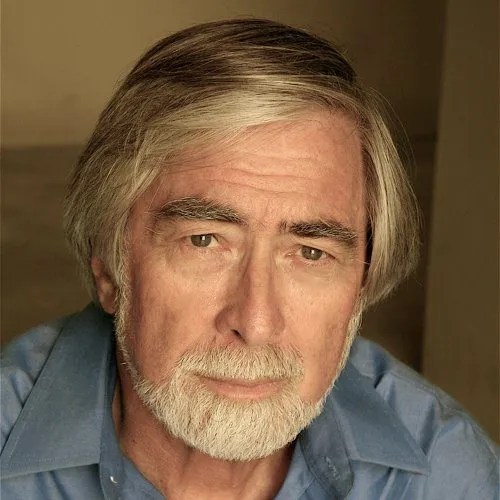
Robert Scheer
Robert Scheer, publisher of ScheerPost and award-winning journalist and author of a dozen books, has a reputation for strong social and political writing over his nearly 60 years as a journalist. His award-winning journalism has appeared in publications nationwide—he was Vietnam correspondent and editor of Ramparts magazine, national correspondent and columnist for the Los Angeles Times—and his in-depth interviews with Jimmy Carter, Richard Nixon, Ronald Reagan, Bill Clinton, Mikhail Gorbachev and others made headlines. He co-hosted KCRW’s political program Left, Right and Center and now hosts Scheer Intelligence, an independent ScheerPost podcast with people who discuss the day’s most important issues.
Editor’s Note: At a moment when the once vaunted model of responsible journalism is overwhelmingly the play thing of self-serving billionaires and their corporate scribes, alternatives of integrity are desperately needed, and ScheerPost is one of them. Please support our independent journalism by contributing to our online donation platform, Network for Good, or send a check to our new PO Box. We can’t thank you enough, and promise to keep bringing you this kind of vital news.
You can also make a donation to our PayPal or subscribe to our Patreon.
