

Click to subscribe on: Apple / Spotify / Amazon / YouTube / Rumble
Benjamin Netanyahu’s speech to Congress proved to be a testimony of the U.S. government and its politicians’ stance on the genocide in Gaza. With standing ovations, smiling handshakes and overall warm welcome by a large number of Washington politicos, the strength of Israel’s influence in the U.S. is clear. Richard Silverstein, author and journalist of the Tikun Olam blog, which covers the Israeli national security state, joins host Robert Scheer on this episode of the Scheer Intelligence podcast to dive into Israeli history, its evolution and how its current stage fails to represent Judaism to the world.
For Silverstein, Netanyahu’s speech was nothing new as it was filled with the same ideas and tropes about the barbaric Arab and Muslim world against the civilized, Western, Judeo-Christian world. Silverstein said these thoughts, “exemplify a certain attitude and approach that has existed for decades in Israel.”
The current zeitgeist that exists in Israel today, whether it be through its government or settler population, does not represent any recognizable form of Judaism, Silverstein said. “This is why I’ve become an anti-Zionist, because I don’t want to be associated with an Israel that sees its religion as destroying the Palestinian existence in Israel; that kind of Judaism is horrific.”
Silverstein noted, “Israel betrayed the values I had as a liberal Zionist … and I think the genocide in Gaza has really sealed then put the nail in the coffin of Zionism.”
Credits
Host:
Producer:
Introduction:
Transcript
This transcript was produced by an automated transcription service. Please refer to the audio interview to ensure accuracy.
Robert Scheer: Hi. This is Robert Scheer with another edition of Scheer intelligence, where the intelligence and certainly the attitude and opinion comes from the guest. And that’s Richard Silverstein, who puts out, and has done it for some 20 years now, right? Tikun Olam, blog, Repairing the World. And the reason I really wanted to talk to you today, after Netanyahu— it’s now Wednesday, and Netanyahu spoke at the Congress and gave what I thought was really a chilling talk. And you know it’s being Netanyahu, but the response of the crowd — some Democrats boycotted it — but you know, this is the US Congress standing ovation really caught my attention. I wondered what’s going on here. And he particularly attacked people like you.
And so let me give you a proper introduction. You’re one of those Jews who’ve been led astray by Iran, I think was the argument, you know, and you probably don’t know it… But I just want to give a little background. You grew up in New York, and you went to, what was it? The…
Richard Silverstein: Columbia University.
Robert Scheer: No, but before that, you went to the Jewish Theological Seminary, right?
Richard Silverstein: Right.
Robert Scheer: And you and you wanted to be a Hebrew professor, and you learned Hebrew, right?
Richard Silverstein: Right.
Robert Scheer: And then at Columbia University, you studied Comparative Literature, and Hebrew literature, also at UCLA, and you actually spent time in Israel at the Hebrew University and so forth. And so you were on your way to being what? You called yourself at one point, quite recently, a liberal, a progressive, and then in parenthesis, critical Zionist. And so if I can accept what Netanyahu said today, some kind of Iranian agents got a hold of you and played with your mind. And now, what are you? A traitor? A self hating Jew or what? And you are one of the people who’s been quite outspoken for years now, from your base in Seattle, criticizing Israel and what has become of the Zionist project. How would you describe yourself?
Richard Silverstein: Well, I would say that I was a liberal Zionist, starting when I was a teenager, and the 1967 war happened, and everybody, the American Jews, sort of rallied around the blue and white flag of Israel and were worried that Israel would be destroyed. And gradually, over time, I… became what I’d call a Zionist who was mugged by the Israeli reality. If you remember that famous saying about becoming a neocon.
And so Israel betrayed my values, the values I had as a liberal Zionist, that Israel could be both a Jewish state and a democratic state. And I came to understand over time, that the way I would define Judaism and the way I would define a Jewish state that could be democratic were impossible, the way that Zionism has developed, and I think the genocide in Gaza has really sealed— then put the nail in the coffin of Zionism, certainly for many, most Jews, I would say, outside of Israel.
And I think that Israel has lost its way, and it may continue to survive for, I don’t know how long, but it become, it’s become a failed state. And a state that’s engaged in genocide and that betrays Judaism, betrays the ethical tradition of the prophets, betrays everything that I hold sacred as a Jew. So now I’m profoundly alienated from Israel, certainly alienated from what they’re doing in Gaza and from Netanyahu. And I think that’s why the Democratic response to the speech was so muted, I would say muted by even the most supportive members of Congress.
And you notice that up on the dais where the Democratic Leader of the Senate should be, Kamala Harris was the president of the senate not there. My senator, Patty Murray from from Seattle, was the pro tem, the president pro tempore of the Senate. She refused to do it. They had to put Ben Cardin in there, who gets millions from AIPAC in the Israel lobby. So he was willing to be up there and be the Democratic front man.
It’s also important to note that Chuck Schumer, who’s the Majority Leader in the Senate, pointedly standing on the aisle as Bibi came down and was shaking hands with all of the GOP members of Congress. Chuck Schumer did not put out his hand. He did not look at Netanyahu. Netanyahu did not look at him and just walked past him. So I think there’s a real there’s a division within the Democratic Party about this, but there’s a very strident division between Democrats and Republicans on Netanyahu himself — who Schumer had attacked a month earlier too — and the rest of the country, which is opposed to the Gaza war and opposed to Biden’s support for Israel in the Gaza war.
So Netanyahu just glossed over all of that and made it seem like we were all one big global family. The Arab states and the Europeans and the democracy of the world were all united in supporting him and supporting Israel, which is total delusional characterization of reality.
Robert Scheer: Well, it’s interesting, you know, the thing that was really quite frightening about the speech, from my point of view, was the denial of any complexity. Any aspirations of the Palestinian people, any… Basically, that they’re all terrorists and they’re all illegitimate, and they’re that way because they are antisemitic and they have no values. They’re barbarian and so forth.
And I must say, because you mentioned the Six Day War, and I was in Israel right after the Six Day War and also I had gone to Egypt. I covered it. And, you know, I had— I don’t know what I felt, overall, ideologically or anything, but, I mean, I was quite happy to arrive in Israel, and Tel Aviv particularly was very exciting city.
And most of the people that I interviewed, and that even included very famous people, I had some words with Moshe Dayan and Atom, and other people. I did manage to get into the West Bank, into Gaza, and it was basically the heyday of labor Zionism, and they all either believed or talked themselves into a belief or a good game that I felt was quite sympathetic. I was the editor of ramparts magazine. They said they liked our magazine. They seemed to agree with our criticism of the Vietnam War.
I did not— and I had been in Egypt, I didn’t experience any great antisemitism. Nasser was in power. I always identified myself as Jewish, just because I didn’t want to be accused of false pretense or something. And, you know, and I one thing that they seem to be— and all the people I talked to, I stayed on the kibbutz, Barkai, I think was the name, and the people I interviewed and talked to, all suggested that being having a people that you occupy could destroy Israel. Okay?
I remember that very clearly. They would say one form or another, “If you come back here in 10 years, and we’re still occupying these people and so forth, then this would not be in Israel I would want to live it.” I heard that, I don’t know, 30, 40, times. And, you know, I did not really run into anybody who said, the Bible gave us this land and we’re going to keep it. And most of the people I talked to actually were proudly quite secular.
And I think what’s left out of the whole discussion — and of course, Netanyahu and the people cheering him, widely ignored — was something that was also in the air at the time of the Six Day War, which was in the United States, one person, one vote. After all, that’s what the Civil Rights Movement had been about. And the people that I talked to in the Labor Party who said, “Oh, you come back and we’re still occupying,” occupying would mean that they wouldn’t have a vote.
So, you know, this was really the issue. Did the requirement of a Jewish state require denying human rights? It was very early, very clear— because there was an argument, do non Jews within Israel proper, as it was, have full rights? No, they weren’t in the army. They couldn’t do this. They couldn’t do that. But still, that was a live issue. How do we extend that? And there was quite a bit of support among Israeli Arabs and others for some notion of the state.
But once you occupy all these people, and everybody forgets, they did not wage war, they did not have an army. This is utter nonsense. And Israel. Made peace with the very people who had been occupying. You know, Jordan was occupying the West Bank. Syria had the Golan Heights, Egypt had Gaza. They made peace with, certainly, with Jordan and Egypt. And so the Palestinians somehow became held responsible for the Six Day War, which was a preemptive war — question whether it should have happened at all — but nonetheless, that is somehow been lost.
I want to go to you now for advice. How is it lost? How is the idea of one person, one vote — if you’re going to occupy people, whether you’re justified or not, you’ve occupied them — how do you go along with the idea that they cannot have basic agency, that goes against the whole drift in the world? Right?
You’ve been, you’ve been in the middle of this debate. Tell me how did, what happened to the Enlightened Israeli left and the Labor Party, and, you know all these people I— you know, I still read the Haaretz and all that, but they seem to be a small group.
Richard Silverstein: That’s right. We need to go back before 1967 to 1948. In 1948 the seeds of what we see now in Israel were planted with the Nakba, the expulsion of nearly 1 million Palestinians from Israel. It was part of a Zionist campaign that Ben Gurion sort of advanced. He was the father, basically, of the state, and leader of the early states from ’48 until the early 60s. He wanted a Jewish majority in Israel, and in order to do that, he had to get rid of as many of the Palestinian— indigenous Palestinians who lived in Israel.
So that left only 250,000 Palestinians inside Israel, and that has grown to about 1 million now. But this mass expulsion was the first step in the sort of contradiction of democratic values. So yes, there were liberal Zionists. The Labor Party was predominant from ’48 until 1977 and its ideals were based on being a democratic state. 1967, though, there were 300,000 Palestinians who were expelled from the West Bank in 1967. So the Nakba was not just in 1948 it continued. And now Israelis have been talking about expelling the two and a half million Gazans who live in Gaza, and we don’t know where they would put them, if they would put them anywhere.
So this idea that Israel needs to either make the Palestinians a quiescent minority or to eliminate them entirely, so that Israel could be a pure Jewish state. This is what the the ideology of Itamar Ben Gvir and Bezalel Smotrich, who are the leaders of the extremist Kahanist wing of this government, or senior ministers in the government, this is what they want. This is why there’s violence, mass violence in the West Bank. This is why 20 or 30 villages, Palestinian villages, there have been basically erased. Why 1,500 Palestinians have been basically just their villages destroyed by the settlers, who, by the way, are not a minority.
The settlers really control the state. People don’t really understand that. They think that, you know, the people who live within the boundaries of Israel, or it’s democratic elections that happen, and everybody is represented equally, or some such Nostrum like that. But the settlers are the state, as far as I’m concerned. They control the settlers are a mass in the army, and they are represented widely in the Knesset, and they dominate the current government. So Israel once until 1977 you could say was a liberal democracy. It no longer is. In 1977 Menachem Begin came on the scene, and from 1977 until now, with the exception of maybe six or seven years, over that period, it’s been dominated by the Likud and its right wing Kahanist ideology.
Robert Scheer: Okay, but I’m getting back to my basic question… How did a truly impressive people, you know, I didn’t do great surveys. I actually did one. I wrote about the Jewish community of LA we did a survey. But, you know… I mean, I lost— my mother lost her whole family in Lithuania. I have to be performed before the war, and my father was a German, non Jewish. So I tried to visit how— it just drives me crazy that the Germans are now suppressing people who talk about Palestinian rights. My God, the whole justification for having a Jewish state was to get away from the Germans and the carnage, the barbarism that they did now they blame the Palestinians. But the fact that matter is, there was a great deal of idealism, universal values, the people who fought the Nazis and, you know, the shtetls and the Warsaw Uprising and everything were basically, you know, one of the most enlightened consciousness that we’ve ever had.
And that’s why, in fact, a number of them spoke out against the possibility of the Zionist project, but I do want to mourn what is lost here, and that is that Jewish people, because of their oppression, because of their travel, had a certain kind of universalist values and decency and respect for life. Certainly with the New York I grew up in — I was earlier than you — but the general assumption was that Jews were tolerant open people. They supported the civil rights of everyone. And I must say, that mystique carried over into a perception of Israel, whether you plant the trees or raise money or so forth.
And as I say, the Six Day War. And there’s a very good movie you, I’m sure you know, on Shin Bet called the Gatekeepers, which actually tries to grasp what happened to the idealism of the Labor Party. I’m not one to just dismiss it. Yeah, they became quite hawkish and aggressive and so forth. But there was always a counter chorus of people. I mean, Moshe Dayan for instance. Why did he learn Arabic? Why did he care about these other people’s claim? Because he said, “No, we can’t be so parochial and just for ourself.” You know, I just, you know, Peled and others, even in the military.
So I want you, because you really bring a lot of expertise to this. How did it go away? Is it just built into what we’ve called settler colonialism? Is it just built into the logic of it? Why not a Swiss type solution where Germans and Italians and French can get along? What happened and that, after all, we did have this possibility of a two state. We did have Oslo and so forth. How did this get soured in this terrible way?
Richard Silverstein: Well, the the ideology of Zionism has really a schizophrenic approach to this Jewish democratic sort of bifurcation. And thought that you could have a state that was informed by Jewish values, by Jewish religion, and you could also have a western style democracy. But if you want to have a state that is Jewish, and you’re not willing to have Jews— you want the Jews to be superior to non Jews, that you want them to control the levers of power, that you want them to their religion to be the primary religion, and you want the Arabs and Palestinians to be a minority and to have less rights than Jews — which is the way the state is constructed — then you can’t have you can’t have a liberal democratic state.
So the countries that you were talking about, Switzerland, Northern Ireland, Canada, that have different minorities who live together is because each minority doesn’t want to eliminate the other, and they’ve decided we can all live together. We have to decide how we’re going to divvy up the elections and the, you know, the legislature and we’re going to share power. That happens a little bit in Lebanon, although it’s a less functional state, and so you had arrangements in all of those places where everybody could decide to live together. In Northern Ireland, you had a civil war, basically, between the Catholics and the and the Protestants. But even there, with the help of George Mitchell and others, you had an agreement that was reached where, you know, it hasn’t always been rosy, but they figured out how to do it.
The— currently, the Israel, the Likud party, the right wing parties they want— they don’t want to have this Palestinian state. They want to have, I mean, Bibi, if you heard him talk in the in the speech, he talked about wanting to find Palestinians who don’t hate Israel to rule Gaza, and he wanted the good Palestinians who accepted the Jewish state are the ones that he wants to deal with, and they basically don’t exist in the form that he’s talking about.
Robert Scheer: Okay but Bibi, Bibi grew up, what in Philadelphia, went to MIT and so forth,
Richard Silverstein: Right, right.
Robert Scheer: He is not a product of the Jewish Diaspora world that I’m describing. Where, first of all, many people within that world revolted, rebelled against the religion. They found it oppressive of women. They found it weird and, you know, parts of the Old Testament certainly not to be— you know, the whole the commandments, some were good, but you know the rules of keeping kosher and so forth. So I don’t know you’re a little younger than me, but I grew up in a Jewish New York in which you rarely— I mean, yeah, we had, you know, people studying the Talmud and so forth.
But in the main, it was a secular phenomena, and it was a phenomena that I would say created a really tolerant, open questioning— I mean, you know, it’s shocking to me what has happened. It is shocking to me that Netanyahu is now a representative of the Jews. I just think, I mean people involved in the Civil Rights, but even the people in the demonstration against Netanyahu, there was a significant number of people today in Washington who are Jewish.
Richard Silverstein: Absolutely.
Robert Scheer: Even an interview of a woman rabbi, which is itself is a rebellion against a certain notion of the religion. But clearly, you know… I know, when we at the LA Times, we did a poll on the Jewish community, and we found, then, at the time of Oslo and so forth, even then, there was a very large number of Jewish people who rejected any kind of coercive, nationalist thing, you know? And so I’m turning to you for an answer to me— for me to a mystery you have studied now, is it the Hebraic tradition overwhelmed the secular, Yiddish kite experience? What happened? Or is it just in the nature of reasserting a colonial experience? But you studied this. I mean, right, what?
You can’t just discard it, because even the Zionists, the fervent Zionists that I knew were enlightened, they didn’t— you know, even if… That’s what gets me, I would recommend to anybody listening this, get a hold of this movie. You can buy it on Amazon for, you know, 10 bucks or something. The Gatekeepers and these guys in Shin Bet, who acted often in a very coercive, harsh way, on the underhand, were clearly struggling. And they were shocked because Rabin, who you mentioned, after all, was killed by one of these people who would be probably very happy with Netanyahu’s speech today.
Just bring us to this complexity, because this is really a very sad moment. I mean, for my money, as a Jewish person, I mean, my God, this is like Netanyahu sounded like some, you know, incredibly— he fed a notion of antisemitism, you know, the coercive, the overpowering. And the people I talked to — including in Israel at the time of the Six Day War — went out of their way, the Abba Ebans and all these people to say, “No, we’re not like that.” Now, some people like Hannah Arendt and everything predicted you will be like that, you know, or you’ll become like that. But why don’t we grapple with that? And I want you to go into your academic brain, your Columbia — you got to go to a fancy school, I went to City College you know — what wisdom do you have about this? Because you’ve been on the receiving end you had a person that Netanyahu was blasting today, right?
Richard Silverstein: Yeah, he talks about the Iranian useful idiots, the demonstrators, pro Palestinian demonstrators.
Robert Scheer: And he attacked university presidents.
Richard Silverstein: Yeah, yeah.
Robert Scheer: This was a McCarthyism of the broadest sweep. You know anybody, anybody who would challenge any— do any fact checking of his narrative, “Oh, they’re evil and they’re working, they’re agents. They’re enemy agents.” That’s where you get back into the old McCarthyism, right? And in fact, this was what was the fed anti semitism in Europe. The Jews were supposed to be communists. They were supposed to be agents of a foreign power, right? And this was what Hitler talked, “They’re not normal Germans. They’re not normal Poles. No, they’re alienated enemy people.” When we heard that today about the demonstrators, and many of whom were Jewish!
Richard Silverstein: Right, right.
Robert Scheer: They would say it about you, I guess they say about me, right? What the hell is going on?
Richard Silverstein: Well, I think we need to talk about Meir Kahane, because I think he’s a seminal figure here. You know, raised in Brooklyn, in the Orthodox community there, which, by the way, the US Orthodox community has fed many of the most extreme, most violent of the settlers. We had, American Jews like Kahanist, who assassinated Alex Odeh down in Orange County in the 1980s and then went to Israel, and Israel has refused to extradite them back to the US to face justice. So our community — maybe just the Orthodox, some of the Orthodox parts of it — has fed the current government, the current ideology.
Kahane did not want Israel to be a democracy. He wanted it to be a halachic Orthodox Jewish state that eliminated anyone who wasn’t Jewish, maybe would accept Palestinians who were willing to live under the kind of regime that he wanted to, he wanted to establish. And slowly but surely over the years, even after he was assassinated in 1991 his ideology grew and it integrated into the settler movement, which started in 1970 but by the time he arrived and immigrated to Israel — by the way, escaping from a terrorism charge in the US After bombing the Russian Consulate, the FBI was on his trail, so he moved to Israel — and he just brought that whole ideology over to Israel, and he, I hate to say it, but he and his followers sort of developed this incremental takeover of the state.
And if, I’m certain if Kahane had lived, he’d be the prime minister of Israel. And I know that’s horrible to contemplate, probably for you, and it would be for me, but I think that Kahanism really is what the state of Israel is. And it’s why there’s so much hatred. And by the way, Netanyahu, in the speech, was attacking liberal progressive Jews like me and pro Palestinian demonstrators on the campuses, but he does that in Israel too. So there is a small group of progressive Israelis who are anti Zionists, who want to create, integrate with Palestinians, and they would like to see a single democratic state in Israel, or, you know, if it was possible two states, but that’s no longer possible. So those people are under attack as well. Palestinians in Israel, Israeli citizens are under attack as well. So we’re all enemies of the state of Israel that Netanyahu is running.
Robert Scheer: But help me out here, because you sort of fell into now this argument that there can’t be a progressive Zionist. We used to have Hashomer Hatzair, you know, Barkai I think they were— that was probably the kibbutz that I stay on there. There were progressive, in fact, at one point. And in fact, I think was at the time in the Six Day War, they said a very significant part of the officer corps had come out of the kibbutz movement, quite often, left wing kibbutz activity. And you find that some of the people have spoken out like Peled’s son, and others came out of that kind of tradition. So there was an idea that you could be a Zionist without being oppressive.
You must have believed that when you called yourself a progressive Zionist. And that’s why, you know, one really wonders, is it the religion that fed the extremism? You know, that you know, with chosen people, or there’s a mandate for this territory? You know, because I, to this day, cannot just discard the need to find safe haven for Jews after World War Two. That, yes, this was the greatest barbarism in modern history. And these are people who were not oppressing other people, and they were used as scapegoats. And so I could understand that. So did I.F. Atone when he went in on the first ships taking the DP’s. And by the way, the very people who were turned away by US at the US border, we don’t want, you know? Because I remember when I was growing up in New York, maybe born, you there, there were the early German Jews, they didn’t really want the people from Poland and Lithuania and so forth, you know.
But I just wonder, is this the beginning of…? Netanyahu today, you said today, I know, before we talked, just some of the greatest hits of Likud in this speech, but there was a vision of the Western civilized world, you know, that used to be used against Jews. That was the basis of antisemitism. “You’re not part of our Western Christian enlightened world,” right? And now here is Netanyahu, basically presenting a view of primarily a white western world with the United States and Israel. This is almost like some fanatical antisemite trope. That’s that some crazy Hitler type would have invented, you know, and we’re going to build— we have this core civilization that, unfortunately, they have the strongest armies, and they are going to keep the rest of the world at bay, you know? With some fringe alliances with, as you say, people who are well behaved.
Is that what’s going on? Were you scared by this speech, and when you saw all those Republicans jumping up. They have power! They can actually affect life here, right? They can order the arrest of people demonstrating, right? Against that. This is not idle chatter, right? What were they cheering? They were cheering, really, the attack on American university presidents and professors, right?
Richard Silverstein: I think the Republicans, I think the Republicans see this natural alliance with Likudism and Kahanism, and they would like to bring that sort of ideology to rule the United States. And that’s why Trump, I think, is so frightening, because he’s a dumb version of Hitler. And he will, he will bring a government if he wins the election — which it appears he might — he will advance the agenda that he had in his first term, and even more extreme. So we could have the Justice Department going, you remember the Palmer Raids in the 1920s where they deported Emma Goldman and other radicals from the US and and saw them as enemies of the state, and you know, this kind of Reign of Terror happened.
That’s what Trump could— this could auger for another term, and that’s why I think they see Israel as as as a sort of ideological model. I don’t think that the Republicans want to engage in genocide particularly, but I think they’re happy with a Jewish state sort of eliminating Palestinians. It’s what that a lot of these Radical Republicans would like to eliminate Democrats, and they want to turn Democrats into you know what McCarthy did, as you mentioned.
And you talked about the tempted to ally the United States with Israel. I note that one of the terms he used was, we are in a fight of barbarism versus civilization. Barbarism is Arabs, Palestinians, Muslims, the Other with a capital O. Civilization is us, white, Western civilization, Christian. They could use this horrible term, Judeo-Christian tradition. And I think that’s that BiBi’s speech, because I’ve heard this kind of speech and these ideas for so long. I just was taking notes because I was re— you know, all of the slogans that he was using. I wanted to write them down, because they they exemplify a certain attitude and approach that has existed for decades in Israel.
it’s a an approach that deforms Judaism. And I think there really are two Judaisms here. I think there’s a Judaism as the radical Kahanists see it in Israel and the takeover of Israel by extremist, ultra orthodox kind of tradition. And there’s a liberal, tolerant Judaism that you and I are familiar with in New York and other major cities in the United States. And we, our Judaisms don’t meet. They have nothing in common with each other. I think there are leaders of our community in the United States here, our Jewish community, who are still desperately clinging to some kind of bridge between the two. But I think that bridge has been blown up a long time ago, and I’m aghast when I see them talk about the Jewish state that they want to see, doesn’t represent any form of Judaism that I recognize.
And I— this is why I’ve become an anti Zionist, because I don’t want to be associated with an Israel that sees its religion as destroying the Palestinian existence in Israel. That kind of Judaism is horrific, and we’ve had a strain of this in Judaism for centuries, of kind of like a militant, intolerant, supremacist, kind of white supremacist ideology in the Jewish tradition, but it was mostly sort of shunted to the side. I mean, in the beginning of the Zionist movement, Jabotinsky, who was the leader of the right wing of the Zionist movement, he was in the minority. Once Begin came to power, he was a follower, a disciple of Jabotinsky. Then that was when that kind of, that kind of version of Zionism, the worst of a Jewish tradition, sort of came to the fore, and that’s what we now are living with.
Robert Scheer: Yeah, but you know, I also, let’s just to wrap it up. It hit me watching it today, Netanyahu speech and all that, the real target is Kamala Harris. And I think, and what remains of a liberal claim or pretense or presence in the Democratic Party. And we saw that with, you know, casino owners and backing and who, you know, who are the people who back Trump? I mean, they claim to be Jewish, but they were coming out of one kind of Sheldon Edelman, all these people.
But it seemed to me, at the Selma march and march, the Jubilee, the famous Selma March, which really a lot of Jewish people participated in, you know, a disproportionate number of the whites were Jewish, you know. And the people who sacrificed, you know, Goodman and Cheney and, well, not Cheney, but Schwerner, Goodman and Cheney wasn’t Jewish, the three civil rights heroes and so forth.
And she gave a speech at Selma, you know, praising John Lewis and others, but she actually talked preceded her remarks about Selma with what was going on in Gaza. And I was very impressed with her remarks. Whether she’ll hold to that, I don’t know, because the pressure now, I don’t know what she would have done if she were there today. Would she have jumped up, or would she have clapped? And, I mean, you know, it would have been, it might have cost some votes or something if she didn’t. It would have been the big news story, right? She sat there behind Netanyahu, and what was she going to do? Because in her speech, he denied, actually, that there’s been any sign, not forget about genocide, any victims of Jewish… Israeli fire— I resent when people say Jewish, I’m Jewish. It’s not my firepower, you know.
But the fact of the matter is, in her remarks the Selma demonstration just few months ago, very clear, very clear. This behavior was, is barbaric, is, you know, the destruction of you know. And even on CNN, after watching it, their correspondent over in Israel, said, “Wait a minute, this needs to be fact checked. You know, there are these war crimes and so forth.” And yet, it seems to me, we might be seeing the opening chapter of the of Trump’s attempt to keep power, because, after all, this was mostly the Republicans, and they’re going to be able to, if they just show that speech, they’ll say, “Wait a minute, we went with Netanyahu. She’s going with… she’s an agent of the Iranians or something, because she talked about the great suffering.”
So I… we have two minutes left. But let me ask you, because you’re a guy who studied Hebrew, right, and you certainly knew about scripture, and you certainly know about the tradition and so forth. What’s your takeaway is this, where does this live leave Jewish people?
Richard Silverstein: Well, I think if the Jewish community in America is going to see itself as tied to Israel, and see Israel as the most important element of Judaism, then we’re in trouble. And I think we are in trouble as a community. I don’t know whether you know in two or three or four generations what this community would be like, because it’s really using Israel to replace the democratic, the prophetic values that you and I have known since we were young, young kids. You know, since I went to Hebrew school and and then I went to the seminary, which you mentioned.
So but, if our religion is going to be based on Israel, then we’re lost, because Israel is lost, as far as I’m concerned, for Judaism. But if we can find some domestic Jewish tradition that is not reliant on Israel for its identity, then there is hope for us. And I don’t know that that the the the answer is not clear yet as to what will happen.
I wanted to go back to Kamala Harris. I think it’s really an open question where she’s going to come down. There’s two options for her. One is she maintains continuity of Biden. She doesn’t raise a stink. She keeps sending the weapons, the $18 billion that we’ve already sent to Israel, and she won’t even whisper the word ceasefire. Or is she going to realize that she’s going to lose the liberal wing of the party if she keeps to that, to that approach, which Biden, by the way, had lost. The liberals were fleeing from him like rats from the sinking ship.
And will she develop a spine? Will she develop an independent approach? I think the sign that she refused to attend the speech was an important symbolic statement. And she’s going to try to probably, you know, maintain a sort of sit on the fence and not offend either side. I don’t know if she can do that. I’m not sure she’s a deft enough politician like Obama or Clinton might have been, but that’s what she’s that’s what she has to do if she’s going to win this election.
Robert Scheer: It’s interesting. You mentioned Obama, but you know, when Netanyahu’s previous speech was what? 2015? When he spoke to Congress, was a vicious attack on Obama. After all it was Obama who tried to work something out with Iran, and they did get them to pull back on the nuclear development. And now we’re in a whole different world. And you know, nobody ever mentions peace in the peace movement, but Jewish participation in the peace movement because of the horror of war, because Jews has suffered so much in war. And know what happens when you have bedlam and you know chaos, Jews took it.
I was growing up, there was a expression of shikis and goy, not nice to say. The non Jew— an alcoholic as a non Jew, because Jews were afraid when people got drunk, or when they got drunk on power, when they got drunk on nationalism, Jews got it, you know, and that somehow has been lost. Now, what you had in Netanyahu was a appeal to jingoism. An appeal to being the big military power, being aligned with the biggest military power of the United States, and really disregarding the whole world. I mean, the UN court that he condemned, you know?
I mean, after all that investigation has started in 2022 was after what, 83 members of the UN asked for such an investigation. What is going on with the occupation. And, you know, I don’t know if it just was like, certainly, like a big blur. It was as if… you talk about inconvenient truth that sometimes Democrats tell you talk about fact checking. No one raises the question, these Palestinian people, I get back to that point, drives me crazy. These Palestinian people did not attack Israel. They were conquered and and Israel gets along, this was supposed to be the Abraham accords. Get along with the very people who, you know, didn’t seem to be attacking Israel. Question about how real it was. So let me end on that.
I want to thanks for doing this. Christopher Ho and Laura Kondourajian and our KCRW for posting this. I want to thank them. Joshua Scheer, our executive producer, Diego Ramos, who writes the introduction, Max Jones, who does the video. I want to thank this my way make a point here the JKW Foundation, which gives us money, in memory of Jean Stein, who comes from a very prominent Jewish family, and Jill Stein and a movie business and so forth, but was an early outspoken critic of what Israel was doing In the West Bank, and she had befriended Edward Said and so forth.
So want to thank her foundation, her memory for giving us some support for these shows. And another example is a very good attorney in Chicago Len Goodman, he has founded the Integrity Media Project, Integrity Media, they give us some support. And again, they do it in favor of free speech. You know, protecting the right to free speech, protecting the right to dissenting views and creating space for dissent. And I would think creating space for dissent is really the most honored of the Jewish Diaspora experience, because how else do you defeat antisemitism, racism and all the jingoism and so forth, is by having tolerance of diverse point of view.
And what we had today is really shocking. I’ll end on an editorial note of my own. I saw a Netanyahu, a guy that was willing to throw anyone in his way under the bus and to attack. And he actually went on an assault on American higher education that was actually more extreme than Joseph McCarthy had done. It was just “POP!” and anybody who dares to get in his way criticize him. Well, I’m going to ask you one final question in that respect, he’s not popular in Israel, right?
Richard Silverstein: Nope, no.
Robert Scheer: 73% of people don’t like him. So isn’t there hope for Jewish idealism and the people who reject Netanyahu? Come on, give me something positive here. No really, they see through the guy…
Richard Silverstein: I wish, I wish I could Bob. But the fact of the matter is, is that the opposition, you know, you would hope the opposition would have some of those values that we’ve been talking about of a liberal Zionism, the labor movement. But the opposition isn’t much different than Netanyahu. Their idea, their basic ideology, is the same thing they are. They’re wearing, you know, Netanyahu is the tough guy, and they’re a little smoother and a little bit more elegant, but they don’t want the Palestinians to have equal rights, and they don’t want a two state solution.
Nobody in power in Israel wants what would be necessary to really have a true resolution of the conflict. But going back to what you said earlier, it’s true that the vast majority of Israelis want him out. They want Bibi gone. They want him gone because a he’s not really trying to free the hostages, as opposed to what he said, he doesn’t want a ceasefire because, which would get the hostages. He doesn’t want it. He doesn’t want an end to the war, because then he’s going to have to face the four corruption counts and possibly go to prison.
So that’s why he wants the war to continue. So I am hopeful about the hundreds of thousands of Israelis who come out and demonstrate every weekend against him. I’m hopeful about the hostage surviving family members who want the government to negotiate for ceasefire and bring their their children home. But they don’t have power. The government is not threatened by them, and they can demonstrate all they want, but unfortunately, this government is entrenched in power and doesn’t have to listen to them. So it’s really a dichotomy there between Israelis who are more moderate but have no power, and the Israelis who are bellicose and hateful and who control power, unfortunately.
Robert Scheer: Okay, I’m going to take so much time. I’m just going to offer a dissent to what you say.
Richard Silverstein: Go ahead!
Robert Scheer: I know one could criticize Rabin and he, you know, after all, was general and so forth. And by the way, Israel had enemies, and by the way, you know, we did have this terrible attack, right? On a Kibbutz that has been used as the excuse for all the savagery and so forth. But I think that you cannot have an appealing, decent society, that well educated, sophisticated people will be happy in if you constantly have your society has its foot on the neck of other people. I think this is what happened to South Africa. I think it happens throughout the world. And I don’t know maybe I was there in a more idealistic time, as I say that I haven’t been back since the Six Day War, but I actually was in a state of shock. Even everything I know, listening to BiBi’s… I actually met BiBi way back when, you know, I don’t know where, somewhere.
Richard Silverstein: He was the ambassador to the UN I think in the 80s.
Robert Scheer: I interviewed him and talked to him and everything. I just was shocked. To me, I never thought that if fascism comes to America, it would come through our alliance with Israel. I never thought this. And I still don’t want to think this. I don’t want to think fascism is coming to America, but… I— we saw a rally there of jingoism, of irrationality, of hatred, with the Republicans cheering Bibi. It was just, you know, disgusting spectacle and scary, scary. Anyway, since you’ve been on the receiving end, my hat’s off for you for having the courage to keep doing. How do people read your work? Tikun Olam blog?
Richard Silverstein: The URL is richardsilverstein.com and I also publish in some publications that I would recommend. One is called the new Arab and the other is called Middle East Eye. And they’re both based in the UK, where, apparently, this, my kind of journalism and political activism is more acceptable outside of the United States, so that’s where the outlets will publish me.
Robert Scheer: Okay, you. Thank you and take care.
Richard Silverstein: Thank you, Bob.
Please share this story and help us grow our network!
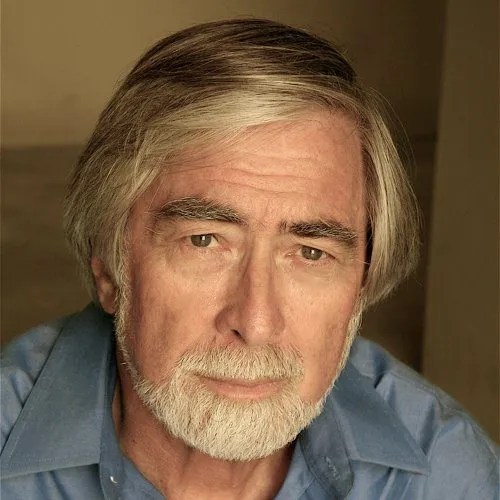
Robert Scheer
Robert Scheer, publisher of ScheerPost and award-winning journalist and author of a dozen books, has a reputation for strong social and political writing over his nearly 60 years as a journalist. His award-winning journalism has appeared in publications nationwide—he was Vietnam correspondent and editor of Ramparts magazine, national correspondent and columnist for the Los Angeles Times—and his in-depth interviews with Jimmy Carter, Richard Nixon, Ronald Reagan, Bill Clinton, Mikhail Gorbachev and others made headlines. He co-hosted KCRW’s political program Left, Right and Center and now hosts Scheer Intelligence, an independent ScheerPost podcast with people who discuss the day’s most important issues.
Editor’s Note: At a moment when the once vaunted model of responsible journalism is overwhelmingly the play thing of self-serving billionaires and their corporate scribes, alternatives of integrity are desperately needed, and ScheerPost is one of them. Please support our independent journalism by contributing to our online donation platform, Network for Good, or send a check to our new PO Box. We can’t thank you enough, and promise to keep bringing you this kind of vital news.
You can also make a donation to our PayPal or subscribe to our Patreon.
